.png)


Top 100 Albums by Black Artists
This may be extremely difficult for Jann Wenner and other faux elitist music journalists to believe, but there are at least 100 albums by Black artists worth listening to. And Bob Dylan had not a damn thing to do with any of them.
There are a few rules that I kept in mind when compiling this list.
1
Contains albums in the realm of R&B and Soul, as I define the genres. There might be lists of other genres like reggae and disco forthcoming, so the albums I like by artists from those genres will be logged over there.
2
No straight up compilations or unofficial mixtapes included here. Greatest hits collections will be listed elsewhere.
3
Artists must be predominantly Black and/or the focal point of the group is Black, like Sly and the Family Stone or Sade. I list my favorite white albums in a different section of this site.
79
Bell Biv Devoe
"Poison"
1990

“Ain’t nothin’ but a thang that we gonna do / Everybody’s always talkin’ ’bout the N.E. crew.”
That “everybody’s always talkin’ ’bout” line was true—for about a good 14 minutes. But what a moment it was. During that brief, glorious window when every member of New Edition dropped solo projects away from the mothership (Ralph Tresvant and Bell Biv DeVoe’s debut albums, Bobby Brown’s "Don’t Be Cruel", and Johnny Gill’s "Johnny Gill"), the N.E. crew became a full-blown juggernaut of high-quality Black pop. From the late ’80s into the early ’90s, they dominated the charts with jams you could dance and mek luv to with equal intensity.
Let’s be honest, though: when the second-tier members of New Edition announced they were doing an album together, expectations weren’t exactly sky-high. We knew Ricky Bell could sing. We knew Michael Bivins… well, couldn’t. And we weren’t even sure what Ronnie DeVoe brought to the table. But none of that mattered once The Bomb Squad got involved. With the same sonic sledgehammer they used to build some of the most iconic rap albums of all time, they helped ensure any talent potholes were paved over with bombastic, high-octane funk.
If you swap out the original version of the album opener “Dope!” for the vastly superior “She’s Dope! (EPOD Mix)” and skip the unnecessary extended remix of “Poison” tacked on at the end, what you’re left with is a tight, nine-track, no-skips-needed record that can hold its own against nearly anything released in 1990. And that was a competitive year—massive sellers like "Please Hammer Don’t Hurt ’Em", "The Immaculate Collection", and Mariah Carey’s debut were all out at the same time. Poison still managed to be one of the year’s top sellers, ending up at #24 on the year-end chart.
I’m a sucker for music that’s fun just for fun’s sake, and Poison delivers in spades. I never take the album’s sometimes misogynistic lyrics too seriously—especially since, once that CD goes on, the one shaking “a big butt and a smile" is me. The album is seven straight bangers deep before it cools down into two perfectly solid ballads. Highlights include the irrepressible “Poison,” the freaky-funky “Do Me!”, the swaggering “Let Me Know Something?!”, and the high school punctuation-flex anthem “B.B.D. (I Thought It Was Me?)”.
Speaking of punctuation, I’m sure B.B.D.’s old English teacher was tickled pink by her alumni’s dedication to question marks, though I have to point out that some of those sentences aren’t actually questions. But errant punctuation aside, "Poison" was a shockingly strong, relentlessly entertaining party record.
We can’t say the same, of course, for B.B.D.’s crummy follow-up. In the words of the trio themselves: “Wrong move, you’re dead!?” (Pun-ctuation intended.)
78
Vesta
"4 U"
1986

Remember how cute and innocent Janet Jackson looked as Penny Woods on "Good Times" in the late 1970s? She seemed like she couldn’t hurt a fly if she tried. Even on "Diff’rent Strokes" and "Fame", Janet was cute as a button—doe eyes, pinchable cheeks full o’ nuts. But apparently, all those hot iron moments she suffered on "Good Times" turned little Penny into a ruthless, heartless capitalist who would crush anyone standing in the way of her rise to superstardom.
Unfortunately, Vesta’s car stalled on Janet’s Parkway to Pop Stardom, and it got towed away and demolished before she had the resources to move it somewhere safe. Because "4 U" had the misfortune of competing with the juggernaut that was "Control"—on the very same label, no less—it was pretty much doomed from the start.
Yes, I blame Penny for this.
The cold truth is that "4 U" was a well-crafted, superbly produced, and masterfully sung album that never had a chance. It didn’t even crack the Top 20 on the R&B album charts—not because of the music, but because Vesta was on A&M Records, and A&M Records was too busy funneling every penny (pun intended) into Janet’s marketing machine. Vesta never got the budget, the push, or the support she deserved.
"4 U" is remembered mostly for the passable torch song “Congratulations,” but that’s just one piece of a much larger, richer puzzle. The album is packed with high-quality dance tracks (“All On You,” “4 U”), silky mid-tempos (“Hunger”), and some truly stunning ballads—sung with a panache and vocal power that set Vesta apart from nearly every other female singer of the time. For me, “Running Into Memories” and “Sweet Sweet Love” are the standouts here and remain two of the best songs in Vesta’s entire discography. (How a song as perfect as “Sweet Sweet Love” isn’t placed on the same soul pedestal as “Here and Now” or “Sweet Love” is truly beyond me.) But most folks never got the chance to enjoy this album, because it was buried near the bottom of A&M Records’ priority list. A shame. A low-down, dirty shame.
I guess when Janet said she was in control, we didn’t realize she also meant the record company.
77
The Emotions
"Flowers"
1976

When The Emotions signed with Stax Records, they didn’t exactly set the world on fire. They had a few decent hits, but getting the attention they deserved was nearly impossible while competing with the likes of Sam & Dave, soul titan Otis Redding, and Isaac Hayes, who was quickly becoming the genre’s biggest star. By the mid-seventies, Stax was bankrupt—and so, seemingly, was The Emotions’ career.
That changed when their new label, Columbia, paired the Hutchinson sisters with Earth, Wind & Fire’s Maurice White and his brilliant songwriting and production partner, Charles Stepney. Stepney, a respected musician, arranger, and member of psychedelic soul outfit Rotary Connection, helped reinvent their sound. Together, he and White swept aside the saccharine stylings of 60s girl groups and handed The Emotions rich, layered, meaty soul to sink their heavenly harmonies into. And the results were stunning.
From the funky brilliance of “I Don’t Want to Lose Your Love” to the breezy “No Plans for Tomorrow” to the title track “Flowers,” the album doesn’t miss a beat. The production is immaculate, fusing jazz, African rhythms, and R&B—a true testament to Stepney’s attention to detail. And the Emotions are in peak form throughout, their voices both confident and celestial. When it comes to song quality, this album is pure Sam Goody.
My only qualm? The album’s stingy runtime—just seven full songs, none over 4 minutes and 30 seconds. Why so short? Instead of those two inspirational interludes, how about one more whole 'nother track? Still, "Flowers" is a gorgeous musical statement. Though Charles Stepney passed before he could witness the album’s success, his influence is all over it. And while The Emotions would go on to even bigger hits with Maurice White at the helm, everything truly blossomed here—with "Flowers".
76
Rick James
"Throwin' Down"
1982

I had to pull out a calculator just to confirm that 1982 (the year "Throwin’ Down" was released) minus 1978 (the year Rick James’ debut "Come Get It!" dropped) equals four.
FOUR.
So how the hell was "Throwin’ Down" already Rick’s sixth album?
One reason, I think, is that while Rick James was a veritable giant of R&B and funk—with a trainload of classics—his albums weren’t exactly intricate concept pieces. Many of the sounds from one track bled right into the next. Sometimes whole arrangements felt like reworked versions of ideas he’d already laid down on earlier records. But that didn’t matter. The music slapped. It served as the background to our early-’80s lives.
To us, Rick James was so much more than “Super Freak,” just like I imagine Neil Diamond means more to white folks than “Sweet Caroline.” (I have no way to verify that, though.)
"Throwin’ Down" follows in the footsteps of "Street Songs", Rick’s biggest record, which had hit just one year prior. The formula is mostly the same: funky grooves with a side of social commentary, a couple of slow jams, and one jazzy outro that sounds like a demo someone forgot to finish. There’s even Teena Marie wailing in the background on “Happy,” much like she did on "Street Songs’" banger “Fire and Desire.” But if I’m being honest, "Throwin’ Down" as a whole feels more solid to me that its predecessor.
A big reason is “Standing on the Top”—Rick’s collaboration with the Temptations. Let’s be real: it’s a Temptations record featuring Rick James. And it’s glorious. My only gripe is that Motown only included the single version here—it barely clocks in at four minutes. I needed the full 10-minute version, the one the Temps put on their "Reunion" album. (Back in the day, I had to go buy that whole album just to get the extended cut, only to discover that “Standing on the Top” was the only Rick James production on there. I should’ve sued Motown for emotional distress.)
Despite its quality, "Throwin’ Down" didn’t get the push it deserved. The album wasn’t promoted properly, largely because Rick—at the height of his drug-fueled volatility—was making it nearly impossible for the label to do business with him.
There’s a now-legendary story that Rick, furious about the album’s poor performance, stormed into a Motown exec’s office, did some lines of coke right there on the desk, pulled out his dick, slapped the exec in the face with it, and calmly walked out. The stunned exec turned to an assistant and said just two words:
“Lionel Richie.”
Motown instantly redirected their promo dollars toward Richie’s "Can’t Slow Down", which went on to become the second-biggest album of 1984 and won Album of the Year at the Grammys. Meanwhile, Rick’s career began its steep descent.
1983’s "Cold Blooded" was decent, but the damage was done. His musical output never fully recovered—at least not until Dave Chappelle and Charlie Murphy resurrected his legacy with one phrase:
“I’m Rick James, bitch!”
But long before the punchlines and memes, there was "Throwin’ Down"—a record that still holds up as a crucial part of Rick’s legacy. The funk was thick, the vibe was raw, and for us little Black kids growing up in his shadow, Rick James was it and we love him for moving our feet and spicing up our lives.
Yes, cocaine is a helluva drug.
But Rick James’ music? That was one helluva good trip.
75
Alexander O'Neal
"Hearsay"
1987

Christmas can be a tricky time for kids—especially for those of us who grew up during the topsy-turvy Reagan years, when Trickle-Down Economics never quite trickled far from the top. Though I came from a military family, both my parents often worked two jobs to keep up with the suburban dream—one that many Black middle-class families had somehow tricked ourselves into believing was ours outright.
Some years, the living room overflowed with so many presents they couldn’t all fit under the tree. And then there were the leaner Christmases—like the one where I got two pairs of pants, some shirts, a few pairs of tube socks, and some candy. As I got older, the holiday naturally became a little less magical for all involved. So in 1987, when I saw just one big box and one small one under the synthetic tree with my name on them, I braced for another “Lollipop Christmas.” I had no idea it would end up being the most memorable—and life-altering—Christmas of them all.
Inside the big box: an early-model CD player. In the smaller, slender package: my very first CD—"Hearsay" by Alexander O’Neal. Black Kris Kringle (aka my dad) had really made a list and checked it twice because there was nothing in the world I wanted more than this new music box that all the kids were talking about but none of them had. None except me.
When it comes to full-length albums produced by Jam & Lewis, "Hearsay" easily ranks in the Top 5. It fires on all cylinders—immaculate songwriting, pristine production, melodic richness, and just the right touch of funk. Alexander O’Neal delivers with power, finesse, and clarity, matching the duo’s intricate arrangements beat for beat. There isn’t a weak cut on the album, and it’s one of the rare records where the interludes aren’t just filler—they matter. They tie the project together and actually enhance the overall listening experience. In fact, the album feels incomplete without them. Standout tracks like “(What Can I Say) To Make You Love Me,” “The Lovers,” “Criticize,” and “Sunshine” are top-tier jams, elevated even further by the angelic background vocals of Lisa Keith.
"Hearsay" built on the promise of Alexander’s self-titled debut and didn’t just meet expectations—it surpassed them. It delivered his sole #1 hit with the funky-monkey jam “Fake,” and gave us arguably his best ballad in “Crying Overtime.” Artistically, I’d go as far as to say "Hearsay" stands just a half-notch below "Control" as the most effective and enjoyable concept album to hit the R&B charts in the ’80s.
Soooo blessed that my dad and Alexander O'Neal teamed up in 1987 to give me the most holly jolly Christmas a boy could ever dream of!
74
Erykah Badu
"Worldwide Underground"
2003

Do people still like legendary Funny Black Erykah Badu? Last I heard, the BeyHive left her smarting from tens of thousands of digital stings for daring to say something slick about BeeYawnSay. Things got so bad that she had to call for backup: “To Jay Z. Say somethin Jay. You gon’ let this woman and these bees do this to me??” Mayday! Badu definitely got the wrong-ass Bee stuck in her bonnet that day.
Back in the ’90s and 2000s, Black queens loved them some Erykah. "Baduizm" was a mainstay at every bougie Black cocktail party Harlem could hold, and Black Marys collectively lost their minds when “Tyrone” hit the radio. "Mama’s Gun" earned well-deserved acclaim for its artistic growth. But for me, "Baduizm" was just aiight—too monochromatic and even-keeled for my taste. And "Mama’s Gun"? That’s an Airplane Album: you gotta fly far away from it for a few years, then circle back to truly appreciate its expansiveness. In all, I was never bowled over by Badu or her brand of Bohemian abstruseness, so I quietly tuned her out.
By 2003, I’d moved out of the country, so there was no need to keep pretending I was into her—like I did at those Brooklyn house parties where you were obligated to bob your head to her songs or risk being asked to leave. I had long stopped following Badu’s movements, so I’m not even sure how or when I stumbled across "Worldwide Underground" here in Colombia. All I know is that I downloaded it and was pleasantly surprised. Sometimes, I don’t want my music obligating me to grab a pencil and decode anagrams. Sometimes I just want to be entertained—and that’s what "Worldwide Underground" did. For the first time, Erykah felt like a real person from this planet and not some underworld creature that emerged from a manhole on Adam Clayton Powell Jr. Boulevard.
Her signature quirkiness was still on dazzling display on “Bump It,” “Back in the Day” (featuring Lenny Kravitz—though I don’t hear him singing anywhere), and “I Want You,” but gone were the kooky cryptograms and bewildering lyricism that wasn’t nobody tryna understand. I’d almost categorize this album as—dare I say it—party music. Yes, some of the themes were still serious, like on “The Grind” and the album’s banger “Danger,” but the overall vibe was: light up the love flower and bob your head. (If Badu had released this while I still lived in Brooklyn, I could’ve stopped faking smiles and doing that tired shoulder-shrug dance just to stay invited.). The album ends with a revamped version of “Love of My Life Worldwide,” featuring solid contributions from Bahamadia, the late Angie Stone, and King, er, Queen Latifah. This is one of my favorite jams on the set.
I get how critics may have seen this EP as a detour from the dense, layered, important music of her earlier albums—but for once, I was happy to see Badu lighten up and set aside the mystical mumbo jumbo that sometimes flirted with straight-up pretension. Of course, in 2008, she gave me and my simple tastes the middle finger with "New Amerykah Part One (4th World War)"—a bold, ambitious, and borderline unintelligible record. The Chi-Raq of her discography. She returned to more accessible territory with "New Amerykah Part Two (Return of the Ankh)" and got her fun on once again with the enjoyable 2015 mixtape "But You Caint Use My Phone". But for my money, "Worldwide Underground"—perhaps not her deepest statement—is her most satisfying one.
73
Tony! Toni! Toné!
"House of Music"
1996

If you want to get me hot under the collar, just say something shady about Raphael Saadiq. I swear, there is no one more peace-loving than me on God’s green earth—but one of the few things that will get me to square up and box a nigga is hearing him badmouth Mr. Saadiq. I’m not proud of it, but I will go to jail behind that man. And here’s the irony: I’m not even a diehard fan of Tony! Toni! Toné! or his solo work or Lucy Pearl. Crazy, right?
At times, 3T's music felt a little too tribute-heavy for me. “Thinking About You” was too Al Green. “If I Had No Loot” leaned too much into Prince. “Let’s Get Down” had a little too much "Smells Like Teen Spirit" bleeding through it. But even when the influence was heavy, it was still enjoyable—and more than that, I could always feel the deep reverence for musicianship in everything Saadiq touched. He never just made music—he crafted it.
That reverence is especially evident in his production for other artists. And when it comes to 3T, they’re one of the rare groups who pulled off the near-impossible:
1. Their music got better with each release.
2. They quit while they were ahead.
Only The Police can make a similar claim.
Their final studio album, "House of Music", is the pinnacle of their sound—more mature, more cohesive, and more consistent than anything they’d done before. Standout tracks like “Loving You,” “Still a Man,” “Don’t Fall in Love,” and “Party Don’t Cry” shine bright, but honestly, the whole album deserves a no-skips treatment. While most male R&B artists at the time were chasing the boot-knocking trend, 3T stayed grounded. They made music as a band—a cohesive ensemble—rather than just a few dudes crooning over producer-built tracks.
Yes, Raphael was the creative nucleus, but don’t overlook the contributions of the late D’Wayne Wiggins. His presence on "House of Music" adds depth and balance, making this album a true group effort and not just a Saadiq showcase.
"House of Music" stands at a crucial crossroads—the final breath of classic soul before the full emergence of neo-soul. It bridges the two with elegance and authenticity. And alongside Mint Condition, Tony! Toni! Toné! represents the undeniable end of the Black R&B band era. Their fingerprints are all over what came after: Musiq Soulchild, John Legend, Alicia Keys and many others owe a debt of gratitude to 3T. They may have put the instruments down, but their legacy still rings out.
72
Meshell Ndegeocello
"Peace Beyond Passion"
1996

Madonna took a chance on Meshell Ndegeocello when she signed her to her fledgling Maverick Records vanity label back in the early ’90s. Ndegeocello’s debut album, "Plantation Lullabies", received heavy critical acclaim but almost no airplay—mainly because radio programmers had no idea what to do with her. Was she R&B? Jazz? Alternative? Dance? Adult Contemporary? None of the above? Her lyrics were often too confrontational for Iowa soccer moms, and her look was far too butch for an industry obsessed with convention. So America, predictably, took a pass.
An attempt was made to commercialize her when she was paired with John Mellencamp on his #3 pop hit “Wild Night.” But that success didn’t deter Ndegeocello from doubling down on her fearlessness. On her 1996 sophomore album, "Peace Beyond Passion", she launched a direct and blistering critique of America’s moral hypocrisy—particularly its religious puritanism. With songs that explored homosexuality, racism, and abuse, Ndegeocello wasn’t just courting controversy—she was stoking it. Let’s be real: she practically dared the industry to blacklist her. I mean, good luck getting an invitation to The Arsenio Hall Show with songs titled “Deuteronomy: Niggerman” and “Leviticus: Faggot.”
But what Meshell bought with this album was her freedom. She became a critics’ darling, producing not only searing indictments but also soul-stirring artistry. Tracks like “Ecclesiastes: Free My Heart” and her gender-intact cover of Bill Withers’ “Who Is He and What Is He to You?” showcase her interpretive depth. (Unlike Gladys Knight & the Pips—whose fiery interpretation is the definitive version of this song—Meshell didn’t bother to switch the gender.)
The album closes with the gut-wrenching spoken-word piece “Make Me Wanna Holler,” a nine-minute chronicle of her parents’ tragic relationship. It’s not just personal—it’s brave. And of all the records on this list, "Peace Beyond Passion" may be the most uncompromisingly authentic. Grammy-nominated and deserving of a much larger audience, it’s a masterclass in how to sacrifice mainstream appeal for enduring truth.
(For the record, Meshell’s since won three Grammys—including two in a category I didn’t even know existed: Best Alternative Jazz Album.)
71
Johnny Gill
"Johnny Gill"
1990

I remember the very moment I decided to buy Johnny Gill’s debut CD. My mother and I were in Tower Records, and through the speakers came the chorus of a smooth ballad that made me wanna shoop right there in Fiesta Mall. When the verse kicked in, I instantly recognized that unmistakable baritone—it was Johnny Gill.
Now, I had been thoroughly underwhelmed by “Rub You the Right Way” and had no intention of spending money on the album housing that song. But hearing the deep cut “Giving My All to You” that afternoon changed everything. I was sold. And I was right to be.
In the battle of producers that took place on "Don’t Be Cruel"—L.A. & Babyface vs. Teddy Riley—the former emerged as the clear winners, despite “My Prerogative” being a certified career single. But on "Johnny Gill", a new match is underway: L.A. & Babyface in one corner, and a razor-sharp Jimmy Jam & Terry Lewis in the other. And this time, the fight’s too close to call.
From the red corner, Babyface comes out swinging with the excellent “Fairweather Friend,” while “Never Know Love” offers more of the same—solid, but not a revelation. “My, My, My,” Gill’s signature ballad, is smooth and well-crafted, though it’s admittedly lost some of its shine over the years.
From the blue corner, Jam & Lewis deliver “Rub You the Right Way,” which I’ve only recently come to appreciate. It’s fine. But then they throw two weak jabs with “Lady Dujour” and “Let’s Spend the Night”—surprisingly limp compositions for a team of their pedigree at the peak of their powers.
But then—redemption. The one-two punch of “Wrap My Body Tight” and “Giving My All to You” knocks the wind out of you. These are the album’s true high points. Add to that Nat Adderley Jr.’s sleeper gem “Just Another Lonely Night,” and the deep cuts start to overshadow the singles.
It’s clear neither production camp handed over their best work—Jam & Lewis were saving their fire for Janet, while Babyface’s most inspired writing was reserved for chicks like Toni Braxton and Tevin Campbell. But even their second-tier material was still operating at a level far above most of their peers.
"Johnny Gill" is ultimately a mishmash of mostly good songs, strung together by the one thing that keeps the whole project from unraveling: Gill’s inspired (if sometimes overwrought) vocals. His voice doesn’t just sing the songs—it glues them together.
So who wins the Producers Showdown? Due mostly to the strength of “Wrap” and “Giving,” I’m giving this one to Jam & Lewis. But the true champion here is Johnny Gill himself—who had the good fortune to be the baloney in a hot-producers-of-the-moment sandwich.
70
Marvin Gaye
"Midnight Love"
1982

Tragedy seemed to follow Marvin Gaye at every turn—from the onstage collapse and eventual death of his singing partner Tammi Terrell, to his bitter and very public divorce from Berry Gordy’s daughter, to his spiraling drug addiction and eventual murder at the hands of his own father. And yet, despite the darkness, Marvin Gaye possessed a vocal talent and a quirky, soulful songwriting sensibility that not even the power of cocaine could extinguish.
This was never more evident than on his 1982 album "Midnight Love", which housed “Sexual Healing,” the only Grammy-winning song of his career. (Marvin's only Grammy! A fact that should make the entire Recording Academy hang its head in bitter shame.)
"Midnight Love" is, at its core, a party record. It touts the joys of getting laid, getting high, and… well, that’s about it. After seven tracks soaked in sensuality and narcotics, Marvin makes a turn—however slight—toward redemption. On the album closer “My Love Is Waiting,” he opens with a Jesus-thanking monologue that feels like a spiritual footnote, a last-ditch testament to the inner tug-of-war between righteousness and hedonism that haunted artists like him, Prince, and James Brown their entire lives.
After a long, drug-induced dry spell, Marvin had relocated to Europe in an effort to heal, and the mood on this record reflects that attempt at self-renewal. "Midnight Love" isn’t particularly varied—every track seems built on the same Roland TR-808 drum machine and synth template, the same gear that gave The Isley Brothers their smooth-funk foundation on “Between the Sheets.” But there’s something hypnotic about that sonic consistency. It keeps you swaying.
No, "Midnight Love" isn’t an unequivocal home run. His stab at Caribbean stylings on “Third World Girl” is the album’s weakest track, and the lyrical depth never reaches the philosophical heights of "What’s Going On." But even so, Marvin proves that he can still croon with the best of them on the aching “‘Til Tomorrow,” and “Sexual Healing” remains a blueprint for modern R&B sensuality—slick, minimal, and downright addictive. Album cuts "Turn On Some Music", "Rockin' After Midnight" and "Midnight Lady" are excellent displays of Marvin allowing himself to relax and cut loose a little, something he could not achieve on the bizarre and rigid "Here My Dear".
In all, "Midnight Love" feels like the clouds parting over Marvin’s troubled life, if only briefly. It’s his most enjoyable album since "Let’s Get It On" and serves as a solid, bittersweet epitaph for one of music’s most iconic and tortured geniuses.
69
Freddie Jackson
"Rock Me Tonight"
1985

Nicki Minaj vs. Cardi B? OK. Brandy vs. Monica? Yes. Azealia Banks vs. Iggy Azalea? Definitely. But Freddie vs. Luther? Not sure about that one.
The whole “beef for publicity” gimmick is a relatively new phenomenon, so when Freddie Jackson came out in the mid-’80s, the press tried to stoke a rivalry between him and Luther Vandross. But it didn’t really catch fire. Though both New Yorkers were vying for more or less the same Quiet Storm audience, there seemed to be enough room for both to maneuver without stepping on each other’s soft-soled, velvet loafers.
Both artists released what many consider their most definitive albums in 1985—Freddie’s "Rock Me Tonight" (his debut) and Luther’s "The Night I Fell in Love" (his fourth). The format was nearly identical: a mix of baby-making ballads and mid-tempo grooves, with a cover or two thrown in for good measure. But Freddie saw more crossover success with the now-classic title track “Rock Me Tonight (For Old Times Sake)” and the go-to wedding number “You Are My Lady”—a feat that probably had Luther blowing steam from both ears.
Both singles were strong enough to propel "Rock Me Tonight" to the top of the R&B charts, but the album also contains some underrated gems: “Love Is Just a Touch Away,” “I Wanna Say I Love You,” and “Sing a Song of Love” all keep the energy consistent. Freddie’s vocal approach was an American Idol fever dream: over-exuberant runs, churchy flourishes, and acrobatic melisma that could stretch a two-syllable word into a two-hundred-and-two syllable one.
Vocal subtlety—a tactic Luther mastered to softly court and seduce his listeners—was something Freddie actively avoided. And while his fire-and-brimstone delivery annoyed some, it endeared him to many… at least in the beginning.
The album’s closer, a cover of “Good Morning Heartache,” was probably not the right canvas for Freddie’s Broadway-meets-Baptist style. He seemed to miss the actual heartache right there in the title and instead shot for the rafters like he was auditioning for a gospel revival in Harlem.
Still, with the wildfire success of “Rock Me Tonight,” the fabricated rivalry with Luther was in full swing. It didn’t last long, but Freddie didn’t need it to. He went on to rack up three more chart-topping albums after his debut—proof that even if he wasn’t Luther’s equal in restraint, he was a heavyweight in his own right.
68
Usher
"8701"
2001

Don’t you hate it when record execs blow zillions on marketing trickery to force some no-talent fuck down your throat—while starving you of exposure to truly gifted artists? You know the ones: artists whose popularity has zero correlation to actual musical ability. (Like, how did Britney Spears sell exactly 9 gazillion more records than Joss Stone?)
We old-school music consumers pride ourselves on being savvier than the average bear. We can smell industry manipulation from a mile away and pivot before it even gets close to our wallets. But sometimes, even the best of us miss it—especially when the labels actually get it right and push someone who does have talent, charisma, or, in rare cases, both.
For me, Usher was one of those artists I totally slept on.
I always knew who Usher was, of course—but for a long time, I saw him as just another polished puppet with record execs’ hands halfway up his spine. That impression was cemented when "Confessions" blew up, largely on the back of “Yeah,” one of the most aggravatingly asinine hits in recent memory. (Don’t argue. You know it’s true.)
But here’s what I didn’t fully appreciate: before he took over the world with "Confessions", Usher was already a star with "My Way" and "8701". And for the purposes of this column, I went back and gave "8701" the deep listen it deserves—and was completely floored.
Everything here works—the songwriting, the production, and most importantly, Usher’s first-class vocal performance. When you can assemble an all-star team of early-2000s hitmakers like Jam & Lewis, The Neptunes, and Jermaine Dupri (who admittedly ranks slightly lower on my producer totem pole), it’s almost inevitable that magic will happen.
I could list all the standout tracks, but honestly, it’s easier to point out the two relative duds that close the album: “U-Turn” and “Good Ol’ Ghetto.” And even those would’ve been highlights on a Sisqó or 112 album.
After giving "8701" the proper spin, I feel moved—no, compelled—to use this space to issue a formal apology to Usher Raymond IV. I unfairly lumped him in with the overhyped underachievers of his generation—Robin Thicke, Sisqó, and every other dude who thought a six-pack and falsetto were enough. But "8701" proves that Usher is not only the real deal, he’s been the real deal for a minute.
And now I get it.
67
Diana Ross
"The Boss"
1979
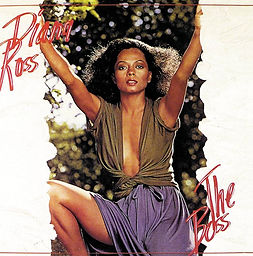
I love 1979. Some of my favorite songs by folks like Sylvester, Donna Summer, Michael Jackson, and Sister Sledge hit the charts that year. Even white folks were cooking—Joy Division, Gary Numan, The Cure, and Human League were all forging new sonic terrain, lacing electronic elements into their music that would go on to define the sound of the ‘80s.
But before the synths fully took over, disco was still in its imperial phase—and everybody wanted a piece of the pie. Even Ice Queen Diana Ross. She’d already scored a near-classic disco smash with 1976’s “Love Hangover,” but when that hit faded, so did her commercial shine. For a while, it felt like Miss Ross could do no right. Her post-1976 output flopped with critics and audiences alike. It was Murphy’s Law on wax.
Then came "The Boss".
While it didn’t officially fish her career out of the toilet, "The Boss" did reintroduce us to the spry and confident Ross we’d been waiting so long to hear. Now, Diana has never been a powerhouse vocalist in the vein of Chaka or Patti—but on this 1979 album, she sure tries her damnedest to hold her own alongside those screaming divas. And shocker: she mostly pulls it off.
Truthfully, I’d always avoided Ross’ solo material because I couldn’t stand her voice. That pussycat-with-a-sinus-infection tone—so "Soft Kitty, Sleepy Kitty"—drove me up a wall. Hated it. But on "The Boss", something shifted. She shook herself free of the coy crooning and actually sang. Like, really sang. She attacks the album’s mid-tempo and disco tracks with what I can only call focused ferocity—keeping in mind her vocal limitations, of course.
“No One Gets the Prize,” “It’s My House,” and the title track are absolute gems. But for me, the crown jewel is “Once in the Morning,” especially the final two minutes where Diana lets her voice soar as the song fades out. I don’t need to hear another note from her to declare that performance the most dazzling and satisfying vocal of her long-ass career.
Despite the gold certification, "The Boss" underperformed commercially—and not because of the music. The real saboteur? Motown. The label barely promoted the album, likely due to the ongoing behind-the-scenes drama between Diana and Berry Gordy. Their relationship, both personal and professional, had soured. By this time, she’d scored some major wins—TV specials, hit singles, even an Oscar-nominated film role—but a lot of her lasting reverence still stemmed from her Supremes days. None of her solo studio albums had gone #1, and none were selling Streisand-level numbers.
And yet… "The Boss" should’ve been huge. At least two tracks had the potential to top the charts and pull Diana out of her post-"Mahogany" slump. But Gordy, still salty that Diana had dared to step out on him (allegedly with the long-tongued one from KISS and Eddie Kendrick), let his ego get in the way. Diana, of course, would have the last laugh by dropping her biggest album a year later—her Motown swan song—before inking the most lucrative record deal in history with MCA.That’s all fine and dandy. But for me, her greatest musical achievement will always be this 1979 album.
P.S. Diana Ross turned me gay.
As a small honey chile, I could not stop staring at that album cover. Her flawless face, made up to perfection. That cleavage-baring top. Her toffee-toned skin glowing like a modern-day Nefertiti. And those long, wind-blown tresses cascading past her shoulders—pure glamour. (Inconclusive evidence I wasn’t gay yet: I had no clue that hair had been yanked off a poor Filipina’s head and sewn onto Diana’s.)
Ross was our Black regal beagle—a high priestess of fabulosity—whose image leapt off that jacket, gently took my little boy hand, and whispered in my ear: You, too, can be this fabulous—if you really apply yourself.
That record cover allowed me to embrace fabulosity and gayness. Because let’s face it: straight boys are far too clumsy and corny to ever be truly glam. Like Diana.
And no, this isn’t the first time Diana did this. I’m pretty sure she turned Luther gay, too.
66
Rufus featuring Chaka Khan
"Rufus featuring Chaka Khan"
1975

Chaka Khan was—and still is—a vocal powerhouse. But even powerhouses need a solid foundation to truly shine, and this Rufus featuring Chaka Khan self-titled debut solo album sometimes leaves her grasping for magic that isn’t quite there.
Chaka was known for recording her vocals quickly—one or two takes, in and out—and while that can sometimes yield electrifying results, on this record, the rushed approach is a bit too evident. Her vocals on tracks like “Fool’s Paradise” and “Dance With Me” feel more strained than spirited, like she’s pushing hard to elevate songs that just aren’t worth the effort.
The songwriting here ranges from fair to middling, which meant the heavy lifting fell squarely on Chaka’s shoulders. And while she does inject her signature fire into otherwise ho-hum grooves like “Have A Good Time” and “Fool’s Paradise,” even her powerhouse wails can’t fully mask the thinness of some of the material.
That said, there are standouts. “Sweet Thing,” reportedly written in just ten minutes, is pure magic—and one of Rufus’s most enduring classics. Chaka’s delivery is sublime, balancing vulnerability with strength in a way only she can. “Ooh I Like Your Loving” and “Circles” are also solid entries, and “Little Boy Blue” offers a glimpse of the emotional depth she’d tap into more fully on later albums.
The context behind the album matters. By this point, Chaka’s relationship with Rufus was famously fraught. She was difficult to work with, moody, and notoriously uninvolved in production or rehearsals. A real Lemony Snicket. On top of that, she was a young single mom, juggling motherhood with the demands of constant touring. When it came time to record, there was little room for long songwriting sessions or meticulous vocal retakes—Chaka wanted to get in and get out. And that reality shows in the album’s unevenness.
Still, there’s no denying Khan’s charisma. Even when the material underwhelms, she never does. Her voice cuts through every groove with swagger, sensuality, and soul. While Rufus featuring Chaka Khan went gold and delivered some key highlights, it ultimately falls short of the magic the group conjured on 1974’s "Rufusized." Perhaps sensing this, Rufus and Chaka made the bold (and rare) decision not to rush out another album the next year. Instead, they took two full years to refine their next project—focusing on arrangements, musicianship, and production with renewed intensity.
The result? An absolute classic. But we’ll get to that later in the countdown.
65
Luther Vandross
"Never Too Much"
1981

Life is a cabaret, ole chum! Luther supposedly had something to prove—though you’d never know it listening to his debut. After finagling a Stevie Wonder–style contract that let him produce himself, he financed his demos, bought back the masters of his two earlier albums (released under the name Luther), and entered the game with quite a bit of clout, thanks to glowing endorsements from superstars like Roberta Flack, Nile Rodgers, and David Bowie.
But there’s no sense of pressure or nerves anywhere on "Never Too Much"—especially not on its spectacular title track, which sounds as cool and refreshing as roller skating through the sprays of an open hydrant on a muggy day in The Bronx. Luther was from The Bronx, but you get the feeling he spent a lot of time in Manhattan too—Harlem’s Apollo Theater, the Broadway stages, the cabaret circuit. You can feel those influences all over this record, which seamlessly blends old-school soul sensibilities with a few sly theatrical flourishes—particularly on his definitive reading of Dionne Warwick’s “A House Is Not a Home.” That song is the album’s money shot—an emotional showstopper that unfolds like a one-man play in three acts. And it’s brilliant.
At the time, Luther was already a force in disco, having sung lead or background on dance classics by Bionic Boogie, Change, Chaka Khan, Chic, and more. But for his official debut as a solo artist, he wisely left the pulsing club beats behind. Instead, he opted for a Motown-adjacent sixties soul feel (“Sugar and Spice”), herky-jerky funk (“Don’t You Know That”), and bass-driven post-disco workouts like “She’s a Super Lady” and “I’ve Been Working,” thanks in part to axe man extraordinaire Marcus Miller.
There’s little point in rehashing what we already know about the man with a voice as warm and toasty as a cup of hot cocoa (with marshmallows) on a chilly night in—where else?—The Bronx. Luther’s magic lay in his unhurried delivery. His vocals glowed with a kind of sunshine, like he was smiling the entire time. There was even a bit of playful cheesiness in his lyrics—like when he croons about “riding the winds of a hurricane” back into his lover’s arms—that gave his music a kind of innocence. He sounded like the smooth, charming guy from around the way.
(Of course, we’d learn much later that behind that aw-shucks glow was a ruthless perfectionist and studio tyrant. He could reportedly be a diva from the depths of hell—but damn if the results didn’t justify it.)
Luther rarely missed because he worked a formula that didn’t feel formulaic. He carved out a space in soul music that softened the wildman heat of Teddy Pendergrass, smoothed out the rough edges of Marvin Gaye, and added extra froth to the creaminess of Smokey Robinson. And always—always—a sprinkle of Broadway drama. “A House Is Not a Home” was practically made for the Great White Way, but Luther somehow managed to keep it from going fully over the top. It was a master stroke that would define the rest of his illustrious career.
"Never Too Much" kicked off a run that was nothing short of historic: seven straight No. 1 R&B albums (eight total), nearly every one of his 13 studio albums landing in the Top 5, and even his greatest hits and Christmas collections cracking the Top 2.
It all started right here—with a big heart, a bigger voice, and a debut that sounded like a hug from someone who really gets you. Luther, we never got too much of you.
64
Anita Baker
"Giving You The Best That I Got"
1988

Don’t you just hate it when your BFF—your home slice, your main dude—falls head over heels for someone, and suddenly you’re left sitting there, helplessly watching as this new romance shifts the entire dynamic of your once-solid friendship? That happened to me and my friend Tristan in college. He met this girl—sweet on the outside, nutty as a fruitcake underneath—and slowly but surely, we watched her consume his world. He couldn’t see how being with her was changing him, but the rest of us could.
That’s what "Giving You the Best That I Got" felt like. Between the release of "Rapture" and this, her third album, Anita Baker fell in love—deeply, openly, maybe even a little recklessly—and her fans, like me, could tell. She was still great, still Anita, but she seemed less focused, as if her creative energy was being redirected elsewhere. The music was still top-notch, but some of the urgency—the fire—had cooled.
Now let’s be clear: "Giving You" is a very good album. Like "Rapture", it's very streamlined with no need to skip a single track. But where "Rapture" felt rawer, more organic and emotionally driven, "Giving You" leans into melodic chord structures, big, juicy hooks, and a steadier, more polished sound. It’s cohesive and smooth, but less visceral.
Some fans were caught off guard by the bossa nova-ish rhythm of “Good Enough”—I know I was. It took time to realize that this laid-back groove was actually perfect for Anita’s smoky soprano and her signature phrasing, which always seems to stretch every syllable to the edge of its life.
The strength of this album lies in its evenness. It’s hard to pick a standout among “Lead Me Into Love,” “Good Love,” “Rules,” and “Just Because”—not because they’re forgettable, but because they’re all equally solid. But maybe that’s part of the problem. Nothing knocks you off your feet like “You Bring Me Joy” or “Been So Long.” The songs here satisfy rather than surprise.
Like Tristan—who remained a good friend, just not as present—Anita still delivered the goods. But you can feel where her attention went. She gave what was necessary to keep her fans happy, but the best that she got? That went to her man.
And honestly, that’s not a bad thing. Sharon Bryant had already advised us that when love calls, you'd better answer. But let’s tell the truth: this album is less a love letter to us and more a diary entry from someone deeply invested in someone else. Beautiful? Yes. Relatable? Absolutely. But somewhere deep inside, you can’t help but feel like Anita was saving a little bit more for Walter than she was for us, her diehard fans. A big mistake on your part, 'Nita, because Walter is now long gone and we're still here for you...and we ain't goin' nowhere!
63
Prince & the Revolution
"Parade"
1986

Very rarely does an album cover so much ground in so little time without stopping to catch its breath. And I’m not talking about the Gloria Gaynor/Donna Summer-style BPM segues that keep the groove going. I mean actual musical terrain—the Beatlesque whimsy of “Christopher Tracy’s Parade,” the stripped-down funk of “New Position,” the baroque soul of “Under the Cherry Moon,” the cinematic instrumental sweep of “Venus de Milo,” and the chic, French-café charm of “Girls and Boys”—all somehow living harmoniously on the same record. That this dazzling, disorienting swirl feels completely coherent is a miracle in itself. Credit Prince, of course, but also the brilliant sequencing and mixing that turn what could’ve been a mess into a masterpiece.
Side two slows the tempo but never lets up on quality, housing two of Prince’s most distinct and contrasting songs of the ’80s: the lush, expansive “Mountains” and the skeletal, twitchy “Kiss.” These two tracks, more than any others, highlight the indispensable and often uncredited contributions of Wendy & Lisa (on “Mountains”) and the band Mazarati (on “Kiss”). “Parade” closes with “Sometimes It Snows in April,” a song that didn’t fully reveal itself until Prince’s death. With lyrics about death, rebirth, and bittersweet memory, it now reads like a quiet, accidental epitaph.
Ironically, "Parade" outshines the film ("Under the Cherry Moon") it was designed to support. The album plays like a whirlwind art installation—part cabaret, part funk revue, part French New Wave soundtrack. Only years later did we learn how much Wendy & Lisa influenced the dreamy, rococo textures of the album’s best moments. Their presence deepens the palette, coloring Prince’s compositions with complex harmonies and emotional nuance.
What other ’80s album (aside from maybe something by Frank Zappa) moves so quickly through so many genres without feeling disjointed? One moment you’re sipping coffee at a French café, the next you’re sweating it out on a Detroit dance floor. That’s the magic trick Prince pulls off here. "Parade" may be the natural evolution of "Around the World in a Day", but it’s also so much more than that—it’s tighter, bolder, braver and, most importantly, doesn't stink.
Unsurprisingly, "Parade" and its equally ambitious follow-up, "Sign o’ the Times", were better received in Europe, where audiences were more attuned to experimentation and theatricality. American listeners, still drunk on the rock-drama of "Purple Rain", didn’t know what to make of all the strings and surrealism. Their loss. This is one of Prince’s finest works with The Revolution—an album that balances wit, sensuality, sophistication, and strangeness in a way no one else could. It’s the sound of an artist at the absolute height of his inventiveness, throwing glitter at the rules and watching it all fall beautifully out of order.
62
Earth, Wind & Fire
"Gratitude"
1975

This is the only live album featured in this entire tome—and for good reason. I generally don’t go in for live albums. Too often, they tinker with the magic of the originals, dragging out arrangements or indulging in crowd-pleasing tricks that distract more than they elevate. But "Gratitude" is different. It had a distinct advantage with me: I was four or five years old when I first heard it, and it was my earliest substantial exposure to Earth, Wind & Fire’s music. This double album was a permanent fixture in our home, and for me, the live versions of songs like “Devotion” and “Reasons” were the real versions. To this day, the studio cut of “Devotion” feels strangely subdued next to Philip Bailey’s live performance, which is nothing short of transcendent. Bailey is the star of "Gratitude", floating over the band’s tight arrangements with falsetto high notes that kiss the heavens square on the mouth.
And while the live material takes up most of the album, the five studio tracks that close Gratitude are just as essential. The title track is a meditative groove laced with serenity. Skip Scarborough’s “Can’t Hide Love” remains one of the most gorgeously constructed soul ballads ever written. And “Sunshine”? That’s one of Earth, Wind & Fire’s finest compositions—radiant, hopeful, perfectly balanced between gospel uplift and jazz sophistication.
I heard someone say on TV recently that great music only gets better with time. That rings true here. "Gratitude" hasn’t just aged well—it has deepened. The joy, reverence, and musicianship packed into these grooves sound even more vital now than they did then. And it’s about time Maurice White got his proper due. We talk about Quincy, we praise Stevie, we rightly deify Prince and Marvin—but Maurice White belongs in that same upper tier. In the ’70s, going gold was a major accomplishment for any Black artist. Earth, Wind & Fire were going multi-platinum routinely. "Gratitude" went triple platinum, which was—and still is—an astonishing feat for a live album, let alone one by a Black band. Kudos!
61
Kashif
"Kashif"
1983

Ever watch an award show where some artist grabs the mic, hoists the trophy, and immediately thanks God for blessing them? Or a sports game where, after a touchdown or a goal, a player points skyward in reverence, as if Jesus personally sprinkled them with elite athleticism? It can feel… unfair, right? Like God’s up there cherry-picking who gets divine favor, while the rest of us are left to grind three times as hard for a fraction of the recognition. If that feels harsh, imagine how it must have been for Kashif—one of the most innovative, forward-thinking musicians and quietly masterful producers in R&B. When he died of a massive heart attack in September 2016, the world barely flinched. Aside from a Wikipedia update and a few tribute posts, the axis of pop culture kept spinning as if Kashif had never existed.
And that’s tragic. Because not only was Kashif an extraordinary producer, he was the architect behind one of the most overlooked and most criminally underrated debut albums in all of R&B. "Kashif" (1983) was a game-changer. Half the songs are bona fide Quiet Storm classics before Quiet Storm had fully crystallized as a genre. Tracks like “Stone Love,” “Help Yourself to My Love,” and “Say Something Love” have aged like the finest vintage wine—but only “I Just Gotta Have You (Lover Turn Me On)” cracked the R&B Top 20 (peaking at #5). Why didn’t this album explode?
It’s not like Kashif was an industry unknown. By ’83, he had already produced stone-cold hits for Evelyn “Champagne” King (“I’m in Love”), Melba Moore (“Take My Love”), and Howard Johnson (“So Fine”). And let’s not pretend that Arista Records was too preoccupied with other Black artists at the time—Aretha and Dionne weren’t exactly dominating the charts, and Whitney Houston’s debut was still two years away.
So what gives? Maybe it’s simple: God didn’t set aside any special blessings for Kashif. He didn’t get the magic wand treatment. Instead, he had to work—brilliantly, consistently, and without fanfare. He had to make art without the halo, the hype, or the Grammy. "Kashif" is one of the most ambitious, lush, and sonically progressive albums of 1983, and its relative commercial failure is a disheartening reminder of how often genius goes unacknowledged when it’s not wrapped in divine narrative or marketing dollars.
It’s easy to celebrate the icons we’re told to worship. It’s harder to pay tribute to the ones who paved the way and never got the flowers. Kashif never got to point both index fingers toward the sky in a Grammy acceptance speech. But maybe that’s exactly why this album still feels so pure, so righteous, and so worthy of rediscovery. It was never about the spotlight—it was about the music. And the music is eternal.
60
Dawn Richard
"Blackheart"
2015

I’m not even gonna front—for the longest time, I thought Danity Kane was the title of a Janet Jackson album. As a permanent resident of Colombia since 2000 and a non-participant in the social media matrix, I missed out on most of the reality TV hysteria that swept through Black culture in the 2000s, save for "Flavor of Love" and "I Love New York", which were entertaining as hell. Beyond the "Chappelle’s Show" spoof, I hadn’t really heard of the "Making the Band" series. And even if I had caught a Danity Kane track back then, I would never have connected it to that Puffy-fueled spectacle.
So when I stumbled across Dawn Richard in 2023, I approached her music with no baggage, no bias. I didn’t associate her with girl groups or reality show antics. I just pressed play on "Blackheart"—and what I heard stopped me cold.
Though technically her third studio album, "Blackheart", like her previous work, was partially self-financed—crowdfunded on Kickstarter, supported by whatever coin she scraped together from the Danity Kane reunion tour and whatever loose change she fished out of the couch cushions. But what she produced doesn’t sound like something cobbled together. It’s a fully realized, atmospheric, genre-blurring record. It’s cold and futuristic in places, tender and human in others. Above all, it’s an album that sounds intentional, bold, and brilliant.
It’s impossible not to compare "Blackheart" to Beyoncé’s "Beyoncé" (2013) or the ambient, moody soundscapes of artists like H.E.R. or Billie Eilish. Beyoncé’s self-titled album—and "Renaissance", for that matter—are both creative high points in her discography. But there is nothing on either that dares to venture as far out into space as "Blackheart". This is a concept album in the truest sense, and like "Paul’s Boutique" or "Sign O’ the Times", breaking it down track by track would be missing the point. (Okay, spoiler: The "Blackheart" tracks “Blow” and “Billie Jean” are not remakes.)
"Blackheart" is like a mysterious package left on your doorstep by the coolest alien on Jupiter. I’m sure there’s a conceptual through-line, but frankly, I don’t care—I’m just here for the production, the turns, the unexpected texture of it all. Yes, Richard’s vocals are run through Auto-Tune, but on a record this otherworldly, it works. Her voice becomes an instrument—processed, modulated, floating in and out of digital mist. It’s all part of the aesthetic.
After falling in love with this album, I went back and listened to the rest of her “heart” trilogy—"Goldenheart" (2013), and "RedemptionHeart" (2016)—and was floored by how consistently excellent they are. This is the direction Black music should have gone. Parliament-Funkadelic and The System cracked the door. Janelle Monáe and Kaytranada pushed it open. And Dawn Richard is running through it like the anchor leg in a cosmic relay race.
I see she’s kept releasing critically acclaimed projects as recently as 2022. But because I’m not on Black Twitter or NiggaTok, I genuinely don’t know if people are talking about her, or if she still has to panhandle for studio time on an L.A. offramp. If she isn’t financially sustaining herself off downloads and performances by now, then something is deeply wrong with this goddamn world.
It also seems like her stint on Making the Band and her association with Bad Boy has worked against her. That kind of mainstream exposure can sometimes vacuum the legitimacy out of your artistic ambitions. But Dawn Richard is no earthbound pop-tart like Nicole Scherzinger or Scary Spice. She didn’t take the Booty-Out-Titties-First route to musical success. Like Missy Elliott before her, she was brave enough to go left—making experimental, genre-blurring, deeply personal music that deserves far more recognition.
If you’re out there reading this, Dawn: Keep doing yo' thing, baby girl. Some of us see you. Some of us hear you. And we’re listening.
100
Kaytranada
"99.9%"
2016

I’m not sure when Canada became a sovereign republic, but ever since, it’s mostly just sat on America’s head like a big, boring wig. Besides Joni Mitchell and Michael J. Fox, Canada’s cultural exports have often been more cringe than credible—think Michael Bublé, Cree Summer, or Loverboy. But in the late ’90s and 2000s, something shifted. Canada started redeeming itself with actual talent like Drake, Deborah Cox , and Nelly Furtado… okay, maybe not Nelly.
Leading that renaissance is Kaytranada, the Haitian-Canadian producer who dropped one of the most enjoyable Black pop albums of the 2010s with “99.9%” in 2016. At nearly 60 minutes long and featuring Anderson .Paak, Vic Mensa, Craig David, Syd tha Kid and more, the album is a genre-hopping, no-skips-needed joyride. Kaytranada plays with house, funk, hip-hop, and R&B like he’s jumping through a sonic hopscotch board—effortlessly and joyfully.
There’s a thread of solitude running through these tracks, a kind of moody introspection that’s common in electronic music—but Kaytranada manages to make it shimmer. Every track is dialed in to the right length, energy, and vibe. Some have rapping, some have vocals, some are instrumental, and somehow it all fits.
Dear Canada: More Kaytranada, please. And while you’re at it, come get yo' boy Justin Bieber.
99
Freddie Jackson
"Do Me Again"
1993

“Do Me Again” was Freddie Jackson’s fourth and final number one album—and, for me, a much-needed rebound from his uninspired 1988 release "Don’t Let Love Slip Away". By this point in his career, Freddie had been dancing dangerously close to redundancy, clinging to the same velvety ballad formula that made him a star but left him sounding increasingly stale. That ’88 album felt like someone just erased his vocals from his earlier hits and had him re-sing new lyrics over the same ole tracks.
Meanwhile, a pack of bedroom crooners—Glenn Jones, Phil Perry, Eugene Wilde—were gunning for Luther’s Pillow Talk Crown, just like Freddie. The air was crowded, and Freddie’s brand of Cognac soul was beginning to sound like background music at a neighborhood Applebee's.
But "Do Me Again" came along and showed that Freddie still had some signs of life. The album didn’t reinvent Freddie, but it introduced just enough variation in production and tone to keep things interesting. Yes, there are stumbles (“It Takes Two” and “I Can’t Take It” don’t stick the landing), but this time around, Freddie actually sounds like he’s enjoying himself and not just focusing on melisma-ing the phuck out of the room.
Standouts like “Love Me Down,” “Don’t It Feel Good,” the title track, and especially “Main Course” show a Freddie who’s a little looser, more playful, and finally allowing his vocals to serve the songs—not overpower them. This isn’t his most iconic album, but track for track, "Do Me Again" might be his most satisfying.
Of course, the clock was ticking. This was the last moment before New Jack Swing and the Let-Me-Pop-Yo'-Coochie era of Jodeci, R. Kelly, and Blackstreet washed Freddie (and most of the secondary crooners) out to sea. But for a brief moment in 1990, he still had enough heat to keep the grown folks dancing slow at Black Night at Bennigan's.
98
Sly & the Family Stone
"Fresh"
1973

Between 1968 and 1973, Sly and the Family Stone released six albums, and four of them are among the most consequential recordings in all of popular music. Songs like “Stand!,” “Everyday People,” and stand-alone singles like “Thank You (Falettinme Be Mice Elf Agin)” are pure genius. But for me, “Family Affair” stands as Sly’s most definitive statement—his most iconic and groundbreaking song. It changed music forever. There would be no Prince without Sly.
With "Fresh", Sly tries to recapture the stripped-down brilliance of “Family Affair,” leaning hard into the skeletal rhythms of the Maestro Rhythm King MRK-2 drum machine and a looser, more improvisational feel. Lightning may not strike twice, but tracks like “If You Want Me to Stay,” “Frisky,” and “If It Were Left Up to Me” are funky enough to keep things moving.
Still, not every track lands. Songs like “Thankful N’ Thoughtful” sound like they’re cut from the same cloth as the highlights but fail to stand apart. And while I’m still not sure what to make of the Doris Day remake “Qué Será Será,” "Fresh" ultimately feels like a creative recalibration—a tighter, more focused follow-up to the murky and divisive "There’s a Riot Goin’ On".
For newcomers, your best entry point is the excellent 2004 Anthology collection, but for those already initiated, "Fresh" is a fascinating, if uneven, chapter in the story of one of pop’s true innovators. May Sly rest in everlasting power.
97
Isaac Hayes
"Joy"
1973

Do you like it thick or do you like it long? On "Joy", Isaac Hayes gives you generous doses of both, so you don’t have to choose. With 1969’s "Hot Buttered Soul", Hayes flipped the script on Black music with psychedelic, masterfully orchestrated soul-funk that redefined what soul could be—laying the groundwork for Marvin, Stevie, and Curtis to follow. By 1973, he had moved from being Stax Records’ star songwriter (alongside David Porter) to one of the biggest icons in soul music. His previous four albums all hit number one, each more experimental than the last.
"Joy", however, plays things a bit straighter. Gone are the extended covers and lush orchestrations—this time, Hayes leans into more direct, unfussy R&B. The nearly 16-minute title track is classic Isaac: seductive, slow-burning, and heavy on vibe. But elsewhere, signs of fatigue start to show. After dropping seven albums in under five years, Hayes' robust baritone sounds particularly worn on “A Man Will Be a Man” and “The Feeling Keeps on Coming.” “I Love You That’s All” is more a kooky, meandering spoken-word skit than an actual song.
That said, “I’m Gonna Make It (Without You)” is a standout. It clocks in at over 11 minutes but earns every second, thanks largely to the soulful backup singers who keep it from drifting too far into syrupy territory.
"Joy" might not hit the heights of "Hot Buttered Soul" or "Black Moses", but for those nights that require a heapin' helpin' of slow jams and candlelight, this album more than holds its own. If mekkin’ luv is on your agenda, this one’ll help you get the job done.
96
Sharon Jones & the Dap-Kings
"Give The People What They Want"
2014

Sharon Jones had been diagnosed with pancreatic cancer a year before "Give the People What They Want" was released, but you’d never know it from the way the music slaps. This album is bursting with life—Jones sounds vibrant, playful, and as powerful as ever, especially on tracks like the giddy “Stranger to My Happiness.”
While it may not include a showstopper like “How Do I Let a Good Man Down,” this is one of the strongest and most consistent sets Sharon and the Dap-Kings ever put down. “Now I See,” a song about betrayal, still radiates with a joyful defiance that Jones was known for. The James Brown influence remains obvious, but there’s also plenty of Gladys Knight in Jones’ delivery—soulful, grounded, and emotionally sharp. There is no skipping forward required the minute you program "Give the People What They Want" into your phone, something you probably can't say about 99% of the albums that came out in 2014.
I didn’t learn about Jones’ cancer diagnosis until after I’d heard the album, and unlike Bowie’s "Blackstar", which hits you like a epitaph even if you didn't know about Bowie's terminal condition beforehand, "Give the People" doesn’t sound like a swan song. It’s filled with fire, joy, and optimism. In hindsight, that resilience makes "Give the People What They Want" even more powerful—and for me, it stands as one of the best records in her catalog.
95
Van Hunt
"The Fun Rises, The Fun Sets"
2015

I grew up around white people and learned a lot from them. One thing that always unsettled me—even back then—was their uncanny ability to create and live in an alternate universe. And it often goes unchallenged. This was long before the QAnon circus or the “it happened/didn’t happen” chaos of January 6. We’ve seen this before—in Holocaust denial, in school textbooks that rebrand chattel slavery as “imported labor” and so on and so forth.
White folks get it wrong, though. As with so many other things, they use alternate realities as a vehicle for hate and delusion rather than to dream up utopias—like world peace or, I don’t know, multiple orgasms for men. Meanwhile, Van Hunt is out here crafting his own alternative universe—one built on music, ideas, and radical imagination. His is a world where funk, new wave, rock, punk, soul, and R&B all live harmoniously on the same block creating an interesting musical hybrid unapologetically delivered by a Black man from Ohio.
In this universe, Frank Zappa, Prince, Sly Stone, (early) Joe Jackson, Lenny Kravitz, and even a dash of Missing Persons all sit around the same dinner table, making weird, beautiful noise together. Van Hunt is the observer, the narrator, the shape-shifter. He sings about love, gender, consumerism, misfits, and sex with a sly smirk and an eyebrow raised.
Truthfully, Black listeners often haven’t been given the opportunity—or permission—to engage with music this complex or so way out in left field. And that’s not on us. The record industry made sure that what we heard was either party music or baby-making music. Anything outside of those two boxes were labeled “not commercially viable for the Blacks.” The industry didn’t grow by trusting consumer free will—it grew by repeating the same curated playlists until we all bought in.
Van Hunt has never made those playlists, and "The Fun Rises, The Fun Sets" is exactly why. It’s whimsical, wacky, fearless, genreless, and messy—in the best way. It demands attention. It resists categorization. It’s not for everyone, but it should be. Because what Van Hunt gives us is freedom—musical, cultural, and imaginative. But you’ve got to do the work to live in his universe. And most people simply won’t invest the time and effort to do so. Especially "the Blacks".
94
Cameo
"Single Life"
1985

“I don’t wanna get too serious / I just like having fun.”
On the surface, that lyric may seem tone-deaf, especially at a time when the AIDS epidemic was ravaging minority communities and a storm of conservatism loomed over pop culture. But in many ways, it reflects a deeper, long-standing reluctance within the Black community to confront anything that might challenge the rigid machismo we cling to—an emotional armor that’s kept too many of us stuck in the Mental Stone Age.
Larry Blackmon wasn’t exactly leading a liberation movement, but he was definitely doing something. By the time "Single Life" dropped, he was beginning to explore his “dick out” era—styling himself in a red leather codpiece, demanding attention, and daring you to question what you were looking at. This was post-"She’s Strange", and Cameo had fully transitioned into a synth-funk juggernaut on the Black charts. But now, with "Single Life", they added more humor, more swagger, and a sharper sense of their own absurdity.
In the music video for the title track, Blackmon wears a wedding dress before ripping it off to reveal leather gear and his signature flat-top, balancing camp and cockiness in a way that—whether intentional or not—pushed against traditional ideas of masculinity. He was never too far from queer aesthetics, but like many of his contemporaries, he wielded those aesthetics without ever confronting them directly. This was the ‘80s, after all. Everyone was a little gay--even the niggaz--but no one was talking about it like, say, Prince was.
Musically, "Single Life" is a strong, genre-blurring affair. Jazz, reggae, funk, soul, and electro all show up to the party. It might be Cameo’s most cohesive and confident album, actually. Tracks like “Attack Me With Your Love” and “Single Life” are funky, and laced with enough innuendo to make a church lady blush. And let’s be honest: this is probably the only time anyone in the history of recorded music has begged to be “bushwhacked” with someone’s love. You can’t make that up.
If "She’s Strange" was the pivot, "Single Life" was the arrival—Cameo fully embracing their weirdness, sexuality, and sense of play while still delivering stone-cold funk. Cameo is one of my very favorite bands and back in the 80s, no one else was doing it quite like them and no one else ever would.
93
The Internet
"Ego Death"
2015

From Joan Armatrading to Meshell Ndegeocello to Brittany Howard and on down the line, I’ve always had a soft place in my heart for Black lesbian artists. Unabashedly sentimental and strikingly frank, they tend to carve out a unique niche—often by deliberately sidestepping musical and cultural trends rather than chasing them. "Ego Death", The Internet’s third and highest-charting album, fits squarely into that tradition.
At the center is Syd (formerly Sydney) Bennett, whose creamy, effortlessly smooth vocals give the album its emotional core. Listening to "Ego Death" feels like cruising down the Pacific Coast Highway with the top down on a warm day—breezy, easy, and sun-soaked. The lyrics are sometimes brazen and narcissistic, but never come off as hostile. They’re always softened by the unmistakable hint of vulnerability and honest insecurity that Syd weaves into each track.
While Syd handles most of the vocals, "Ego Death" is clearly a collective effort. The musical contributions from the band are precise and thoughtful, especially from standout bassist, co-producer and Funny Black galore Steve Lacy, whose fingerprints are all over the record’s groove-heavy feel. Kaytranada—the ever-inventive Haitian-Canadian—drops in to produce the album’s standout track, “Girl,” a silky slow-burn that glides along Lacy’s deep bass line like a hovercraft over a lake of honey.
"Ego Death" feels like the kind of record I once hoped Lucy Pearl might make: loose but airtight, spontaneous yet methodical, sexy without trying too hard. That kind of balance is only achieved by serious musicians who trust each other—and it shows. There’s nothing manufactured about "Ego Death". It just flows from start to satisfying finish.
92
Donna Summer
"Once Upon A Time"
1977

This is where the legend of Donna Summer really starts to come together. By this point, she had shed much of the sex-kitten purr that defined her earlier work and began to plant herself firmly at the center of dance music, not merely as a seductive figure but as a fully commanding vocalist. Her singing on "Once Upon a Time" is more forceful, more expressive, and layered with a sense of purpose that elevates the entire project higher than previous records.
A conceptual double album sung from the perspective of Cinderella, "Once Upon a Time" finds Donna diving into narrative songwriting with surprising depth and confidence. But it’s Side 2—the electronic disco suite—that feels like the beating heart of the album. “Now I Need You” and "Midnight Shift" aren’t just standouts—they’re career highlights. Cold and creepy, yet soft and vulnerable, these two songs in particular remain two of my all-time favorite Donna deep cuts.
As with her earlier albums, the songs are intricately mixed together, flowing seamlessly from one to the next in a continuous beat that make the album feel like a living, breathing performance rather than a collection of tracks. The storytelling, the production (once again courtesy of Giorgio Moroder and Pete Bellotte), and Donna’s ascending vocal power all coalesce here in a way that makes "Once Upon a Time" a pivotal and sometimes underrated cornerstone in her discography. It was also the first in three consecutive double-albums to hit number one on the Billboard Hot 100, and a sign of much bigger things to come for Donna.
91
Karyn White
"Make Him Do Right"
1994

You’ve been making half-court shots, tomahawk dunks, and 360-degree turnaround layups all afternoon. You’ve been nothing less than unstoppable. Dripping with sweat and out of breath, you turn around—only to realize no one saw it. Not a single soul. You didn’t even set up your iPhone to document your Allen Iverson-inspired greatness. Just like that, your brilliance disappears into the ether like a tree falling in an empty forest. That’s exactly how I feel about "Make Him Do Right", Karyn White’s most overlooked and misunderstood album.
The first mistake was leading with “Hungah”—the orthographically challenged and sonically underwhelming album opener. It felt like a discount version of Janet Jackson’s “That’s the Way Love Goes” and set the tone for an album that, at first listen, felt patchy and directionless. The first two-thirds of the record often have you hovering near the fast-forward button, which is a shame, because the final third is where the gold nuggets are buried. And in hindsight, that’s where we should’ve started all along.
Beginning with “Simple Pleasures,” Jam & Lewis finally stop the genre gymnastics and lock into what Karyn had quietly become: a grown-ass A/C balladeer. Despite debuting with uptempo smashes like “The Way You Love Me” and “Facts of Love,” the long-term impact of “Superwoman” and the lukewarm reception of her dance-heavy sophomore album had clearly repositioned Karyn as a midtempo and ballad artist. The final four songs here are among the strongest in her career. Karyn’s voice has never been about vocal pyrotechnics, but she has an emotive clarity that makes tracks like “Thinkin’ ’Bout Love” and “One Minute” hit just right—sincere, tender, and believable.
But getting to those tracks means wading through some missteps. Attempts to recreate the empowering tone of “Superwoman” backfire on “I’d Rather Be Alone” and the title track “Make Him Do Right”—both missing the nuance and conviction of her earlier hit, and landing more like forced sequels than fresh statements.
Now let’s talk about the real crime: the fact that “Can I Stay with You” wasn’t the lead single. This Babyface-produced gem is a between-the-legs, triple-somersault jam—an elegant, yearning ballad that should’ve been a signature moment for Karyn. Instead, it was buried as the second single and peaked at only No. 10, partly due to the dud that was “Hungah.” “Here Comes the Pain Again” is another forgotten treasure—an emotional gut-punch that hit hard when I was younger and still gets to me today.
It’s frustrating that this album went mostly ignored, because despite its uneven front half, "Make Him Do Right" is Karyn White’s most solid and emotionally cohesive project. If you make it past the fluff and find your way to the back stretch, you’ll discover an album full of genuine feeling, understated craftsmanship, and some of the most quietly powerful songs in her catalog. Sometimes the best games don’t get televised—but that doesn’t make them any less legendary.
90
Maysa
"Maysa"
1995

Before striking out on her own, Maysa lent her smoky, velvety vocals to British jazz-fusion outfit Incognito, helping to define their sleek, soulful sound. With her 1995 self-titled solo debut, she stepped into the spotlight—and while it never got the recognition it deserved, the album is far from a misfire.
On paper, Maysa had the ingredients for success: contributions from powerhouse vocalists like Sharon Bryant, Angie Stone, and Siedah Garrett, with production by hitmakers Robbie Nevil and Barry Eastmond. Expectations were clearly high. But Maysa was signed to a fledgling label with a shoestring promotional budget, and as a result, the album never really had a fighting chance on the charts.
But commercial success and artistic value don’t always go hand in hand. Au contraire, mon frère. While the album does open with a few sluggish, uninspired R&B numbers that don’t quite match Maysa’s potential, things begin to shift around track six. That’s when the magic starts.
“J.F.S.” kicks off a remarkable back stretch that transforms the album into something memorable. From there, songs like “Alone at Last,” “Peace of Mind,” and the stunning “Rain Drops” show off Maysa’s ability to channel deep emotion with grace and subtlety. “Rain Drops,” in particular, is hauntingly beautiful—a melancholic masterpiece that’s brought real tears to my eyes on more than one occasion. The album ends on a high note with "Goodbye", the title sadly serving as a reference to Maysa's career expectations.
Though "Maysa" didn’t get the attention it warranted at the time, it stands as a quiet triumph of mood, melody, and vocal warmth. And happily, this debut was just the beginning. Maysa has continued releasing music well into the 2010s, with her 2015 album Back 2 Love even cracking the Top 10 on the R&B charts. She may not have had a blockbuster start, but she carved out a long, soulful career on her own terms.
Kudos, Maysa. You deserved more flowers then—but I'm giving them to you now.
89
Aretha Franklin
"Sparkle" (Original Soundtrack)
1976

After co-reigning with James Brown over the charts and Black entertainment since 1967, Aretha Franklin entered the 1970s on a high. She was at the peak of her powers—crossing over into pop, racking up R&B hits, and even conquering gospel with "Amazing Grace" in 1972, which became the biggest commercial success of her career.
But then… the wheels began to wobble.
Her 1973 release, "Hey Now Hey (The Other Side of the Sky)", was the booger bear of her stellar career, a disjointed, eccentric, and oddly forgettable affair. The ensuing years saw more misfires, and the Queen of Soul found herself uncharacteristically off balance—until "Sparkle". Teaming up with Curtis Mayfield, who wrote and produced the entire soundtrack, proved to be the adrenaline shot Aretha needed, even if she had to steal the project from her own sister to get it done.
Yes, some of the vocals on Sparkle carry a hint of urgency, maybe even desperation—as if she knew this was her shot at holding onto the crown and keeping punchy upstart Natalie Cole at bay—but overall, the album is a solid piece of work. Mayfield’s production is polished, and Aretha sounds energized, sexy and even giddy at times.
She’s playful and radiant on “Jump” (though, full disclosure: watching her perform this on Soul Train—her massive boobies very much out and about—can be a bit much), smooth and inviting on “Rock with Me,” and downright intoxicating on “Hooked on Your Love,” which is easily a standout. And of course, Aretha absolutely nails “Something He Can Feel,” reminding everyone, including Cole, that her throne wasn’t going to be as easy to steal as the "Sparkle" soundtrack was for her.
"Sparkle" would be Aretha’s last major hit album for nearly a decade, but it’s one of her strongest and most focused efforts from her later Atlantic years. With Mayfield in her corner and a renewed sense of purpose, Aretha delivered a comeback moment that still glows five decades years later.
(Not sure who gave En Vogue the advice to cover not one but two songs from "Sparkle" for their 1992 "Funky Divas" album, but it certainly wasn't given in their best interest. Yuck!)
88
Rahsaan Patterson
"After Hours"
2004

I discovered Rahsaan working in a small restaurant in Greenwich Village. Every month or so, a media company would send us a package of eight or ten CDs from mostly unknown artists to play in-store. Most of the discs were in the Deep Forest/Enya vein, but every now and then, they’d toss in a CD by a Black artist—perhaps for good measure. One of those was "Love in Stereo", Rahsaan Patterson’s excellent sophomore album. It was so good that it mysteriously went missing from the restaurant and somehow ended up in my CD changer in Brooklyn.
I absolutely loved that album, but in some ways, the 2004 follow-up "After Hours" was even more enjoyable—mostly because it’s more expansive and varied, if not inconsistent. The first five songs are about as good as Rahsaan would ever get in his career. He comes across as casual and confident, seemingly unbothered by the poor performance of his first two records or the acrimonious split with MCA.
The highlight for me is “I Always Find Myself,” which is absolutely irresistible with its knock-knock cowbell. (R&B music needs more cowbell!) Tracks like “So Hot” and “Burnin’” are tailor-made for kicking back with a Hennessy after closing time.
The two ballads that follow took me a bit more time to warm up to, and while the second half of the album doesn’t quite enchant as much as the first, there’s clear musical growth. “You Make Life So Good” is a stellar example—showing an evolution that Rahsaan’s new record label either couldn’t recognize or didn’t know how to promote.
Once again, the album went largely ignored, and from what I understand, wasn’t even properly released in the U.S. at first. Rahsaan Patterson’s career—and his excellent musical output—stand as a glaring example of how unfair the music industry can be when an artist chooses to forgo commercial trends and instead follows their creative instincts. Well, you keep doing you, Rah, and rest assured that I will continue to actually purchase your music instead of stealing it.
87
Chic
"C'est Chic"
1978

Chic became an early casualty of the disco backlash, and to this day, I still can’t understand why they were so rigidly pigeonholed into that genre. Sophisticated and immaculately produced, "C’est Chic" is, at its core, a pop album—through and through. I simply don’t hear the hallmarks of conventional disco: no relentless four-on-the-floor bass drum, no twittering hi-hats, no sweeping string arrangements like those that saturated the genre in the late ’70s.
What I do hear is some cutting, James Brown-inspired guitar strumming, masterful bass work, and layers of Luther Vandross vocals tucked beautifully into the background. “Le Freak” may have been their biggest hit—and one of the best-selling singles of all time—but tracks like “I Want Your Love” are top-tier soul music. And then there are ballads like “At Last (I Am Free),” which make a strong case that Chic were never just a disco outfit.
Sure, some of the music may have seemed pedestrian to mainstream (read: white) audiences—but that’s because these folks weren’t in on the joke. Chic was never meant to be taken too seriously. They were an homage to an elegant, aspirational era: women in furs and diamonds, men laying their coats over puddles to protect their dates’ shoes. The Ladies of Chic rarely belted or harmonized; their role was to set the mood—a lush backdrop that allowed Nile Rodgers and Bernard Edwards to showcase their incredible production chops.
Thankfully, Rodgers, Edwards, and drummer extraordinaire Tony Thompson went on to have success beyond the disco era. But despite the backlash, "C’est Chic" remains timeless. Songs like “Le Freak” aren’t going anywhere—they’ll be played at parties and on radios for decades to come. So take that Comiskey Park music nazis!
86
Stephanie Mills
"Stephanie"
1981

Stephanie Mills continued refining the foolproof formula she established with 1979’s "What ’Cha Gonna Do with My Lovin’". "Sweet Sensation" was an unmitigated R&B triumph, and its crown jewel—“Never Knew Love Like This Before”—earned Mills a Grammy and cemented her signature sound. But with 1981’s "Stephanie", things take a turn: the mood is darker, the songwriting more mature, and the disco remnants of her earlier work are mostly stripped away in favor of full-throttle soul.
Once again helmed by the powerhouse production duo of James Mtume and Reggie Lucas, "Stephanie" feels more focused and emotionally grounded than her previous two outings. The album’s core—the one-two-three punch of “Don’t Stop Doin’ What’cha Do,” “Top of My List,” and “I Believe in Love Songs”—is a masterclass in rich, radio-ready soul. These three tracks alone are worth the price of admission. I would be remiss to not mention the tenderness and warmth Luther Vandross' vocals add to "Love Songs" and "Night Games". The only real misstep is ironically its biggest hit: “Two Hearts,” a duet with Teddy Pendergrass that somehow lacks chemistry. Teddy sounds like he wandered into the studio by accident and decided to phone it in.
Still, "Stephanie" was strong enough to earn a Grammy nomination for Best R&B Vocal Performance, Female—only to lose to Aretha Franklin’s limp cover of Sam & Dave’s “Hold On, I’m Coming.” (Seriously? A single cover song beat a whole album? No wonder the category was finally retired in 2011.)
After "Stephanie", Mills entered a relatively quiet period on the charts before roaring back six years later with the triumphant "If I Were Your Woman". But this 1981 album stands as an underrated gem, a turning point that proved Stephanie wasn’t just chasing hits—she was shaping an artistic legacy.
85
Alexander O'Neal
"Alexander O'Neal"
1985

I remember seeing the videos for “Innocent” and “If You Were Here Tonight” and wondering why this Negro with the highly processed hair didn’t just drop a little Visine into those painfully red eyes. I already knew and liked Cherrelle—her presence on “Innocent” was also the start of a long-running collaboration between the George and Weezy of R&B. Alexander came across as a bit of a pimp—brash, smarmy, confident—which was the perfect foil to Cherrelle’s around-the-way-girl vulnerability. And the combination worked like a charm.
With Alexander O'Neal's debut, Jam & Lewis really started pulling everything together. Cherrelle’s debut had dropped the year before—a sassy, promising record that paved the way for her career-defining "High Priority" record. Alexander O’Neal picks up where that album left off, improves on it, and (mostly) shifts the focus away from Jam & Lewis’s signature drum programming and toward Alex’s very capable vocals.
The album only had seven tracks, but five of them were released as singles—“What’s Missing” climbing highest, peaking at No. 7. Still, each song hits a solid note, especially the absolutely sublime “If You Were Here Tonight,” which remains one of the greatest quiet storm ballads of the decade. (Didya know that the whole song only has one rhyme in it?)
Alexander O’Neal’s debut proved he wasn’t just a product of the production machine—he was a legit interpreter of song, full of emotional depth and vocal muscle. This album, along with his follow-up, would cement his place as one of R&B’s premier male vocalists of the 1980s.
84
Donny Hathaway
"Extension of a Man"
1973

The truth about Donny Hathaway is this: a voice as marvelous, as soul-stirring as his, deserved better music. Alongside fellow Howard University alum Roberta Flack, Donny was laying the groundwork for a thing called Black Yacht Rock long before it was a thing. But despite his extraordinary gifts as a musician and composer, Hathaway too often drifted into MOR (middle-of-the-road) arrangements that didn’t do justice to the sheer power of his voice.
His three studio albums contain moments of brilliance, but they’re also filled with over-orchestrated tracks that feel more suited to mall music than a stage-shattering voice like his. That’s why "Extension of a Man" stands out—not because it completely escapes this tendency, but because it contains one performance so transcendent, it justifies the entire project. “Someday We’ll All Be Free” isn’t just a great Donny Hathaway song—it’s one of the most remarkable performances in the history of popular music. Hathaway himself wept when he heard the playback, and honestly, if this song doesn’t send chills down your spine, it might be time to go down to the free clinic and have your vital signs checked out..
The rest of the album doesn’t rise to quite the same heights as “Someday We’ll All Be Free”, but it’s far from filler. His cover of “I Love You More Than You’ll Ever Know” is a slow burn with real staying power, and the single “Love, Love, Love” is another prime example of what made Donny such a singular talent—effortless phrasing, emotional precision, and that honeyed ache in his tone.
Donny Hathaway possessed what might be the greatest voice in popular music—full stop. "Extension of a Man" doesn’t always give that voice the stage it deserves, but when it does, it reminds us of everything we lost when Donny left this world too soon.
83
The O'Jays
"So Full of Love"
1978

The O’Jays dropped nine albums in seven years—and every single one went either gold or platinum. So it’s no surprise that Gamble and Huff routinely saved their best material for Philly International’s crown jewel. Walter Williams and tenor extraordinaire Eddie Levert were the Batman and Robin of soul music, and "So Full of Love" kept Gotham City movin' and groovin' in 1978.
The centerpiece of the album is, of course, “Use ta Be My Girl,” a smooth, infectious jam that signaled a shift in the group’s sound. Gone was the politicism that peppered much of their early ’70s material—songs like “Ship Ahoy” and “Give the People What They Want” come to mind—and in its place came a softer, more sensual vibe. In short, the O’Jays had moved from Social Conscious County and relocated to Kissy-poo County. And that was just fine—after all, the Vietnam War was over and America was in the mood to dance… and mek luv.
So "Full of Love" was crafted as the soundtrack of the latter. Slow- and mid-tempo burners like “Brandy”, “Cry Together” (a track that seems to have inspired the Isley Brothers’ 1996 R. Kelly-penned “Let’s Lay Together”), and the pleading “Help Somebody Please” dominate the tracklist. This isn’t the group’s strongest overall set, but Eddie Levert’s impassioned vocals elevate even the lesser material—he yells the living fuck out of most of these songs, and that’s what makes them fun. Whether you’re mending a broken heart or lighting candles for a romantic night in, "So Full of Love" delivers the goods.
82
Luther Vandross
"Give Me the Reason"
1986

When Bette Midler’s character in "Ruthless People" discovers that her husband—played to sleazy perfection by Danny DeVito—refused to pay even a slashed ransom to get her back, she shrieks the now-iconic line: “I’ve been kidnapped by K-Mart!” One imagines Luther Vandross could relate. By the time "Give Me the Reason" dropped in 1986, mainstream America was still treating him like a second-tier artist despite an unmatched run of success. This was his fifth consecutive No. 1 album on the R&B chart (he’d go on to notch seven in a row), and his highest-charting release on the Hot 100—yet the pop world still couldn’t seem to figure out what to do with him.
The title track, featured in "Ruthless People", had Luther looking as trim, confident, and radiant as ever. It deserved better than its modest No. 37 peak on the Hot 100. Meanwhile, “Stop to Love,” the album’s second single, fared better on both charts—and with good reason. It kicks off the album with some of Luther’s most effervescent, jubilant singing, nearly rivaling the vocal perfection of the previous year’s “’Til My Baby Comes Home.” Marcus Miller, the maestro of groove, returns with another clinic on bass—especially on the tight, borderline P-Funk swagger of “See Me.”
Not everything lands. “I Gave It Up When I Fell in Love” is the album’s one misstep, a cloying throwaway quickly redeemed by the definitive version of “So Amazing,” a gem Luther originally penned for Dionne Warwick. But the true revelation comes at the very end. His rendition of “Anyone Who Had a Heart”—the same Warwick song that reportedly convinced young Luther he was meant to be a singer—is nothing short of astonishing. It’s arguably the most emotionally resonant performance of his career. Vandross, often critiqued (unfairly) for sacrificing emotion in pursuit of technical perfection, achieves both here. His phrasing, breath control, and emotional depth align in a rare, transcendent moment that gives "Give Me the Reason" its soul-shaking close.
Commercial crossover may have eluded Luther once again, but musically, he was in his imperial phase. If there’s such a thing as a “Classic Period” for Vandross, it runs from 1981 to 1988: six albums, all of them strong, with "The Night I Fell in Love" and "Give Me the Reason" marking the peak of his artistic powers. Even later career oddities—like dyeing his hair auburn or tossing a rapper named Precise onto “Nights in Harlem”—couldn’t tarnish the golden glow of this stretch.
Luther rolled snake eyes on the Hot 100, but make no mistake: he was holding a royal flush in the studio.
81
Vesta
"Relationships"
1993

Exactly ten years before, Vesta had reached her commercial and artistic peak with "4 U"—a strong, fully realized album that was sadly ignored by both record buyers and critics. Despite managing another modest hit with the "Sweet Sweet Love" knockoff “Special,” her singing career never quite recovered from the egregiously missed opportunity that "4 U" represented. Sadly, Vesta is still mostly known for the over-zealous "Congratulations", not even one of the best five songs on "4 U".
Refusing to fade quietly, Vesta became a Jill of All Trades in her quest to stay relevant: she acted, she DJ-ed, and eventually returned to doing background vocals for others. She managed to release one more album under a Polygram subsidiary, and that album—"Relationships"—is a quiet triumph.
Her voice had changed by this point, leaning more nasal and lacking some of the gale-force power of a decade prior. But "Relationships" proved that she didn’t need to blow the roof off the mutha to connect with her audiences and bring out the best in the album's compositions. "Relationships" is a cohesive, reflective, and surprisingly satisfying album despite it receiving no support from her record company. “Somebody For Me” is arguably the best song of her career (and hands-down my personal favorite), and throughout the record, she reminded listeners that she was still an incredibly emotive and nuanced singer, fully capable of delivering songs without resorting to pyrotechnics.
Tracks like “You Still Do It,” “I Have To,” and “All Because I’m Free” are standouts—gems tucked away on an album that, like so much of Vesta’s work, simply fell through the cracks. "Relationships" isn’t even available on most streaming platforms today, another insult to a blisteringly talented artist who, for reasons that have little to do with skill, was relegated to third-class diva status—a place she never, ever belonged from the giddy-up.
80
Bobby Womack
"Understanding"
1972

"Understanding" builds on the momentum Bobby Womack began with the previous year’s solid "Communication". While "Communication" occasionally meandered—thanks in part to a couple of talky introductions—"Understanding" is a more focused, cohesive, and ultimately more satisfying effort.
The album bursts open with the strident “I Can Understand It,” my personal favorite of Womack’s entire career. He follows it with another stellar single, “A Woman’s Gotta Have It,” both tracks showcasing his rare ability to blend grit, groove, and emotional intelligence with effortless cool.
The requisite covers are here, of course—and sorry, Neil Diamond, but Bobby’s rendition of “Sweet Caroline” is the definitive version. As he often did, Womack also tips his hat to country & western, this time with “Ruby Dean,” a track that interpolates elements of Mel Tillis’ “Ruby, Don’t Take Your Love to Town,” which had recently been a hit for Kenny Rogers and the First Edition.
The album closes on a poignant note with “Harry Hippie,” a tribute to Bobby’s free-spirited brother who dreamed of a drifting, untethered life—and who would tragically be stabbed to death by his girlfriend just two years later. It’s a bittersweet moment that grounds the album in sorrow and affection, revealing the heart that always beat beneath Bobby’s swagger.
"Understanding" stands as the strongest entry in a remarkable run of mostly excellent albums that spanned from 1971 into the early ’80s. It captures Womack at his most musically coherent and emotionally resonant, cementing his status as one of soul music’s great songwriters, storytellers and stylists, the Last Soul Man.
59
Sade
"Love Deluxe"
1992

By the time Sade got around to following up the sometimes lethargic but mostly satisfying "Stronger Than Pride", the band had begun to shed the more obvious traces of its signature jazzyness. They were beginning to phase out the lush horns and warm grooves and in came drum machines, ambient synths, and the kind of sparse acoustic guitar work that felt like it was echoing off the walls of a dimly lit art gallery. And then, several years later, "Love Deluxe" arrived—an album where that stripped-down approach finally crystallized into something sleek, sultry, and spellbinding.
Unlike every other Sade album—before or after—"Love Deluxe" grabbed me from the get-go. From the moment I pressed play, it felt like a fully realized mood, not just a collection of songs. Sure, it took a few listens for the less rhythmic cuts like “Pearls” and “Like a Tattoo” to work their slow, aching magic on your boy, but eventually, I saw the error of my ways. Sade knew exactly what they were doing.
Adu’s vocals became even more refined here—softer, more reserved, nearly floating above the instrumentation like incense smoke curling up toward the ceiling. She barely raises her voice across the entire album, but that restraint is exactly what gives the project its velvet weight. This wasn’t about vocal acrobatics or belting choruses; this was about mood, control, presence...mystique.
And like everyone else with a functioning soul, I got caught in the slow-burning, soulful stickiness of it all. It’s no overstatement to say "Love Deluxe" is one of the most thoroughly satisfying albums to come out of the early ’90s and among the best collective works of this British ensemble led by one of the most enchanting and captivating beauties the world has ever produced.
I just wish Sade didn’t make us wait so long between releases. At this point, I’m more likely to spot Bigfoot and Slenderman doing the Bogle together at the club than hear a peep out of Sade. C'mon, now!
58
Janelle Monáe
"The Electric Lady"
2013

I must have discovered Janelle Monáe in 2015 when a friend in New York insisted that I give "The Electric Lady" a spin. This was quite a surprise, as this particular friend was not a fan of neo-soul, female singers, or Black music in general. For her to recommend Monáe meant that the artist must have had something special to capture her attention.
I turned to the P2P music sharing site Soulseek, as I often did back then for free music, and downloaded the album. I immediately gravitated toward the music contained within because there was something endearing and confident about Monáe’s style—how she seamlessly brought together futuristic R&B sensibilities with huge dollops of old-skool Chantilly. In fact, the album felt like a kind of tribute to her biggest influences: “Ghetto Woman” channels Stevie Wonder, “It’s Code” tips its hat to The Jackson 5, “Victory” is basically Lauryn Hill’s “To Zion,” “Can’t Live Without Your Love” salutes Roberta Flack, “Dance Apocalyptic” could have been written by André 3000, while “Givin’ Em What They Love” is so much Prince that the artist himself—and Monáe’s mentor—lends his vocals to the track. (Not sure why this song was omitted from streaming services.)
The futuristic (and sometimes kooky) Battlestar Galactica references and interludes don’t diminish the quality of the music; they also serve as a thin veil for Janelle’s pro-dyke messaging scattered throughout. Even though Janelle hadn’t yet come out in 2013, the Cindi Mayweather character represented the dyke-forward symbolism that had Janelle reaching for and slightly turning the closet door knob, while also giving the album its cohesion.
Draping all that music together under one cloak and making it an enjoyable experience is quite difficult to achieve, especially when the finished product clocks in at nearly 70 minutes. But Janelle accomplished her goals without boring the listener with an album that may not break new ground creatively, but it entertains and engages from start to funky, futuristic finish.
57
New Edition
"Heartbreak"
1988

Ralph Tresvant and the boys voted Bobby Brown out of the group in 1985, shortly after recording "All for Love", and the group’s career turned into a musical Weeble Wobble. They were forced to release that album and the yuletide EP "Christmas All Over the World" in 1985, then rushed out an album of doo-wop covers in 1986 to help pay off the debts they’d incurred while signed with Maurice Starr.
Bobby wasn’t doing so great on his own either—his 1986 album "King of Stage" was kind of stale. It notched one #1 R&B hit (“Girlfriend”), but the record petered out before reaching gold status. Both sides were probably suffering from some serious second-thought-itis about the breakup.
That was until Jimmy Jam & Terry Lewis, L.A. & Babyface, and Teddy Riley stepped in with a big net and fished everybody out of the career quicksand they were sinking in. "Heartbreak" was crafted by Jam & Lewis specifically for the revamped New Edition, who had replaced Brown with gifted vocalist Johnny Gill. Songs such as “If It Isn’t Love,” “Crucial,” and “N.E. Heartbreak” were exponentially funkier, more polished, and more pristine than anything N.E. had done before. Gill added a soulful huskiness that contrasted well with Tresvant’s smooth munchkin vocals.
“Can You Stand the Rain” is a top-notch ballad, as are “Coming Home” and “Boys to Men”—the latter mysteriously described by Gill as a wack song he didn’t want to sing. Not sure what's wrong with dat brutha. But anyway, "Heartbreak" is important in the trajectory of albums produced by Jam & Lewis, continuing the expansion of their busy and sonically layered style that has become one of the most influential production sounds in popular music. The album also helped us forget about N.E.’s unremarkable musical output in 1985–86 and reestablished them as viable players in the realm of late ’80s adult R&B.
The success of "Heartbreak" allowed each member of N.E. to branch out and create some pretty impressive music—well, impressive debut albums, at least. Eight years after the release of "Heartbreak", and with the fortunes of every member of N.E. turning sour (all except for non-singing mogul Michael Bivins, who must have made a fortune off Boyz II Men and 702), the group—now a sextet with the return of the seriously discombobulated and underemployed Bobby Brown—released their most commercially successful album to date with 1996’s "Home Again".
For me, though, "Heartbreak" will always be N.E.’s most enjoyable and monumental musical statement, a record that had it git-git goin' on.
56
Cameo
"She's Strange"
1984

"She’s Strange" is Cameo’s second of three number-one R&B albums, and from just one listen, it’s clear that Larry Blackmon and the boys had begun hitting their creative stride. By 1984, Blackmon was steering the group into bold new territory, sensing that the Black electro-funk wave he helped pioneer was beginning to ebb. Rather than cling to a fading sound, "She’s Strange" finds Cameo building on the sometimes clunky "Style" album and expanding musically and sonically—melding their signature funk with fresh influences that reflected the shifting musical landscape.
One of the most notable moves was the group’s early embrace of rap, showcased on “Talkin’ Out the Side of Your Neck,” a band favorite at HBCU football games. Released just months before Run-DMC’s game-changing debut, the song’s fusion of funk, soul, and socially charged spoken-word delivery was both timely and forward-thinking. Elsewhere, “Love You Anyway” offers a smooth, jazz-inflected mid-tempo groove that shows off Cameo’s softer side without losing their edge. The band even dipped a toe into reggae with “Tribute to Bob Marley,” a heartfelt homage that, while one of the weaker tracks on the album, feels sincere rather than opportunistic. And on the album’s closer, “Lè Ve Toi!,” Cameo ventures into multilingual territory.
At its core, though, the title track is the crown jewel. A No. 1 hit for the group, “She’s Strange” is irresistibly funky—built on a skeletal groove, off-kilter synth lines, and Larry Blackmon’s unmistakably nasal crooning. (Really, who else in the R&B universe would dare describe their dream woman as both their Al Capone AND their Eva Perón? Nobody but Blackmon, that’s who.). The track is somehow both minimalist and maximalist at once—quirky, confident, unmistakably Cameo, and arguably the finest single in their entire catalogue.
If someone told me they wanted to dive into Cameo’s discography, I’d point them in the direction of "She’s Strange". The record captures a band in an upward evolution, bridging their foundational funk roots with the innovation that would carry them through the rest of the ’80s. The title track alone is worth the price of admission, but the entire album is a testament to a group refusing to be swept under by the quickly changing tide in 80s R&B—and sounding all the better for it.
55
Janet Jackson
"janet"
1993

Which Janet Jackson album is the best? "Control"? "The Velvet Rope"? "Dream Street"? Like everything else in this life, it depends on who you ask. But one thing’s certain: from "Control" to "The Velvet Rope", the musical evolution was undeniable—whether or not you vibed with each individual track along the way. Janet may have never been a powerhouse vocalist, but she was (and is) one helluva an artist—rightfully mentioned in the same breath as pop titans like Michael, Madonna, and Whitney.
"janet." is Jackson’s boobs-out, pussy-first album. She’d only flirted with that persona on "Rhythm Nation 1814"—but by 1993, she wasn’t hinting anymore. Tracks like “Throb,” “The Body That Loves You,” and “Any Time, Any Place” made it clear: Someday Is Tonight, and every night after that too. And it wasn’t just a marketing gimmick. I’ve seen those made-for-TV biopics on Bobby Brown and the DeBarges—Janet appears in both as a kind of low-key, bed-hopping, rich-girl character. And when I went back and watched her pre-"Control" American Bandstand performances, I was struck by how her dancing already had a suggestive, sensual charge to it. "janet." was just the full realization of that persona—the birth of Slutty Janet™—a role that would dominate her image and output for the next 25 years, for better or worse.
What made "janet." (and Janet) so special is how freely she allowed Jam & Lewis to explore a more experimental, creatively unbound side of themselves—one they couldn’t quite tap into with other artists. They weren’t going to cook up “Throb” for Cheryl Lynn, and Johnny Gill singing “You Want This” would’ve been funny as phuck. But with Janet, they had the ideal muse for this more challenging, risk-taking kind of R&B.
Sure, there’s standard fare here: the monster hits like “That’s The Way Love Goes” and “Again” (which I’ve always thought of as “Tender Love Pt. 2: Electric Boogaloo”). But then you get “If”—a bombastic, sonic revelation—and “What’ll I Do,” a sassy throwback that sounded like nothing else on the radio at the time.
Is "janet." a perfect album? Nah. It’s looser, less consistent than the airtight constructions of her previous two projects. But I get why so many fans call it her best. There’s a lot of innovation here—ambitious, textured, emotionally honest music. And I respect that.
But for me? I’m a "Control" kind of guy. I’ll take Sassy Janet over Slutty Janet—most days.
54
R.J.'s Latest Arrival
"Hold On"
1987

There’s nothing like a good play on words to kick off an album. “Rhythm Method” isn’t just the title of the opening track on "Hold On"—it’s also a cheeky nod to what has long been rumored as Black men’s preferred form of birth control. R.J.’s Latest Arrival leans into the pun when the lead singer purrs, “front-loading automatic systems of rock.” We all know she meant systems of cock. The rhythm method might be a risky way to avoid parenthood, but “Rhythm Method” is a reliably fun way to funk.
Unfortunately, after such a promising start, the album stumbles hard with an unnecessary rehash of their biggest hit, “Shackles”—not to be confused with Mary Mary’s 2000 gospel-adjacent empowerment anthem, “Shackles (Praise You).” This version of “Shackles” adds a swipe at Ronald Reagan that feels tacked-on, not transformative. It’s less of a reinvention and more of a rerun.
Thankfully, things bounce back with the Calloway-esque “Do You Wanna Be My Baby,” a track that could’ve easily slotted onto a Midnight Star album—catchy, slick, and full of that late-’80s charm. But just as you start to settle in, the group takes a hard left turn with the puzzling “Things We Like,” a clunky rap/rock number that lands like an unwanted Fat Boys reunion. By 1986, that cartoonish style of rap had already overstayed its welcome, and here, it just feels painfully out of place.
But don’t give up—Side 2 more than redeems the misfires of the first half. Two smart decisions help right the ship: (1) they wisely put the sultry Dede Leitta front and center, and (2) they shift focus from chasing dance trends to crafting smoother, mid-tempo R&B grooves.
“Heaven in Your Arms” is hands down the strongest single in R.J.L.A.'s catalog—granted, I say this as someone who knows very little about the rest of their discography. Still, this track should have been their breakthrough hit. “Past and Future,” sung by a vocalist who sounds like a grape Kool-Aid version of Isaac Hayes, works as a decent bridge to the title track. And that track—“Hold On”—is where Dede turns in her most emotive, heartfelt performance. It’s another song that should’ve cracked the top ten, folks.
The album rewards patient listeners with a beautiful closer: “Please Stay,” is a shuffling, subtly Brazilian-tinged gem that lets Dede’s warmth and sensuality shine. It’s my favorite song on the album and almost single handedly redeems the missteps on side 1.
I mentioned that the original version of “Shackles” was the group’s biggest hit, but according to Wikipedia, 1988’s “Off the Hook (With Your Love)” holds that crown—though I’m literally hearing it for the first time as I type this. The group reunited in 2023 to release a sweet throwback single, “One Step at a Time.” (The accompanying video looks like it was recorded on a camera made by Milton Bradley. My guess is that they may have blown most of their video budget paying who appears to be Dave Chappelle’s dad to do some spirited ballroom dancing.).
R.J.’s Latest Arrival were never destined to be a household name—and that’s perfectly fine by me. There’s a certain pride that comes from pulling out the "Hold On" LP, dropping the needle, and turning up the volume, knowing full well that as I Smurf the afternoon away, I’m probably one of about three people left on God’s green earth who still owns—and genuinely enjoys—this record.
53
Gladys Knight & the Pips
"Claudine" (Soundtrack)
1974

When it comes to Curtis Mayfield, I’ve always been a selective fan. I enjoy a few of the Impressions’ big hits—“It’s Alright,” “Amen”—and I genuinely like two of his solo albums. And that’s about it. So why do I still consider Mayfield one of the titans of 1970s soul? It all comes down to four soundtracks: his own "Super Fly", plus "Sparkle" (Aretha Franklin), "Let’s Do It Again" (The Staple Singers), and "Claudine" (Gladys Knight & the Pips).
With the exception of "Super Fly", which is rightfully hailed as a landmark in soul and cinematic scoring, Mayfield’s best work often needed a commanding vocalist to fully blossom. His own vocals—gentle, thoughtful, and slightly wispy—couldn’t always carry the weight of his complex ideas. But paired with the magnificent powerhouse vocals of Gladys Knight? That’s when magic happened.
Both Mayfield and Gladys were booked and busy in the early ’70s—touring, recording, appearing on TV, and making films. Yet somehow they found time to collaborate on "Claudine", Mayfield’s second film soundtrack and the Pips’ second album in under a year. The result is a soundtrack that plays like a social statement wrapped in a velvet glove—and then punched through a brick wall.
The album opens with “Mr. Welfare,” a searing critique of a system that both supports and shames Black women. Gladys attacks the song with a fierce conviction, building from somber reflection to gut-punching emotion. You hear her throwing in those gritty “oh!”s and “uh!”s—emotional punctuation marks that elevate Mayfield’s message to gospel-level urgency.
One of Mayfield’s trademarks was writing in keys that dared the vocalist to reach for the sky—and if they couldn’t, well, that was on them. The "Sparkle" sessions were originally recorded by Irene Cara and other actors from the movie, but when they couldn’t meet Mayfield’s vocal demands and he refused to transpose, the project eventually landed in the hands of Aretha. Gladys, of course, required no such accommodations. She didn’t just meet Mayfield’s challenge—she made it sound easy.
Mayfield’s writing gave Gladys room to stretch out—emotionally, vocally, artistically. If Motown had her buttoned-up, then "Claudine" let her fly loose. “On and On” is as funky as Gladys had gotten to that point—a righteous, rollicking groove that reached #2 R&B, #5 Pop, and even earned a Golden Globe nomination for Best Original Song. This is one of my favorite G.K. and the Ps tracks ever.
The album does sag a little in the middle. “Claudine’s Theme” feels more like filler than substance, and “Hold On” flirts with meandering. But even when the material isn’t airtight, Gladys hauls it back from the brink with unshakable poise and vocal authority.
Then, just when the Claudine album threatens to lose momentum, it comes roaring back with “Make Yours a Happy Home”—a midtempo groove made unforgettable by Gladys’ fiery “hey-yeah-yeah-hey!”s. Her voice cracks and squeals in all the right places, channeling the same raw intensity that made Neither One of Us an emotional benchmark.
Interestingly, 1974 was a banner year for the group: in addition to "Claudine", they released the commercially successful "I Feel a Song". But after that, their momentum began to stall. In an effort to reignite interest, “Make Yours a Happy Home” was released as a single a full two years after its original appearance on the "Claudine" soundtrack. (A similar strategy was used with Al Green’s 1972 track “Love and Happiness,” which wasn’t issued as a single until five years after it debuted on "I’m Still in Love with You" in an attempt to un-sag his sagging fortunes.)
The songs on "Claudine" may not be intricate compositions, but they give a master vocalist like Gladys space to move, to make concerted decisions or improvise, to soar. Curtis Mayfield knew that he couldn’t bring these songs fully to life on his own. But in the hands of the Empress of Soul, they throbbed with fire, finesse, and down-home Soul.
52
Al Green
"Call Me"
1973

Elsewhere in this column, I mention how I used to scare the living daylights out of my roommate when I’d watch "Historias de Ultratumba" ("Tales from Beyond the Grave") on the Discovery Channel every Monday night. The show focused on hauntings, poltergeists, demonic possessions, and other lighthearted fare like that. While I’ve always found those topics fascinating, José—like many Roman Catholics in Colombia—was absolutely terrified of anything remotely supernatural.
A recurring motif in many of those stories was the eerie onset of whispery voices. Sometimes they floated from some indeterminate corner of the house; other times, they were murmured directly into the ear of the afflicted person, usually while they slept. You’d hear someone say they woke up to an invisible presence whispering their name—or worse, something like “Get the fuck out”—right into their ear canal.
Al Green’s vocal delivery on "Call Me" has the exact same spine-tingling intimacy. His voice drifts in like a ghostly caress, lyrics delivered with such breathy delicacy and flocculent warmth that you could swear Al left a few tiny droplets of spit glistening on your earlobe. Honestly, the Vatican should enter "Call Me" into its official annals as the most tender and benevolent possession ever recorded.
Between 1971 and 1975, Al Green was on an unholy tear: six consecutive No. 1 albums and thirteen Top 10 R&B singles—eleven of which cracked the Top 3. To say he was “on a roll” in the first half of the ’70s would be putting it mildly. "Call Me", the third of those six chart-toppers, is widely regarded as his masterpiece—and I’d have to agree. From the aching longing of the title track to the spiritual reflection of “Jesus Is Waiting,” "Call Me" sees Green pulling liberally from country and western influences to craft an album that sighs, whispers, and bleeds with quiet solemnity. On tracks like “Have You Been Making Out OK” and “I’m So Lonesome I Could Cry,” his voice becomes so delicate, so insubstantial, it’s as if he’s singing from the other side of some invisible veil. He knows exactly when to deploy a whisper, a whimper, a barely audible exhale. Even when his voice cracks, it feels intentional—perfectly placed for emotional effect.
My favorite track here is “Your Love Is Like the Morning Sun,” because, frankly, it makes me feel sad—and there’s nothing more deeply satisfying than a sad song that knows exactly what it’s doing. At the end of the day, an album this ghostly and devilishly good feels like heaven.
51
Seal
"Seal" (1991)
1991

Seal hasn’t seen much love on the U.S. R&B albums chart, and it’s a shame, a crine shame. In fact, only his two remake projects—"Soul" and "Soul 2"—managed to make a dent, charting at No. 4 and No. 1 respectively. But those were safe, pandering collections—the kind of paint-by-numbers covers albums that every past-their-prime singer churns out when the radio stops calling and the tour dates get sparse. The fact that those projects—polished but utterly uninspired—found a home on the R&B charts, while his first two groundbreaking albums were mostly ignored by Black American audiences, says more about the state of the industry (and maybe our own biases) than it does about Seal himself.
It’s a lowdown, dirty shame, really. His self-titled debut, released in 1991, is an unqualified triumph—an album that refused to play by anyone’s rules. At least three singles from the album deserved a home on Black radio in the U.S., but none really landed. I won’t lie: my own knee-jerk reaction at the time mirrored that of a lot of Black Americans. I dismissed him outright. Between his Euro-leaning sound, the crusty dreadlocks, and his vaguely artsy mystique, Seal just didn’t look or sound like what we thought of as “R&B” in the early ’90s. He didn’t fit the mold—and so we wrongly tuned him out.
It wasn’t until years later that I dropped the shenanigans and gave this 1991 album the attention it deserved—and man, am I glad I did. The record kicks off with “The Beginning,” a pounding, euphoric dance floor anthem that still sounds fresh decades later. It’s the perfect gateway into the album’s kaleidoscope of styles and textures. Then there’s “Crazy,” which reached No. 7 on the Billboard Hot 100 and remains one of the most hypnotic pop singles of the decade. And let’s not forget “Killer,” his reimagined version of the track he first released with Adamski, which brings a gritty intensity that anchors the album’s first half.
Side one alone is stacked with classics, and though the rest of the album slows down a bit, it doesn’t coast. The mid-tempo and mellower cuts showcase Seal’s unique voice—raspy, aching, and richly textured—alongside Trevor Horn’s lush, forward-thinking production. Horn, best known for his work with acts like Frankie Goes to Hollywood and Grace Jones, brought his love for sonic detail and grandeur, turning Seal’s debut into a sweeping, cinematic experience. These weren’t just songs; they were soundscapes.
No, this isn’t a soul album in the traditional sense. But it is soul music in its intent, its emotional resonance, and its lineage. Seal may not have been steeped in the gospel-inflected vocal traditions of the genre, but he built his sound on the bones of British Black dance music—trip-hop, acid jazz, dub, and early house. It’s R&B filtered through a London lens, a musical town that’s always borrowed heavily from Black American Soul.
Yes, Seal’s debut was just out of step with the U.S. R&B charts at the time. In an era dominated by gangsta rap, new jack swing, and Jodeci-style freak-on-yo’-booty ballads, his earnest, genre-defying sound felt like a misfit. But that’s also what makes it endure. The album wasn’t chasing trends—it was carving out its own lane. And more than 30 years later, it still holds up better than most of its chart-topping peers.
50
Chaka Khan
"Chaka"
1978

“…then in her solo stuff, it was different. There seemed to be a lot more fire energy [in her delivery]…and it scared me a little…”
That was Rahsaan Patterson, reflecting on how Chaka Khan’s transformation from Rufus frontwoman to solo powerhouse affected him.
I grew up with just a smidgen of Rufus and Chaka in the house. We had the 8-track of their 1975 self-titled album—the "Sweet Thing" album—and later, Chaka’s "I Feel For You" on cassette. But Chaka didn’t fully enter my consciousness until the early 1990s, right around the time I’d grown disillusioned with then-current R&B on the radio and began hunting through used LP bins and bargain CD racks for the sounds of ’70s soul. Also: I was smoking a fair amount of weed at the time.
My favorite ritual was lighting a doobie, sliding on my big over-the-ear headphones, sinking into this cushy chair I had bought at Ikea and getting completely lost in music. It was during one of those hazy sessions that I truly discovered the magic of the premiere Black female vocalists—and at the head of the pack was Chaka Khan.
I wasn’t scared by her music like Rahsaan was—but I was hopelessly intrigued (another word he used). It wasn’t just her raw vocal power—it was the decisions she made with those vocals. Some of them seemed absolutely insane, and I simply could not get enough of her.
"Chaka", her 1978 solo debut, landed just a year after "Ask Rufus", and the contrast between the two is striking. "Ask Rufus" is a carefully constructed, lushly produced masterwork, with Chaka showing incredible restraint and control. "Chaka", on the other hand, is a hodgepodge of styles and ideas, and Chaka had told "restraint and control" to go and fuck themselves. She was about to let loose on some serious wild woman shit.
The songwriting on "Chaka" isn’t as consistent or sophisticated as the best Rufus material—but that hardly matters. Chaka grabs each song by the balls, no matter how bland or uninspired, and screams it into submission.
We all know what “I’m Every Woman” meant—and still means—but what about the unheralded cuts like “Love Has Fallen on Me,” “Some Love,” and the gloriously titled “Message in the Middle of the Bottom”? I honestly couldn’t even tell you whether those songs are good compositions or not. But it doesn’t matter, either. Chaka bulldozes over every element of structure and harmony with a vocal force so wild, so visceral, you can’t help but be riveted. And I was completely riveted by her approach to these songs.
My personal favorites? “I’m Every Woman,” obviously—but also "Roll Me Through the Rushes", “We Got the Love” and “A Woman in a Man’s World.” That last one isn’t much of a song, truth be told, but no one told Chaka that. By the time the musical interlude ends and she charges into the third verse, she’s in full attack mode. The way she demolishes that final stretch—just hollering and ad-libbing like a woman possessed—is exhilarating. Each time I listened to that song, I was left baffled by what producer Arif Mardin and the engineers must have been thinking during playback. They must have been just as blown away as I was.
Even the half-baked cover of Stevie Wonder’s “I Was Made to Love Her” is an absolute hoot. Not because it’s a great song—not really the best choice of Stevie hits to cover—but because of Chaka’s totally bonkers, off-the-rails delivery. She sounds like she’s barely in control of her own senses during the final verse and coda. And this is what sets her apart from all over mega-talented vocalists.
I still laugh out loud when I hear many of these songs—not because I'm high, but because they are just so much fun. Chaka Khan, for all her immense skill, never loses that joy when she approaches a song. And there’s nothing I love more than music that makes me feel this damned good.
And "Chaka" never fails to deliver those good, good feelings.
49
Al B. Sure!
"In Effect Mode"
1988

For those who know only the basics about legendary Mexican painter Frida Kahlo, it might seem like she was a bit of an egomaniac—after all, she made her face the main subject of most of her work. But Kahlo’s artistic obsession with self was far more complex than vanity. Afflicted by polio as a child and born with one leg shorter and thinner than the other, she spent her life in physical pain. Yet it was her unapologetic depiction of her facial features—especially those that defied Latin American beauty norms—that set her apart most boldly. In a culture that worshipped hyper-femininity, Kahlo rocked a full unibrow and a visible mustache. And in an era long before Instagram filters, laser hair removal, or $40 threading appointments, she painted her face as-is and dared the world to look away.
This unflinching self-portraiture made her face one of the most iconic and enduring in art history. She laid the groundwork for proud unibrowers like Sesame Street’s Bert, the NBA’s Anthony Davis, and—yes—R&B crooner Al B. Sure to rock theirs with no shame in their game.
Al B. Sure and Bobby Brown both emerged as torchbearers of the new romantic/street hybrid vibe that Keith Sweat had helped usher in just a year earlier. The formula was simple but potent: a little vulnerability, a little bedroom pleading, and just enough swagger to avoid sounding like a simp. Jodeci and their legion of imitators would take the same blueprint into the next decade with wildly popular, but often inconsistent, results.
But Al B. Sure’s debut "In Effect Mode" is some tasty pie à la mode that nailed it on the first try. With only eight tracks, the album was lean, focused, and near-flawless. Side one was for seduction (“Ooh This Love Is So”, “Naturally Mine”), while side two was for sweating it out at the club [“Rescue Me”, “Off on Your Own (Girl)], and not a moment felt wasted—except maybe the final track, which was wisely tucked away at the very end of the album.
Sure’s falsetto and sound—dreamy, synth-heavy, and vocally laid-back—were matched by his Right On! magazine pinup looks. But let’s talk about what really made him different: the unibrow. It was thick. It was proud. And for a minute, it was iconic. Sadly, somewhere along the way, he started plucking his unibrow and hiding it behind oversized frames in nearly every public appearance. This is a shame, not just for unibrow culture, but for the legacy of others who fought tooth and nail to have their one bushy eyebrow accepted by society. His son Quincy, from his relationship with the late Kim Porter, now carries the musical torch and the unibrow gene—and unlike his dad, he’s wearing it proudly in his videos.
So come on, Al. Stop plucking away at your brow and take off those oversized shades! You helped make the unibrow sexy, mysterious, and croon-worthy. Frida walked so you could smolder. Don’t let her down.
48
The System
"Sweat"
1983

Eighties blockbuster movies like "Total Recall" and "The Terminator" painted a bleak picture of the future—gray skylines, malfunctioning androids, and endless chases through smog-choked alleyways. But even Ah-nold couldn’t have predicted that the real future would be this lame—especially on the music front. Back then, we actually believed tomorrow would be robotically funky. Hits by Human League, Thomas Dolby, and New Order hinted that even if the world got nuked and we had to live under the rule of robot warlords, at least we’d have killer synth basslines to keep us doing the Wop in matching silver bodysuits.
The System was part of that sonic promise. Their 1983 debut "Sweat" felt like a message beamed back from the dancefloors of the future: sleek, cool, mechanical—but warm and soulful where it mattered. It was a quantum leap from the disco outfit Kleeer, which singer Mic Murphy and keyboardist David Frank had once been involved in. With "Sweat", they scrapped the old playbook and built something closer to Android Soul: cold steel beats that clanked in the echo-y distance that also possessed a human pulse. The title track, “It’s Passion”, “I Am Now Electric” and especially the stellar “You Are in My System” gave us a glimmer of hope in a future dystopia that awaited us. “You Are in My System” comes across as chilly, lonely and as distant as Neptune and also ranks up there as one of my favorite songs of all time. I absolutely love this song!
And listen—I know it might sound wild, but I’m serious when I say "Sweat" holds its own next to classic albums like Gary Numan’s "The Pleasure Principle" (1979) and Kraftwerk’s "Computer World" (1981). While those records laid the groundwork for electronic minimalism and robotic funk, The System took those ideas, ran them through a New York R&B filter, and came out the other side with something equally futuristic but way more accessible. If Prince and Nona Hendryx represented the darker, artsier edges of early ‘80s Black synth-funk, and Kashif brought sunshine and romance into the circuitry, The System fell perfectly in the middle. They made music that sounded like what you’d hear while roller-skating under blacklight in a neon jumpsuit—with just a hint of dread about the toxic air outside.
"Sweat" wasn’t just a cool debut—it was a signal that Black electronic music had arrived with something smart, slick, and fully-formed. If you want to know what the future was supposed to sound like before everything went awry, you need to start here.
47
The Time
"What Time Is It"
1982

"Ice Cream Castle" may be The Time’s best-selling album—thanks, of course, to the juggernaut that was "Purple Rain"—but make no mistake: "What Time Is It?" is hands-down their best work. Released in 1982, during the golden era of Prince’s hyper-productivity (roughly 1982–1987), this sophomore LP is arguably the crown jewel of his side projects. It’s a perfect storm of funk, ego, attitude, and razor-sharp production.
What people sometimes forget is that while Prince was redefining pop and R&B with his own genre-blurring catalog known as the Minneapolis Sound, he was also quietly (or not so quietly, depending on how deep you dig) crafting high-quality material for his protégés: The Time, Sheila E., and to a lesser extent, Vanity/Apollonia 6. Along with Sheila E.’s "The Glamorous Life", "What Time Is It?" is the most fully realized of those efforts. It’s the album where Prince’s songwriting and studio wizardry met Morris Day’s campy, cocky persona—and the results are hilarious, funky, and surprisingly cohesive.
The album opens with “Wild and Loose,” which features a split-channel skit: women talking in your left ear, the fellas cutting up in your right. It’s juvenile, yes—but it’s also funny, and it sets the tone for an album that doesn’t take itself too seriously, even while delivering serious grooves. The track then slides seamlessly into the monster jam “777-9311,” whose legendary drum sequence—a quirky, infectious pattern—wasn’t even programmed by Prince but came preloaded on the Linn LM-1 drum machine. Prince layered that accidental brilliance with one of the nastiest basslines of the decade. Morris’s come-on in the lyrics—“Hey baby, what’s your phone number? I know it sounds fast, but I ain’t got all night”—is a pickup line for the ages. (Fun fact: Andre Cymone allegedly had to change his phone number because Prince lifted his real digits for the title.)
“Gigolos Get Lonely Too” slows things down with a surprising dose of vulnerability, while “The Walk” turns into a full-on vaudeville routine with Vanity playing foil to Morris. It’s a long, theatrical sketch disguised as a funk song—more performance art than pop single—but it works because of the chemistry between the two and Morris’s over-the-top delivery. He might not be a trained singer, but the man can sell a persona like few others. “Somedayi’mgonnabesomebody” delivers Prince’s recurring theme of ambition and perseverance (see also: “Money Don’t Grow on Trees” from his vault), but with a New Wave twist. And the closer, “I Don’t Want to Leave You,” is notable for breaking character—dropping the pimp shtick for a more sincere romantic plea. It’s one of the only tracks where we get a glimpse of Morris Day the person, not just the persona.
With only six tracks, "What Time Is It?" feels more like an extended EP than a full LP by today's standards, but it’s jam-packed with variety. Funk, New Wave, balladry, musical comedy—it’s all here, and somehow it all works. The Time’s later albums, like 1990’s "Pandemonium", would balloon in length (15 tracks), but none matched the laser-sharp efficiency of these early efforts. For context, the combined song total of "The Time", "What Time Is It?", and "Ice Cream Castle" is only 18 tracks—just three more than "Pandemonium" alone.
Ultimately, "What Time Is It?" is a cornerstone of The Time’s legacy and a critical piece of the universe Prince created and engineered. The crass humor, cartoonish misogyny, and outlandish confidence are very much of their time (pun intended), but the album is undeniably entertaining. And for Prince, it served as a major credibility boost in the Black community—especially at a time when his own album, "Controversy", was still struggling to connect with some R&B audiences.
Even the album cover is iconic: Morris, cocky as ever, glancing at his watch like he’s late for a date with yo’ girlfriend. And maybe he is.
46
Loose Ends
"Zagora"
1986

Ever have a weird classmate who had no real personality of his own? He wasn’t part of the cool kids crew—never had the natural flair or social stamina to get in—but he lingered in the background, watching, listening, copying. He took notes on the cool kids’ slang, studied how they wore their jeans, and later trotted those insights back to his nerdy lunch table, where suddenly he became the trendsetter. That’s basically how I feel about Loose Ends—like they were that nerdy kid, hiding behind the stacks, silently observing Jimmy Jam and Terry Lewis from a distance before running back to the U.K. and unveiling to their peers what they'd learned.
It’s no secret: Loose Ends asked Jam & Lewis to produce them. Begged, even. But when that didn’t pan out, they followed an old British tradition: take what Black America creates, study it, mimic it, and refine it for mass consumption. Just like The Beatles. Just like The Stones. Just like Clapton and Led Zeppelin. But to their credit, Loose Ends were at least composed of actual Black Brits—not the usual parade of blue-eyed soul acts the UK loves to call “R&B.”
The result of their stateside mimicry mission was "Zagora"—an album that stands as arguably Britain’s second-best attempt at crafting a true, authentic R&B outfit. (The best? That’d be Hot Chocolate, fronted by the late, great Errol Brown, MBE.). "Zagora" is a carefully constructed Jam & Lewis facsimile, and while that might sound like shade, it’s not. They did a damn good job with the blueprint. This thing grooves.
“Stay A Little While (Child)” and the silky chart-topper “Slow Down” are natural extensions of their earlier U.S. smash “Hangin’ on a String (Contemplating),” and together those three songs form a holy trinity of pristine mid-’80s R&B. These were the kinds of songs that Black radio ate up—not too rough, not too soft, just smooth enough to play between Freddie Jackson and Midnight Star. And in many ways, Loose Ends did what Billy Ocean, Junior, and Hot Chocolate did before them: walk a transatlantic tightrope, drawing heavily from the Black American R&B tradition while adding their own careful twist.
"Zagora" is very much a product of its time—drum-machine heavy, synth-forward, and polished to a sheen. It has just enough groove for the club and just enough mellow for your candlelit living room slow jams session. Crack open a Bartles & Jaymes wine cooler, turn the lights down, and get your cuddle on. What it lacks in rawness or edge, it makes up for in smooth, controlled finesse.
But let’s not pretend this album is flawless. It’s safe. Almost too safe. Every element—from the songwriting to the vocals to the mixing—feels like it was measured out with a digital scale and executed to hit a very specific R&B sweet spot. Jane Eugene’s vocals are pleasant but rarely rise above the material. She swings sweetly, especially on the ballads, but never really owns a track. At the end of the day, "Zagora" is a record that’s nearly great, but only nearly because it never risks greatness.
And here’s the bigger issue: albums like "Zagora" rarely get the love they deserve. If it doesn’t come from a white male with a guitar, publications like Rolling Stone, Billboard, and Spin tend to ignore it. That’s why I write this column. Albums like Zagora were never made for the critics in flannel shirts. They were made for us—Black listeners, Black dancers, Black lovers. For the creators and the architects of popular music. And if we don’t keep telling these stories, the music we lived to, danced to, and fell in love to will be erased by the mainstream’s selective amnesia.
So no, "Zagora" isn’t revolutionary. It doesn’t break barriers. But it does what it came to do: offer up top-shelf, Jam & Lewis-inspired R&B from a group of Black Brits who paid attention, studied hard, and made something damn near worthy of their American counterparts. And for that, I say: Loose Ends and "Zagora" passed the test.
By the way, I hear that in 2025, Jane Eugene might have gotten deported by Trump for overstaying her visa, by a whopping 26 years! All I gotta say about that is that wayward Brit Slick Rick had better keep a low profile.
45
Maze featuring Frankie Beverly
"Inspiration"
1979

While most artists were jumping on the disco bandwagon in the late ‘70s, Maze featuring Frankie Beverly stayed locked into their groove. Their 1979 release "Inspiration" built on the success of their first two albums but traded the earlier jazz-fusion meanderings for a tighter, funkier, and more focused sound. The title track, “A Woman Is a Wonder,” and “Call on Me” showcase Frankie’s increasingly prominent keyboard work and a more polished mid-tempo soul. The real standouts, though, are the celebratory “Feel That You’re Feelin’” and the bass-driven “Welcome Home,” where Frankie’s vocals shine brightest. "Inspiration" marked album three in what would be a nine-album gold streak—and it’s still one of their most consistent and rewarding listens.
Maze’s journey began in Philadelphia as Raw Soul before relocating to the Bay Area in the mid-’70s, where they caught the attention of Marvin Gaye, who helped them secure a record deal and gave them their new name. Their 1977 debut and its follow-up, "Golden Time of Day", built a devoted fanbase among Black audiences with their rich, organic blend of soul, funk, and quiet storm stylings. By the time "Joy and Pain" arrived in 1980 and "Live in New Orleans" dropped in ’81, Maze had cemented their rep as one of the most reliable and beloved live acts in R&B—no frills, no gimmicks, just timeless music and good vibes.
At the end of the day, "Inspiration" is most often cited as a fan favorite and it’s no surprise with a collection of songs this damned good. Thank you, Frankie. I miss you.
44
Gladys Knight & the Pips
"Neither One of Us"
1973

The first of five number one albums for Gladys Knight and the Pips—a surprisingly low number for a legendary group that delivered over 30 years of first-class music, fronted by one of the most outstanding voices popular music has ever known. Anyone who knows me knows I’m a massive Gladys Knight fan, and that admiration stems from this very album: "Neither One of Us" (1973), a constant fixture in my childhood home.
"Neither One of Us" was the group’s ninth full-length release and their last for Motown—the label Gladys never wanted to sign with in the first place. They may have begun their career with Motown with a whimper, but they sho’ nuff left with a bang. The title track is a masterclass in vocal storytelling, beginning in one of Gladys’s lowest registers and building into a roof-shaking climax that pulses with urgency and heartbreak. That same formula of quiet intensity turning to dramatic payoff repeats across all of side one, culminating in my personal favorite, “This Child Needs His Father.” Gladys turns up the drama to ten on a slowed-down, aching version of Stevie Wonder’s “For Once in My Life.” If her remarkable interpretation of this song doesn’t give you chills, you need to call the coroner ‘cuz you might be dead inside, bruh.
While side two doesn’t hit quite as hard, there’s still gold to be found—especially in the melodramatic “And This Is Love” and the brooding “Can’t Give It Up No More.” "Neither One of Us" marked not just the end of an era with Motown, but the start of an incredibly successful and prolific period for the group. Their next chapter would bring the biggest hits of their storied career—and this album was the perfect transition into it.
43
Mary J. Blige
"What's the 411?"
1992

When “Real Love” first hit the airwaves, nobody could’ve predicted where this whole Queen of Hip Hop Soul thing was headed. In hindsight, What’s the 411? stands as a benchmark in contemporary R&B—not because it was polished, but because it was raw, honest, and deeply influential. We didn’t have a framework for what MJB was doing back then. Sure, Keith Sweat and Jodeci had already ushered in New Jack Swing, but we hadn’t heard it done by a woman. And not just any woman—a woman whose vocals revealed bruises, yearning, and a palpable vulnerability that seemed to somehow mesh with boom-bap beats from the streets.
It was almost disorienting: someone singing with the grit of the projects and the sincerity of a church soloist, crooning heartbreak over an Audio Two sample. Weird. But it worked. Songs like “You Remind Me,” “Love No Limit,” and “Changes I’ve Been Going Through” gave us glimpses of Anita Baker’s melancholy and Natalie Cole’s sweetness—only wrapped in combat boots and baggy jeans. We gravitated towards what we were hearing, especially us Black Queens, both male and female, but just didn’t have a name for it yet.
What’s the 411? is a fine album, indeed, but isn’t flawless. Even so, the missteps are minor. “I Don’t Want to Do Anything” with then-boyfriend K-Ci doesn’t do anything for me—it leans more toward drama than duet. Her cover of Rufus and Chaka Khan’s “Sweet Thing” only reminded us of what a blisteringly talented vocalist Chaka was in her hey, but the song’s weak presence is far from a dealbreaker. Even the interludes and Mary’s light flirtation with rapping (thanks to Grand Puba’s guidance) sounded better than they probably looked on paper.
What’s the 411? is more than a solid debut—it’s a cultural turning point. It paved the way for women to bring raw emotional truth to hip hop-influenced R&B. It also signaled the emergence of the Bad Boy era, with Puff Daddy’s baby-oiled fingerprints all over its streetwise sheen.
Mary J. Blige would go on to earn her crown many times over. Back in ’92, the title Queen of Hip Hop Soul might’ve felt gimmicky, premature, maybe even burdensome for Blige, but over the next two decades, she proved it was more than a marketing ploy—it was prophecy.
42
The O'Jays
"Family Reunion"
1975

The O’Jays were the real deal in the 1970s. Between 1972 and 1979, the group released eight gold- and platinum-certified albums, making them arguably the most consistent—if not the most successful—soul group of the decade behind Earth, Wind & Fire.
People my age had O’Jays classics as the soundtrack to our lives: “Backstabbers,” “For the Love of Money,” “Give the People What They Want.” The alternating vocals—Walter Williams’ smooth-as-butter coolness and Eddie Levert’s volcanic power—coupled with the production brilliance of Kenny Gamble and Leon Huff gave us some of the finest Black music ever recorded.
Lodged smack in the middle of their 1970s run is "Family Reunion" (1975), one of four platinum studio albums the group released and the second one they dropped that same year. The album opens with “Unity,” a call for Black solidarity—a common theme across their catalog. This one leans more heavily into Black disco a bit more than than earlier message songs. Philadelphia International practically invented the classic Black disco sound, especially the four-on-the-floor rhythm and those sizzling hi-hats, and “Unity” uses that framework to sneak the message into your bloodstream while putting some boogie in your butt.
Then there’s the title track, “Family Reunion.” The music is beautiful, but that spoken-word section near the end has not aged well. Levert essentially advises girls to follow their mothers into domestic servitude. Probably not a track you’ll want on your Women’s Rights playlist.
They (clumsily) try to balance the scales with “She’s Only a Woman,” a sarcastic response to those who see the singer’s woman as weak. The lyrics praise her strength (“carrying a big ole world on her shoulders”), but the delivery is oddly passive—like Walter’s just standing there, watching her suffer without lifting a damn finger. Still, I’ll give them credit for the attempt.
Side Two only has three songs—but every single one is a barn-burner.
“Livin’ for the Weekend” is a perfect party record with a built-in emotional arc. It starts slow with a bluesy bassline, explodes into funk frenzy, then slows back down—mimicking the arc of a weekend: slow start, wild night, recovery. I’m a little nuts because sometimes a single phrase will make me fall in love with a track. At about 1:32, during the mellow intro, Levert delivers this throwaway line: “I said right now I’m are-uh…” I fuckin’ love that. That one moment—along with the fact that it’s a fantastic song—is why “Livin’ for the Weekend” will always be a favorite.
Then comes “Stairway to Heaven,” where Eddie Levert loses it in the best way possible with those iconic ad-libs. And finally, the album closes with “I Love Music,” an absolute milestone in the rise of disco—sophisticated, funky, and life-affirming. I especially love the musical interlude where the boys pull back and allow the jazzy guitar and flowing strings shine before coming back with their strident cries of "get it on!" This is my favorite track on an already dyn-o-mite album.
As a kid, my parents gave me the best musical gifts a child could ever receive. My mom gave me Gladys Knight & the Pips. My dad gave me The O’Jays. My childhood may not have had many idyllic Brady Bunch moments, but I wouldn’t trade that musical education for anything—not even a white maid or a dog named Tiger.
(Though if it meant sharing a room with cutie-patootie Peter Brady…maybe I’d think about it. Nah. I’ll keep Gladys and The 'Jays.)
41
Funkadelic
"Uncle Jam Wants You"
1979

I've said it before and Imma say it again: I love me some 1979! Disco ruled the airwaves, but just about every genre was firing on all cylinders as the decade came to a close. Well—except funk. Parliament’s run of number ones ended the year before, and Uncle Jam Wants You would be the last time Funkadelic made any real noise on the charts. The glory days of Sly & the Family Stone, Ohio Players, and Tower of Power were already in the rearview, while groups like the Commodores and Earth, Wind & Fire had found massive success by moving away from hardcore funk altogether. As for James Brown—the man who invented the whole damn thing—he couldn’t buy a hit in ’79, even if he’d rolled up to the Hit Store in his pickup, shotgun in hand, high on angel dust, and demanded one.
That said, Uncle Jam Wants You showed that funk as we knew it still had some gas left in the tank. “(Not Just) Knee Deep” is the obvious centerpiece—a monster jam that clocks in at an audacious 15 minutes with that rubbery bassline and wobbly keyboard groove that would get sampled into hip-hop immortality later by everyone from De La Soul to Dr. Dre. The rest of the album rides that same extended jam-session energy, with “Uncle Jam” and “Freak of the Week” keeping things anchored in psychefunkadelic territory. The album may not as tight or iconic as One Nation Under a Groove, but there’s enough here to remind you that even on their way out, Funkadelic could still make your speakers sweat and your booty shake.
40
Ready for the World
"Ready for the World"
1985

This debut was a defining moment of my junior high years. I’ll admit it—95% of my friends were white, and I take full credit for shaping their musical taste at the time. Even before “Oh Sheila” hit #1 on the pop charts, we were already strutting down the street (none of us had licenses yet) belting out “Digital Display” and “Ceramic Girl” like it was our afterschool job.
From the opening of “Tonight” to the junty closer “I’m the One Who Loves You” (still my favorite track), Ready for the World drove their white, unmarked van from Michigan and lifted the Minneapolis Sound blueprint before stitching it together to make dance-pop album that’s sweet and danceable. Full of barely disguised sexual innuendo, swaggering male bravado, and lead vocals sung in a willowy lisp so sharp it would make a Castro Street drag queen jealous, this debut album delivered the goods. Sure, the slow jams couldn’t match the uptempo bangers—but they held their own, especially the nearly iconic “Tonight”. All in all, this is one of the most fun R&B albums of 1985, and still one I set the needle down on when I get to feeling like a willowy, lispy-lipped teenager again.
39
Chaka Khan
"Naughty"
1980

With Yvette Stevens, either you get it or you don’t. There is no gentle on-ramp, no grace period where you’re allowed to stand off to the side squinting, trying to “understand” what’s happening. If you hesitate, she will roll right over you—and keep going. By the time "Naughty" dropped in 1980, Chaka Khan was already a certified Funk and Soul pioneer, but nothing could’ve prepared anyone for the full-on vocal assault she unleashes on this, her second solo album. With "Naughty", Chaka didn’t just enter the room—she declared war.
From the storm’s-a-coming opening of “Clouds,” Chaka sets out to blow the roof clean off the house. She’s primed, overheated, and vibrating with a barely contained, cocaine-fueled intensity. On this opener, she takes her voice to its absolute limits from jump to jaw-dropping finish. The driving disco beat and background singers don’t ambush her—she sees them coming. And instead of retreating, she loads up the heavy artillery. She pushes, shoves, and bulldozes her way through the track until the music itself is forced to fall back and behave. This is Chaka’s territory, and no sonic invasion is going to deplete her vocal reserves. Flag planted. Battlefield secured. On to the next skirmish.
“Get Ready, Get Set” is a fairly standard post-disco come-hither sex-kitten number—the kind of track women used at the time to announce their sexual autonomy with a wink and a strut. It does its job well enough, but its real purpose is to set the stage for the absolute annihilation that follows.
“Move Me No Mountain” is one of the most astonishing vocal performances of Chaka’s career—a full emotional yo-yo that starts in her subterranean register (crouched low in the bushes, knife between her teeth) and ends somewhere in outer space, dropping bombs from the stratosphere. Barry White’s Love Unlimited Orchestra and Dionne Warwick both covered this song, but I can only imagine how salty they were once they heard what Chaka did with it. Her low register here is thick, sensual, and impossibly warm—dangerous because you know she can explode at any moment. And then she does. The second verse ramps everything up by a thousand degrees without losing that warmth. She dips again—lower than before—then ends in a full-on guttural eruption, volleying with what sounds like thirty different Chakas stacked in the background. This isn’t singing; this is domination.
“Nothing’s Gonna Take You Away” offers a brief ceasefire. It’s a tender—if slightly cheesy—ballad that forces Chaka to holster the big guns and show restraint. Luther slides in on background vocals, adding that unmistakable warmth only he could provide. It’s lovely. It’s soothing. And it doesn’t last.
“So Naughty” lives up to its name: playful, mischievous, and absolutely stacked with powerhouse foreground and background vocals. The main Chaka stays firmly in control, refusing to let the track take her hostage. And just to remind everyone who’s running things, she closes the song with some of the most ferocious singing—read: screaming—of her entire career. About ten Chakas launch into the vocal stratosphere simultaneously, ambushing your ears with what feels like a 21-gun salute. Total obliteration.
Side Two opens with the Brazilian-flavored “So Much Love,” and once again, it’s a battle. This time the music comes armed—rock guitars, pounding percussion, driving bass, all swinging hard. By the second verse, Chaka is already deep into her vocal maneuvers, firing round after round. By the bridge, the music retreats yet again. And just to make the victory unmistakable, those screaming Chakas return, pushing everything else back behind enemy lines.
“All Night’s All Right” is quirky, sexy fun. Chaka eases into seduction mode—but not before unleashing some serious vocals woven through funky violins and guitars. When she growls, “I feel it now, child,” it’s damn near orgasmic. As enjoyable as it is, though, it’s merely the warm-up for one of the most satisfying cuts in her solo catalog.
“What You Did” is vintage Chaka: fierce, playful, and locked in combat with a pesky, tuba-led horn section that darts around her phrasing like it’s trying to test her patience. Her background vocals here are flawless—subdued, sultry, and surgically precise. The same goes for the gorgeous, reflective “Papillon,” which—because this is Naughty—still doesn’t end without her sealing the deal with those primal, soul-rattling screams. Surrender, musicians. You lost.
Like much of Chaka’s solo output, "Naughty" is a bit spotty—but when it hits, it hits with such force that you’re left in awe of her almost unbelievable talent. She was already staggering with Rufus, but her first two solo albums place her in an entirely different vocal universe. Her voice had matured, and the musical demands were heightened by Arif Mardin’s exacting productions. Where Rufus’ looser arrangements bent around Chaka’s power, Arif forced her to sharpen her weapons and fight against tighter, fuller, more disciplined structures—pushing her to superhuman results.
War is supposed to be hell, but the all-out sonic combat found throughout "Naughty" feels about as heavenly as it gets.
38
Stephanie Mills
"If I Were Your Woman"
1987

Stephanie Mills’ 1987 comeback was nothing short of a revelation. As the ’80s wore on—awash in towering hairdos, bombastic keyboard riffs, and thunderous drum machines—Stephanie tried to keep pace by trading her signature soulfulness for a sassier, sexier persona. But her audience gave this transformation a big ho-hum. Her mid-’80s singles and albums largely went unnoticed, even as contemporaries like Patti LaBelle, the Pointer Sisters, and Gladys Knight & the Pips revitalized their careers by updating their sound for the new era.
Stephanie, meanwhile, watched her momentum wither. That is, until she joined forces with producer Angela Winbush and returned to her R&B roots—at least in spirit. Her stirring rendition of Alton McClain & Destiny’s “I’ve Learned to Respect (The Power of Love)” signaled a major turning point. Then came "If I Were Your Woman", an album that reminded everyone just how powerful and distinctive Stephanie’s voice truly was. Her performance on “I Feel Good All Over”—a song Patti LaBelle had famously passed up—is an absolute masterclass in fire and emotion, while her reimagining of the Gladys Knight classic showcased an artist fully in command of her identity.
Newly signed to MCA Records—home to a powerhouse Black Music division at the time—Stephanie had the right label, the right producers, and most importantly, the right mindset. "If I Were Your Woman" became the most commercially successful album of her career.
For me, “I Feel Good All Over,” “Jesse,” and “Mystery Lady” alone are worth the price of admission, and almost all of the other jams here are also top notch, including the #1 single “(You’re Putting) A Rush on Me”. That said, it’s not without its missteps. The final two tracks feel like a misguided attempt to go a bit New Jill Swing and ultimately sink to the bottom of the R&B sea like chum. (Thankfully, whoever sequenced the record had the good sense to tuck them at the very end, making them easy to ignore.) Still, the rest of the album is some of the finest work Stephanie had delivered in years. She would go on to enjoy more success with future releases, but none of them—at least for me—matched the magic of this 1987 gem.
37
The Jacksons
"Destiny"
1978

Can you think of anyone who had a more complex and complicated life than Michael Jackson? I sho’ nuff can’t. This is a tale of the most glamorous case of child abuse taking place right before our eyes: a young boy whose father’s belt whipped him up on the stage when he really just wanted to play in the park. An adolescent and young adult who carried the weight of his entire family on his back. A man who wanted nothing more than to be normal, but he felt used and exploited by the people who were supposed to love him. “Destiny” gives us a glimpse into these facets of Michael's life and, for me, serves as his first true solo statement.
While still under the Jacksons banner, this album marked the first time the brothers had complete creative control—writing, producing, and performing everything themselves. And they came out swinging. The result is a tightly constructed, musically rich project that showcases not just their technical growth, but a growing emotional depth, particularly from Michael. He was positioning himself as one of the best male singers in the game.
What elevates “Destiny” beyond just being a well-produced R&B album is its lyrical intimacy and Michael’s stunning delivery. This isn’t the glossy, pop-perfect Michael of “Thriller” or “Bad”; this is a young man wrestling with real emotional weight and the pressures of fame. From the frustrated vulnerability of “The Things I Do for You,” to the quiet desperation in “That’s What You Get (For Being Polite),” Michael offers a rare glimpse into his inner life—expressing pain, resentment, and longing with startling clarity. “Destiny” captures his need to break free from expectation and reclaim his autonomy, while “Bless His Soul” explores the isolation of feeling misunderstood by even those closest to him. These songs read like pages torn from a diary, and the pages filled with disappointment, sadness and rage are aimed directly at Joe Jackson.
Vocally, “Destiny” finds Michael approaching his peak. His performances here are nuanced, soulful, and unguarded. For listeners who only associate him with his post-Thriller superstardom—or worse, the tabloid circus—“Destiny” is a reminder of the raw, human artistry behind the myth. Just listen to his falsetto on “Push Me Away” and you’ll understand what I’m talking about.
The uptempo tracks, while commercially successful, haven’t aged quite as well. “Shake Your Body (Down to the Ground)” is rhythmically infectious but overstays its welcome, relying on a static groove with little harmonic variation. “Blame It on the Boogie,” though fun, feels slightly generic—one of those disco-era cuts that lack the emotional punch of the album’s deeper moments. Still, these tracks don’t detract from the power of the album as a whole.
“Destiny” is not just an important chapter in the Jacksons’ evolution—it’s the clearest early indicator of Michael Jackson’s brilliance as a songwriter and expressor of feelings. It’s his first declaration of independence, and he makes it count.
36
Earth, Wind & Fire
"All 'n All"
1977

As I scan the reviews online, it’s no surprise that "All ’n All" earns near-universal praise—every reviewer gives it five stars, save for one dipshit who gave it 4 because his Amazon shipment arrived later than expected. What Phillip Bailey got to do wit dat? "All 'n All" is arguably Earth, Wind & Fire’s most mystic, exotic, and sonically expansive record, and is worth waiting an extra day or two for the postman to leave it on your doorstep.
Led by the mega-hits “Serpentine Fire” and “Fantasy,” the album unfolds as a vibrant, cohesive tapestry woven together by percussion-laden interludes that feel more like spirit guides than filler. These interludes don’t just connect the tracks—they elevate them, lending the album a sense of ritual and forward momentum. (Side note: The Carter years must have really been shitty if “Fantasy” only reached No. 12 on the R&B charts back in '77. That's beyond my comprehension.)
Of course, all the lush ambiance in the world wouldn’t mean a thing without outstanding compositions and vocal performances—and "All ’n All" delivers both in abundance. Whether it’s the tightly wound funk of “Jupiter,” the hypnotic fusion of “Runnin’,” or the astral glide of “Serpentine Fire,” each track radiates with purpose and precision.
The ballads don’t hit with quite the same force; Phillip's “I’ll Write a Song for You” is sweet but somewhat muted compared to the high-octane energy of the rest of the album. Better is the Maurice White-led "Be Ever Wonderful" with his soaring vocals. Still, these are just a minor note in an otherwise major key of an album.
"All ’n All" is a multi-layered gem that showcases the many faces of EW&F—funk architects, spiritual travelers, jazz fusionists, and pop masterminds all in one. It’s not just a high point for the band—it’s a statement of intent that positioned them in the same rarefied air as icons like Stevie Wonder and Miles Davis.
Simply put, this album is essential listening—not just for fans of Earth, Wind & Fire, but for anyone who takes music seriously.
35
Aretha Franklin
"Lady Soul"
1968

What Exactly Is Soul Music?
People say opera is the most technically demanding vocal form out there—requiring years of breath control drills, muscle memory refinement, and vowel-shaped acrobatics just to get in the door. And maybe it is. But opera is a composer’s medium, a discipline of form, training, and studied interpretation. You’re singing what’s written—beautifully, yes, but with little room for personal imprint.
Soul music, by contrast, is difficult for the opposite reason.
The best soul singers aren’t molded in conservatories or broken down and built back up by vocal coaches. They tend to just pop out of they mama ready to wail. Some say their talent is bestowed upon them by The Good Lard, others that it's crafted from an early age—refined in the church pews or harmonized into being around a flaming trash barrel on a Philly street corner. Either way, soul singing is mysterious and magical. Like the undeniable powers of voodoo or Robitussin.
I once read that when Aretha Franklin’s father brought her to formal music lessons, the instructor quickly sent them home, saying there was nothing to he could do for her. Her gift was already there—fully formed, untouchable. And you hear that miracle on full display in “Lady Soul”, an album that arrived just ten months after her landmark “I Never Loved a Man the Way I Love You”.
In between the two came “Aretha Arrives”, a patchy placeholder of a record, tossed out to keep her name hot while the real gem was being finished. “Lady Soul” was appropriately titled and worth the wait. Of those three albums, it’s the most consistent and cohesive. Every track hits. Every note lands. And Aretha—often emotionally unstable, privately tormented by her marriage to controlling husband, manager and overall asswipe Ted White—is here in total command. She is present. She is locked in. She is on fire.
She absolutely torches songs like “People Get Ready,” “Come Back Baby,” and the scorching “(Sweet Sweet Baby) Since You’ve Been Gone.” In Vibe magazine, a writer once said that while most singers build a song slowly, starting soft and dramatic, Aretha often starts where other singers end. She had the range, the guts, and the technical muscle to do it—and still sound effortless. That’s not just skill. That’s interpretive genius.
Two performances here stand out for different reasons, and together they paint a portrait of her unmatched talent. First is the raw, slow-burning blues of “As Good to Me As I Am to You,” where Aretha delivers one of her most awe-inspiring performances up to that point. It’s full-bodied and the full of fire that a Black woman scorned could only deliver. It’s got phrasing so precise, so emotionally wrung out, its passion zaps you like spiritual beam of light. Remarkable.
Then there’s the other side of her magic: “(You Make Me Feel Like a) Natural Woman.” Here, Aretha’s voice sounds worn, maybe even weary. And yet she doesn’t raise it—not once. She leans into the lyric, sprinkling it with strategic pauses and with nothing but breath and tone, she tells the truth. That, friends, is soul—not volume, but vulnerability. Not technique, but spirit. It’s the kind of thing that can’t be taught. You either done got it, or you ain’t.
And Aretha had it all.
Even beyond those crown jewels, there’s not a weak moment on “Lady Soul”. It remains one of her finest artistic statements and easily one of the most beloved soul albums ever made. It doesn’t just justify her title as the “Queen of Soul”—it defines it. No one has ever come close to snatching that crown.
34
Bobby Brown
"Don't Be Cruel"
1988

Bobby Brown was known to be, shall we say, not the most pleasant fellow. A conceited bastard, if you will. Think of him as a less attractive Muhammad Ali in the ring of R&B—constantly reminding us that his talent was so immense, so undeniable, that he had rightfully earned the title King of Stage. So much so that he named his debut album just that. But for anyone not named Whitney Houston, that label never really stuck. And when that debut landed with a thud, few shed tears.
But Bobby wasn’t fazed. If anything, the album’s lukewarm reception only inflated his ego further. Which is why it must have felt like divine vindication when his sophomore effort, “Don’t Be Cruel”, dropped in 1988 and—after a slow, steady climb—became the biggest-selling album of 1989. Powered by five monster singles that dominated radio, TV, and our subconscious for the better part of a year, Bobby finally got to puff out his chest and say "I told you so, niggazzzzzz!"
Personality flaws aside, “Don’t Be Cruel” is a behemoth of an album—sharply produced, relentlessly catchy, and undeniably influential. It balanced snappy, aggressive bangers like “My Prerogative” and “Every Little Step” with velvet-soft, let-me-remove-yo’-panties ballads like “Rock Wit’cha” and “All Day, All Night.” The result? A blueprint for male R&B in the New Jack Swing era. Bobby may not have invented the genre, but this album, along with Guy’s debut, helped define it, set its tone, and pushed it into the mainstream.
He was insufferable about it, of course—rubbing the success in everyone’s faces like it was scented body oil. But truth be told, he wasn’t entirely wrong. The album was a brilliant statement. Though, let’s be honest: that brilliance came more from Babyface, L.A. Reid, and Teddy Riley than Bobby himself. This was a producers’ album—slick, bold, and engineered for maximum impact.
What Bobby brought was pure kinetic presence. The moves. The sweat. The attitude. His showmanship—especially in those iconic videos and televised performances—added the kind of cultural voltage that pushed this record from great to iconic. He exuded a sexually charged bravado that marked a clear departure from the quiet storm crooners of the earlier ’80s. This was R&B on Red Bull and raw ego, a new template of Black masculinity for the late ’80s and early ’90s. It was undeniable and it was entertaining. I, for one, lapped it up like a thirsty kitten before a saucer of milk.
“Don’t Be Cruel” isn’t a flawless album. ("Take It Slow"? No. Take it AWAY.) But it’s entertaining as phuck—a pop-R&B juggernaut that’s both a product of its time and a shaper of it. And while Bobby never came close to recapturing this level of success, for a brief, coke-fueled moment, he was King of Stage.
And that his career was ultimately derailed by the very fame he’d been chasing since his New Edition days?
That’s Cruel, indeed.
33
Lionel Richie
"Lionel Richie"
1982

The nice chunk of Richie’s best songs is found on this solo debut, though it takes some agile jump rope skills to leap over the crappy tracks. Maybe Lionel wasn’t exactly a Paris runway model—standing there in a green Lacoste sweater with a see-through afro-mullet and an Everlasting Gobstopper of a chin that barely fit on the record sleeve. But none of that mattered. He arrived with his heart on his sleeve, leading with the extremely glutinous “Truly” as the debut single.
Now, I get the idea: keep the streak going after the hit ballads he wrote for The Commodores. But the difference? Those Commodores ballads were good....damned good. “Truly”, on the other hand, is like a cardboard copy—a karaoke-ready imitation of a real Lionel Richie slow jam. I truly despise “Truly.” I really do.
“Serves You Right” and “Tell Me” offer more evidence that Richie should probably stay away from uptempo tracks. But hoooold up, wait a minute—“Round and Round” and “You Are” disprove what I just wrote because they show that yes he could write a solid non-ballad. Aiiight then, Lyenull...go 'head wit' cho bad self! These uptempo songs land beautifully next to the best material on the album: the melancholic “Wandering Stranger” and the twangy “My Love,” the latter with Kenny Rogers back there adding some hearty, gravy-dripped harmonies.
“You Mean More to Me” and “Just Put Some Love in Your Heart” almost feel like interludes due to their brevity, but they're still very nice offerings that meet Lionel’s early ’80s standard, back when he was still operating near his peak.
Of course, 1983’s "Can’t Slow Down" became a blockbuster, ending up as the second-biggest album of the year behind Michael Jackson’s "Thriller". The parallels are kind of uncanny: this debut is Lionel’s "Off the Wall" moment—a collection of stronger individual songs that feels a bit less streamlined than its follow-up. And like MJ, Richie’s real strength may lie in playlists. I’ll rarely listen to a full Richie or Commodores album from front to back—but I will rock the hell out of a Lionel/Commodores playlist that trims the fat and leaves the fire. Same goes for Michael and the Jacksons.
Lionel became a mega-star, fell off the map for several years and then came back more popular than ever as a television star. I'm happy for Richie because he seems like a genuinely nice individual. And more importantly, he gave us music that we can enjoy all night long (all night), starting with this debut record.
32
Sylvester
"Stars"
1979

Within the subgenre of disco (a label that was as much a marketing invention as it was a musical category), “Stars” by Sylvester stands tall. It may not boast a song as towering and iconic as “You Make Me Feel (Mighty Real),” but it delivers three stellar dance tracks that do more than just move your feet—they testify. Sung with the kind of church-inspired fervor you expect from Sylvester and the powerhouse duo of Martha Wash and Izora Rhodes (a.k.a. Two Tons of Fun), this record brings the Holy Ghost to the dancefloor.
Clocking in at just under 35 minutes with only four tracks, “Stars” is a disco scorcher that wastes no time trying to impress—it just does. This isn’t an album that needed to be longer to say more. Every track hits with a different flavor: the inspirational “Stars,” the muscular groove of “Body Strong,” and the sultry slow burn of “I Need Somebody to Love Tonight.” The last of those is the album’s most curious inclusion—it’s moody and atmospheric but doesn’t quite match the high of what came before. If they’d swapped it out for the non-album single “Can’t Stop Dancing”--an absolute banger--we’d be looking at a 10 out of 10 over here.
The crown jewel on “Stars” is undoubtedly the 11-minute epic cover of “I (Who Have Nothing).” What could have been a schmaltzy retread becomes, in Sylvester’s hands, a tour-de-force of operatic soul and divine camp. It’s driven by a snare-less bass drum and tinged with timbales and rubbery bass, but none of that overshadows Sylvester’s gripping falsetto—strained, vulnerable, commanding. And just when you think you’ve heard it all, Martha and Izora come in around the 7-minute mark with a euphoric breakdown of “I love ya! Ooh, ooh, ooh…I love ya! Love ya!”—some of the most joyful, unabashed background vocals in disco history. It’s pure magic.
And let’s be clear: while “Stars” is often labeled a disco album, that’s really just about tempo and timing. What you’re hearing is soul—raw, expressive, deeply spiritual soul—dressed in a glittering jumpsuit and platform heels. This is music born of the Black church and Philly street corners, queered and queened up for the dance floor. Just like The Good Lard intended!
Some critics have knocked Sylvester’s disco-era work for lacking cohesion or depth, but I disagree. True, this isn’t a concept album like “Innervisions” or as innocent and emotionally pristine as “Talking Book”, but that’s not the point. Sylvester wasn’t trying to be Stevie Wonder. He was a preacher, a provocateur, and a soul stylist who found a way to merge the sacred and profane into something that also made you shake yo’ money maker. He was a genius.
“Stars” may be compact, but it’s thunderous in feeling, and it stands right up there among the most creative, liberating, and vocally stunning works in all of dance music. It’s not just a disco album—it’s an altar call set to a four-on-the-floor beat.
Sylvester, it’s you who makes me feel mighty real.
31
Prince & the Revolution
"Purple Rain" (Soundtrack)
1984

Why is “Purple Rain” not in the top 5 or 10 on this list?
The main reason is because I played the grooves off that record. I literally wore it the phuck out. Over time, the goosebumps stopped rising on my arms, and I chalked it up to listening atrophy. But now I realize I’ve been a damned fool. “Purple Rain” deserves a permanent place—not just in my list, but in my heart. Because without this album, I wouldn’t be the person I am today.
Let me take you back.
The second Prince sang the bridge of “The Beautiful Ones” on that big screen in 1984, I was completely consumed. That wasn’t just a performance—it was possession. And “When Doves Cry”? That hypnotic, bone-dry mix and haunting cadence changed everything. No one had ever heard anything like it. Along with “1999” and “Little Red Corvette,” it ushered in an entirely new sonic era. Suddenly, every contemporary artist was trying to make records that sounded like those three tracks—especially “Doves,” with its eerie brilliance. I used to lie on the floor and let the guitar solo of “Purple Rain” wash over me, tears streaming down my face, completely overwhelmed by the beauty and emotion of that song. Prince gave me strength, gave me permission to feel deeply, and reminded me not to give up—if for no other reason than to see what he would do next.
So yes, this soundtrack album is a masterpiece. It was so good, in fact, that it elevated a campy (and let’s be real—crappy) movie into a classic. That’s a feat “Parade” couldn’t quite manage for its parent movie “Under the Cherry Moon”. But despite its brilliance, “Purple Rain” was—and still is—tragically incomplete.
Knowing what I know now, "Purple Rain" should have been a double album. It should have included all the music featured in the film but missing from the record: the stunning version of “God” from the movie, “Sex Shooter” by Apollonia 6, and “Modernaire” by Dez Dickerson. On top of that, the b-sides—"17 Days”, “Erotic City”, and “Another Lonely Christmas”—deserved to be on the double album, too. These weren’t throwaway tracks; they were essential extensions of the “Purple Rain” world. Relegating them to b-sides wasn’t just an oversight. It was highway robbery.
And that’s not the only time we Prince fans got gypped by record company decisions. Let’s run down the list of injustices:
(1) The original CD pressing of “1999” omitted “D.M.S.R.” — Which is absolutely criminal. You don’t leave that song off. Ever.
(2) The “Crystal Ball” triple-album debacle — A brilliant and ambitious project butchered into “Sign O’ the Times”. Don’t get me wrong: "Sign" is genius. But reducing “Crystal Ball” was like asking a parent to choose which kids to take out behind the barn and shoot dead.
(3) The chopped versions of “Let’s Go Crazy” and “Computer Blue” — The full versions were reduced for the “Purple Rain” soundtrack due to time constraints of the LP format. Prince was in his creative prime and bursting with ideas—and they didn't trim the fat with a scalpel but with a chainsaw.
(4) The “Black Album” saga — Prince’s infamous decision to pull the album just before its release made it legendary. But years later, when it was officially released on CD, it lost all its mystique. It should’ve been released the first time around against Prince's wishes—or never released at all and left to thrive as the most coveted bootleg in history.
So yes, we were ripped off—by technology, by cautious labels, by the artist’s own eccentricities. But the beauty of “Purple Rain” and the genius of Prince himself is that even when given only 60% of the vision, we still got something that changed music, pop culture, and a whole lot of us in the process.
And forty years later, even though the goosebumps don’t rise quite as easily, I still carry the electricity of that moment—the thrill, the ache, the awe. Prince and the Revolution gave us “Purple Rain”, and while we didn’t get all of it the first go-around, what we got helped shape pop music history.
30
Sade
"Lovers Rock"
2000
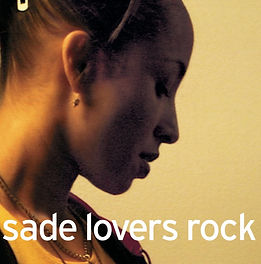
On their first three albums, Sade carved out their own lane—a dusky, elegant stretch of musical road paved with Cognac-kissed love songs and blow-dried with a jazz-inflected breeze. They never chased trends. Whatever was hot on the radio at the time of their recording sessions rarely found its way into their studio. That resistance to the moment helped them cultivate a timeless sound—unfazed by shifting fashions, unbothered by how the years began to pile up between releases.
After a long ass wait, “Lovers Rock” finally arrived—eight years after “Love Deluxe”. It felt less like a comeback and more like a quiet revelation. The band stripped their sound down to its bare bones, trading the lush horns, pianos, and conventional drum kits for echo-laced guitars, murky basslines, and subtle Caribbean textures. There’s not a shout on the entire album; Sade Adu keeps her voice just above a whisper, floating like smoke through the sonic haze. It only deepens the mystique.
Heartbreak permeates the album. The romantic love that had defined so much of Sade’s earlier work has clearly run its course. But there’s a new tenderness too—Adu sings with raw devotion about her new daughter, offering glimmers of light that keep “Lovers Rock” from feeling like a slow, elegant suicide note. It’s matte and monochromatic by design—but in Sade’s hands, restraint becomes a kind of magic. “Every Word”, the downcast and solemn ballad buried deep in the album’s second half, might just be my favorite Sade song of all time. Might be, no. It is.
When “Lovers Rock” came out, I had just made the second great transition of my life: a move from Brooklyn to Medellín. What was supposed to be a temporary relocation turned into something more profound. While I studied Spanish, navigated a new culture, and juggled the slow unraveling of a long-distance relationship (while simultaneously entering another), “Lovers Rock” became a quiet, steady companion.
Sade are the undisputed royalty of what I affectionately call Yacht Soul—cool, detached, jazz-tinged R&B with one hand holding a cocktail and the other dipping into the warm waters of the Caribbean. Their early albums feel like a luxe sea voyage. “Lovers Rock” is the soundtrack for when you finally return from Turks and Caicos or Martinique, step off the boat, and realize the vacation is over and real life is waiting—with all its heartbreak, beauty, and emotional ambiguity.
By the time Sade returned again with “Soldier of Love”, nearly another decade had passed. And somehow, Adu sounded even more weary, more introspective. Rumor has it she spent some of her hiatus in the Dominican Republic—Santo Domingo is the Caribbean’s armpit—and from the sadness emanating from the music here, that rumor checks out.
In July 2011, I flew to Miami to see Sade live, joined by the same ex-partner I’d left behind in New York over a decade earlier. Full circle. That’s the kind of role Sade plays in my life: permanent, ambient, quietly monumental. And not even Canadian BaeCon Drake getting Sade Adu’s face tattooed on his butt cheek (or wherever he got it) can tarnish their legacy or dim their brilliance.
Some artists fade with the outgoing tide. But Sade just whispers and lets the water carry her forward, bringing along in her wake all of her diehard fans like me who hang on her Every Word.
29
Guy
"Guy"
1988

Step aside, Mylie Montana.
Guy’s self-titled debut was the real cultural wrecking ball when it dropped back in 1988. It didn’t just launch a new sound—it obliterated everything that came before it. Practically overnight, the slick, sensitive R&B of the early ’80s went as cold and limp as piece of baloney. Alongside Bobby Brown’s “Don’t Be Cruel”, “Guy” gave us what we didn’t even know we needed: an aggressive, churchy, sexually-charged blend of hip-hop-infused R&B that was masculine, melodic, and absolutely magnetic. It was a genre shift wrapped in a glossy, Harlem-endorsed package.
This was New Jack Swing in its purest, most potent form. And while Janet Jackson’s “Control” laid the groundwork, “Guy” brought the streets to the dance floor. “Groove Me,” the album’s second single, didn’t need a spot on the Hot 100 to prove it had arrived. It blasted out of speakers with a jolt of funky bravado, taking the sass of “What Have You Done For Me Lately” and dousing it in testosterone. The album would go on to sell over two million copies—proving that this wasn’t just a niche Black record. This was crossover with grit.
On a personal note, “Groove Me” was one of those rare musical moments where time seemed to stop. Like hearing “The Beautiful Ones” during “Purple Rain” for the first time, or being knocked off the couch by Amy Winehouse’s “Rehab” the day it hit my TV screen—“Groove Me” didn’t just play, it rearranged my molecules. And even more impressive: the album keeps that energy going. From start to finish, it’s relentless.
At the core of it all is Aaron Hall. His voice—sharp, gospel-rooted, and emotionally urgent—was a secret weapon that set Guy apart from their peers. Teddy Riley may have shaped the sound, but Aaron gave it soul. While artists like Al B. Sure (who secretly sang most of the lead vocals on “You Can Call Me Crazy”) and Keith Sweat leaned heavily on style and studio magic, Aaron could actually blow. Whether he was sermonizing on the sweaty, funk-laden “Don’t Clap… Just Dance,” crooning heartbreak on “Goodbye Love,” or serving bedroom drama on “Piece of My Love,” Aaron delivered.
And then there’s “I Like”—a song that might sit just a step below “Groove Me” on the tracklist, but has steadily risen to the top in my personal canon. It’s drenched in silky synths and opens with a shimmer that might make you think Prince is coming around the corner. But soon enough, it unfolds into a laid-back groove with a classic feel—a jam that Carl Carlton or Leon Haywood would’ve crooned on back in the day. (Fun fact: Chaka Khan once said “I Like” was her favorite song of all time. I knew there was something I liked about that woman!)
With this album, Guy became the hottest thing in R&B after Bobby Brown. And that’s no coincidence—Teddy Riley had his hand in the dough on both of those records. This was just the beginning of Riley’s historic run. His work here positioned him as one of the greatest architects of modern Black music, right up there with Jimmy Jam & Terry Lewis, Babyface and (later) Timbaland and Pharrell. Riley became our Phil Spector, minus the murder conviction and what-not.
“Guy” is more than just a debut album. It’s a sonic revolution that changed how R&B looked, felt, and sounded—forever. And it’s hot, it's Wop-worthy and, yes, I Like.
28
Atlantic Starr
"Brilliance"
1982

By 1982, Disco—a subgenre white record executives created to capitalize on the popularity of club music Blacks, Latinos and gays had been dancing to since the early 70s—had died in the eyes of mainstream America, buried under the rubble of vinyl at that infamous record-smashing stunt at Comiskey Park in Chicago. But for the niggaz, spics and fags, the dance floor never closed. While white America might have pivoted back to Bruce Springsteen and Elton John, the rest of us kept right on dancing because disco hadn’t kicked the bucket. It evolved and splintered off into electro-funk, disco rap, Hi-NRG and (eventually) EDM.
Groups like Atlantic Starr, who’d ridden the disco wave to modest success, had to do a pivot of their own. And with the help of Commodores producer James Anthony Carmichael, they found their footing amid the backlash. First came “Radiance” in 1981, which offered accessible, radio-ready jams like “When Love Calls” and ballads like “Send for Me.” But it was their 1982 follow-up, “Brilliance”, that truly marked a turning point.
This record is the sound of a group finding its sweet spot—shedding the disco label while weaving together threads of R&B, pop, and yes, the remnants of the club sound they came up on. The result is a slinky, melodic hybrid that’s catchy, well-produced, and quietly transformative.
Lead single “Circles” is the crown jewel—Black pop perfection with just enough bounce and shimmer to make its way onto the pop charts (#38 on the Hot 100). But “Brilliance” doesn’t stop there. From the high-gloss groove of “Love Me Down” to the breezy romance of “Perfect Love,” the uptempo tracks are radio-friendly without losing their soul. Meanwhile, ballads like “Let’s Get Closer” and “Your Love Finally Ran Out” deliver on the emotional intimacy that would come to define the Quiet Storm format in the years to follow. Those were the slow jams for those Lovers out there.
The real Stove Top Stuffing of the album, though, lies in the vocal stylings of Sharon Bryant. Her sweet, emotive delivery is the glue that holds this album together, elevating even the simplest lyrics into heartfelt statements. “Your Love Finally Ran Out” is easily the best ballad on the set, but it’s the closer—“You’re the One”—that lingers. It’s a gently radiant song brought to life by Sharon’s crystalline tone and subtle phrasing, and for me, it’s the crème de la crème of the record.
If there’s a criticism to be made, it’s that “Brilliance” is too short on Sharon. This was her peak era with Atlantic Starr—an all-too-brief, golden window in the group’s history that set a standard no other incarnation ever truly matched, despite its breakthrough mainstream success once half of the group was shown the door, including Sharon. Her departure after their "Yours Forever" album left a void that, in my opinion, was never fully filled.
Still, “Brilliance” lives up to its name. With its polished production, airtight songwriting, and the unmistakable warmth of Sharon Bryant’s voice, this album isn’t just a worthy listen—it’s a keeper. A shining example of how R&B artists navigated the post-disco landscape with class, craft, and undeniable soul.
(It’s a shame that “brilliance” is not a word we can use to describe Bryant’s solo career, which moved almost completely under the radar like some big secret, Lovers.)
27
Anita Baker
"Rapture"
1986

Anyone who knows me even a little knows that Anita Baker was my ride-or-die throughout the late ’80s and ’90s. Before I fully grasped the galaxy that is Chaka Khan, Anita was my life force, my go-to girl, my Genova Diva. She was the artist I turned to for everything—comfort, romance, reflection. And no album better encapsulated that era of my life than “Rapture”.
Released in 1986, “Rapture” was a smooth, well-oiled statement of intent—eight tracks of refined, bear-skin rug Soul that felt timeless even then. It arrived just as disco’s aftershocks and electro-funk’s dominance were still rumbling across Black radio, and yet here was Anita, cutting through the noise with a warm alto and a jazz-inflected approach to phrasing that owed more to Sarah Vaughan than to Sarah Dash. While many Black albums of the time were singles-driven, “Rapture” played like a complete, cohesive work—sharp as a Ginsu knife and twice as precise.
Half of the album’s eight tracks became massive singles. And none of them needed thunder-crash drum machines, overbearing synths, or aggressive beats to make their impact. The arrangements were subtle and supportive, letting Anita’s voice take the lead while creating an atmosphere that was intimate, smoky, and impossibly endearing.
Let’s not even waste time discussing how essential “Sweet Love” was in establishing Anita’s reign. The real centerpiece for me has always been “You Bring Me Joy”—a slow-burner that starts with a whisper and crescendos into one of the most emotionally charged vocal performances she’s ever delivered. It’s chills-inducing every single time. Even the tracks I consider slightly weaker—“Same Ole Love” and “Caught Up in the Rapture”—remain top-shelf Quiet Storm staples.
It’s worth noting that Anita didn’t reinvent the wheel—she polished it to perfection. Sade’s first two albums had already helped reset the cultural climate, prepping the soil for “Rapture” to bloom the way it did. But Anita added a new layer of warmth and gospel-steeped soulfulness that felt deeper, more lived-in. More "Detroit", if you will.
The material is inspired, and the production choices—crafted by Anita with help from Michael Powell—are pitch-perfect for the kind of sonic world Anita was building. Rod Temperton’s “Mystery” lives up to its name with sultry nuance, while “Watch Your Step” plays like a velvet-gloved warning. And “You Bring Me Joy”—as I’ve said and will keep saying—really DO bring a nigga joy.
“Rapture” didn’t just impact R&B—it left fingerprints on all of popular music. It paved the way for a whole generation of vocalists who dared to keep it slow, soulful, and grown. From Oleta Adams and Regina Belle to Des’ree and even Toni Braxton—whose debut was full of songs originally intended for Anita—“Rapture” showed that you could go retro without being out of touch, elegant without being cold, romantic without being corny.
And yet, as monumental as Rapture was (and still is), it’s very much a product of its time. Like “Sgt. Pepper’s”, it’s locked into a specific cultural and sonic moment. Her later work—especially “Compositions”—may not have had the same global impact, but that record broke ground for me. It was personal. It expanded my world the way “Rapture” expanded the industry.
I won’t lie: “Same Ole Love” does start to feel a little “same ole” over time. But the magic of “Rapture”—the way it can still give me goosebumps decades later—proves that this album was more than a mood. It was a movement. And Anita Baker, elegant and eternal--and shady as she wanna be--remains its queen.
26
Curtis Mayfield
"Super Fly" (soundtrack)
1972
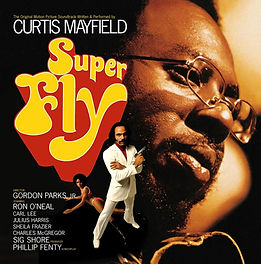
Pimps and hos are a misunderstood lot who get a bad rap. But has anyone ever really paused to consider how essential unsavory behaviors have been in constructing this thing we call America? Everything that is authentically American—from colonization and Manifest Destiny to Trumpism—rests on a foundation of criminality. Even our clearly criminal phenomena—Bonnie & Clyde, Charles Bronson’s “Death Wish”, cryptocurrency scams—are reimagined as pop culture staples, complete with docuseries, biopics, and nostalgic reboots. Ours is a culture that venerates lawlessness—so long as it’s white folks doing the dirt.
Enter Blaxploitation: A different take on America’s favorite blood sport with Black faces finally in the starring roles. It was an interesting concept that didn’t have a lot of staying power, but whose music continues to inspire to this day through samples, covers, interpolations and rehashes.
I’ve never seen the film “Super Fly”—and I don’t need to. Curtis Mayfield’s soundtrack is an experience in itself, one more visually arresting than the movie could ever hope to be. From the ominous opening bars of “Little Child Runnin’ Wild,” you’re submerged in a sonic world that drips with tension. The bongo strikes, violin stabs, and saxophone toots gradually swell into a crescendo that feels like slowly sinking into a dark urban lagoon.
Then you’re dropped into the streets with “Pusherman.” Its imposing bassline, sharp guitar flourishes, and lyrical bravado (“I’m yo’ momma / I’m yo’ daddy / I’m that nigga in the alley”) are practically a nursery rhyme for pimps and hustlers. And just when you think the tension can’t be sustained, the legendary guitar riff of “Freddie’s Dead” cuts through like a siren, visceral and immediate.
Perhaps the most cinematic moment of all is “Junkie Chase,” a frantic instrumental that combusts with action and stress. It’s probably the most appropriately named track in all of music. Every soul artist who’s ever been tasked with scoring a Blaxploitation film has tried to recreate this song’s pulse-pounding energy. None have succeeded.
The first side of Super Fly simply does not let up. Side two is more subdued, more reflective, but no less affecting. “Give Me Your Love,” slinky and seductive, is my personal favorite. The entire album is a stunning, fully realized masterwork that surpasses the film it was created to support. It’s the rare soundtrack that tells a more compelling story than the movie itself.
What shocked critics and fans alike was the sheer consistency of the record. Curtis Mayfield—brilliant though he always was—had never before sustained this level of narrative and musical intensity over a full album. The production is dense and deliberate, but never overwhelms him. He displays remarkable restraint, walking the tightrope between caution and compassion, judgment and empathy. It’s so convincing, so vivid, that many people who owned the album never even bothered to see the movie. Like me.
The only blemish on this otherwise untouchable collection is “Think,” which briefly breaks the album’s momentum. It’s not a bad song—it just doesn’t rise to the same level as the rest of the material. For that reason alone, “Super Fly” doesn’t quite get tens across the board.
But make no mistake: this is the apex of soundtrack albums, black, white or otherwise. It’s not just good—it’s essential. That Rolling Stone named it #72 on their list of the 500 Greatest Albums of All Time feels just about right… though maybe it should’ve been higher.
25
Gladys Knight and the Pips
"I Feel A Song"
1974

Between 1971 and 1975, Gladys Knight & the Pips absolutely glutted the market—dropping a staggering twelve albums in just four years. Twelve! That includes live recordings, a soundtrack (“Claudine”), new material for Buddah Records, and a series of sneaky “revenge releases” from Motown-affiliated Soul Records, who scrambled to issue leftover recordings in an attempt to confuse the record-buying public after the group’s departure. It was a whirlwind of content, and somewhere in the midst of all that came “I Feel a Song”—a tight, surprisingly powerful album that became their fourth number one on the R&B charts.
Coming hot on the heels of their “Claudine” soundtrack with Curtis Mayfield, “I Feel a Song” finds Gladys in a mood. The title track is a rousing tell-off, filled with frustration and sass, and sets the tone for what is arguably one of the more emotionally intense performances of her career. Gladys sounds noticeably raspy throughout the album—likely the result of non-stop recording and touring—but rather than detract from the music, this rawness adds a layer of urgency and pathos that suits these songs just fine, thank you.
The highlights come fast: “The Going Ups and the Coming Downs” is rich in soul and perfectly paced, while “Feel the Need” is one of the most stellar ballads in G.K. & the Pips' discography. “Love Finds Its Own Way” is another standout, with Gladys pushing through the roughness in her voice and reaching for emotional clarity through sheer force of will. Her decision-making and phrasing, always impeccable, remain two of her superpowers, even when her vocal cords were clearly under strain.
“Seconds” is an odd but fascinating addition—written by Burt Bacharach and Neil Simon (yes, that Neil Simon), the song is full of playful wordplay and dramatic theatricality. It’s the kind of number that might have felt more at home in Dionne Warwick’s inbox, but somehow, Gladys gives it the subdued treatment it deserved. And then there’s the live rendition of “The Way We Were / Try to Remember,” a hybrid cover that became one of Gladys’ signature performances. Yes, Barbra Streisand made “The Way We Were” iconic, but if I had to pick a version that wrings out every last drop of soul? I’m going with Gladys. This and every time, Gladys, thank you very much.
No need to skip over any tracks, but this isn’t a flawless album. Some of the material—while technically solid—doesn’t always rise to the level of her most emotionally resonant work. “Burn Down the Bridges,” for instance, is a strong song on paper, but feels like it loses steam toward the end, as if even Gladys got bored mid-way through the outro. And while she’s consistently good, she rarely reaches Aretha-level gut-wrenching intensity on the weaker tracks. (In her hey, Aretha sang the phuck out of every single song that landed on her desk, even the crappiest ones.)
That said, there are no clunkers on “I Feel a Song”. Even at its most mid-tier, the album is expertly performed, well-produced, and packed with the kind of adult soul that bridged the gap between the grit of the ’60s and the smoother leanings of the late ’70s. But unfortunately, this release also marked the end of their hot streak. After years of chart dominance, “Gladys & the Pips” hit a long dry spell. As soul began to fall out of favor, Motown pivoted, and disco came in swinging—leaving traditional vocal groups like the Pips on the outside looking in.
It would take nearly a decade—and a whole new sonic strategy—for G.K & the Ps to return to the top of the charts. But “I Feel a Song” stands as a bittersweet bookmark: the last chapter of a run that saw Gladys Knight & the Pips at their absolute peak. Raspy voice and all, she still had enough fire to remind us that, sometimes, soul hits harder when it’s just a little bit rough around the edges.
24
Luther Vandross
"The Night I Fell In Love"
1985
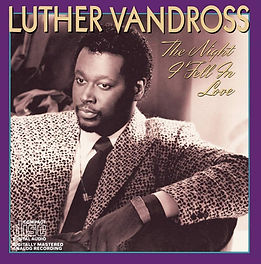
What is this ridiculous obsession folks got with romance? All this Pretty Woman fantasy nonsense, obsessively tracking J.Lo’s latest situationship, and bingeing vapid reality dating shows only serve to exacerbate the Big Lie: that true love is real and attainable. No one—and I mean no one—spun that delusion into R&B gold quite like Luther Vandross. The man practically patented the romantic daydream and made it sound like love was just a touch away.
But let’s be real: Luther knew, more than anyone, that you’re more likely to run into the Boogerman than a Loverman just around the corner. That didn’t stop him from promoting the fake news that real love was right there, waiting for you—if you were just willing to wait. BS, Luther. Pure BS.
Now that we’ve gotten that out of the way, let’s turn our attention to “The Night I Fell in Love”, Luther’s razor-sharp, most enduring album—and the ultimate expression of that fantasy. The trademark flawless vocals are there, along with lush production and immaculate background singing. The record kicks into high gear with “’Til My Baby Comes Home,” where the background vocals bubble with energy and Billy Preston lights things up with his spectacularly playful organ playing.
Luther continues his run of elevating other artists’ work with a gorgeous rendition of Brenda Russell’s “If Only for One Night.” He also digs into more personal territory with “My Sensitivity (Gets in the Way),” a song he once called one of his most honest compositions. It’s tender, introspective, and tinged with just the right amount of melancholy. And then there’s “Wait for Love”—perhaps the crown jewel of the album—where Luther’s phrasing and ad-libbing reach near-transcendent levels. It remains one of my favorite tracks in his very impressive catalog.
Even when the tempo picks up—as on the title track or “It’s Over Now”—Luther stays fully in command, thanks in no small part to Marcus Miller’s masterful bass lines, which lend the grooves both polish and punch. The album closer, “The Other Side of the World,” is beautifully orchestrated. Luther never raises his voice above a whisper, delivering a quiet, solemn lullaby that sneaks up on you without ever putting you to sleep. Majestic.
Still, there’s something worth acknowledging that Loofah fans will probably burn me at the stake over: Vandross, often chose technical precision over passion. I mean, when is the last time you heard his voice crack or get scratchy due to being overheated from emotion? (Think Sam Cooke or Otis Redding.). His need for vocal perfection sometimes pulled emotional immediacy out of his delivery, leaving you to wonder if he really did fall in love that night. By the pained expression on his face, he might be singing about the night he simply fell. Take his cover of Stevie Wonder’s “Creepin’” as an example: it’s vocally stunning, but it lacks the hazy, late-night vulnerability that made Stevie’s original so unforgettable. I think solemnity and melancholy were Luther’s true essence, but he barely let that side of himself show because he needed to sell us the idea that everlasting love was a polished and pristine thing. (“Anyone Who Had A Heart”, followed by “Dance with My Father”, represent the most honest Luther sounded on record, in my opinion.)
Yet even with that emotional distance mostly in play, “The Night I Fell in Love” remains Luther’s most cohesive and satisfying album—a sleek, shimmering testament to the man whose greatest skill was selling the illusion of love. And nobody—and I mean nobody—sold it better.
Well done, Luther. Well done
23
Aretha Franklin
"I Never Loved A Man The Way I Love You"
1967

Peanut butter and jelly. Smith and Wesson. Peaches and Herb. Aretha Franklin and Atlantic Records. Some tandems are simply destined to be together. Neither Aretha nor Atlantic was quite as good without the other, and this album proves just how extraordinary the fusion of two already potent forces can be. Calling “I Never Loved a Man the Way I Love You” a landmark would be a gross understatement—it’s the musical equivalent of tossing a lit cigarette into a warehouse stocked to the hilt with powder kegs.
This album isn’t a debut of an already established artist on a new label—it’s a rebirth. After years of being underused and misdirected at Columbia, Aretha set up camp at Atlantic Records was finally given the right material, the right musicians, and most importantly, the FREEDOM to let loose. What followed was an emotional detonation that simply blew up everything we knew about pop music, and the world has never quite recovered.
We all know the firepower of “Respect,” a seminal recording of all time that’s akin to an earthquake in three minutes. But what makes this album immortal are the deeper cuts, the slow burners, the volcanic ballads where Aretha rumbles and bubbles just beneath the surface before erupting into full-throated gospel fury. “Drown in My Own Tears” and “Baby Baby Baby” aren’t just my two favorite songs on the set—they’re emotional avalanches. The blues meets the church, and the result is spiritual and searing.
Aretha’s vocal control here is nothing short of masterful, though it’s clear that on most of the song, she’s not at her vocal best. Still, she knew exactly when to let a phrase hang in the air or punch a word for maximum effect. Listen to the way she commands a pause in “Dr. Feelgood,” or the electric charge she injects when she yells “Listen!” in “Drown in My Own Tears.” And don’t miss the tiny “whoa!”s she drops in the title track like emotional grenades—this is interpretive singing at its absolute peak.
Even the more upbeat numbers like “Good Times” show how naturally Aretha could swing with Sam Cooke’s energy while making the song fully her own. And while her take on Cooke’s “A Change Is Gonna Come” doesn’t quite eclipse the original (a nearly impossible feat), it comes breathtakingly close, closing the album with both vulnerability and defiance.
Yes, the sound quality on some of these early Atlantic sessions doesn’t always do her justice. There’s a certain grit to the mix, and the fidelity isn’t perfect. But let’s be honest: when Aretha’s in full flight, she could be singing through a tin can and still level every soul within earshot.
Even the “weaker” tracks on this set—if you can call them that—do nothing to tarnish the album’s power. Instead, they’re simply outshone by the brilliance surrounding them. And the best part? This was only the beginning. Believe it or not, Aretha’s vocal gifts would improve markedly over the course of the next few years, giving her even more command over a tool so remarkable that the only explanation for it is that it was bestowed upon her by The Good Lard. There was so much more to come for Aretha and “I Never Loved a Man the Way I Love You” stands as the announcement of the most consistently electrifying vocalist in pop music history. Full stop.
22
Rahsaan Patterson
"Love In Stereo"
1999
I’ve told this story a million times. Back in the late ’90s, I was working at my Sugar Daddy’s restaurant in Greenwich Village—a charming little spot that, for some reason, received a box of free promo CDs every month. These were meant to be played over the house sound system for the customers’ dining pleasure. Now, if I recognized an artist in that package—which was rare, because the selection leaned heavy on obscure indie acts—or if something piqued my ear, I’d quietly slip the CD into my backpack and keep it moving. (And before any of you righteous queens clutch your pearls, remember: you can’t steal what’s already free. Duh.)
One such treasure was Rahsaan Patterson’s “Love in Stereo”. After one spin in the restaurant, it never made it back to the CD changer—it went straight home with me and found a permanent spot in mine.
It was 1999, and I had lost my faith in R&B. Biggie was dead. And for those of you who didn’t live in New York at the time, you truly can’t understand how much his death—compounded by Tupac’s—left a crater in the city’s soul. Under Giuliani’s gleaming boot, NYC was being sanitized and Disney-fied. One by one, the gay Black clubs were getting shut the fuck down. And with the rise of online dating, nobody was dancing anymore. R&B, as far as I was concerned, had devolved into overproduced, synth-slick luv-mekkin’ Muzak. It was soulless. So, for something contemporary to truly grab my attention, it had to be good. And “Love in Stereo” was very good.
Now don’t get me wrong—not every track is a home run. “Treat You Like a Queen” and “Sure Boy” are fine. “It’s Alright Now” and “The Day” tread in safe, conventional waters. But what makes “Love in Stereo” such a gem is that it gets better—and bolder—as it goes on. “The Moment,” with its Bootsy Collins interpolation, is an instant classic. “Any Other Love” is tender and beautifully crafted. But Rahsaan saved the best for last with the slinky and sexy “Get Here,” a track that simmers like a man with his loins on fire. It’s a low-pressure boiler, hypnotic in its restraint, with an expressive falsetto that floats into the clouds before grounding you again with earthy funk. It’s one of my favorite songs by anyone, period.
People love to throw out Stevie Wonder and Chaka Khan comparisons when it comes to Rahsaan, and honestly, they’re not wrong—but it’s not because he mimics their sound. It’s because his music comes from the same place. You can feel the lineage. His soul is old, his sensibilities rooted in the golden era of expressive, musical R&B. He wasn’t trying to chase trends or chase hits. At the time, I was going through a Chaka phase, and I immediately felt her spiritual presence in his delivery—commanding yet vulnerable, confident but never cocky.
More importantly, it was clear that Rahsaan was the architect of his own sound. He wrote, he arranged, he interpreted. He wasn’t willing to water it down for radio spins, BET airplay, or arena tours. He never sold out—and the mainstream never showed up. As a result, he has no gold or platinum plaques. But “Love in Stereo”? That record is solid gold to me. And even if it never lands on the RIAA’s radar, it still deserves to be heard by every old fart like me who still dares to hope that down-home Soul might one day make a comeback.
21
Marvin Gaye
"Let's Get It On"
1973

The title track of "Let’s Get It On" is, without question, my favorite song of all time. Marvin Gaye’s vocal performance here is peak Marvin—seductive, vulnerable, and overflowing with raw emotional truth. And while the title track gets most of the shine, his brilliance spills over into other standouts like “Please Don’t Stay (Once You Go Away),” “Distant Lover,” and the devastatingly beautiful “Just To Keep You Satisfied.”
Marvin had what Luther Vandross sometimes lacked: passion and personal revelation. He wasn’t afraid to strip himself bare, to show you everything—his longing, his confusion, his desire, his ache. Yes, he was a technically brilliant singer, but he never let polish get in the way of Soul. He gave unfiltered, unvarnished emotion.
But back to the title track—because I just can’t get past the rush of pure, unadulterated joy it delivers. The lazy, sensual guitars are perfection. The drumming is subtle but phenomenal. And then there’s Marvin, guiding the whole thing with a voice that caresses, teases, commands. His songwriting here is deceptively complex. He doesn’t follow the usual pop formula of verse-chorus-verse-chorus-out. Instead, after the second verse, the song begins to loosen, veering off into something more conversational, almost spiritual. It’s marked by his signature layered background vocals—equal parts seductive whisper and gospel call-and-response.
This structure creates a delicious sense of meandering urgency. The song feels longer than it is, not because it drags, but because it builds tension. By the time you reach the last 20 seconds, it becomes an ecstatic release—so funky, so soulful, so orgasmic that you feel emotionally spent when it ends. The whole thing is a metaphor for the perfect sexual encounter: a slow build, a feverish climax, and then… silence. Release. Satisfaction. As far as I’m concerned, no other song has ever reached that level.
“Keep Gettin’ It On,” on the other hand, feels unnecessary. If they really wanted to extend the pleasure of “Let’s Get It On,” they should have just let that track run for eight glorious minutes. “Keep” acts like an underwhelming encore that dilutes the impact of the original’s finality. Honestly, the whole album runs a little short—but what it lacks in length, it makes up for in emotional and musical depth.
"Let’s Get It On" may not be flawless, but it’s damn close. And the title track? It has no rival.
20
Stevie Wonder
"Songs In The Key of Life"
1976

Yeah, yeah, I know, I know.
“Song in the Key of Life” is Stevie’s magnum opus and is rightfully considered the most complete, ambitious and exceptional statement in soul music—in popular music. And I agree with that statement on a technical and cultural level.
The sheer volume of exceptional songs here is staggering, and no other artist—not even Stevie himself—had attempted something this far-reaching in scope and still managed to hit so many high notes. But despite all of its brilliance, “Songs in the Key of Life” does not land at the top of this chart, nor does it head up my personal list of favorite Stevie albums. That’s not a dig on the record—it’s just that when I compare Stevie to Stevie (because, let’s be honest, no one else is in his league), this album doesn’t have the same sharp edges and focus as others in his catalog that will appear on this countdown.
That said, I fully acknowledge “Songs” as a remarkable artistic triumph. It’s a sprawling, kaleidoscopic universe of sound and soul that covers more ground than most artists manage in an entire career. And unlike some double albums that feel bloated or self-indulgent, this one earns every minute of its runtime. You couldn’t shave it down to a single LP without losing something essential—each track, even the weaker ones, plays a role in the overall story Stevie’s telling about life, love, injustice, joy, and spiritual renewal.
Let’s get the minor quibbles out of the way. For all its musical range, "Songs" can occasionally feel overindulgent—especially on tracks like “I Am Singing” or “Contusion,” which are interesting diversions but not exactly essential. And some of the album’s boldest statements, like “Black Man” and “Another Star,” lose a bit of their impact by stretching way past the seven-minute mark. They’re impressive compositions, no doubt—but sometimes you feel the weight of their length more than the power of their message. The history lesson that closes out “Black Man” is a cool idea, but I’m not sure if I needed Stevie to teach me every single factoid of American history. I just start tuning out at about the 5-minute mark.
But when the spectacular songs rain—my God, they pour. The second side alone could stand as one of the greatest soul records ever pressed. “I Wish” is the kind of funk so infectious it feels medicinal, while “Knocks Me Off My Feet” is tender, quiet, and stunning in its simplicity. I'm not even go to waste my breath describing the undeniable brilliance of "Pastime Paradise". Coolio already did it for me. Then comes “Summer Soft,” a deceptively breezy track that turns into a storm of emotion, and “Ordinary Pain,” which flips expectations halfway through and turns into a gospel-funk exorcism. And then there’s that voice, always brimming with clarity, range, and unfiltered feeling. It took four people and an outside producer to put together “Sgt. Peppers”. Wonder did almost all this astonishing work by his own-damned-self.
My personal favorite is “Joy Inside My Tears,” a masterpiece that doesn’t get nearly the recognition it deserves. It’s a sad song masquerading as hopeful—quiet and reflective until the final minutes, when Stevie’s voice lifts off into a series of gut-wrenching ad-libs that are among the most emotionally naked of his entire catalog. The way he builds from solemnity to something like transcendence. That’s not just great songwriting—it’s soul alchemy.
Then there’s “As,” a track so audacious in its lyrical ambition that it could have fallen flat under a lesser artist. (I'm looking at you George Michael and Mary Blige.) Instead, Stevie delivers a vocal performance that keeps elevating across its full seven minutes, never once feeling repetitive or indulgent. His ad-libs toward the end are pure catharsis—he sounds like a man possessed by love, faith, and light, letting it all pour out into the ether.
Even the so-called “lesser” tracks—“Have a Talk with God,” “Isn’t She Lovely,” “All Day Sucker”—offer enough layers and nuance to keep them relevant 50 years on. “Isn’t She Lovely” in particular, for all its overexposure, is still an impressively joyful ode to fatherhood that balances sentiment with technical brilliance.
It’s funny—sometimes I feel guilty for not loving this album more than I do. It changed the game, inspired generations, and cemented Stevie as a once-in-a-century artist. But the main culprit is that I wore this album out when I was a kid, and then again when I went through my Old Skool phase in college. Maybe the goosebumps that once showed up on cue have dulled with repetition. But every time I return to it—really return—I’m reminded why “Songs in the Key of Life” stands in a league of its own.
It may not be the Stevie album I reach for first, but it’s the one that taught me the most about what music could be. And for that, it remains an indispensable part of my musical life.
19
Jody Watley
"Jody Watley"
1987

Any Black queen who’s had to come to terms with their sexuality in a culture that still recoils—sometimes violently—at male homosexuality knows how daunting, painful, and downright confusing that process can be. Growing up, I was constantly bombarded with images of “normal” sexuality: rom-coms like “When Harry Met Sally” and endless streams of R&B where the Black macho man was always feenin’ for some pussy or promising a woman that, if she’d just give him a chance, he’d do all the things her sorry-ass man wouldn’t.
For Black gay boys, that kind of hyper-heteronormativity seeps into everything and presses down hard during our formative years. Many of us responded by inventing a girlfriend who conveniently lived in Canada and bragging at the Monday lunch table about how she gave us some stank over the weekend. I more or less pulled off the macho posturing, spinning elaborate sex stories starring phantasmagorical girlfriends, but I was always left with a low-grade confusion—mainly because I had no idea where to put the massive stockpile of feminine energy I’d been carrying around since forever.
That confusion was partially blown to hell the minute I turned on the TV, heard that bass line, and watched Jody Watley fling her heavily-weaved head around while staring directly into the camera. With hoop earrings the size of silver wagon wheels, Jody embodied a form of Black femininity so powerful and mesmerizing that it didn’t just make me want to be like her—I wanted to be her.
When I talk about the “quintessential second-tier eighties artist,” I’m one of the few people who absolutely includes Jody Watley in that elite company alongside Paula Abdul, Huey Lewis and the News, and Run-DMC. Just a year before Jody dropped her eponymous debut, Janet Jackson had karate-chopped the door wide open for the sassy Black entertainer to challenge pop music’s stale, white-bread status quo. And no one walked through that door with more purpose—or more attitude—than disgruntled Shalamar deserter Jody Watley.
Jody arrived projecting a femininity so forceful it bordered dangerously—and deliciously—on drag. But there was nothing campy about her approach, especially when you factor in the quality of the music. Like “Control”, nearly every track on “Jody Watley” is a declaration of pussy power and independence. Both women were fueled by a desire to strike out on their own and kick dust directly into the eyes of the men—Joe Jackson and Howard Hewitt, respectively—who had been looming over their careers like bad weather.
The opening salvo, “Looking For a New Love”, was an instant classic, gifting the culture the immortal phrase “hasta la vista, baby”—a line so durable even Arnold Schwarzenegger couldn’t resist recycling it before unloading his gun into the chest of some poor bastard with bad timing. But Jody didn’t ease up. She followed with the slinkier, even better “Still A Thrill”, deploying a delicious vocal androgyny clearly indebted to Grace Jones’ husky-throated dominance. The dance momentum continues with “Some Kind of Lover”—a great song, though I’ll forever prefer the remix from the video and later compilations—and the pounding, club-ready “For the Girls”.
Side Two kicks off with the sweaty brilliance of “Love Injection”, a full-on sex romp where Jody’s almost diffident vocals nearly get upstaged by Tony Thompson’s bazooka-sized snare drum. “Don’t You Want Me”, the second Bernard Edwards production in a row, is the album’s best single by a mile. While the remix ruled radio, I’ve always preferred the album version—stripped down, exposed, and emotionally vulnerable.
“Do It To the Beat” took some time to grow on me, largely because it’s wedged between “Don’t You Want Me” and the absolutely superlative “Most of All”, produced by Patrick Leonard, the same man who helped Madonna level up artistically on “True Blue”. For me, the album effectively ends with “Most of All”. Dating back to my cassette days, I always ejected the tape as the song faded out, allowing me to pretend the actual closer was just a foolish phantasm that never truly existed.
Which brings us to the two missteps on an otherwise near-perfect debut. First: the unnecessary and nutty “Learn To Say No”, a rehash of a trashy Richard “Dimples” Fields song that awkwardly paired Jody with George Michael at the absolute peak of his global hotness. Whose idea was it to redo a song by Richard “Dimples” Fields—essentially a cheesy R&B novelty act? (That said, may he rest in peace.) The track plays like a cynical marketing ploy, and both artists deserved better. Thankfully, it was Scotch-taped onto the very end of the cassette, making it easy to eject from my life before it even got started.
The second issue is minor and has to do with sequencing. “Do It To the Beat” should’ve either opened Side Two or followed directly after “Love Injection” to keep the dance-floor momentum alive before easing into the more introspective “Don’t You Want Me” and “Most of All”. I’m being nitpicky, I know—but picking at the scabs of music is the entire point of this damned blog, innit?
Still, neither flaw meaningfully detracts from what remains one of the strongest debuts in 80s-era Black pop—just a hair below “Control” and “The Hardline According to Terence Trent D’Arby”, perhaps.
More importantly, this album helped me confront and embrace the regal Black chick who lived inside of me. I didn’t go so far as to buy the giant hoop earrings, but Jody’s presence—as pop music’s first true female drag queen—served as a crucial stepping stone in my own sexual and gender development. Nearly 40 years later, listening to this album is still a thrill.
AND...
...Some ask whether Jody deserved a Grammy.
The real question is whether the Grammys deserved her.
18
Prince
"Dirty Mind"
1980

“Dirty Mind” comes charging at the listener like a bull right out of the gate, never slowing down and never veering off course. Packed with immaculate songwriting, there’s no time here for embellishments, overwrought overdubs, superfluous instrumentation, or studio trickery. No horns. No extra percussion. None of the piled-on production excess that would later bog down much of Prince’s post-’80s work. This album is lean, nasty, and unapologetically direct.
The title cut sounds damn near like a demo—in the best possible way—with its relentless bass drum, Dr. Fink’s plucky keyboard stabs, and Prince’s salacious falsetto riding the groove like he’s daring you to keep up. Stripped down, brash, and funky as hell, it immediately sets the tempo and the tone for everything that follows.
“When You Were Mine” is considered by many to be Prince’s best song, and it’s not hard to hear why. It’s a sad little number built on a 1950s rock-and-roll framework, sprinkled with quirky, sexually confusing lyrics and an absurdly catchy melody. What makes it even better is how humorously filthy it is. He’s singing about the emotional hazards of falling for a perennial floozy, but he does it with a wink. When I first heard the album, I was way too young to grasp lines like “just like a train / you let all my friends come over and meet” or “now I spend my time / following him whenever he’s with you.” It’s an absolute joy of a song, and its edges have never dulled with time.
“Do It All Night” isn’t nearly as raunchy as the title suggests, but it expands on the rock/New Wave/R&B hybrid that other Black artists—Cameo, Rick James—would later attempt with mixed results. Prince pulls it off effortlessly, choosing simplicity over embellishment while slipping in flashes of vulnerability (“I may be kinda short…,” “I’ve been waiting such a very long time…”). Despite lyrics that suggest a man waiting impatiently for his turn at some good pussy, the song lands closer to a love song than a sex romp.
“Gotta Broken Heart Again” is the album’s lone quasi-ballad, featuring Prince’s falsetto in peak form and the dry irony in his songwriting that would become a defining trait of his greatest work.
I wasn’t crazy about “Uptown” for years, but I’ve since come around. It’s a hedonistic romp that drops you into a judgment-free zone where everyone—“white, black, Puerto Rican / everybody just a-freakin’”—is free to shake their ass and get their rocks off. It’s also where Prince confronts his androgyny head-on. A woman invites him over and asks if he’s gay. He says no, then immediately asks her the same question. The exchange is so casual it feels lived-in, like autobiography set to funk.
“Head” and “Sister” were designed to shock, and they absolutely did. “Head” finds a bride-to-be detouring from her wedding to give Prince an impromptu blowjob, sung with the same casual tone as someone grabbing coffee on the way to work. “Sister,” sparse and abrasive, features a guitar sound that feels ripped from a teenage garage band circa 1962—except this time, the taboo is dialed all the way up. The song’s celebratory abandon makes it clear that Uptown is a place without shame or embarrassment.
My favorite track on the album is “Partyup,” the song that rightfully secured Morris Day’s future role as frontman of The Time. It’s an apocalyptic stomper—the first documented instance of Prince using funk to grapple with Armageddon and nuclear annihilation. It also introduces the call-and-response chants that would dominate his next two albums and all of The Time’s output. But more than anything else, it’s just pure fun.
Roundly misunderstood upon release—especially by Black audiences—“Dirty Mind” remains one of Prince’s most enigmatic works. It’s serious yet funny, tongue-in-cheek yet confrontational, superficial yet deep, simple in structure but complex in intent. It feels like he spent months writing these songs and one reckless afternoon recording them in his garage.
Prince would grow, technology would evolve, and his productions would become more layered and ornate with stunning results. Still, “Dirty Mind” stands as his best and most fully realized concept album: eight perfectly placed songs, every instrument exactly where it belongs, no excess, no filler, and absolutely no fat to trim.
17
Toni Braxton
"Toni Braxton"
1993

I used to read Entertainment Weekly religiously because, in their music reviews, they always found a way to drag an artist with a biting sense of comic cheekiness. In their lukewarm review of Toni Braxton’s debut, they quipped that she didn’t do much to distinguish herself from the wave of “wine-cooler R&B divas.” Wine cooler!! That phrase stuck with me—not just because it made me giggle with delight, but because it was, in a way, unfair. Toni’s debut may have shared the chilled, mellow vibe of some of her peers, but underneath the gloss was a singer with far more grit and gravitas than the comment suggested. (But I couldn’t stay mad at Entertainment Weekly. They be funny!)
1993 was a transitional year for R&B. The tide had turned toward a harder-edged, male-dominated sound—Bobby Brown, Jodeci, and the tail end of New Jack Swing. The golden era of classic soul was fading; folks who once swore by Teddy Pendergrass and Betty Wright were aging out of the clubs and not exactly spending their hard-earned dollars on tapes and CDs anymore. Black music in the ’90s was being rebranded for a younger, more radio-savvy crowd—one that demanded beats that bounced and lyrics that talked slick. Sweet declarations of love had given way to bass-heavy pledges of booty-bopping and cunnilingus.
Meanwhile, the Quiet Storm legends were growing quieter: Sade only released music when Jupiter aligned with Venus, Luther was going for a more modern sheen, and Freddie Jackson was M.I.A. So when Toni Braxton arrived with her self-titled debut, it felt like a throwback. And a damn good one.
Listening to the album now, you can hear the fingerprints of its era—especially in Babyface’s polished but sometimes anemic productions, which relied heavily on the artist to bring the fire. He was a master at crafting ballads with mass appeal, and he knew how to cast the right voices—Toni, Karyn White, Whitney. Several of the songs on Toni’s debut were originally meant for Anita Baker, and when Baker responded "nah, I'm good", it’s easy to see why Toni was the next call. Her voice had a husky, hickory-smoked depth that wrapped itself around a lyric and made the music smolder.
The best songs on Toni Braxton are undeniable R&B staples. “Another Sad Love Song,” with its mournful “ohs” right at the top, struck a perfect balance of pain and polish. “Breathe Again” remains a slow-burn ballad, using odd little repetitions to tap directly at the most tender parts of your heart. And “Love Shoulda Brought You Home,” lifted from the Boomerang soundtrack, came with both attitude and ache—it’s arguably the moment that put the industry on alert. These songs didn’t just sound great—they felt like something. Toni, with her soulful alto and unflinching delivery, brought the melancholy in ways that elevated even the darkest material. She became the new Dame of Despondency.
Other standouts like the fun “I Belong to You” and the smoldering “How Many Ways” don’t hit with the same weight, but they entertain, thanks mostly to Toni's vocals. These midtempo grooves brought sensuality and poise, hinting at the grown-ass woman behind those doe eyes and that pixie cut. Toni’s phrasing, her restraint, her control—she made even the less lyrically rich songs feel deeper than they had any right to be. That’s the mark of an artist. Her idols—Whitney, Anita—were masters at that too.
That said, the album isn’t without its clunkers. “Love Affair” is a little too toothless for its own good, and “Best Friend” feels like a watered-down B-side—cute, but forgettable. They don’t match the sultry, shadowy tone of the stronger material and throw off the emotional arc just enough to make you wish the scissors had come out during sequencing.
Still, in the midst of R&B’s early-’90s identity shift, “Toni Braxton” stood tall. She didn’t chase trends—she leaned into what made her special. She brought back the drama, the ache, and the elegance. And in doing so, she elbowed her way into a space that had been getting crowded with dudes and drum machines, clearing a little room for the Black women who still had something to say—and sing.
So no, Entertainment Weekly, Toni wasn’t just another wine-cooler diva. If anything, she was the whole damn bottle of Hennessy—intoxicating, dark, smooth, and with enough bite to leave the industry buzzed and craving another round.
16
Sade
"Promise"
1985

I get the sense that some folks still think “Promise” was a letdown after Sade’s debut “Diamond Life”, and that feeling probably has everything to do with the sheer pop dominance of those three monster singles: “Smooth Operator”, “Your Love Is King”, and “Hold On to Your Love”. Add to that deep album cuts like “I Will Be Your Friend” and “When Am I Going to Make a Living”, and you had a record that stayed on turntables from Burma to Babylon without ever wearing out its welcome.
Still, judging “Promise” by the impossible standard set by its predecessor misses the point entirely. What this sophomore album lacks in obvious pop moments, it more than makes up for in substance, confidence, and sophistication. This is the record that gave us one of the quirkiest, most uncanny love songs to ever sneak onto the Billboard charts—“The Sweetest Taboo”—alongside Quiet Storm cornerstones like “Never As Good As The First Time” and “Jezebel”, years before Quiet Storm was even fully codified as a thing.
What truly makes “Promise” special is that it refuses to be a retread of the sleek R&B sound of “Diamond Life”. Instead, it drifts deeper into a loungy jazz realm, flirting with abstraction and mood. The instrumental “Punch Drunk” feels like a dimly lit after-hours detour, while “Is It a Crime” is a dazzling, Carnegie Hall–worthy performance that shows Sade Adu’s voice dipping, soaring, and stretching with wild aplomb. It remains one of the band’s signature songs and a guaranteed crowd-pleaser .
The album also serves as a quiet roadmap for where Sade were headed. “Jezebel”, “You’re Not the Man”, and “War of the Hearts” act as bridges to the band’s later aesthetic: mellow, minimalist, emotionally reserved, and faintly downcast. Lyrically, “Promise” is Adu at her most ambitious. She’s not just cataloging love found and love lost on this album. Songs like “Jezebel”, “Tar Baby”, and the magnificent “Maureen” open a window into her broader interests, politics, and personal history. Ironically, after “Promise”, her writing would narrow again, focusing almost exclusively on romantic terrain.
Like all great albums, “Promise” rewards patience and demands you listen all the way through. “Maureen” is one of those hypnagogic tracks that transports you straight to that tender mental space where memory, grief, and nostalgia blur together. It taps into that hollow left behind by someone you’ve lost, where bitter and sweet swirl into the same ache. It’s a song that makes me cry and smile at the same time—especially in those closing moments when Adu mourns the fact that her long-lost (or possibly dead) friend will never meet the people who came later, while the background singers hover somewhere in the ether.
Like most Sade albums, I wasn’t blown away by “Promise” on first listen. I even thought it was spotty. Complicating matters, I owned the LP that didn’t include “You’re Not the Man” or “Punch Drunk”, so when I later transferred it to CD, those tracks felt like intruders, barging in and fucking up the flow. For years, I simply programmed them out of my playlists, annoyed at Sade for creating extra work for me.
But, as usual, Sade were right and I was wrong. Over time, I came to appreciate how those tracks injected an extra layer of jazziness that helped “Promise” feel more mature and exploratory than their debut. That generosity does not extend to the overwrought “Fear”, though—a melodramatic misfire with senseless lyrics and a meandering arrangement that would’ve been far more at home in a corny Mexican soap opera than on a jazz-fusion album.
In the end, “Promise” cemented Sade’s status as musical nobility—statesmen and stateswoman. While they would go on to release excellent work in frustratingly sporadic intervals over the decades, they never quite matched the quiet peak achieved here. (But they got damned close on at least two occasions.) “Promise” remains a soul, jazz, Quiet Storm gem that, much like Sade Adu herself, only gets better with time.
15
Terence Trent D'Arby
The Hardline According to Terence Trent D'Arby
1987

Soul and hip hop were absolutely thriving in the late ’80s, with era-defining releases by Anita Baker, Luther Vandross, Sade, Prince, EPMD, Public Enemy, Eric B. & Rakim, Slick Rick, and plenty of others who rightfully get name-checked whenever people talk about that moment in music. Almost always left out of that conversation, however, is one of the most promising, audacious, and flat-out exciting debut albums of the period: Terence Trent D’Arby’s first record.
This album is a testosterone-soaked flex from start to finish, built on a combustible mix of Teddy Pendergrass-style chest-thumping vocals, James Brown growls, Prince’s gender-bending quirk, and Motown-inspired arrangements that feel both classic and contemporary. Terence came out of the gate talking big shit—and, crucially, he had the voice and the songwriting to back it all up. It’s taken me over two decades to fully appreciate just how strong this record is, but once it clicks, it doesn’t let go.
The album moves effortlessly between styles without ever sounding scattered. There’s the gospel-tinged uplift of “If You All Get To Heaven,” the gorgeous throwback soul of “Never Turn My Back On You,” and the quietly introspective “Let’s Go Forward,” which reveals an emotional intelligence that often gets overshadowed by Terence’s bravado. The record closes with his incendiary take on Smokey Robinson’s “Who’s Loving You,” and yes—sorry, Michael—TTD ate that one up. No disrespect, of course; you were a kid, and kids don’t know what they be doin’.
Even the tracks that might give some listeners pause—“Dance Little Sister,” which flirts with corniness, and the oddly titled “As Yet Untitled,” which can feel abrasive on first (or fiftieth) listen—don’t qualify as filler. Terence’s personality carries everything. He knows exactly when to unleash that scratchy growl and when to slide into a syrupy falsetto, and his innate sense of drama keeps the album gripping even when it’s being willfully indulgent. The songwriting is tight throughout, and if the album sounds “dated,” it’s only because it feels like it could’ve dropped in 1977—and that’s a compliment.
This record also arrived during a brief window when mainstream R&B still had some real soul left in it. In a span of just a few years, artists like Sade, Jody Watley, Freddie Jackson, Vanessa Williams, and Terence Trent D’Arby were all competing for the Best New Artist Grammy. Terence lost to Jody Watley, which was silly on two levels: Jody had already been releasing records for years as part of Shalamar, and Terence’s debut was simply more ambitious, more volatile, and more transcendent than even her excellent solo debut.
What this album really showcases is how multifaceted Terence was. He could funk hard, croon tenderly, and sermonize dramatically without sounding forced. On songs like “Wishing Well,” “Let’s Go Forward,” and “Who’s Loving You,” he’s scratchy and smooth, arrogant and vulnerable, macho and feminine—sometimes all within the same verse. For a brief moment, he gave Prince and Michael real competition. He wasn’t as funky as Prince or as effortlessly charismatic as Michael, but he was a better singer than both of them, and that mattered.
Unfortunately, that moment didn’t last. His ego ballooned, and the muddled, meandering, painfully boring sophomore album drained all the electricity out of his rising star almost overnight. But that shouldn’t obscure what this debut accomplished. For a short, blazing stretch of time, Terence Trent D’Arby sounded like the future of soul music—loud, fearless, dramatic, and impossibly gifted. And this album remains the undeniable proof.
14
Meshell Ndegeocello
"Bitter"
1999

My mom suffered from depression and I think my brothers have also had some experiences with this terrible condition. Even though I look just like my mom, I inherited my personality characteristics mostly from my father: laidback, unbothered, unintrusive, pleasure-seeking. I have never had problems with depression and that is mostly due to the fact that I can entertain myself very easily, meaning that I don't have moments of loneliness that can trigger episodes of depression.
But if I want to call myself a well-rounded person, then I still need to feel sadness every now and again. And I tend to seek out these feelings in my music; the gloomier, the better. There is magic in music that can generate melancholy in me, and that power is found in spades in Meshell Ndegeocello's major beta-blocker, 1999's "Bitter".
There is no category for Meshell. She doesn’t fit neatly alongside anyone else discussed here, and “Bitter” doesn’t earn its place through vocal gymnastics, flashy musicianship, or pristine production. In fact, none of those things particularly stand out. That’s precisely the point.
“Bitter” is stellar for reasons that exist far beyond music. It is an open diary—a slow bleed—written by a woman whose soul has been trampled, bruised, scraped raw, and left exposed to the air. That funky, popping bass that defined Meshell’s earlier albums is nowhere to be found here. In its place is a heart in free fall, hemorrhaging in real time.
The album opens with “Fool of Me”, and there is no easing into the pain. Heartbreak is immediate and unfiltered. Me’shell has been dumped, strung along, and denied clarity, and her voice never rises above a whisper—as if volume itself would be a lie. The restraint is devastating. This isn’t performative sadness; this is the sound of someone conserving energy just to survive the day.
“Faithful” digs deeper and feels almost confessional. If there’s a reason things didn’t work, maybe it lives here. Ndegeocello admits she is only faithful to God—that she is weak, human, and capable of straying. Piano and guitar dominate the arrangement, and while her voice rises slightly above a murmur, it still feels fragile, tentative. It’s a tender, revealing moment that allows us closer access to her internal wreckage.
“Satisfy” briefly suggests movement—maybe even contentment—but the illusion doesn’t hold. Her backing vocals shimmer beautifully, yet the string arrangements hint that whatever satisfaction she’s singing about belongs firmly in the past. If joy exists here, it’s remembered, not felt.
Any sense of momentum evaporates with the title track. “Bitter” is an acoustic guitar-driven ballad that lays bare the resentment and sourness that followed the breakup—on both sides. That bitterness bleeds seamlessly into the Jimi Hendrix remake of “May This Be Love”, which is soaked in melancholy and resignation, followed by “Sincerity”, another meditation on unrequited love carried by lonely guitar lines and hushed vocals. These songs are serene, yes—but it’s the serenity of emotional exhaustion, not peace.
If there’s anything resembling an uptempo moment, it’s “Loyalty”. Even here, Meshell frames the story through what appears to be a straight couple and family dynamics, but the emotional truth feels autobiographical. The guitar work is sharp and effective, yet the underlying sadness never lifts. Even motion feels heavy on this record.
The emotional core of “Bitter” lives in its final stretch. “Beautiful” is whispery and dreamlike—the only moment where Meshell sounds remotely at peace. The piano chords are achingly simple, and for a brief moment, the album exhales. That calm is short-lived.
“Eve” arrives like a quiet warning, ushering in the even more unsettling “Wasted Time”, where Meshell trades lines with another eerie voice, dissecting all the years poured into loving someone who never loved her back. The track cuts abruptly, collapsing into one of the most moving pieces she’s ever recorded.
“Grace” is not redemption. It doesn’t resolve anything. It feels more like resignation—an epitaph rather than a prayer. Meshell understands that her happiness is bound to someone she must release, and the arrangements reflect that painful clarity. The harmonies are immaculate, the guitar achingly sparse. There is no catharsis here, only acceptance. You don’t hear healing—you hear someone learning how to live with the wound.
“Grace” is a magnificent song, and it’s the moment that made me fall completely for Meshell. I’ve followed her entire career—sometimes begrudgingly, given the deliberately tangential nature of some later albums—but I never expected her to recreate the suicidal enchantment of “Bitter”, though she got pretty close with 2011's excellent "Weather". ("Omnichord Real Book" from 2023 is also great, but for different reasons entirely.). The fact is that moments like "Bitter" only happen once. And thank god, because a repeat of this level of pain could take you over the edge.
There’s a lot to say about a concept album like this, but the word that keeps coming back is brilliance. “Bitter” accomplishes exactly what it sets out to do: it makes you feel everything, without apology or relief. Even the so-called uptempo tracks are drenched in melancholy, ensuring nothing disrupts the album’s singular goal—to pull the listener down into her despair and make them sit with it.
There are no singles here. This record refuses fragmentation and is best absorbed whole, start to finish. Though Meshell has released strong work throughout her career, “Bitter” remains her defining moment—a once-in-a-lifetime document of emotional collapse.
Depression has never sounded so honest.
And it has never felt this devastatingly good.
13
Maze featuring Frankie Beverly
"Can't Stop the Love"
1985

For a guy who’s never been to a Black family reunion or a backyard barbecue with aluminum trays, am I even allowed to love Frankie Beverly as much as I do? My Blackness has been put on trial most of my life, and when I inventory certain behaviors—like not wearing house shoes out on the street, occasionally listening to opera music, or having never once stepped foot in a Family Dollar—I start cross-examining myself: "Maybe I'm not that Black."
But whenever that insecurity bubbles up, I pull out my phone, scroll my library, and there it is: my Maze featuring Frankie Beverly playlist. Case dismissed. Doubts evaporate.
I love Maze. Deeply. Sincerely. And I remember exactly when it all started.
I was down on Gila Monster Boulevard in Arizona, home from college, riding around in my dad’s little sports car, weaving through Scottsdale on my way to meet some fool I was convinced I was in love with. “Can’t Stop the Love” was one of maybe two cassettes in the car. I’d seen it sitting there plenty of times and ignored it, mostly because I could not stand their biggest hit, “Back in Stride.” But I hated the radio even more, so I punched the tape in.
And somewhere between stoplights and bad decisions, the magic crept in.
Song after song seeped into me, took root, and started germinating in my soul. Magical isn’t hyperbole here—it’s the only word that fits both the compositions and the feeling I had driving around with the warm Arizona wind blowing through my Gumby haircut. By the time I parked the car, I knew two things: 1. I was hooked on Maze and, 2. my dad was never going to see that tape again, making him the latest victim of my notoriously sticky fingaz.
What I realized that night is that Maze’s magic comes from what they don’t do. They never try to bludgeon you into submission. No pounding beats. No chest-thumping, testosterone-soaked vocals. Instead, they gently weave Southern sensibilities into the silky soul template they helped define in the early ’80s. Frankie talks about love, not sex. He teaches without preaching, guiding you like that favorite uncle who slips you a five-dollar bill behind your mama’s back after she done already told you, “nigga, NO!”
The guitar and keyboard solos are there to enhance and caress, never to harass or overwhelm. But the true essence of Maze lives in Frankie’s voice. Early on, his delivery had a raspy edge—like that other uncle who ruins every family gathering because he hits the moonshine too hard. By the time albums like “Inspiration” rolled around, he’d smoothed that grit into something supple and expansive, stretching his range and leaning into long, sky-reaching notes that feel like blessings. Those qualities are in full bloom on “Can’t Stop the Love”.
Now, let’s address the elephant. “Back in Stride” is not my favorite Maze song—never has been. But over time I’ve made peace with it. I don’t even skip it anymore because it works perfectly as a warm-up act, setting the table for what follows. Yes, it sounds a little too close to LTD’s “(Every Time I Turn Around) Back in Love Again,” and Frankie’s voice was never built to spar with Jeffrey Osborne’s aggressive funk growl. Still, there’s something oddly endearing—almost childlike—about it, which explains why it shot straight to the top of the R&B charts.
The title track is where the album truly opens its arms. “Can’t Stop the Love” is reflective, patient, and confident. Frankie hits those notes and holds them, letting them bloom. At over seven minutes, it never drags or overstays its welcome. It opens with a lilting guitar riff, and Frankie scats, testifies, and stretches out—never crossing into preachy territory. The keyboards stay supportive, the drums resist the urge to crash and clatter like so much early-’80s bullshit, and the whole thing feels intentional and timeless. This is the album’s heart.
Side One closes with “Reaching Down Inside,” which keeps the spell going in a quieter, more melancholic way. It’s about healing, about looking inward instead of chasing distractions. Frankie’s vocals are rhapsodic here—soaring, comforting, and quietly inspiring. And the production? Immaculate.
Side Two opens with “Too Many Games,” a song that took its sweet-ass time growing on me—but once it did, it moved in permanently. Now it sends chills up my spine every time it comes on. The elementary scatting, the tenderness—it should have been the first single and a number one, period. “I Want to Feel I’m Wanted” rides the one nicely, but “Magic” feels like the album’s thesis statement. This is tenderness distilled. Frankie sounds exposed and vulnerable, and the solemn saxophone wraps everything in a calm so complete it feels damn near spiritual. Nothing is extra. Nothing is wasted.
The album closes with “A Place in My Heart,” and between this and the other ballads, Maze cements their mastery of the slow-tempo groove. (Trend alert: end an album on a high note and you’ve got me for life.)
The beauty of “Can’t Stop the Love” lies in its simplicity—musical, lyrical, emotional. There’s no fat to trim. Every song gets to the point without lingering too long or forcing a skip. Frankie sings with a kindness that feels rare now—especially now that he’s gone. (I tear up even writing that line.)
“Can’t Stop the Love,” like the entire Maze catalog, continues to inspire me and reinforce my deep, abiding love for Soul music—real Soul music.
And no, I never returned that cassette. In fact, I’m looking at it right now, sitting in a closet filled with dozens and dozens of other stolen items that may have played a role in K-Mart's financial demise. I know both my dad and Frankie forgive me for being a petty thief, because I did it to enhance my life, not hurt others. Hell, stealing “Can’t Stop the Love” from my own father might be the very thing that made me the upstanding BLACK citizen I am today.
12
Janet Jackson
"Control"
1986

When people talk about seminal R&B albums, titles like “Lady Soul”, “Songs in the Key of Life”, or “What’s Going On” rightly come up first. For those of us nappy-headed kids born in the ’70s, “Purple Rain” and “Thriller” were the soundtracks of our formative years. But history keeps making the same mistake: underestimating—if not outright ignoring—the seismic impact of “Control”.
When it dropped, “Control” didn’t just shift Janet Jackson’s career; it recalibrated Black pop music. Aggressive, sassy as fuck, and unapologetically Black, Janet came roaring back with her third album and made it very clear that the little girl doing cute Mae West impersonations on variety shows had left the building. This was a declaration of independence written on the scroll sheets of highly danceable music.
Unlike many Black artists navigating MTV in the mid-’80s, Janet—along with Jimmy Jam and Terry Lewis—refused to dilute the Blackness in the music to make it more “palatable.” Instead, white audiences were forced to meet straight-up R&B on its own terms. In the process, “Control” cracked the door wide open for Paula Abdul, Taylor Dayne, Jody Watley, and a whole generation of attitude-forward pop divas who borrowed liberally from Black radio while still getting heavy rotation on MTV.
“Control” is a concept album, whether people say it out loud or not. Its central narrative is Janet’s evolution from sheltered, wealthy daddy’s girl to eye-rollin', neck-poppin', self-directed diva. Around that transformation, Jam and Lewis built tracks that were funky enough for Black audiences and catchy enough for pop radio—a balancing act that very few producers have ever pulled off this cleanly.
Ironically, some of these songs were originally pitched to former Atlantic Starr singer Sharon Bryant, who somehow decided they weren’t the right vehicle for her solo debut. A truly historic misjudgment. Those songs landed in Janet’s lap instead, and something clicked. After spending time with Jam and Lewis just hanging out—talking about life, relationships, independence—Janet noticed that the lyrics mirrored the very conversations they’d been having. That was new for her. Her earlier albums were mostly add-water-and-serve affairs, devoid of anything personal.
Inspired, Janet grabbed her spiral notebook and started writing. On college-ruled paper came the blunt, intimate lyrics for “Control”, “What Have You Done for Me Lately”, “Let’s Wait a While”, and others. “Nasty” hit especially close to home, pulled straight from a recent run-in with some overly aggressive knuckleheads while she was out with her girls. After approaching the song with traditionally sung vocals, she was told to bark the lyrics out with the same anger she’d felt in real life—and that’s the take we got. That bite is exactly why the song still hits. The video, with its now-iconic choreography courtesy of former Laker Girl Paula Abdul, is one of early MTV’s defining moments.
Monte Moir made his presence felt too with “The Pleasure Principle”, a monster jam where the lyrics are mostly secondary to the groove. The video is equally legendary, showing off the results of Janet’s Deal-A-Meal era after she breaks into a warehouse and Wops all over the place. A former roommate of mine loved pointing out Janet drinking distilled water before busting into her routine—a small but oddly influential moment, since, according to her, America had never seen Black folks hydrating themselves with that liquid before. Suddenly, bottled water took over the streets of Black America.
The album winds down with two ballads: the hit “Let’s Wait a While”, which politely suggests postponing the boot-knocking until a later date, and the quietly sensual “Funny How Time Flies (When You’re Having Fun)”, where Janet essentially tells her man, in both English and French, to put his boner away because she has to catch the last bus back to Encino.
“Control” isn’t flawless—“You Can Be Mine” could’ve stayed on the cutting-room floor—but perfection wasn’t the goal. The mission was to announce her arrival, loudly and unmistakably, and let both Michael and Madonna know that a dirtier, Blacker, more assertive energy had entered the chat. Janet shed the baby fat, the shyness, and the expectations that came with her last name to become a cultural force on her own terms.
Because it was about control.
And for the first time, she had lots of it.
11
Mary J. Blige
"My Life"
1994

I like to present myself as closed-minded and musically snobbish—high standards, low tolerance for bullshit—but then here comes another Puff Daddy–adjacent record barging its way onto my list, daring me to explain myself. Fine. Let’s talk about it. Slowly. Carefully. With caveats.
There are so many reasons I should not love this album as much as I do. Mary doesn't have the best voice—let’s get that out of the way. Puff Daddy is less a producer here than a financier and the only one with the keys to the studio. And damn near 80% of the record consists of Mary singing over reheated instrumentals from older songs like she’s borrowing outfits from her auntie’s closet. From a pure creativity standpoint, this album sits low on the ladder—near the basement, honestly.
And yet.
There is exactly one reason this album is a classic: Mary J. Blige herself. Just because her voice isn't butter doesn't mean that she's not a spectacular interpreter of song. Which she is.
A strong secondary reason is sequencing—an art form most people don’t even recognize until it’s done wrong. The weakest tracks are wisely tucked into the middle, while the album opens with its most straightforward R&B joints and then locks into a devastating emotional run that starts with “Be With You” and ends with “Be Happy.” Ironically, happiness is the last thing this album is about. This is black-eyed, cried-out, mascara-running Mary at a low point in her life—she once said she wrote these songs in tears, and believe her, you can hear every drop hit the page.
What we get is a bare-bones, emotionally reckless open diary. The first two tracks are BET-friendly remakes of the Mary Jane Girls’ “All Night Long” and Barry White’s “It’s Ecstasy (When You Lay Down Next To Me).” But these aren’t lazy covers. The melodies and lyrics are reworked just enough to make them feel lived-in, like old furniture reupholstered with new scars. That formula works even better on “I’m the Only Woman,” which lifts Curtis Mayfield’s “Give Me Your Love.” Mary’s raspy, untrained voice claws its way through Curtis’s immaculate arrangement, pleading, bargaining, damn near begging her man to do right and choose right. Shockingly, both versions stand tall—Curtis because he was Curtis, and Mary because she could take a borrowed song and bleed all over it until it belonged to her.
The rest of Side One drifts into less compelling slow jams, buoyed by solid background vocals from Faith, JoJo, and Big Bub. “I’m Going Down” is an almost note-for-note read of the Rose Royce original—not offensive, just unnecessary. But it does its job: clearing the runway for Side Two, which is where Mary absolutely wrecks you.
“Be With You” is Mary’s song, period. No crutch samples, no nostalgia scaffolding. This is her standing naked in the middle of the room, confused, rejected, desperate. She doesn’t sound strong—she sounds weak, which is exactly why it works. It’s followed by the devastating “Mary’s Joint,” which slows down Audio Two’s “Top Billin’” until it’s barely breathing. Mary sinks behind the beat, her voice heavy with resignation. No screaming. No off-key theatrics. Just exhaustion. This is arguably the finest moment of her entire career.
The heat doesn’t let up. “Don’t Go,” riding Guy’s “Goodbye Love” backbeat, continues the pleading, with crucial help from a then-unknown Faith Evans. Again—restraint. Sadness. The crescendo where Faith sings “You got my heart boy…” is a masterstroke. “I Love You” leans on that endlessly recycled Isaac Hayes piano riff, but Mary turns it into a farewell letter soaked in grief. She’s battered, resigned, wishing him well while quietly admitting she’ll never stop loving him. The song fades out with Mary moaning and aching, every sound left intact. No dignity edits. No emotional cleanup.
“No One Else” should’ve been cut. Full stop. It breaks the emotional arc that Mary so carefully built. “I Love You” already delivered the moment of realization and acceptance, and the only logical ending is “Be Happy,” courtesy of Curtis Mayfield. Here, Mary finally reaches a conclusion: maybe the chaos wasn’t just him—maybe it was her too. Maybe she can’t be happy with anyone until she gets herself right. Her voice stays restrained, fragile, ending on that soft, unresolved “oh why?” like she still isn’t convinced.
“My Life” functions as a time-capsule autobiography. It is unapologetically narcissistic—Mary, her pain, her sadness, and nothing else. Even “You Bring Me Joy,” which was supposed to be uplifting, feels smacked around and bruised along the edges. Every track carries sorrow like a watermark. You’d have to be truly soulless not to feel it.
In hindsight, “My Life” feels like the last true Soul album before the genre was fully swallowed by bump-and-grind R&B. A lot of credit goes to the pioneers whose music Mary borrowed and bent to her will, but the real magic is her ability to turn recycled material into something painfully intimate. What a way to close the book.
Flawed. Derivative. Emotionally naked.
And absolutely undeniable.
10
Rufus featuring Chaka Khan
"Ask Rufus"
1977
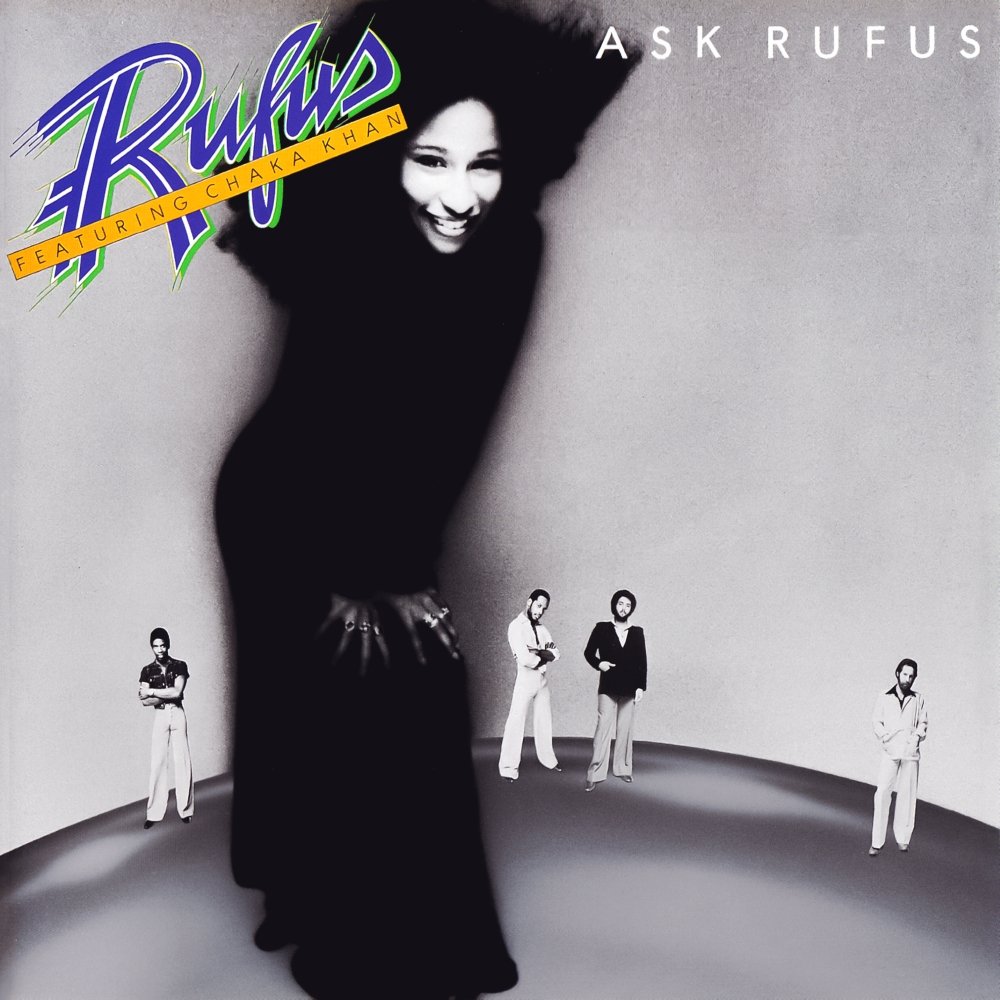
Rufus and Chaka’s second number-one R&B album is also their second classic, and while it stands shoulder to shoulder with “Rufusized” in terms of quality, it’s a completely different beast. In fact, it’s different from everything else they ever did, and for three very specific reasons.
First: this is the one Rufus album where Chaka is not required to perform vocal alchemy—turning straw into gold on songs that only exist to survive the demo stage. Every cut here is strong on its own. These songs don’t need Chaka Khan to come in swinging like a Marvel villain to elevate them. They’re already built. Solid. Thoughtful. Fully formed.
Second: Chaka actually steps back—just a little—and lets Rufus feel like a band again. This is the rare moment where the album reads as a true collective effort instead of “Chaka Khan featuring some very talented gentlemen trying to keep up.” Everyone gets oxygen. Everyone matters.
And finally—and this is the big one—Chaka shows restraint. Real restraint. For perhaps the only time in the Rufus catalog, she isn’t battling the music, daring it to keep up. Instead, she inhabits it. She accents it. She shades it. She sings like a jazz vocalist who understands that sometimes the most devastating move is knowing when not to scream.
Like many strong-willed but quietly insecure Aries women, Chaka had something to prove. Critics had side-eyed the relatively slapdash vocals on the self-titled album that followed the universally adored “Rufusized.” Yes, that record gave us the rotund classic “Sweet Thing,” but elsewhere her vocals sounded rushed, even worn. Touring was relentless, studio time was scarce, and Chaka—famously allergic to repeated takes and post-production duties—was not about to hang around for too long. Two passes, maybe three, and she was gone.
So when they finally stepped off the road and sat down to create, what emerged was something otherworldly—light-years removed from their funkier work. Chaka remains the focal point, but instead of attacking the music, she folds herself into it. For the first time, she treats the arrangements with reverence, using her voice to shape the mood rather than dominate it.
This is an album about ambiance and melody, which is why they smartly front-load “At Midnight (My Love Will Lift You Up)”—a full-throttle reminder of what Chaka can do when she feels like it. (Though I will say: the high end across this entire album feels oddly muffled, and her vocals here sit too far back in the mix.) Still, it’s a romp—Chaka airborne, doing exactly what you expect.
Then comes the pivot.
"Close the Door" drops into a hush so intimate it feels like she’s whispering directly into your ear. Gone are the machine-gun vibrato and the scorched-earth screams. Even when she ad-libs, she reins it in. You can practically hear her saying, I could blow this up… but I won’t. And the gamble pays off.
“Earth Song” continues this meditative glide, pairing laid-back vocals with cosmic, vaguely hippie lyrics and a restrained Rufus cushioned by a full orchestra. Chaka herself has cited this as a favorite, and it sets the stage beautifully for what might be the most inspired performance of her career.
“Everlasting Love” finds Chaka digging deep—scraping the bottom of her cavernous range and pulling out something rich, seasoned, and adult. There’s no wild-child nonsense here. This is maturity on wax. She stretches the song slowly, letting it simmer until the final verse blooms with quiet authority. This is the kind of singing that permanently shuts critics up. Few soul singers—male or female—could touch this level of control and emotional intelligence.
And then side two somehow gets even better.
“Hollywood,” with its “Charlie Brown”-esque piano figure, keeps the quiet storm rolling. Chaka starts in a near-whisper and builds to trademark screams that feel earned, not indulgent. “Magic in Your Eyes,” penned by Chaka herself, strips things down even further—intimate, reflective, percussion-led. This is as close as we ever get to hearing her think out loud and the result is an exercise in reflective tenderness, words we would not have used to describe Khan a year prior.
“Better Days” warms things up just a notch. Chaka begins low and honeyed, then gradually lets the seams split. The bass churns. The background vocals wobble ever so slightly off-key—in the best way—as she weaves in and out, spilling over the groove like hot cocoa, until the song dissolves.
And then comes the closer.
“Egyptian Song” is pure drama. Drawing on Middle Eastern textures—hand cymbals, strings, mysticism—Chaka paints a distant landscape before detonating it with “here is a melody for you.” By the second verse, the tension is already peaking. When she hits “to sing, to dance…,” it seems impossible she could go higher. She does anyway, finishing the album on a breathless, orgasmic exhale. The coda of the song has the drama sweeping up and then fading back into the sand with several whips of the desert breeze. A remarkable performance all the way around.
After “Ask Rufus,” Chaka’s disinterest in remaining with the band becomes increasingly obvious, as she had signed her solo deal less than a year after the album's release. Her voice continued to mature—smoother, broader, less abrasive—but on “Street Player” and “Camouflage,” she was clearly checking out, already mentally packing for her solo career while wrestling with a well-documented, talent-draining drug problem.
Looking back, “Ask Rufus” feels intentional—like a swan song disguised as a group album. And even though they continued releasing music together up through 1983, a soft goodbye and the end of an era was exactly what "Ask Rufus" was .
09
Prince
"1999"
1983

The truth is, we never know what’s coming. Nobody would’ve guessed that Prince wouldn’t make it to 60, or that the “stones” in The Rolling Stones were apparently referring to their ages. And when 1981’s “Controversy” extended Prince’s so-so chart performance, there was no way for us—the casual, pre–social media faithful—to know what was quietly incubating in Minnesota.
In hindsight, many people treat 1983’s double album “1999” as a mere stepping stone to “Purple Rain,” but at the time, “Controversy” felt like it existed in an entirely different, lesser universe. Nothing about that record suggested what Prince was about to unleash by the end of 1982.
That said, Prince did know some things. He always did. For one, he knew that whatever came next couldn’t be quite so cryptic and off-putting. I mean—who exactly was a song like “Jack U Off” meant to reach? College radio DJs? Horny art-school weirdos? Certainly not America.
This next chapter had to cross over. It had to play on white radio and work for the brothaz in Detroit and not send the soccer moms of Des Moines scrambling for the phone to complain to the station manager. Prince could feel Michael Jackson revving the engine, ready to drive an 18-wheeler straight through the mainstream color barrier, and he understood that if he wanted to ride that wave, his music—and image—had to be MTV-ready.
Which meant changes. He had to smear some activator into that brittle, rebellious hair. Phase out those thigh-high boots. And put some pants on for Pete's sake!
The leap from “Controversy” to “1999” is one of pop music’s great caterpillar-to-butterfly transformations. The thigh-highs became more socially acceptable ankle boots. The jeans appeared. The curls got juicy. But none of that would’ve mattered one damn bit if the music hadn’t sounded so revelatory. Prince wasn’t the first to use Oberheim synths or the Linn LM-1 drum machine, but the way he wielded them—paired with his sharpened songwriting—was something else entirely.
On the double album, the three big hits consume all of Side One, starting with the towering title track. If you had to boil the entire 1980s down to a single word, it’d probably be reverb. Phil Collins’ happy studio accident on “In the Air Tonight” had already changed the rules, making drums sound unnaturally massive. Prince applied that same excess to keyboards, slathering on effects and making them the focal point of the compositions. From there on out, gated drums and cavernous synths ruled ’80s pop like Vladdy Putin rules shirtless photo ops.
Those first three tracks—“1999,” “Little Red Corvette” (juvenile sexual metaphors and all), and “Delirious”—were Prince’s passport. They cracked MTV wide open and welcomed in those soccer moms with open arms.
Side Two is the “Black side,” trimmed down to just two songs but heavy with intent. The filthy funk of “Let’s Pretend We’re Married” and the elastic groove of “D.M.S.R.” served notice that Prince hadn’t abandoned the brothaz. If anything, he reminded us—subtly but firmly—that his alter-ego Jamie Starr was also behind Vanity 6 and The Time, acts that were running laps around “Controversy”-era Prince on the R&B charts.
For me, though, Side Three is the album’s emotional core—the most Prince of all four sides. “Automatic” is cold, clanky, and stripped of sparkle, replacing brightness with eerie R2-D2 bleeps and creeping dread. “Something in the Water (Does Not Compute)” is even more unsettling—icy, brittle, apocalyptic. It sounds less like a song than a tragic goodbye note, and it remains one of my favorite Prince tracks of all time. The side closes with “Free,” a solemn and gorgeous meditation on liberty that felt especially plausible—and terrifying—during the Cold War.
Side Four opens with another funk workout, “Lady Cab Driver,” this time powered by live drums. “All the Critics Love U in New York” is Prince talking about Prince—an East Village–coded New Wave dance number recalling those early days when places like New York were abuzz about this upcoming talent, even drawing the praise of folks like Mick Jagger and Paul McCartney. “International Lover” is admittedly a bit of a shrug, though “International Lover (Take 1, Live in Studio)” on the “1999” deluxe edition improves on it significantly.
For me, “1999” was a total revelation. The imagery. The B-sides. The physical vinyl with Prince’s eye staring up at you from the label. But more than anything, it was the music—so fully realized, so alien, it felt almost otherworldly. I lived inside Prince’s universe and it was records like "1999" that gave me the very air I breathed.
And even though he knew what was coming next, I had no idea it would somehow get even better.
A singular, once-in-a-planet talent.
The earth will never see his like again.
But we will...
08
Seal
"Seal" (1994)
1994
Seal had not yet wandered into that beige, Starbucks-playlist phase of his career—the one defined by safe, by-the-book remakes of soul standards everybody done already heard to death. In the early 90s, he was still making adult contemporary music for the cappuccino crowd, sure, but good adult contemporary: sophisticated, emotionally evasive only when it needed to be, and elevated by those hickory-smoked, sandpaper vocals that could sell despair like it was a luxury item.
This, his second self-titled album, followed a deeply satisfying debut that had conquered dance floors worldwide, yet it made almost zero impact on the R&B charts. Not because it wasn’t worthy—but because it didn’t play by the rules. In my book, this album is a near-masterpiece that was completely overshadowed by one song: “Kiss From A Rose.” A phenomenal track, no doubt, but also the kind of hit that ends up flattening the rest of an album’s identity in the public imagination.
When the needle hits the groove, Seal opens with “Bring it on!”—and for once, an artist actually means it. His first album rode the club-ready momentum of “Killer” and “Crazy,” but a series of personal upheavals landed him in the hospital and then back in the studio with Trevor Horn, where the mood shifted dramatically. This is not music for your feet. This is music for your chest cavity.
Where the debut leaned heavily on drum machines and dance-floor propulsion, this album turns inward. The arrangements are sweeping, lush, and unapologetically dramatic. Strings swell. Pianos drift. Flutes, percussion, and atmosphere wrap themselves around the listener in a dreamy, milky fog. These songs aren’t built to move bodies—they’re built to make you sit still and feel uncomfortable in your own thoughts.
“Prayer for the Dying,” the lead single, went absolutely nowhere on the charts, probably because America wasn’t ready for a melancholy meditation on death delivered without a single wink or hooky concession. But musically and vocally, it’s stunning. Seal’s raspy but surprisingly flexible tenor carries a story about a dying friend—apparently suffering from heroin-induced AIDS—without ever sounding preachy or self-important. It’s grief without grandstanding.
Then there’s “Dreaming in Metaphors,” even stranger and more ambitious, riding a 7/8 time signature that feels as unstable as its subject matter. The vocals soar, the arrangements feel almost otherworldly, and the whole thing hovers in that uncomfortable space between beauty and unease. “Don’t Cry” and “Fast Changes” follow similar emotional terrain with slightly diminishing returns, but the mood never breaks.
Side two kicks off with the behemoth: “Kiss From A Rose.” Forget the Batman association. Strip away the movie tie-in. What you’re left with is one of the most gorgeously constructed pop songs of the decade—immaculately sung, emotionally layered, and still capable of producing goosebumps decades later. The overdubs are inspired, the metaphor is absurd yet devastating, and Seal somehow turns watching a friend die into something achingly tender. A career-defining song if there ever was one.
But the album doesn’t collapse under the weight of its own hit. “People Asking Why” creeps in quietly, Stevie Wonder’s “Summer Soft” hovering somewhere in its DNA, starting low and rising heavenward as Seal interrogates his own success. Fame, money, acclaim—what do they mean when stacked against the fragility of life itself?
The closest thing to a groove is “Newborn Friend,” a mid-tempo lament disguised as pop. Seal wonders aloud whether happiness can be conjured through ritual, chant, or sheer willpower, all while delivering one of his strongest vocal performances on the album. Joni Mitchell even drops by for “If I Could”—her presence minimal but meaningful, adding gravitas to a track soaked in mutual restraint and emotional fatigue.
The album closes on a note that tries to gather the pieces, reassuring us that after all the minor keys and existential dread, Seal isn’t ready to throw in the towel just yet. It doesn’t quite land. Honestly, I would’ve preferred he leaned harder into the darkness and left us stranded there. Ending it on unresolved despair would’ve been braver. That would’ve really sealed the deal.
Still, this album remains deeply personal to me. It is forever the soundtrack of freezing winter rides on a rickety LIRR train, trudging from Long Island back to Manhattan, watching snow-covered ground blur past while the music perfectly mirrors that specific, bone-deep loneliness. It made Seal a pop star—briefly—and it stands as his most emotionally cohesive work.
Seventeen years later, he finally topped the R&B charts with an album of those old soul remakes. By then, though, his rose had long since gone gray.
07
Stevie Wonder
"Innervisions"
1973

FINISH WRITING
Who's a better painter, Vincent VanGogh or Jean-Michel Basquiat? Who's a better writer, Shakespeare or Hemingway? It all depends on who you ask, I guess. Those who are in the know have extensive knowledge of other geniuses and can make an objective assessment based on that knowledge. I have not heard even a minute portion of all of the albums that came out in 1973 but I have no qualms in proclaiming that "Innervision" is far and away the best musical expression of that year even not having heard all of the other stuff that was released that year. If "Innvervision" indeed has a rival, I certainly would have heard about it by now. The truth is that this record elucidates how far ahead of the pack Stevie was when his genius was in full bloom.
Every single one of the nine songs that make up this record is a classic; there is not song here that does not hit on all cylinders. Even though "Talking Book" is my favorite Wonder album, "Innvervision" is a more complete record objectively speaking. The songwriting, the singing and especially the production come together to create a singular listening experience that can only be described as remarkable. Even though each individual song is a revelation on its own, it would be silly to single out one song over the other. What makes a piece of art a masterpiece is the impeccable decision-making of the artist, the discipline to know when to keep at it and when to put down the brush as to avoid overembellishment. "Innervision" represents an artistic expression that could have only been ordained by a higher power because it simultaneously displays a level of creativity that overwhelms the flood gates exercising a restraint in embellishment that no mere human possessed at any other point in history.
“Innervisions” is an album that absolutely, 100% lives up to all the hype a hoopla. It is simply a breath-takingly innovative collection of songs start to finish and the work that established Stevie Wonder as a true legend and musical genius at such a young age. Even as a 5-year old child, I just could not get enough of this record. How fucking amazing is “Too High” with its myriad keyboards and creepy background singing? “Visions” is a solemn yet effective harpdriven track while “Golden Lady” is the perfect, dreamy ending to Side 1. Things stay on the same stellar level with songs like the funk classic “Higher Ground”, the multilayered, ominous “Jesus Children of America” and “He’s Misstra Know-it-all,” which are both incredible examples of an artist at the very peak of his gifts. Stevie had no musical peers in the 70s.
06
The Emotions
"Rejoice"
1977

I generally sidestep anything even adjacent to that old-time religion, but, despite the stain glass in the cover art and wholly holy song titles, this album is an immaculately conceived, beautifully executed production from start to finish. Maurice White knew exactly what he was doing here, and he did it with purpose. The first album he produced for The Emotions, “Flowers,” gave us a delightful preview of what was coming, but this follow-up is where everything snaps fully into focus.
I’m usually drawn to darker, more solemn—hell, even depressing—albums, but this is one of those rare sets that delivers pure happiness and joy from the moment the needle touches vinyl. No buildup required. No mood-setting patience necessary. It hits immediately.
The album opens with their biggest hit, the strident, uplifting “Best of My Love.” The sisters sing with a sense of destiny here—and by the time the song reaches its climax, they’re practically screaming with jubilation, like they knew this was the one that would crack things wide open. It’s joy as a full-body experience.
“A Feeling Is” follows, opening with some beautifully reflective vocals—Wanda, I believe, who also composed the song. Maurice White’s production is razor-sharp, and once again the track ends with those perfectly orchestrated, church-adjacent screams that feel spontaneous but are anything but accidental. That momentum carries straight into “A Long Way to Go,” which is just as strong as the tracks before it, capped off with some spine-tingling, sanctified hollerin’ that somehow never tips into corny.
Things slow down a touch with the gorgeous ¾-time ballad “Key to My Heart,” which showcases the sisters’ harmony vocals beautifully, with Maurice White joining in. The “woo-woo-woo’s” at the end are pure pleasure—simple, playful, and disarming. Side one closes with the upbeat and inspirational “Love’s What’s Happenin’,” probably the weakest track here, but even at its least essential, this album never clunks or drags.
Side two comes out swinging with “How’d I Know That Love Would Slip Away,” a song first recorded and co-written by Deniece Williams. Let’s be honest—they stole this one fair and square, because their version is superior. The vocals are exquisite, the production is peak Maurice White, and that guitar riff sets up the track perfectly before sliding into those iconic “shoo-be-doos.” They’ve been imitated endlessly—Alicia Keys, Toni Braxton, Mariah Carey—but never duplicated. The Emotions usually sing with an inherent gentleness, but here there’s a little sass in the delivery that’s irresistible.
“Don’t Ask My Neighbors” was another big hit, and once again Maurice White proves himself a master of mood-setting through percussion—sticks, bongos, castañuelas—and subtle background vocal flourishes. Nothing is overdone. Often you don’t even know whether to sing along with the lead or the background vocals because both are so perfectly mapped out.
You might think the album is winding down when “Blessed” opens with a low Moog line and a tangle of gospel moans and murmurs, but you’d be dead wrong. The groove is slow, yes, but it simmers and builds to an emotional crescendo that feels like it could only have happened if Maurice let the feeling override technical perfection. It sounds like it was recorded in a church, imperfections and all, and that’s exactly why it hits so hard. This is one of the most inspired performances of their career. Pure magic.
And then—just when you think they’ve already given you everything—the title track closes the set. And what a closer. I’ve always loved albums that save the money shot for last (see “Compositions,” “Sign O’ the Times,” “Ocean Rain”), and “Rejoice” absolutely delivers. It opens with a sizzling cymbal, slides into a disco-flavored, percussion-heavy intro, then locks into something that’s part dance floor, part revival tent. Disco meets church, executed flawlessly.
The tempo, the mood, the precision—it’s impossible not to move, impossible not to get goosebumps. The vocals are locked in, inspired, joyful, and when Wanda holds that long note near the end, it ties the whole album together in one final, euphoric exhale. It’s one of those songs I hate to hear end—but that’s the point. It leaves you spent, exhausted, and completely satisfied.
I shouldn’t love this album as much as I do. My mother played it to death, and for years it was the soundtrack to chores, yard work, and general childhood misery. But credit where it’s due: a lot of the music I cherish most now came straight out of her collection, and “Rejoice” is one of those records that only improves with time. The vocals sound like they were captured in just a few takes, imperfections left intact, feeling prioritized over polish.
That’s real soul music.
You go, girls.
05
Michael Jackson
"Off the Wall"
1979
I don’t want to be a hater, but no other Michael Jackson album deserves to be anywhere near this countdown. “Off The Wall” is so fresh, so fully realized, so brilliantly produced and sung by everyone involved that everything Michael did afterward simply pales in comparison. Sorry, “Thriller,” but this is the album that’s actually so good it’s frightening.
Like the great breakthrough albums by Coldplay, Stevie Wonder, Seal, Maze, and others, there’s something deeply endearing about an artist who arrives with vulnerability and naïveté intact. “Off The Wall” wasn’t Michael’s first solo album—it was technically his fifth—but for all intents and purposes, it’s the first time we get the full measure of his wizardry. Michael was never really an album artist after this; even “Thriller” plays more like a perfectly sequenced greatest-hits collection, with songs that don’t necessarily hang together thematically. “Off The Wall,” on the other hand, feels almost like a concept album—its concept being the coming-of-age of a once-in-a-generation interpreter of song.
(Hints of this emotionally exposed, post-adolescent brilliance first surfaced on The Jacksons’ “Destiny,” an album that deserves must-have status in its own right. Michael sounds so vulnerable there it’s almost uncomfortable—and that’s exactly why it works.)
If “Off The Wall” has a single unifying theme, it’s vulnerability.
Even in the opening moments of “Don’t Stop (‘Til You Get Enough),” Michael isn’t strutting—he’s asking. Politely. Tentatively. Maybe sorta wondering if you might want to dance. We don’t hear the answer, but we feel it in that ecstatic “whooo!” that kicks the song into gear. The track is a percussion-heavy dance-floor monster that somehow never ages, and the production trick at the end—dropping everything but the percussion—was genius. I’d heard a version of that before on The Emotions’ “Special Part,” but here it’s elevated into something iconic.
“Rock With You” follows, deservedly hitting No. 1 and showcasing some of the most beautiful lead-and-background singing of Michael’s career. This is where we really hear how masterful he was at harmonizing with himself, creating an intimacy his earlier work never quite reached.
“Working Day and Night” is a straight-up classic—relentless percussion, handclaps, piano, horns, and Michael using his voice like another instrument. The grunts, gasps, and yelps aren’t gimmicks; they’re rhythmic weapons. I challenge anyone to put this on and remain seated.
Side one closes with “Get On The Floor,” an aggressive, glorious disco burner powered by Louis Johnson’s popping bass and John Robinson’s relentless drum work. From the moment the strings hit, you’re done—you’re on the dance floor. Michael rides the groove effortlessly, hee-hawing with delight as the track fades out. And yet, beneath all that joy, there’s still a trace of insecurity in his voice—something fragile and human that I find impossible to resist.
Side two opens with the title track, and honestly, it doesn’t get much better than this. The musicianship is immaculate, but it’s Michael’s vocals that stop time. This song is a reminder—one that history often obscures—that he was an astonishing interpreter of song. His phrasing, tone, control, and purity here are unmatched in popular music. “Off The Wall” is one of the very few songs I can listen to back-to-back without diminishing returns, thanks equally to Michael’s performance and Rod Temperton’s flawless writing. This is Temperton’s finest hour.
“Girlfriend” and “She’s Out of My Life” continue to highlight Michael’s vocal brilliance, leaning heavily into the adolescent fragility of his voice. Remember—he was only about 18 or 19 when he recorded these. “Girlfriend,” written by a then-thirty-something Paul McCartney, sounds in Michael’s hands like it was penned by a preteen Emmanuel Lewis. And that’s intentional. Michael uses his vocal instincts to de-sexualize a song about sexual impropriety, and somehow makes it work. “She’s Out of My Life” is devastating in its restraint and serves as the emotional thesis statement for the album’s obsession with vulnerability.
But none of that quite prepares you for the simple, jaw-dropping brilliance of “I Can’t Help It.”
To take a Stevie Wonder composition and somehow make it even more transcendent requires a level of sensitivity, restraint, and vocal intelligence that very few singers possess. Quincy Jones does his usual magic with the arrangement, but it’s Michael who turns this into something sacred. His control is unreal. He knows exactly when to pull back, when to let the music breathe, and when to gently release emotion—especially in that final fade, where he finally lets go. In anyone else’s hands, this song would still be beautiful. In Michael’s, it’s untouchable.
The only song I can even mention in the same breath is Roberta Flack’s “Jesse,” another masterclass in vocal empathy. But even that falls short. “I Can’t Help It” exists on its own plane. No song touches it.
“It’s The Falling in Love” is a perfectly good duet, but sequencing it right after “I Can’t Help It” dooms it to Class B status. “Burn This Disco Out” is pure filler. A smarter sequencer would’ve placed “It’s The Falling in Love” after “Girlfriend” and ended the album with “I Can’t Help It,” which would have been a flawless closing statement.
In the end, “Off The Wall” was also Quincy Jones’ true coming-out party as the most important producer in pop music—and the quiet precursor to the kind of superstardom that ultimately destroyed Michael Jackson. The fame, the spectacle, the scandal all came later.
But this is how I choose to remember him: young, vulnerable, joyful, searching—and singing his ass off.
(And yes, as I was writing this, I had “I Can’t Help It” playing for reference. And yes, once again, tears streamed down my face as it faded out. It really is that beautiful.)
04
Stevie Wonder
"Talking Book"
1972
“Talking Book” kicks off with Stevie Wonder’s first monster hit of the ’70s, the deceptively simple and quietly perfect “You Are the Sunshine of My Life.” The verses are passed around between three different leads, giving the song a warmth and intimacy that feels almost conversational. (Did Prince steal this idea for “1999”? Absolutely. And good for him.) There’s something disarming about this track—its complexity hides in plain sight, making it sound light-years ahead of its time while pretending to be effortless.
“Maybe Your Baby” is my least favorite song on the album, and that’s only because Chaka Khan came along later, stole it, and completely incinerated it vocally. Sorry, Stevie, but Chaka shredded this one so thoroughly that even you had to acknowledge it—hence “Tell Me Something Good,” the song you gifted to Chaka after hearing her rendition of "Maybe Your Baby". Still, Stevie retains the definitive version of “You and I (Can Conquer the World),” a love song so indelible it’s been covered by everyone from O’Bryan to Vesta to Michael Evans on “Good Times.” “Tuesday Heartbreak” is a funky, satisfying romp that allegedly deals with heartbreak, though it sounds like Stevie having way too good a time for that to fully register.
One of Stevie’s great sequencing habits is closing side one in a dreamy, inward-looking haze, and “You’ve Got It Bad Girl” is where “Talking Book” quietly ascends into masterpiece territory. From those opening keyboards, you know you’re somewhere special. The song is layered with musical vapor—soft synths, whispered vocals, spoken asides—that practically demand headphones. The attention to melodic detail is immaculate, and this is the moment where Stevie stops flirting with greatness and fully commits to it.
Side two opens with the seismic event known as “Superstition,” a track that still sounds like it was beamed down from another planet. It’s impossible to overstate how futuristic this must have sounded in 1972—and frankly, it’s still lapping most contemporary music. If James Brown turning the guitar into a percussive weapon was one production watershed, then Stevie’s use of the clavinet as a full-fledged rhythm instrument is another. This wasn’t just a hit; it was a redefinition of groove.
“Big Brother” follows as the clumsier cousin to “Girl Blue” from “Music of My Mind.” Where “Girl Blue” is mystical and unsettling, “Big Brother” is more direct—a harmonica-led scolding of politicians who exploit poor Black communities for votes. It’s effective, but I still prefer the earlier song’s eerie ambiguity. “Blame It on the Sun” brings things down to a wistful mid-tempo glow, Stevie sounding resigned, tender, and—once again—naïve in a way that feels utterly sincere.
The album closes with one of the most emotionally devastating one-two punches in his catalog: “Looking for Another Pure Love” and “I Believe (When I Fall in Love It Will Be Forever).” “Looking” is intimate and accepting, Stevie sounding bruised but not bitter, while Jeff Beck’s blues-drenched guitar nearly steals the song out from under him. “I Believe” is sprawling and imperfect, its slightly sloppy drums and frayed edges adding to its emotional gravity. Stevie sounds tired here, not defeated but worn down, leaving the door cracked open for love to return someday. It’s a beautiful, human ending—warts and all—to a landmark album.
And this is where we have to talk about the Grammys, unfortunately.
I hatehatehatehate that we’re expected to use the Grammys as any kind of meaningful barometer for artistic quality. It’s like taking your goldfish, Gippy, to a car dealership and letting him decide which vehicle you should buy. Goldfish can’t drive. They also lack the empirical experience to assess whether the sticker price aligns with the Kelley Blue Book. The people who run the Grammys, meanwhile, seem just as clueless about music quality as Gippy is about sedans—except Gippy has the moral advantage of not being corruptible by industry politics, because money means absolutely nothing to him.
So when I look at the all-white nominees for the 1973 Album of the Year and see that “Talking Book” isn’t even mentioned, I’m confident Gippy would have done a better job. Yes, Ray Charles’ “Modern Sounds in Country and Western Music” was nominated in 1963. Yes, Isaac Hayes’ “Shaft” soundtrack was nominated in 1971. And yes, both lost—to “Judy [Garland] at Carnegie Hall” and Carole King’s “Tapestry,” respectively. Between those moments? Crickets. No Black artists. But sure, tell me again how this organization exists to “honor artistic achievement…without regard to sales or chart position.” And while you’re at it, I’ve got some oceanfront property in Kansas I’d love to sell you.
Critics still debate whether Stevie’s classic period begins with 1971’s “Where I’m Coming From” or 1972’s “Music of My Mind.” Both marked a sharp break from Motown’s lagging instincts, especially in the wake of Marvin Gaye’s “What’s Going On” and the Temptations’ psychedelic pivot. But no one argues about “Talking Book.” Released the same year as “Music of My Mind,” it was the undeniable statement—the moment Stevie fully seized control of his career through bold songwriting, dense overdubs, clavinet-driven funk, and a strange, insular sonic world that felt miles ahead of even Marvin.
“Talking Book” may not have Stevie’s strongest overall song lineup—that honor belongs to “Innervisions”—but pound for pound, it’s his most intimate. He sounds confident in places, sheepish in others, sometimes barely above a whisper, sometimes letting his voice crack or drift out of tune. Those imperfections aren’t flaws; they’re the point. They create a closeness between Stevie and the listener that more polished records of the era simply don’t have.
That intimacy—more than the hits, more than the innovations—is why “Talking Book” scrapes its way onto this list while other technically superior albums fall just short. And yes, the Grammys eventually gave Stevie his due during this period. Fine. I’ll begrudgingly give them that. But they still owe him one more. At minimum.
Because “Talking Book” isn’t just great. It’s essential. And no amount of institutional blindness—past or present—can change that.
03
Rufus and Chaka Khan
"Rufusized"
1974

OK… whew… where do I even start with this one? I’ll try—try—not to let this run on forever, but I can never say too much about this woman or this album. Even Chaka herself has said that this is her favorite work of the Rufus era, and honestly, what argument could you possibly make against that? This record is just too much fun, and Chaka is too crazy, too ballsy, too confident, and too freakishly talented to be ignored. More than any other Rufus project, this album captures the exact moment when a supremely gifted singer stops asking for permission and just takes the room.
Rufus and Chaka Khan had already scored big with “Tell Me Something Good” the year before, and their first two albums were decent enough to establish that yes, this woman could sing and yes, the band could play. But “Rags to Rufus” did not prepare us for what came roaring out of the speakers on “Rufusized.” Somewhere in between those releases, Chaka Khan underwent a transformation—shed a skin, burned a bridge, killed off the timid version of herself—and what emerged was a singer operating with full awareness of her power.
The album kicks off with “Once You Get Started,” and from the jump it’s clear this is no longer a group effort so much as a platform. Horns stab, the groove locks in, and then Chaka storms the center of the track, screaming like she’s claiming territory. We’ve heard screamers before, sure—but Chaka’s screams are different. They’re unhinged. She lets her voice scratch, crunch, gargle, and tear at the seams in a genre where women were still expected to sound smooth, controlled, and pretty at all times. Chaka Khan said fuck that and built her legacy on jagged edges. I was mesmerized by this approach to singing—still am.
“Somebody’s Watching You” is ostensibly a funk sermon, but the message is almost beside the point. When she growls, “Don’t get me wrong, there’s more to life than gold / There are fortunes here that can’t be bought or sold,” and puts that deranged emphasis on “life” and “lie,” you realize she doesn’t actually care whether you absorb the lesson or not. She’s not here to save you. She’s here to blow off steam and light shit on fire.
“Pack’d My Bags” is a breakup ballad, but even here Chaka can’t resist warping the language. When she lands on “pay your dues,” the word “dues” becomes a full-blown vocal obstacle course. Any other singer would’ve been told to smooth it out. These histrionics, though, became Chaka’s calling card—and the wild thing is, they worked. She’s not interested in sounding pretty, even on a tender love song. Legend has it she liked to get in, seize the moment in a take or two, and get the hell out of the studio. You can hear that urgency all over this record.
“Your Smile” shows the other side of her voice—warm, restrained, almost lulling. She holds back just enough to sell the intimacy, then lets loose ever so slightly when she stretches “needed” into a tumbling, joyful sprawl. The title track that closes Side One gives Rufus a chance to stretch musically. I usually skip it.
Side Two opens with “I’m a Woman (I’m a Backbone),” a song that would be utterly forgettable if not for Chaka’s confidence and sass. On the first two Rufus albums, she often sounded talented but tentative. That version of Chaka is gone. Here, she’s tender one second and venomous the next—inviting you to lay your head on her chest before spitting “give a little harder for my life to pay.” She ends lines with these strange bubbling, gargling sounds that are hard to describe but instantly recognizable as her. She shifts emphasis, bends rhythm, ignores intonation when it doesn’t serve her mood. Total control. Total refusal.
“Right Is Right” isn’t much of a song on paper, but Chaka tosses it into a vocal blender and makes it live. Her spitfire delivery and the way she stretches “woe” at the end of each line turn mediocrity into momentum. “Half Moon,” a Janis Joplin remake, is where I politely apologize to Janis and say Chaka takes this one. Her phrasing is more grounded, more sexual, more deliberate, while Rufus lays down one of its funkiest backdrops. By the end, she sounds like she’s about to combust.
“Please Pardon Me” is classic unraveling-Chaka. She starts subdued, then slowly comes undone as her stacked background vocals—often slightly off-key, often sung by Chaka herself—pile up and start screaming at the edges. Those imperfections are part of the magic. These aren’t great songs being elevated by polish; they’re average songs being possessed by a singular interpreter.
Then there’s Bobby Womack’s “Stop On By (You’re Welcome),” which doesn’t need embellishment because it’s already a great composition. Tony Maiden joins Chaka on lead, and their voices lock beautifully—Tony even taking the high at points—but by the final stretch, Chaka steals the spotlight with scratchy, ecstatic screams that drip with youthful, feminine exuberance. Bobby’s version is excellent. Chaka’s is definitive.
There were more strong Rufus and Chaka Khan albums to come, and her confidence and skill only grew. But no other release captures—or could capture—the explosion of confidence heard here. “Rufusized” documents the exact moment a wildly talented young woman realized she didn’t have to be “Little Aretha,” because that wasn’t a compliment—it was a leash. Chaka was too wild, too woolly, too unrestrained and occasionally unhinged to live in anyone’s shadow.
The second of Rufus and Chaka Khan’s six Top 5 R&B albums, “Rufusized” is a coming-out party for both singer and band, a seminal moment in ’70s Black music, and one of the main reasons I love Chaka Khan so damn much. Blemishes, rough edges, and all—it’s perfect because it refuses to be.
02
Anita Baker
"Compositions"
1990

When I was a kid, I used to get genuinely terrified whenever someone in a movie got caught in quicksand. I’d cover my eyes, then slowly splay my fingers apart just enough to watch the poor bastard sink, panic, and eventually disappear into that inescapable beige goo. I’ve always had a fear of drowning, but the idea of being trapped—forced to inhale wet sand—felt like the absolute worst way to kick the bucket. Pure nightmare fuel.
Fast-forward ten or twelve years and my absolute favorite female singer, Anita Baker, releases her fourth album, “Compositions.” And just like that, I was back in the quicksand.
At the time, a lot of us—including me—were completely thrown by this record. Everything about it felt wrong: the gloomy artwork, the jazz-leaning arrangements, the pervasive sense of doom compared to the bright, adult-romantic optimism of “Giving You the Best That I Got.” We’d been spoiled by the polished class of Corporate Soul Anita perfected across her first three solo albums. We weren’t ready for these nine shadowy, meandering songs that felt introverted, heavy, and emotionally damp.
To make matters worse (or better, depending on your temperament), the album was produced loudly, with Anita’s voice often pushed back into the mix, as if she were being drowned out by her own creation. I taped the CD onto a cassette and routinely fast-forwarded past at least three songs. I didn’t even bother including “Lonely” on the tape at all—my 19-year-old ears simply weren’t equipped to process anything that smelled remotely like jazz. Eventually, I set the cassette aside for what felt like years.
Then something happened.
I don’t remember when or why, but one day I put the CD on again—and this time I got caught in the quicksand of “Compositions.” Something in me shifted. Those songs suddenly reached past surface pleasure and landed somewhere deeper, darker, and far more personal. I identified with the sorrow and restraint in the music, and the more I struggled to escape that murk, the further I sank. The same bleakness that once repelled me now had me completely in its grip.
I can still admit the album is spotty. But its best moments rank among the very best songs of Anita Baker’s career. Four tracks in particular are untouchable: “No One to Blame,” “Talk to Me,” “Fairy Tales,” and—yes—“Lonely,” the very song I’d once erased from existence. The melancholy running through these tracks had me transfixed, shackled at the ankles, held prisoner. And here’s the wild part: this album is the reason I got into jazz. Real jazz. “Lonely” and “Fairy Tales” opened a door to music that could be simultaneously devastating and uplifting, sad and strangely euphoric. They also gave me a lifelong affection for moody, melancholy music well outside of R&B.
Anita’s vocal on “No One to Blame” has brought me to tears more times than I can count. I remember driving on a road trip with another Anita fan and popping this album in. We didn’t even make it through the second song before she asked me to turn it off because it made her feel depressed. I smiled. That reaction meant Anita had succeeded. She made us feel exactly what she intended—some of us just process gloom as joy.
I’m not sure how I would’ve received Anita Baker had I discovered her after falling in love with belters like Chaka Khan, Aretha Franklin, or Vesta. Anita’s contralto is silky but restrained, not immediately gratifying, and probably wouldn’t land as hard without those immaculate arrangements behind her. Without her obsessive need to control every aspect of her music and career, she might’ve been pushed aside like Oleta Adams, Phyllis Hyman, or Angela Bofill. That insistence on authorship is exactly why “Compositions” hits me so deeply.
Musically, “Compositions” isn’t objectively superior to her other albums. It doesn’t reinvent Black music or radically expand her sound. But career-wise, it’s a massive risk. After changing the face of Soul music with “Rapture” and following it with the blockbuster “Giving You the Best That I Got,” the smart move would’ve been to stay in Quiet Storm lane forever. Instead, she leaned into jazz textures that had only peeked through before, like on “Good Enough.” Critics called it her attempt to exorcise her jazz demons. Fans were confused. I was too.
Over time, though, I became attached not to her range, but to her choices. Her ad-libs feel simultaneously planned and impulsive, like she rewrote them mid-take. She rarely repeats herself once the song opens up. “Talk to Me” is a masterclass in conversational singing—pleading, negotiating, sighing, hollering—before letting loose during the vamp. “Whatever It Takes” is vintage Anita minimalism: low bass, crisp rim shots, a slow burn that ends with her moaning over her own fading chorus.
Then there’s “Lonely,” the song that alienated fans and thrilled critics. Strip away the overdubs and it’s straight-up jazz, recorded live, and it took serious nerve to release something like that at the height of her commercial power. It took me years to get it. Once I did, I became obsessed. The sneaky piano, the commanding bridge, the extended instrumental outro—it cemented what I’d suspected since “Good Enough”: jazzy Soul is Anita Baker’s strongest suit.
“No One to Blame” remains one of the most emotionally devastating songs she’s ever recorded. Dark piano, classic structure, but sung with an intimacy that feels almost intrusive. When she ends the song at the top of her register, screaming and pleading, it wrecks me every time. “Fairy Tales,” with its relentless groove and extended jam, is another bold move—nearly four minutes of letting the band ride while Anita murmurs approval from the sidelines. Just incredible.
In the end, “Compositions” is the sound of a Black woman risking everything to make the album she wanted to make. No matter what the liner notes say, there’s no universe where Anita Baker wasn’t fully in control here. More than any other record in her catalog, this one reveals a vulnerable, insecure, moody Anita who stopped chasing hits and leaned into feeling. (Ironically, it still won her a Grammy.)
“Compositions” is musical quicksand. It’s bleak, heavy, and inescapable—and once it pulls you under, it doesn’t suffocate you. It makes you feel alive. For me, that darkness has always felt like joy. And that’s why it ranks as one of the greatest albums of my life.
01
Prince
"Sign '☮' the Times"
1986

So bittersweet…
Can I say that “Sign ‘☮’ The Times” is my favorite album of all time? Yes—and no. Yes, because as it was originally released, no other album leaves me feeling so full, so satisfied, so completely content when it ends. And no, because “Sign ‘☮’ The Times” is not the album we were supposed to receive. What we got was the crippled war-veteran version of a three-album behemoth called “Crystal Ball”—a stitched-together amalgam of recordings from the aborted “Camille” and “Dream Factory” projects.
Thanks to the wonders of the internet and i-products, I’ve been able to reconstruct “Crystal Ball” as closely as possible—using the originally intended songs (as far as anyone knows) and their general order, though not the exact sequencing. All I can say is: wow. “Crystal Ball” has a looser, funkier, more chaotic feel than “Sign.” It’s actually more diverse. The additional tracks inject a rougher funk texture that turns the project into the ultimate apocalyptic party album—messy, fearless, and overwhelming in the best possible way.
I had completely ignored “Rock Hard In A Funky Place” when it appeared on “The Black Album,” but here, nestled among the Camille material, it makes perfect sense. “Crystal Ball,” more than the compromised “Sign ‘☮’ The Times” we were handed, captures every facet of Prince’s personality: the quirks, the neuroses, the tenderness, the religiosity, the hedonism, the insecurity. It’s darker, funkier, and more unhinged—a victim of what may be the greatest musical crime of the century.
You have to imagine those record executives kicking themselves now, because like the Beastie Boys’ “Paul Boutique,” this album in its original form would almost certainly be regarded as the definitive record of the 1980s and beyond. Tracks like “Birth of the Flesh” (later diluted into the merely decent “Escape”), “Good Love,” “Joy In Repetition,” “Shockadelica,” “The Ball” (mutilated into the insipid “Eye No”), and the epic “Crystal Ball” itself make the project an unsurpassable display of musical brilliance. Even B-sides like “Ha Ha Ha He He Hee” signaled an artist on a manic, possibly chemically enhanced mission to prove something.
It's kind of koo-koo bananas to think that arguably the one of the weakest track on the set is the the Top 5 hit “You Got The Look.” And even as immaculate as “Sign ‘☮’ The Times” is, “Crystal Ball” would have blown the entire idea of musical genius wide open. My only real complaints about “Crystal Ball” remain “The Cross” (I still can't get into its Christian Rock feel) and the original sequencing of the final side, which would have closed with “It’s Gonna Be A Beautiful Night” coming after “Adore.”
Still, given the seismic impact of the double album we actually received, one might argue there’s no point mourning what never was. But I’ll cry over that spilled milk forever. Prince effectively had to give up seven of his twenty-two children for adoption—and most of them ended up in the worst foster homes imaginable: buried on third-rate soundtracks like “Bright Lights, Big City,” exiled to forgotten B-sides, awkwardly reshaped and sent back out into the world, or worst of all, left to rot unloved on the “Graffiti Bridge” debacle.
And yet—even with those corporate-mandated amputations—“Sign ‘☮’ The Times” still represents Prince’s musical summit. It is his most brilliant statement, one he’d been building toward since 1978. The speed at which he arrived there is rivaled only by The Beatles. That alone earns him a seat at the table with Frank Zappa, Miles Davis, Joni Mitchell, and other artists who refused to let pop conventions cage their imaginations.
“Sign ‘☮’ The Times” is not a singles album. It’s a journey. The songs don’t function nearly as well outside the protective arms of the whole; the sum far exceeds its parts. That’s what made slicing it up such a sacrilege. The album rises and falls, veers left then snaps right, blinds you with joy and plunges you into darkness without warning. Extracting singles from it was like cutting the smile off the Mona Lisa and hanging it alone in a frame.
Removing the 10-minute opus “Crystal Ball” forced the entire project to pivot, thrusting the title track into a spotlight it was never meant to occupy. It became something it wasn’t designed to be. I can only imagine how exasperating that must have been for Prince.
By the time this album came out, I was already a full-blown Prince fanatic—and still, I didn’t get it at first. I didn’t understand the title track, “Hot Thing,” “Forever In My Life,” or “It’s Gonna Be A Beautiful Night” for years. Ironically, these are among the less quirky tracks. They just seemed underwhelming next to the rest. Eventually, I stopped listening to individual songs and started feeling the album.
The opening sequence alone is masterful. The title track delivers grim social commentary, then suddenly children shout “play!” and Prince yelps “Oooh doggies!”—and we’re catapulted into the ecstatic rush of “Play In The Sunshine.” That sugar high collapses into the grinding funk of “Housequake,” arguably Prince’s greatest funk construction ever. Sung as Camille, it’s a brontosaurus-sized call-and-response jam that lives up to its own hype.
Then the temperature drops. Hard. “The Ballad of Dorothy Parker” is cold, murky, and unsettling, mixed almost entirely in the low end due to a studio accident Prince wisely left untouched. Like Sly Stone’s “A Family Affair,” it demands headphones and patience. It’s quietly brilliant.
Side two oscillates between lust, playfulness, and abstraction. “Starfish And Coffee” is childlike and surreal; “Slow Love” is classic and restrained; “Forever In My Life” spirals inward with its fractured vocal structure, the result of yet another studio boo-boo that was left intact. It took me years to unlock it, but when I did, I simply could not get enough.
The second disc opens with “You Got The Look,” which I’ve always tolerated more than loved, but it serves as a necessary on-ramp to the masterpiece that follows. “If I Was Your Girlfriend” is one of Prince’s most misunderstood songs. It’s not about gender confusion—it’s about intimacy, envy, and emotional access. The Camille vocal, the eerie minimalism, the whispered ending—it’s one of the most satisfying musical roller coasters of his career.
“Strange Relationship” continues the confession, exposing Prince’s self-sabotaging tendencies. He wants happiness—and then destroys it once he has it. That truth seems easier for him to tell while disguised as Camille. Both the released and “Dream Factory” versions are extraordinary, though I think I prefer the original version with its pinch of Indian flavor, more pounding drums and the original Wendy support vocals.
By the time we reach “Adore,” the album reveals its final heart. This is Prince’s greatest slow jam—not because it screams, but because it seduces. Inspired by Patti Labelle's "If Only You Knew", "Adore" is caressed by a controlled falsetto, Al Green-style restraint, humor, vulnerability—it’s a genuine love song. When it ends, I never want the album to stop.
And that’s the curse of “Sign ‘☮’ The Times.” It’s so good that everything afterward feels like a letdown. “Lovesexy” nearly broke my spirit. People say Prince “shot his wad” here—and if that’s true, he left his followers permanently pregnant with awe, devotion, and respect.
Had the world been allowed to hear “Crystal Ball” as it was meant to exist, I truly believe much of Prince’s later turmoil—artistic, commercial, symbolic—might never have happened. The lesson is simple: you let a genius do his thing. You may not understand it at first, but the world is always better for it.
As brilliant as “Sign ‘☮’ The Times” is, it will forever remain a magnificent, heartbreaking what-could-have-been—courtesy of record-executive idiots who never trusted what they saw in Prince's crystal ball.