.png)


Black Gaddy’s Top Rap Albums
I am not a big fan of rap albums, especially those that came out after 1994 or so. I often find them bloated with too many interludes, guest rappers and bonus tracks. Back in the day, Kurtis Blow and the Fat Boys could express everything they needed to say over 7 or 8 tracks, only requiring an investment of 40 minutes.
Jump to 2005 and 50 Cent’s “The Massacre” has a whopping 22 tracks, lists about 20 producers and runs almost 80 minutes long. Now I see why so many hip hop fans spend so much time lounging at home; there simply is not enough time in a day to listen to these marathon rap albums and hold down a full-time job.

Growing up in Arizona in the 1980s where rap was not played on the radio at all meant that we had to use other means to get our hands on rap records and tapes. My brother was–and still is–absolutely obsessed with hip hop (and not just rap) so I followed his lead. From the early 80s until about 1987, my brother was able to get his hands on rap 12-inch singles and albums from the most popular groups through a DJ friend of his.
We’d borrow these records by the crate and quickly commit them on cassette. (Yes, our bootlegging asses were part of the reason rap records hardly ever went multiplatinum back then.). Tower Records began carrying some of the most popular rap artists like L.L. Cool J and Whodini, but we really didn’t know what we were missing until Yo! MTV Raps and, a bit later, BET’s Rap City exposed us to lesser known artists like Stetsasonic, Boogie Down Productions and 3rd Bass.
There are some rap albums that I continue to rock on the regular and they are listed here. It’s no surprise that most of them were released between 1987 and 1994, the Golden Age of Rap. I was living in New York at the tail end of this era and was now exposed to rap at every turn.
But Diddy had turned it into club music and that’s where I enjoyed it the most, opting not to spend my hard-to-come-by money on a rap or R&B album unless I was sure it was a classic. Being that I simply did not buy rap albums in any significant numbers, this Rap Albums list is shorter than it should be.


But even back then, I didn’t feel rap albums were always of the highest quality, so I preferred to pick out the best songs for a mixtape rather than listen to an entire album from start to finish. These days, I rock a rap playlist on my phone with about 450 tracks by artists of all shapes and sizes; putting this playlist on random play allows me to enjoy a potpourri of songs from the genre without getting bored and falling the hell asleep like Rip Van Winkle.
30
Childish Gambino
3.15.20
2020

I don’t think anyone watching Donald Glover goof around on that quirky "Community" sitcom could’ve predicted he’d turn into the kind of complete artist he is today. I liked him well enough on the show, and I was hooked on the first season (and some of the second) of his iconic "Atlanta". But when it came to his music? I was skeptical. “Childish Gambino” sounded like a dumb stage name, so I figured the music had to be dumb too.
Then along came "3.15.20".
“Algorhythm” flips Zhané’s “Hey DJ” into something that sounds like a cosmic discotheque on the Death Star—distorted voices, jarring sounds, yet somehow perfectly sequenced into the next track. That’s “Time,” a sparse R&B hymn that layers gospel-tinged vocals with sped-up chipmunk effects that stir memories of Saturday morning Smurfs. It’s weird, but it works.
Throughout the album, Gambino shapeshifts. At times he channels Anderson .Paak, Nelly, and Morris Day—laid-back, funky, playful, with hints of that Southern drawl—but then he’ll glide into melodies that echo the soulful weight of early ’70s gangsta-lean grooves, rubbing elbows with Kendrick Lamar’s more meditative side. Just when you’re settling into one mood, the beat suddenly morphs into glossy ’80s electro-funk, somewhere between The System and Bruno Mars. Unlike "Because the Internet"—where he spent most of his time demanding respect and thanking Tina Fey for the "30 Rock" writing job—there’s more confidence here, even when he’s at his quirkiest or most vulnerable. (And yes, I still watch "30 Rock" and try to guess which jokes Gambino wrote.)
The album is full of left turns. “24.19” collapses into a dreamlike drift, like Bowie’s "Low" or a Pink Floyd interlude, only to be yanked into the chaos of “32.22”—a frantic Afro-punk séance built on pounding bass and panicked, breathless chanting. One track drifts into ambient Deep Forest territory, then suddenly erupts into trap house beats. Another channels a cappella grandeur à la “Bohemian Rhapsody” and 70s prog-rock, all while clinging to an Afro-Futurist aesthetic that was buzzing through the late 2010s.
“Summertime Magic” became my jam during COVID—the soundtrack to a summer where the sun blazed but nobody could go out in it. And “47.48”? That one carries the breezy vibe of War’s “Summer” crossed with Stevie Wonder’s “Girl Blue.”
By the time you’ve worked through the first stretch of "3.15.20", the “Childish Gambino the rapper” persona has mostly been hushed, replaced by rhythms, atmospheres, and experiments that can’t be boxed in. Like fellow Funny Black artists, I hesitate to call something this loose and exploratory “rap.” Gambino can (and does) rap, but here he seems intent on dodging any label you try to pin on him.
On paper, an album this restless should sound like a kitchen sink disaster. Instead, it sounds like Donald Glover finally proving that his name—silly as it may be—is no joke.
29
De La Soul
3 Feet High and Rising
1989

I was one of those people who couldn’t get with the hippie-drippy rap of Arrested Development and PM Dawn. I don’t need musicians trying to make me reflect on life’s deeper meanings when all I want is to bob my head and feel entertained. These early ’90s rappers came out trying to prove that hip-hop could be made by dudes who read Kerouac and graduated from HBCUs—not everyone in the game grew up in a housing project where the elevator smelled like piss. Yeah. We get it.
De La Soul leaned hard into that uncomfortable, unconventional Black male persona—a figure I’ve come to call the Funny Black. Their rhymes were off-kilter, self-aware, and often riddled with inside jokes, like on “Can U Keep a Secret.” Even Trugoy’s name sounded like it came from a Dungeons & Dragons manual, but nope—it was just “yogurt” spelled backwards. Apparently David “Trugoy the Dove” Jolicoeur liked his dairy.
The record itself is sunny and sample-heavy, filled with almost childlike storytelling—a hip-hop version of Mr. Rogers’ Neighborhood. “Potholes in My Lawn,” with its “Magic Mountain” sample, was the first song that caught my ear, followed closely by “Say No Go.” But back in the late ’80s, I was more into the urgency of Public Enemy and N.W.A., or the lyrical gymnastics of Slick Rick and Big Daddy Kane. So I tossed De La Soul in the same basket as PM Dawn and wrote them the fucc off.
It would take thirty years for me to circle back to this album and finally listen without prejudice. And to my surprise—I liked what I heard. I still have no clue what these dudes are rambling on about. Dandruff? Lasagna? Plug 1 and Plug 2? Whatever, man. But musically, Prince Paul layers samples on top of samples in ways that feel dense, weird, and incredibly catchy—back when clearing samples didn’t cost your soul.
“Plug Tunin’” is easily one of the best tracks in the genre, even if I don’t know what the hell they’re talking about. And that’s fine. What makes 3 Feet High and Rising so great is its consistency. It rides its laidback, quirky wave all the way through, finishing strong with a string of gems like “Say No Go,” “Plug Tunin’,” “Buddy,” “Me, Myself & I,” and “D.A.I.S.Y. Age.”
I’m pretty sure these guys have other solid albums, too. It might take me another decade to get around to them—but I will. Good stuff here.
28
Mobb Deep
The Infamous
1995

FINISH
Q-Tip produced two songs, "Temperature's Risin'" being the better of the two, even though Quincy Jones did not clear the original sample ("Body Heat").
27
Foxy Brown
Ill Na Na
1996
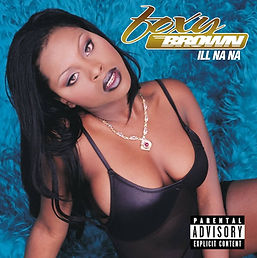
First of all, very appropriate album title, Foxy, because ain't nothing on earth that makes me more ill than some na na.
When it comes to female rappers..man, I just don't know. Monie Love, "Left Eye" Lopes, Yo-Yo and others have all given us some good moments, and Salt-N-Pepa have a Hall of Fame-caliber career, but in a candy-coated world of pop rap. New Jills Megan Thee Stallion, Cardi B and the mega-successful Nicki Minaj have also straddled the line between hardcore rap and pop. When it came to a female being considered a serious rap artist who garners a level respect put aside for the male counterparts (e.g., Roxanne Shanté, Lauryn Hill, Missy Elliott, etc.), Foxy Brown's name has to be up on that list.
My brother is a rap fanatic. We were walking down the street one day and out of nowhere, he turned to me amid a fog of ganja smoke and said, "Foxy is the closest thing we've had to a female Biggie." Since I don't know enough about rap music to support or refute his claim, I just nodded and fanned the noxious smoke away from my face.
Was my brother right?
Again, I don't know, but I reckon that he based his observation on Foxy Brown's 1996 debut album "Ill Na Na", which dropped in 1996 and hit like a tsunami, becoming a landmark album for female rappers in terms or sales and chart placement. And the music was quite good, launching three major singles ("Get You Home", "I'll Be" and "Big Bad Momma", which was released on the 1997 European re-issue.). The songs were naturally sample-heavy, so the X factor is Brown's laid-back, yet confident rapping style that was the perfect mix of gangsta and geisha
26
Kanye West
My Beautiful Dark Twisted Fantasy
2010

White people often don’t even know they’re being racist. Case in point: earlier today I was wandering around the streets of Charlotte looking for a FedEx branch. After a few aimless turns, I finally asked this white guy for directions. He gave them to me clearly, even helpfully. I thanked him and turned to walk away.
But then, as if worried I might forget, he added, “Oh, it’s right next to the Honey Baked Ham. You can’t miss it.”
Can you believe this guy?!
As if Black people need pork products to bolster our memory. Enough with the stereotypes and generalizations already, white people!
That guy had no idea how racist he was being while kindly directing me to FedEx. But what about the Black man who turns his racism inward? Complicated indeed.
But before this current Kanye turned everyone against him, he produced work like "My Beautiful Dark Twisted Fantasy", which plays like a rap opera. From the cinematic opening of “Dark Fantasy,” I feel like I’m being transported into some dystopian episode of "High School Musical". To be honest, I’ve always known Ye more as a producer for other people than for his own solo work. I own "Late Registration" and "Graduation"—both high-quality records—but I don’t reach for them often. As good as they are, neither has towering and reflective moments like "Fantasy" does.
“Gorgeous” is one of those soaring moments. So is “All of the Lights,” a track that showcases Kanye’s superpower: getting everyone to show up. Fourteen different vocalists appear on that track alone. Then comes the thunderous “Monster,” all distortion and swagger, with Jay-Z, Rick Ross, and Nicki Minaj. I don’t really follow Nicki’s music, but maybe I should—she chomps down on this track, snatching the meatiest parts from her male counterparts and strutting away with the whole damn thing.
Ye even lets Rick Ross outshine him on “Devil in a New Dress.” But “Runaway” is all Kanye. It’s long, ominous, and damn near therapeutic—him reflecting on his major fuck-ups and the public caricature he’d become. Pusha T is there too, but more like a shadow than a partner. The song doesn’t give any hint of the full-on implosion of Kanye’s mental health that would unfold over the next decade.
As I took the last bite of my ham and cheese samwitch—OK, so that white dude was right; there was no way I was gonna walk past Honey Baked Ham and not get me some pork—I thought about Kanye and his epic, self-directed fall from grace. Some people equate genius with madness, and West has become the poster child for that theory. Back then, his ego was his greatest enemy. He was so self-absorbed he once bragged that he didn’t need pussy—because he was on his own dick. It was easy to hate West.
Looking at what he used to be and what he is now, all we can say is:
Damn. We miss that Kanye.
The annoying, irritating, egomaniacal one. Because this new, self-hating, racially confused West is too pitiful to even hate. We felt sorry for you for not using your hundreds of millions of dollar to get some professional help. But now your situation is much worse because we simply don't care anymore.
You may be dark and you may be twisted but you are nowhere near beautiful.
This album was, though.
25
Mos Def
Black on Both Sides
1999

The Village Voice’s Robert Christgau once wrote that Black on Both Sides offered such a “wealth of good-hearted reflection and well-calibrated production” that it overwhelmed one’s “petty objections.” And yet, in classic fashion, he still managed to lodge a petty objection: that the album runs too long. See how wipepo be?
The album opens with “Fear Not of Man,” a party jam that blends traditional rap drum programming with what sounds like live percussion, a warm-up track that seamlessly bleeds into the instant classic “Hip Hop.” That track samples Stanley Clarke’s 1978 funk slow-burner “Slow Dance,” overlaid with an eerie piano riff lifted from David Axelrod’s “The Warning (Part 2).” (Axelrod, by the way, was a major player at Capitol Records and helped get Black artists like Lou Rawls on the label, so I mention him with purpose.)
The momentum doesn’t break when “Love” kicks in, either. And while I’m not typically a fan of optimism in music (I like my art moody and unpredictable), this joint just works. The well-placed handclaps bring it all together.
Mos Def was cute back in the day—but was he a good rapper? Absolutely. Through a mix of wit, metaphor, and socially-charged wordplay, he cemented his place in the realm of activist rap. The production choices across the album are a study in crate-digging genius: Christine McVie (née Perfect) shows up as a sample on “Speed Law,” and the legendary Burning Spear rides shotgun on “Do It Now,” alongside a pre-atrophy Busta Rhymes. Ali Shaheed Muhammad even pulls off a DJ Premier homage on “Got,” laying down muffled, analog-style drums that sound like they’ve been lifted from a dusty, warped cassette. It knocks.
One of the record’s greatest strengths is its genre-hopping musicality. Mos Def weaves through styles like a man on a mission—to prove that all of this, all of it, originated with us. There’s the jazzy lounge of “Umi Says,” the punk-metal stank of “Rock N Roll,” and the multi-part suite of “Brooklyn,” which jumps across soundscapes while paying homage to Bed-Stuy, the planet from which so much greatness springs.
And then there’s “Mathematics,” a Preemo-helmed masterpiece that justifies the wait at the album’s end. DJ Premier does what only DJ Premier can do—layers a head-nod beat with scratched vocal samples from Fat Joe, Erykah Badu, and others, crafting a track so compelling it dares you not to spark up and put that mess on repeat.
Sure, the album dips a little in the middle, but the strength of the final few tracks more than compensates. It was a stroke of jeen-yus to save the sole Premier cut for the grand finale.
So I’m left wondering: why does everything fly, everything def, always seem to come out of Brooklyn? There’s gotta be something in the water. Having lived there myself—both before and after the onslaught of gentrification—I can say with confidence: Brooklyn is a breeding ground for Black brilliance, and "Black on Both Sides" is a resounding testament to that fact.
And is the album too long? Only if you’re not interested in the lyrical, musical, and spiritual offerings of a thoughtful Black man. (Looking directly at you, Rob ‘Gau.)
Also, Mos… how the hell does a U.S. citizen mess around and get deported from South Africa? Ain’t it 'sposed ta be the other way around? Umi says this case got “avoidance of child support payments” written all over it…
24
Kendrick Lamar
Good Kid, M.A.A.D. City
2012

FINISH
People love California, especially Japanese people. As an online teacher, many of my clients are from there and when I ask them about where they would like to live if they got transferred to the U.S., they almost invariably answer "California, Gaddy!"
Now, I've been to California on several occasions and one thing I can say about that state is that there are few things from there I care about. The squeegee was invented there. "Weird Al" Yankovic was born there. Bernie Mac was in "Bad Santa" and that movie was filmed there. Well, I guess that's about it.
Oh, but there's one more thing: Kendrick Lamar is from California and he gave us "Good Kid, M.A.A.D. City" is also one of them for sure, thanks to this fantastic album. Like the very California-sounding "Paul's Boutique", "Good Kid, M.A.A.D. City" is an example of storytelling where all the puzzle pieces go together to create a full experience. Lamar's rapping is thoughtful and introspective, like he's reading from the pages of a journal, digging up memories about times. These reflections are different from the fantasy-based gangsta raps from other West Coast rapper insomuch that the street lifestyle is not being glamorized, but reminisced on. "Money Trees" is especially poignant with contributions from Jay Rock, who helps tells a matter-of-fact story of a hustler.
"That's just how I feel."
"Poetic Justice" includes participation from Canadian Bae-cun Drake, long before the historic beef that decimated Drake so much that he had to call a lawyer for help. But back in 2012, he was a pretty good rappin' mate on this Janet Jackson-heavy, deep bass slow jam.
23
The Game
The Documentary
2005

With a who’s-who of producers behind the boards, it’s clear that Dr. Dre and frenemy 50 Cent had serious faith in The Game’s talent—and his ability to move units. The Compton cutie did not disappoint: his debut album went double platinum in the U.S., fueled by a string of hit singles and slick videos that helped reassert California’s dominance in the rap game. (Fun fact: Diddy was reportedly this close to signing the well-endowed Game before Dre swooped in. Whether the Bad Boy contract included Freak Off duties remains unconfirmed.)
What sets The Game apart is that he’s not just a ruthless gangsta out to buss caps and stack cheddah—he’s also a thoughtful dude with a heart and a conscience. He’s acutely aware of the ripple effects that come with street life, and that emotional complexity shines brightest on the Kanye-produced “Dreams,” a track that echoes Nas’s finest work, both lyrically and stylistically.
Throughout the album, The Game name-drops his rap heroes with genuine reverence. Dr. Dre handles the bulk of the production, and 50 Cent’s monotone drawl blankets the project like a cheap suit—whether you love it or not. The overall vibe is deeply West Coast, driven by unhurried G-Funk grooves, breezy melodies, and chest-rattling bass made to blast from your ragtop Impala.
Game’s delivery is scratchy and charismatic—sometimes reflective (“Runnin’”), sometimes nearly tearful (“Start from Scratch”), but always grounded in a kind of wide-eyed respect for the genre’s greats, like Nas (“The Documentary”). He even shows flashes of playfulness on the frantic, fireworks-worthy Just Blaze banger “No More Fun and Games.”
Still, this is one of those 70-minute epics that demands pacing. It kicks off strong, but inevitably hits some lulls. Best to break it into chunks—treat it like a mini-series instead of a feature film. If you want to savor all the angles without zoning out, block off a long weekend and take it one dose at a time.
22
The Roots
Things Fall Apart
1999

FINISH
Philly always puts a jazzy, organic touch on everything she does. And it almost always turns out brilliant, like on this transcendent album.
21
Run D.M.C.
Run D.M.C
1984

FINISH
I cannot overstate how important and life-changing Run-DMC’s 1984 debut album was for us. Us meaning we Black hicks in Arizona who went from being country bumpkins to being country bumpkins in Adidas track suits.
20
Cypress Hil
Cypress Hill
1991

FINISH
They made the West Coast actually seem like a pretty cool place to live.
Squeegee Americans.
Leaf-blowers Association
19
Gang Starr
Hard to Earn
1994

FINISH
Gang Starr’s second album hooked me the minute Guru mentioned Dick Dastardly in a rap. Their fourth album is 60 minutes long, but is not a bad thing because I love almost everything Primo does. Different from their breakout “Step in the Arena”, “Hard to Earn” is a bit harder and more focused, shooing aside the New Jack Swing tendencies of that earlier record. And by the way, we miss you, Guru.
18
Jay-Z
Reasonable Doubt
1996

FINISH
Even with 140 million records sold worldwide, 24 Grammys, a billion dollars and wedding vows from Beyoncé, “Reasonable Doubt” continues to be Jay-Z’s most gleaming achievement.
17
EPMD
Strictly Business
1988

Back in the day, EPMD caught a lot of heat for supposedly biting Rakim’s slow-rolling rap style. To my ears, Erick Sermon’s slurry, laid-back drawl doesn’t really sound like Rakim at all, but Parrish Smith? Yeah, his delivery comes off like a Rakim carbon copy—minus the lyrical wizardry that made The R one of the best to ever touch a mic.
What EPMD did embrace—boldly, unapologetically—was sampling. They didn’t just nibble, they feasted: “I Shot the Sheriff,” “Rock Steady,” “Mary Jane,” “7 Minutes of Funk.” Whole slabs of other people’s records were served up with only light seasoning. Sermon would eventually stretch his production chops a bit further, but in those early days, straight-up loops with minimal modification were his calling card.
“I’m Housin’.” What does that even mean? Were they moonlighting for NYCHA? Or maybe channeling John Houseman? And then there’s “the time has arosen”—which sounds like a rejected Hallmark card. “So Let the Funk Flow” lifted a guitar lick that Nas later flipped into a definitive hook, proving sometimes the student perfects the teacher’s toolset.
Vibe once ranked “You Gots to Chill” as the funkiest rap single ever. I wouldn’t go that far today, but back in the late ’80s it was the jam. At teen dances, that opening Zapp sample hit and everybody bum-rushed the floor like it was the Soul Train line. “It’s My Thing” later got raided by Jay-Z for “Ain’t No Nigga,” though Jigga didn’t bother to steal one of EPMD’s finest throwaway lines: “If it gets warm, take off the hot sweater.” Pure poetry.
That’s the thing about Strictly Business—the whole album feels simple, almost juvenile at times, like two buddies messing around in the garage with a drum machine and a crate of funk records. But the charm is real. I’ll die on the hill that “Smack me and I’ll smack ya back” is one of the greatest lines in rap history. And then there are the random obsessions: the “Danger Zone” (were they closet Kenny Loggins fans?), and “The Steve Martin” dance, which flopped so hard I’d bet Steve himself never even attempted it. Back then, rappers weren’t afraid to invent dances on wax. Nowadays? No one’s even tried to bless us with “The Carrot Top.”
Every old-school rap album needed the “shout out to our DJ” track, and here it’s “DJ K La Boss,” proving he wasn’t just standing around twiddling knobs. But the real standout is “Jane”—a saga that spawned a whole series. That opening couplet? “Haircut like Anita Baker, looked her up and down and said, ‘Hmm, I’ll take her.’” Iconic. When the sequel rolled around on the follow-up album, the new Jane rocked Whitney Houston hair. Not as catchy, but points for consistency.
Strictly Business isn’t perfect, but it didn’t need to be. It’s raw, funky, quotable, and just messy enough to still sound fun decades later.
16
Common
Be
2005

FINISH
If this countdown had 26 or 27 slots, Common’s “Like Water for Chocolate” would have made it. But for the time being, “Be”, a tight, focused and streamlined piece of work that sees both Common and producer Kanye West at their best. (Remember when albums like "Be" showed us that Ye was a genius and nothing else? Now "genius" is like number 12 on the list of things he “Be”.)
15
A Tribe Called Quest
The Low End Theory
1991

FINISH
The cerebral/socially conscious/hippie-dippy rap of the early 90s was not really my cup o’ tea, but ATCQ’s second album did a lot to change my mind. Anchoring their sound in jazz, “The Low End Theory” was the coolest, most sophisticated rap music we had ever heard, an album that could easily bump at the club in Midtown or bougie-up a cocktail party in Ft. Greene. “The Low End Theory” influenced acts like Digable Planets, Arrested Development, The Roots, Outkast who either replicated their sound or used it as their musical foundation.
14
N.W.A.
Straight Outta Compton
1988

FINISH
Was anyone really checkin’ for California Blacks before N.W.A. hit the scene? The sun was setting on the S.O.L.A.R. label and it would be 6 years before O.J. stabbed his way into the U.S. consciousness. Luckily, these Niggaz With Attitude helped bridge that media gap with some of the hardest hitting and controversial songs the world had ever known up until that point. Several decades later, those songs still bump.
For us West Coast dudes, California was already on our radar before 1988 thanks to Ice-T's "Rhyme Pays"
13
Public Enemy
It Takes a Nation of Millions to Hold Us Back
1988

FINISH
Yes, I realize that this is supposed to be higher up on the chart, but I'm that dude that really got into “Fear of a Black Planet” before I began giving this album the attention it deserves.
High Points: This is a great album because it literally blew the roof off of peoeple’s perception about the breadth and girth of Hhip Hip music. This album showed even the naysayers that rap music can be everything at once: danceable, informative, creative, incendiary and fully entertaining. This album also served as precursor of things to come with the bombastically excellent “Fear of A Black
Planet.” I would dare to say that the Beasties and the Dust Brothers were directly influenced by this record while constructing the incredible “Paul’s Boutique”. This album gets better over time and shows us that we can learn while we bob our heads to the beats.
Why It Didn’t Make the Top Twenty-five: The instrumental tracks—not including the one ripped off by Madonna for “Justify My Love”—and the Flavor Flav tracks are inferior to all the others. This album is defined more by its initial impact than its lasting effects, but still, it’s a hard-hitting classic.
12
L.L. Cool J
Mama Said Knock You Out
1990

FINISH
Even L.L.’s grandmama was dissatisfied with his most recent musical output. His debut was hot, but then two lackluster albums had her pulling him aside and telling him he needed to refocus, create some rhymes with a vengeance and “knock ‘em out”. He grabbed Marley Marl, locked themselves in the studio and did just that.
Told a British journalist that he focused on himself was never interested in making slice-of-life music because he didn't want his audience to feel bad about themselves when they heard his music. I only have LL's first four albums and as spotty as the middle two were, I certainly never felt bad.
In a rap against Ice-T, he took the cover to the bathroom. Well, LL, I did the same with yours wit 'cho fine ass self. Now he's LL Fat J, but that's OK.
Leaned heavily into the LuvMan image that worked for him, but not BDK.
11
M.C. Lyte
Lyte As A Rock
1988

FINISH
No other lady has been able to touch this album that brilliantly mixes street savvy, romance and a touch of silliness in all the right places. You don’t have to cram to understand me when I say I absolutely love this record! (I’ve heard that Lyte’s sophomore album, “Eyes on This” is pretty good, too, but I’ve never heard it. I think my next female-led rap album to appear on an extended version of this list would be Foxy Brown’s “Ill Na Na.”)
10
Big Daddy Kane
Long Live the Kane
1988

FINISH
We sometimes forget how remarkable BDK’s skills were back in his hey. He is one of the most influential MCs ever and this debut highlights his brilliance.
9
Wu-Tang Clan
Enter the Wu-Tang: 36 Chambers
1993

I’ve never been able to keep track of all the members of Wu-Tang. The household names are Method Man and O.D.B., then you’ve got Ghostface Killah, GZA, and RZA. But who are the other 43 guys? At some point, it felt like anyone with a Staten Island ZIP code was eligible for membership.
The album kicks off with “Bring da Ruckus,” an earthquake disguised as a beat. It’s dry, dirty, stripped down—no cymbals, no gloss—just the feeling of stumbling down a long, dark tunnel while someone hurls firecrackers behind you. From there, 36 Chambers plays like a greatest hits package: the energy never dips, every track feels like a grenade tossed into your headphones. “Shame on a Nigga” keeps the octane blazing, and the sheer mash-up of personalities, anchored by RZA’s grimy, lo-fi production, makes the whole thing feel like controlled chaos—or maybe a riot with a soundtrack.
Staten Island itself? Honestly, it’s drab. Suburban. I remember seeing nice houses, some not-so-nice houses, but not really projects, and definitely not a ton of Black folks. Yet somehow, out of that beige suburbia came the Wu-Tang Clan—the island’s one true cultural export. (Sorry, Pete Davidson, you don’t count.) And credit where it’s due: the real glue was RZA’s production. Gritty, monochromatic, menacing. He stitched together loops of piano plinks, sirens, and random soul crooning from the likes of Gladys Knight—who probably never imagined her voice would one day be haunting a track called “Can It Be All So Simple.”
I’ll never forget the Black gay bar days, two rooms: house music downstairs, sweaty hip-hop upstairs. And yes, queens would lose their minds bouncing to “Method Man.” It was strange but beautiful—Timbs and voguing could peacefully coexist under the same roof.
And then there were the interludes. Half the time they sound like Wu-Tang members are threatening each other. Are these guys even friends? Why all the “I’ll slap you, son” energy directed at your own crew? Still, that aggression was part of the texture—just another reason 36 Chambers hit like nothing else at the time.
Blaaauw!
8
Slick Rick
The Great Adventures of Slick Rick
1988

FINISH
The most unique storyteller the rap world has ever known. This album is the absolute template for all other rap artists whose goal is to create a movie through words, a skill that Slick Rick mastered like no other.
High Points: The high point of this album is Slick Rick himself. There is something totally endearing to his snooty, nasally delivery and aristocratic British accent. Ricky D is quite the weaver of elaborate and clever storytelling, at times funny and cautionary at others. He shunts aside much of the humdrum chestpumping and male bravado found in most Hip Hip, opting to express his dominance of New York City with alternate doses of insecurity and street slickness. The beats are over the top in their silliness, but they match well with his (at the time) innovative rapping style that he breathes life into even the most mundane of beats…
Why It Didn’t Make the Top Twenty-five: …except “A Teenage Love” which I find to be overly contrived and boring. Again, this album is a well-placed classic back then, but does not pack the same punch today.
7
Public Enemy
Fear of a Black Planet
1990

FINISH
Homophobia and misogyny aside, Chuck D. and the Bomb Squad knew how to push the right buttons in the minds of Black America. We were never sure how Flavor Flav fit into the puzzle, but we somehow liked having him around,
High Points: The entire album is just incredible and one of the best Hip Hop albums ever made. A true marriage of killer, apocalyptic productions the Bomb Squad is known for and dead-on rapping that doesn’t get overwhelmed by those beats and arrangements. I love the urgency of “Brothers Gonna Work It Out”, “Welcome To The Terrordome”, “Burn
Hollywood Burn”, “Revolutionary Generation” and “Fight The Power”. Even the Flava Flav numbers are good and, of course, the scatterbrain productions are just about flawless.
Why It Didn’t Make the Top Twenty-five: The reggae-tinged “Reggie Jax” is kind of corny and I’m not crazy about the hatemongering on the anti-gay “Meet the G that Killed Me”. Also Chuck D.’s proclamation that “It takes a man to make a stand / But it takes a woman to make a strong man” is misogynistic even though the intention was supposed to empower women. Still, one cannot argue with impact and brilliance of this set overall.
6
Eric B. & Rakim
Paid In Full
1987

FINISH
5
Run D.M.C
Raisin' Hell
1986

This is rap’s “Sgt. Pepper’s Lonely Hearts Club Band” while Run-D.M.C. was the genre’s first superstars.
Whether they admitted it or not, the mainstream took a wait-and-see approach with rap music. The expectation—hell, the hope—was that it would burn itself out like a fad, the way they tried to kill disco, or the way they assumed jazz and the blues had been “contained.” Instead, the very things critics thought would sink rap—cursing, violence, misogyny—turned out to be what made it thrilling to kids far beyond the big urban centers.
Run-D.M.C. didn’t lean fully into those extremes, but "Raisin’ Hell" was bombastic enough to become rap’s first true blockbuster. They’d been building toward this: their debut (1984) was a line in the sand, "King of Rock" (1985) expanded their sound with a little metal swagger (DMC was a bona fide headbanger), but "Raisin’ Hell" was the giant leap. With Rick Rubin at the controls, they aimed for the cheap seats. Instead of just sampling Aerosmith, they remade “Walk This Way” and dragged the actual Aerosmith into the booth. Contrived? Absolutely. Monumental? Even more so. Suddenly, Run-D.M.C. weren’t just kings of rap—they were on MTV in regular rotation alongside Bruce Springsteen and Talking Heads. Ironically, “Walk This Way” might be the least monumental track on an album stacked with monumental ones.
Few albums come out swinging like Raisin’ Hell does with “Peter Piper.” From the jump, the playful cadences of early ’80s rap were gone, replaced by authority, swagger, and precision. My personal favorite is “Is It Live,” but the whole record is bulletproof. The title track feels like the brawnier, more convincing big brother of "King of Rock". “You Be Illin’” brings comic relief, but doesn’t dent the album’s overall seriousness. And then there’s “Proud to Be Black”—a straight line to Public Enemy’s "It Takes a Nation of Millions". Chuck D himself has said he wore this record out, calling it “the perfect rap album.” Hard to argue with that.
This isn’t just a no-skip album; it’s a master class in cohesion. Each track feels distinct without ever sounding like a hodgepodge, and the whole thing is tighter than most “serious” rock albums of its time. Run-D.M.C. didn’t just rap over beats—they attacked songs with intent, making rap albums compete with pop and rock albums as albums. No more skeletal, garage-made mixtape energy. The stakes had changed.
And the cultural shockwave was real. Moms in Des Moines suddenly had sons demanding Kangols, Adidas, and fat gold chains. My own friend Chuck—a previously quiet white boy—got so swept up that he came home in a fake chain big enough to anchor a boat. His mother threatened to thrash him if he dared leave the house looking like a “hoodlum.” If suburban kids were willing to risk spankings to look Run-D.M.C.-adjacent, you can imagine the impact on us Black country bumpkins. These guys weren’t just rappers; they were gods.
"Raisin’ Hell" wasn’t just another record—it was the record that flipped the script and set the bar. Maybe the most influential rap album ever pressed.
4
Beastie Boys
Paul's Boutique
1989

The cream always rises to the top if you just wait long enough.
This is the album on this list I engage with the least—not because it doesn’t reward repeat listening, but because it refuses to be treated like casual entertainment. You don’t throw this record on while doing chores or half-paying attention. You either sit with it or get the fuck out of the way. When it dropped, critics and fans alike blew it—not because the album failed, but because they weren’t interested in growing up with the Beastie Boys. They wanted keg stands, punchlines, and another “Brass Monkey” to scream at parties. This record offered none of that, and people panicked.
Calling Paul’s Boutique an album is already selling it short. It’s closer to an audio overload—an aggressively detailed, constantly shifting narrative sprawl stuffed with characters who show up, leave, and never explain themselves. There’s no storyline, no emotional roadmap, and absolutely no concern for listener comfort. It’s hip hop that assumes you’re smart enough to keep up—and if you aren’t, that’s your problem.
Despite the Brooklyn storefront title, the album doesn’t stay put for more than five seconds. Geography is irrelevant here. It ricochets across America—deserts, highways, classrooms, trailer parks—because the Beasties were no longer boxed in by New York’s density or its expectations. California mattered. Los Angeles mattered. The space, the sprawl, the sunshine, the distance from rap’s ground zero gave them oxygen. They weren’t suffocating under tradition or peer pressure anymore. They were free to think sideways.
And that freedom terrified Def Jam. The label thrived on immediacy, formulas, and records that announced themselves instantly. Def Jam didn’t want ambition—they wanted returns. Another novelty hit. Another set of dumb chants for dumb people. This album was the opposite of that: dense, expensive, unmarketable, and proudly unconcerned with chart placement. Of course Def Jam passed. They couldn’t hear past the absence of an obvious single. They couldn’t imagine rap that didn’t sprint directly toward the cash register. That’s not a knock on the Beasties—it’s an indictment of the label.
The move west wasn’t a betrayal; it was a jailbreak. And once in California, the Beasties found their perfect accomplices in the Dust Brothers. These guys weren’t just producers—they were mad scientists. While other hip hop records were busy looping one recognizable sample until it died, the Dust Brothers treated sampling like composition. Architecture. Obsession. They stacked sounds until tracks felt alive, vibrating, overcrowded, but never sloppy. The sheer audacity of the sampling on this album remains unmatched. Even decades later, you’re still discovering where bits came from, usually by accident, usually years after the fact.
Remember when Prince tried to force us to listen to all of the crap on "Lovesexy" by gluing all the songs together on one 50-minute track? If you don't, you're lucky because that means you didn't shell out $18 for the CD like I did. That type of sequencing trickery actually would have actually worked just swell on "Paul's Boutique" because the whole thing reads like one action-packed movie. There’s no room to reflect, no pause to process. One idea slams into the next before your brain can catch up. Puns, inside jokes, cultural detritus, obscure references—all flying past at highway speed. The Beasties trade lines mid-thought, step on each other’s sentences, and refuse to explain a damn thing. Even the printed lyrics are hostile, crammed together like they’re daring you to quit. This album doesn’t want to be decoded. It wants to overwhelm you.
Fans who bailed on this record weren’t betrayed—they self-selected out. They wanted the Beastie Boys to remain a cartoon forever, frozen in beer-soaked amber. Paul’s Boutique required curiosity, patience, and a willingness to admit that the band might be smarter than the audience. That was a deal-breaker for a lot of people. Too bad.
Time has been kind to this record, but only because hip hop eventually got lazy enough for people to realize how insane this thing actually was. Only in retrospect did its excess start to look like genius. “B-Boy Bouillabaisse” alone is a career’s worth of ideas chopped into fragments, and it’s obvious that restraint—not lack of imagination—is what kept this from becoming an even larger monster.
If there’s a film comparison to be made, it’s not about narrative—it’s about density and confidence. This is the Tarantino of hip hop: maximalist, referential, unapologetic, and fully aware that it’s operating on a different level. You don’t need to understand every name or reference to feel the impact. You just need to surrender to it.
That’s why Paul’s Boutique still towers over so much of what came after it. It doesn’t chase approval. It doesn’t explain itself. It doesn’t give a fuck whether you’re comfortable or not. Def Jam couldn’t handle it. Casual fans didn’t deserve it. California unlocked it. And the Dust Brothers built the impossible machinery that made it all work.
3
Nas
Illmatic
1994

With Illmatic, Nas set the bar way too high for everyone—especially himself.
Biggie was a novelist with a passport. His stories bounced from shady Fulton Street corners to champagne-slick downtown lounges and VA Beach weekend getaways. Nas, meanwhile, barely left the courtyard of the Queensbridge Houses. You never saw early Nas sipping Alizé with a model; he was on the bench with his boys, puffing ‘la, plotting quick money, or lying in bed staring at the ceiling wondering if life had anything better to offer.
Illmatic is the apex of the introverted New York mind—half genius, half unmedicated anxiety—raised by concrete, boredom, and the MTA. Nas is that kid who’s both vulnerable and vaguely threatening at the same time. He might run with dealers and shooters, but the main battle is in his head. Unlike the gangsta-rap paranoia of the era, Nas isn’t stopped by the cops or the government or some external boogeyman. Nas’ biggest enemy is Nas. That’s what gives the album its electricity and its weird tenderness—and why it’s a capital-C Classic.
“N.Y. State of Mind” drops us straight into Queens with Nas and his crew trying to get into trouble while pretending they’re trying to avoid it. No moralizing, no justification—just reportage. “The World Is Yours” finds Nas “aiming guns at all my baby pictures,” disgusted by what he sees and desperate to break out—if only he knew how. And when he asks, “Whose world is this?” and answers “It’s mine,” it’s not even clear if he’s talking about the actual world or the headspace he’s trapped in.
“Memory Lane” is where the album’s existential crisis really crystallizes. Here’s a teenager already waxing nostalgic like an old man on a park bench. Where most 20-year-olds are just getting started, Nas is already looking backward, convinced the best days are somehow behind him. Even the mix sounds like it needs therapy.
Q-Tip’s “One Love” keeps us on the benches with Nas sending dispatches, gossip, and unsolicited life coaching to locked-up homies. It’s brilliant storytelling, but also a subtle PSA: one wrong move and you’re next in line for collect calls and commissary.
But the crown jewel is DJ Premier’s “Represent,” where Nas raps like he’s trying to cram every thought he’s ever had into a single breath. No pauses, no breaks, no wasted syllables. And then there’s the closer, “It Ain’t Hard to Tell,” light and shimmering over the “Human Nature” sample. Nas calls himself “half man / half amazing,” and for once, it doesn’t sound like bragging—it sounds like data.
For me, this is the perfect marriage of beats and bars. Biggie was a genius in part because his imagery was accessible; Nas was denser, more layered, more diary than screenplay. Decades later, I still can’t reliably rap along with him, but the production makes sure I always know where he’s taking me.
And thank God Illmatic dropped before the era of endless skits, fake voicemails, and “interludes” rappers used to pad out tracklists like college kids padding bibliography pages. Illmatic is lean. Focused. Ten tracks. No bloat. No fat. No excuses. It’s the album every rapper—including Nas himself—wished they could make.
Nas never reached these heights again. He eventually gave in to the pop-rap temptations—Lauryn features, MTV singles, Jay-Z beefs, and marketing tricks like naming an album Nigger. The records still sold—partly because fans kept buying lottery tickets hoping for another Illmatic. I’m glad he’s loved and respected, both by day-ones and newcomers, but it’s no secret: Illmatic will always stand as one of hip-hop’s definitive statements—an artistic summit neither he nor anyone else has been able to touch.
2
Ice Cube
Amerikkka's Most Wanted.
1990
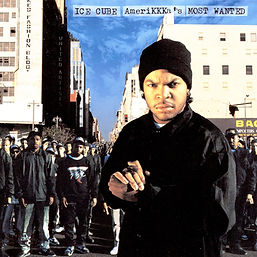
Ice Cube might be the most confusing elder statesman in old-school rap. One minute it’s “Fuck Tha Police” and Rollin’ Wit’ da Lynch Mob, and then fifteen years later he’s out here networking like he’s trying to get a Marriott Bonvoy upgrade. Honestly, it’s impressive range. Broadway actors wish they had that kind of range.
Anyway—there’s maybe three rap albums I can recite from beginning to end without embarrassing myself. And yes, I know that Public Enemy’s "It Takes A Nation of Millions To Hold Us Back" is widely regarded as the GOAT, and, objectively, I cannot dispute those declarations. Chuck D and the Bomb Squad built that thing like it was a sonic tank that still stands firm to this day. But here’s the thing: my personal canon has always been less about objective greatness and more about what had my teenage brain levitating at the time.
And the timing. I somehow discovered "Fear of a Black Planet" and "Amerikkka’s Most Wanted" before I ever seriously sat with "It Takes a Nation", which is basically like watching the sequel and the spin-off before the original. Maybe that’s not musical ignorance on my part, but it is what it is.
Which brings me to the point: I am absolutely not ashamed to name "Amerikkka’s Most Wanted" as one of my all-time favorites. This album rewired my brain. At first I didn’t know what to do with it because it felt dense as hell—like the musical version of trying to read Foucault without a dictionary. N.W.A. was simple, blunt, and effective: hot beats, hot takes, done. Ice Cube going solo, though? That boy flew to the East Coast and got academic with it by creating headphones-ready rap that you bumped on the subway.
The Bomb Squad didn’t just produce him—they detonated him. From the opening bars of “The Nigga You Love to Hate,” it’s pure adrenaline. Then the title track comes in like the Kool-Aid Man smashing through drywall. Squeals, breaks, ticking noises, alarms—half the time I wasn’t sure if I should be nodding my head or looking for emergency exits. But Cube’s delivery is airtight, and the result is one of my favorite tracks in any genre.
The album stays on fire. “Once Upon a Time in the Projects” gives us sitcom-from-hell energy. “Turn Off the Radio” is Cube versus R&B radio—spoiler, Cube wins. But “Endangered Species (Tales from the Darkside)” is the crown jewel. Urgent, apocalyptic, and paranoid in the way that turned out not to be paranoia at all. Chuck D jumps in like the world’s angriest professor, giving sociopolitical footnotes to Cube’s street-level reporting. By the end, everybody’s dead and society pulled the trigger. Roll credits.
Side 2 starts with “A Gangsta’s Fairytale,” Cube proving he’s always been funny as hell when he's not snarling at everybody. Nursery rhymes but make it felony-adjacent. Then we get Flava Flav wandering through a freestyle like a drunk uncle at a cookout before Yo-Yo arrives to drag Cube for filth on “It’s a Man’s World.”
“Rollin’ Wit’ the Lench Mob” could’ve easily sat on an N.W.A. album if Cube hadn’t already broken up with them like, “it’s not you, it’s capitalism.” “Who’s the Mack” is a cautionary tale in blaxploitation cosplay—smooth, funky, and narrated like Cube’s the uncle trying to prevent you from getting swindled by somebody wearing too much cologne. The closer “The Bomb” doesn’t really go anywhere, but by that point the album has already done backflips on our skulls, so consider it a cool down lap.
This is one of the rare albums I can still rap along to, front to back, because the imagery is sharp, the beats are futuristic, and the Bomb Squad basically sprinkled MSG on West Coast rap. Cube's follow-up "Death Certificate" kept the grit but lost some of the manic genius without those East Coast nerd-scientists behind the boards.
For me, "Amerikkka’s Most Wanted" remains a towering moment in hardcore rap, and the album that turned Ice Cube from “angry dude from N.W.A.” into an actual rap giant for a minute there.
1
Notorious B.I.G.
Ready To Die
1994

The King of New York gave me the soundtrack to my young life. When Biggie was murdered you could feel the oxygen vanish from the city like somebody opened the emergency exit on the five boroughs. Nothing was really the same afterward. And, as history would reveal, Biggie ended up in a much better place than Puffy—artistically, spiritually, and definitely sartorially.
Like with Mary J. Blige, the magic of "Ready to Die" lies mostly with the artist and the stolen beats. You could’ve handed those same instrumentals to ten other rappers and ten other producers and nobody would’ve made the thing breathe like Biggie. The same way Faith Evans singing My Life wouldn’t have had the same “my soul just slid down the wall” effect that Mary gave it. Certain voices are just built for the pain they’re narrating.
I don’t care how many lists or think-pieces people publish about other elite MCs and platinum producers—nobody else made me re-embrace an entire genre I had already written off the way Biggie did. "Ready to Die" is my New York soundtrack. That album pushed me into a the faux thug nigga we called "banjee" and I don’t use that description lightly. Biggie influenced my style, my attitude, my habits, my clothes, the clubs I hit, the people I hung with, the music I started listening to—everything. And interestingly, the funeral of that phase coincided almost perfectly with the funeral of Biggie. Once Notorious went in the ground, so did my Timbos and Girbauds.
Let’s talk about the actual record. Puffy helped lay down some of the gloss that lets Biggie soar, but the more I learn about Puff’s supposed production prowess, the more it feels like the equivalent of sprinkling parsley on a steak that was already prepared by somebody else. There’s nothing especially groundbreaking about the beats—and that’s fine. The music never gets in the way of the verbal demolition Biggie unleashes.
The opening cuts lay out a familiar ghetto story—innocent male posturing turning into actual bloodshed—but Biggie’s imagery is so vivid it feels like you’re watching the whole thing unfold on a big screen. That’s the mark of a real storyteller: you’re not listening, you’re living.
“Warning” takes you deeper into his world. It opens with the now-iconic, “Who the fuck is this? Paging me at 5:36 in the morning…” and spirals into the paranoia of a man being hunted. He’s already loaded the Glock and fed the Rottweilers gunpowder for breakfast just in case company stops by. The intruders arrive, the plot unfolds, and Biggie drops them both before they can breach the crib.
But it’s not all carnage and paranoia. There are genuine party joints that balance out the Brooklyn bleakness. “One More Chance” is pure lyrical gymnastics—double entendres, metaphors, and enough sexual braggadocio to make Luther Campbell blush. Meanwhile, the singles “Juicy” and “Big Poppa” show the sweeter, more human side of Big that made us root for him as a person, not just marvel at him as a technician.
The true masterpiece here, though, is DJ Premier’s “Unbelievable.” This is Big at his hardest and most surgical, and Premier hands him one of the most punishing beats ever pressed to wax. It’s the kind of track that makes you involuntarily screw up your face and nod like you just smelled something illegal.
"Ready to Die" is one of the few rap albums I can still recite from beginning to end, which is saying a lot given how spider-webbed Biggie’s rhyme terrain is. There isn’t a throwaway track or a lazy verse anywhere. Unfortunately, that can’t be said about the double-album follow-up which—aside from the Premier joints and a few undeniable party tracks—felt more like an artist trying to cover every base at once. He didn’t lose talent, he just traded grit for Billboard real estate. Bad Boy set out to make him both the King of Rap and more the King of Sales.
"Ready to Die" stands tall as an unmitigated masterpiece—a literary blueprint of New York street life. More importantly, it swung the pendulum back to the East Coast, where rap has always been treated like something you contemplate, underline, and quote—not just something you dance to. I thank you, Biggie, for restoring my faith in hip hop. Like so many greats, your candle blew out too soon. No matter what, you will always be the hardest MC ever put to wax.
👍