.png)


Black Gaddy’s Top Singles
Since I’m not a music critic, I don’t have to play nice or spread the love just to look balanced. If this list is heavy on a few favorite artists, that’s because—well—I actually like their music more than most. When you’ve got favorites, you tend to ride with them, track after track. You might even see a couple songs by the same artist sitting back-to-back. That’s not favoritism—that’s just mathematics at work. I used a numerical ranking system to put this thing together, and sometimes the numbers clump. If that happened, I just left it that way because I don't have time to argue with math.
Let’s be clear: these lists aren’t comprehensive, and they definitely aren’t based on deep research. They’re just collections of songs your Black Gaddy happens to like. So if you see an overabundance of certain artists and a complete absence of others, that’s why. Personal taste doesn’t always strive for balance.
For the “Black” lists, the artists are, in fact, Black—or at least juuuuuuust Black enough to scrape by and qualify. (Looking at you, Stacy Lattisaw.) Meanwhile, the “White” lists are for white artists… and for those who, while racially ambiguous, still land on the whiter end of the pop spectrum. So yes, folks like Teena Marie, K.C. and the Sunshine Band, The Jets, Exposé, Lisa Lisa, and Gloria Estefan—y’all are on the white list. (I suffered many a sleepless night deciding on where to put Mariah Carey. But at the end of the day, she landed with the Blacks, mainly because of that "Butterfly" album and the fact that she got a Black baby daddy. Again, no rocket science going on around here, folks.


Why do I need separate lists for Black and white artists?
Because "you gotta keep ‘em separated", as the song goes. I don’t mix Black and white artists because we make music under entirely different circumstances—and often for completely different reasons.
White folks might revere Van Morrison for his whatchamacallit or worship The Beach Boys for their… whatever it is they love about The Beach Boys. But we don’t celebrate Teddy Pendergrass or Minnie Riperton for those same reasons. And they weren’t making music for people trying to get lost in the studio ingenuity of Pink Floyd. Putting all of these artists on the same list feels like comparing rutabagas and watermelons—different roots, different flavors, different purposes.

The full list of Black artist singles originally has 1,060 entries, with a cap of 10 songs per artist. But I couldn’t include them all—because my webmaster in India told me it would cost an extra $400 to make it happen. And since I earn Colombian pesos, I wasn’t tryna hear it. So I trimmed it down to 500 entries, which meant cutting out a lot of minor artists. Still, I made an effort to spread the love and include a solid mix of one-hit wonders and underrated acts who never seem to get Billboard love—names like R.J.’s Latest Arrival, Princess, and Loleatta Holloway.
Also, I make no differentiation between Soul and Black Disco as they come from the same place. However, somewhere on this site, there is a separate list for Disco that brings together artists from all racial backgrounds onto one list. If you don't see it yet, it's on the way.

Also, I just can’t with the Rolling Stone magazine lists. Half of them are basically The Beatles, The Rolling Stones, and the gawd-awful Bob Dylan on repeat. It’s like they think music history starts and ends with "Abbey Road" and nasal poetry. (I actually like "Abbey Road", but I'm not tryna to take it under the bleachers and get it pregnant.)
And when white critics do try to talk about Black music, they usually get it wrong. Anyone who truly digs Rick James knows “Super Freak” isn’t even close to his best track—just like no real Bruce Springsteen fan would claim “Born in the U.S.A.” is the Boss at his peak, though this is the song we most recognize by him. But songs like "Super Freak" are the ones that always show up on their lists, because the folks making them only explore as deep as what’s been spoon-fed to them by mainstream radio. They don’t know what’s underneath the surface—and frankly, they’ve never bothered to look.
There’s no way the Rolling Stone writers could ever fully grasp that, as massive as “Billie Jean” was in the post-disco era, songs like "Cutie Pie” by One Way or “Atomic Dog” by George Clinton hit just as hard—if not harder—in our communities. Those records weren’t just songs; they were soundtracks to house parties, skating rinks, cookouts, and late-night slow rolls. But because they didn’t cross over to mainstream white radio—or didn’t come with a groundbreaking music video—they get passed over like they never happened. You had to be there. And clearly, they weren’t.
Black Daddy Music is my attempt to recognize, recapture and keep alive the music that made us who we are today without the necessity to filter our music through mainstream sensibilities.
So, if you want to take this ride down memory lane with me, take heed to the immortal words of D-Train and "Keep On" reading.

300
The Bangles

"Hazy Shade of Winter"
1987

Prince wanted to fuck The Bangles’ doe-eyed frontwoman Susanna Hoffs, so he dove into his vault and pulled out “Manic Monday,” a track originally meant for Vanity- or Apollonia 6 (honestly, who can keep track at this point?). He gave it to The Bangles, reportedly spending much of the studio time silently staring at Hoffs while barely acknowledging the uglier chicks in the band. The romantic connection never materialized, but the song blew up, launching The Bangles into the pop stratosphere.
With their newfound fame, the group had the clout to take bigger creative swings—like their blistering cover of Simon & Garfunkel’s “Hazy Shade of Winter,” featured in the coke-drenched ‘80s classic movie "Less Than Zero". This version, with its driving guitars and tight four-part harmonies, let every band member shine instead of leaving Hoffs to carry the whole thing. It’s a ferocious improvement over the folky original and one of the key tracks that established The Bangles as a legitimate rock band—not just a pop girl group.
299
Annie Lennox
"Walking On Broken Glass'
1992

We all loved the Eurythmics, but there was always a question mark around whether their androgynous and undeniably talented lead singer, Annie Lennox, could make it on her own. Truth be told, the group had started faltering in the U.S. once they shifted away from the icy, electronic sound that made them stars. Still, it was clear Lennox had the pipes—and the vision—to pursue something more soulful. Her debut solo album was a global smash and delivered a handful of excellent singles, including the orchestral-dance gem “Walking on Broken Glass.” Lennox would go on to become one of the most respected and successful female artists to ever emerge from the U.K.—a well-earned accolade. And yes, we’ll be seeing her again on this countdown.
298
U2
"In God's Country"
1987

U2’s "The Joshua Tree" looms large in the soundtrack of my life. It remains one of my favorite records, and a big reason for that is “In God’s Country.” The Edge’s slicing, crystalline guitar work cuts through the track like desert sunlight, providing a perfect backdrop for Bono’s strident, haunted vocals. The album, famously inspired by the contradictions of America—its beauty and its brutality—hits especially hard when I’m riding my bike through the wide, empty stretches of the Arizona desert. Out there, “In God’s Country” loops in my head like a hymn to both hope and disillusionment. Back then, I loved U2 fiercely. These days… not so much.
297
The Jets
"You Got It All"
1985

“You Got It All” has a surprisingly layered backstory. Co-produced by David Z—older brother of Bobby Z from Prince’s Revolution—the track was written by Rupert Holmes, best known (and sometimes mocked) for that frothy yacht-pop staple, “Escape (The Piña Colada Song).” Holmes originally wrote “You Got It All” for his 10-year-old daughter, who tragically passed away before the song was ever recorded. The Jets picked it up in 1986, with 12-year-old Elizabeth Wolfgramm taking lead vocals. Too young to grasp the song’s romantic overtones, she was reportedly told to imagine singing it to a puppy.
We were in high school when the track came out, and of course we found juvenile ways to misinterpret the lyrics—particularly the chorus line, which we swore meant the new boyfriend got “it” all over the ex. Leave it to the ’80s to make a chart-climbing power ballad out of heartbreak, innocence, and a slightly sticky double entendre.
296
Duran Duran
"The Reflex"
1984

Duran Duran were always a clever band, mixing hair bleach, rouge, and pop hooks to become one of the biggest acts of the early ’80s. There was no question they had the goods, but it wasn’t until “The Reflex” that some Black kids started paying attention. That shift came courtesy of Nile Rodgers, whose remix transformed the track with looping background vocals and a funkier, more danceable beat. Some record execs reportedly pushed back, saying the mix was “too Black.” As usual, that turned out to be a compliment in disguise—“The Reflex” became the band’s first U.S. number one and a global smash.
295
Corey Hart
"Sunglasses at Night"
1983

Canada occupies so much space on the earth's surface yet has contributed so little to humanity. I've been to Toronto and thought that it was a very clean and charming city. But like everything else Canadian, it had no edginess to it. While there, I went to a gay event there—OK, it was a bathhouse—and it was just a bunch spice-less Asian boys chasing after a bunch of bland white dudes. Even the men of color I met were like, I don't know, mundane. Cute and mundane. Just like Corey Hart. Still, he needs to be elected president because, besides Joni Mitchell, David Foster, Kaytranada and Canadian bacon, Hart remains the best thing that country has ever exported.
294
Justin Timberlake
"Rock Your Body"
2002

Back in kindergarten, there was this awkward kid named Charles Wyatt with giant magnifying-glass glasses who had a bizarre habit: he’d jump on the backs of the Black kids during recess and start bouncing like he was at a rodeo. Only the Black kids. Even at five years old, we all knew something wasn’t right. Years later, whenever I see Justin Timberlake doing his watered-down MJ moves or trying to channel Prince with that “ain’t-I-sultry” smirk, I get serious Charles Wyatt flashbacks. JT is the musical version of someone who jumps on the backs of Black brilliance and rides it all the way to the top, pretending he invented the saddle.
Thankfully, Pharrell came along and sprinkled some actual flavor on Justin’s career. “Rock Your Body” is a damn good track—smooth, funky, sexy—and the one true highlight of a discography I have never heard and never will. That Neptunes beat does all the heavy lifting, and Justin just gets to glide on top like he’s at an R&B amusement park, all Charles Wyatt-like. Honestly, if Pharrell hadn’t shown up when he did, JT might’ve been the most rhythm-deficient Mouseketeer since Annette Funicello.
We will not see Justin Timberlake again on this countdown.
293
The Cars
"Just What I Needed"
1978

“I don’t mind you coming here / And wasting all my time, time.”
I can’t explain it, but when Benjamin Orr repeats “time”, I kinda lose my mind, mind. It’s just about the best thing in rock music. Period.
The Cars are one of those bands people forget to remember, but between 1978 and 1985 they cranked out a slew of pop-rock gold. Ric Ocasek may not have gotten all the songwriting flowers he deserved while he was alive—or maybe he’s just better remembered as the dude who looked like a praying mantis and somehow pulled Transylvanian supermodel Paulina Porizkova. Either way, “Just What I Needed” is an absolute romp, with that spiky guitar line, stiff-hipped rhythm, and just enough sarcasm to make it cool.
Every time it comes on, I find myself doing that involuntary White Man Stompy Dance. You know the one. Don’t act like you don’t.
292
Talking Heads
"Psycho Killer"
1977

My first exposure to Talking Heads came courtesy of MTV and the hypnotic weirdness of “Once in a Lifetime.” (Same as it ever was!) The guy on screen was all jittery and sweaty, moving around like he was having a full-on conniption fit. And I loved it.
It would be years—decades, really—before I discovered an even better Talking Heads song: 1977’s “Psycho Killer.” Unlike the art-funk of “Lifetime,” this one’s a more straight-ahead rock number, but David Byrne’s eerie vocal delivery and the lyrical content make it even more arresting. Those iconic fa-fa-fas were reportedly inspired by Otis Redding’s “Fa-Fa-Fa-Fa-Fa (Sad Song),” but that’s where the comparisons end.
With its stabbing drums and droning bassline, “Psycho Killer” has a twitchy sense of urgency that makes it one of the definitive statements from one of the most legendary bands of the new wave era.
291
Stephen Bishop
"On and On"
1977

Yacht Rock rules, period. And while Stephen Bishop may not have sailed quite as high as Christopher Cross or Captain Kenny Loggins, he definitely steered his own smooth vessel into the heart of the genre. The man had Chaka-freakin’-Khan singing on his 1976 debut album—if that’s not instant cred, I don’t know what is.
“On and On” is one of those perfectly bittersweet, sun-drenched tunes that probably still wafts through elevators, grocery stores, and dentist offices across America—but don’t let that fool you. It’s pure melancholic magic. I remember loving this song as a kid, and somehow, that love never left. It’s breezy, it’s wistful, and it still goes down like a rum punch at sunset.
290
Joss Stone
"Fell In Love with a Boy"
2003

Can someone check on Joss Stone—did she fall asleep at the mic when she recorded “Fell in Love with a Boy”? Because if so, she somehow managed to doze off into greatness. Joss wasn’t playing around on her debut studio album. Not only did she enlist ?uestlove and the legendary Betty Wright to produce the lead single, but Wright also pulled in none other than Angie Stone to lend her velvet-rich vocals to the background. That’s a flex.
The song itself is a sultry reimagining of The White Stripes’ garage-rock stomper “Fell in Love with a Girl.” Where Jack and Meg went for gritty, sped-up punk fury, Joss and her crew slowed it all the way down to a soulful ooze, wrapping it in bluesy guitar licks, buttery clavinet lines, and a juicy 70s vibe you could almost sip on. Joss didn’t just sing over the groove—she tiptoed through it, flirted with it, teased it, and made it completely her own.
At just 16, she was already calling on a lifetime of soul and blues influences—some of whom, like Angie, may have literally been backing her up in the booth. The result? A raw, earnest entry into the neo-soul canon, delivered with the same sort of unvarnished passion that Amy Winehouse would also tap into around the same time on her own debut. Joss found kinship in the scene too, working with Raphael Saadiq, Salaam Remi, and even Dave Stewart of Eurythmics fame.
Whether she was half-asleep or wide awake, Joss Stone made a hell of an entrance—and “Fell in Love with a Boy” is still a stone-cold (pun intended) standout.
289
Beck
"Loser"
1993

Critics’ darling Beck burst onto the scene with the slacker anthem “Loser,” planting his flag firmly in the dirt before it was cool. Way before the opioid chic of white-boy angst became a TikTok trend, Beck was already the unofficial spokesperson for the trailer park-meth lab-Gen X Venn diagram. With his loose, lo-fi sound, he offered a refreshing contrast to the brooding, tightly wound grunge that was ruling the airwaves at the time.
While bands like Alice in Chains and Soundgarden sported with vocalists who could peel paint off the walls—Layne Staley’s haunted wail or Chris Cornell’s Olympian howl—Beck strolled in like, “Eh, I’ll just mumble something and see what happens.” And somehow, it worked. His half-baked, laissez-faire delivery didn’t just feel deliberate—it felt revolutionary.
I eventually warmed up to the grunge wave, but Beck had me from the jump. I sang “Loser” so obsessively during a research trip to Zimbabwe that to this day, my local friends there still associate me with that song. Not sure if that’s a compliment, but it’s certainly a legacy.
288
Kylie Minogue
"Can’t Get You Out of My Head"
2001

No song has ever worn its title more accurately than this Minogue banger, a veritable nursery rhyme for the club crowd. With its hypnotic “la-la-las” and finger-paint-simple lyrics, “Can’t Get You Out of My Head” is practically preschool pop—but that’s exactly what makes it genius. Co-written by Cathy Dennis (yes, the same Cathy who begged us to "Touch [Her] All Night Long"), this monster track is structured like a glitter-drenched descendant of New Order’s “Blue Monday,” built for maximum replay and repeat. Resistance is futile.
It’s the “I Will Always Love You” of dance-pop: Minogue’s signature track and one of the best-selling singles in global pop history. Even if your idea of fun is listening to b-sides from Aphex Twin in a basement, this song is a brain worm that will still creep soul and lay eggs. You don’t have to love it—but once you’ve heard it, you will be humming it during your next grocery run. Catchier than COVID, "Can't Get You Out of My Head" is a perfect storm of mindless deliciousness.
287
Fleetwood Mac
"Say You Love Me"
1975

Simplicity and optimism were Christine McVie’s superpowers. Of the three main architects of Fleetwood Mac’s classic lineup, she was the most consistent, content to chase melody over melodrama. While Stevie Nicks conjured moonlit visions and Lindsay Buckingham shredded through emotional turmoil, McVie kept her eyes—and ears—on the prize: crafting songs with hooks that hit the brain’s pleasure center like a spoonful of sugar. “Say You Love Me” is a perfect example. With Buckingham’s jangly guitar and Stevie’s biscuit-and-gravy background vocals adding just a hint of country twang, the song becomes one of many undeniable highlights from the band’s self-titled 1975 breakthrough. It’s sweet, it’s smart, and it sticks—just like Christine intended.
286
AC/DC
"Black In Black"
1980

I don’t care if you grew up on Scottish bagpipes or alpine yodeling—there’s no way your soul didn’t quake the first time you heard the Godzilla-sized riff that AC/DC unleashed on the world with 1980’s “Back in Black.” That opening guitar lick doesn’t just enter the room—it kicks the door off the hinges. Even hip-hop pioneers like Boogie Down Productions (and others) couldn’t resist sampling its raw power. “Back in Black” isn’t just a song; it’s a seismic event, anchoring one of the best-selling albums of all time and solidifying AC/DC as Australia’s greatest export after the kangaroo. Sure, they’ve had other hits—but don’t ask me to name them. As far as I’m concerned, they could’ve applied for early retirement after this one and still gone down as gods of heavy metal.
285
Taylor Dayne
"Don't Rush Me"
1988

As the proud owner of the biggest mouth in ’80s pop, Taylor Dayne rarely gets mentioned when people rattle off the greatest vocalists in popular music. Maybe it’s because her time at the top was brief—two big albums, a flurry of hits, and then poof. Or maybe it’s because we couldn’t quite take her seriously when she rocked that unblended dark weave over her natural lighter hair in the “Tell It to My Heart” video. But let’s be clear: homegirl could sang. On “Don’t Rush Me,” she dials it down a notch vocally, but still manages to give us sass and story—a woman telling some overeager dude that he needs to pump the brakes. It's not quite boot-knockin' time yet. Taylor admits that she's “made that mistake before” by giving up the skins too soon, so this time she’s taking it “slowly, slowly.” Wise choice, Taylor. I just wish her career hadn’t faded away so quickly, quickly because the rapid decline of the career of someone with such tremendous vocal skills should not have been rushed like that.
284
Radiohead
"There There"
2003

Does “There There,” with its brooding groove and prominent bassline, have a touch of—dare I say it?—soul? Shockingly, yes! I love Radiohead, but let’s be real: few people on Earth are as pasty white as Thom Yorke. (Chris Martin might be his only real competition.) So it was a pleasant curveball to hear the band flirt with an R&B undercurrent on a couple of tracks from "Hail to the Thief". No, Yorke isn’t exactly giving us Teddy Pendergrass vocals, but the rhythm section pulses with unexpected warmth and swing. “There There” doesn’t just shine—it glows.
283
Hamilton, Joe Franks & Reynolds
"Fallin' in Love"
1975

I have no idea who these yacht rockers are—or if they have any other hits—but that’s neither here nor there. “Fallin’ in Love” is a breezy little gem, all billowing strings and grand piano flourishes that somehow make that strawberry margarita you're sipping on taste even sweeter. The song floated all the way to number one in the U.S. in 1975, and some 20 years later, dance outfit La Bouche (of “Be My Lover” and “Sweet Dreams” fame) tried their hand at a cover. I haven’t heard it, and I’m pretty sure it La Sucks. I’ll stick with Hamilton, Frank and Reynolds, thank you very much.
282
John "Cougar" Mellencamp
"Paper In Fire"
1987

I love this song. During John Mellencamp’s heyday, there wasn’t a single he released that I didn’t like—well, except for the anthemic and anemic “R.O.C.K. in the U.S.A.” John always tried to position himself as a Lucky Strikes-smoking, pointy cowboy boots-wearing, Rebel Without a Cause-type figure in pop music. But let’s be real: he was crafting R.O.C.K. that was pretty damn M.O.R.
Case in point: between 1981 and 1989, Mellencamp racked up no fewer than 14 Top 20 singles in the U.S. A true rebel doesn’t try that hard to be liked. For comparison, Bruce Springsteen—a far more convincing rebel—had 12 Top 20 hits in that same span, seven of which came from a single album. Bruce sold his soul to the devil once. Mellencamp had a long-term contract with Beelzebub.
Still, Mellencamp was undeniably, authentically Middle American—and nowhere is that more evident than on the twangy, cornfield-stomping “Paper in Fire.” That ain’t no violin closing out the chorus of what I consider his best track. That’s a FIDDLE, goshdarnit!
281
Stevie Nicks
"Stand Back"
1983

Prince didn’t technically write “Stand Back”—he just dropped by the studio, laid down some uncredited synth magic, and bounced. The track was inspired by his own “Little Red Corvette,” so maybe he saw it as a musical loop closing in real time. Prince also famously sent Stevie Nicks the instrumental for “Purple Rain” and asked her to write lyrics for it, but she turned him down—either because she was overwhelmed by the task or just too blitzed on coke to understand the assignment.
There’s no question that Nicks is a rock legend, but her solo career—while it started with a bang—fizzled into a slow simmer. The drugs had taken a toll on her voice, her output, and her sense of direction. Meanwhile, the music world was shifting away from the mystical rock’n’roll she helped pioneer. “Stand Back” was about as contemporary as she’d ever sound, and one of the last major solo hits she’d land.
But chart stats aside, the real legacy of “Stand Back” lives on in the hearts of gay men everywhere. That video—Nicks gliding on a Planet Fitness treadmill, buried in ten pounds of chiffon, and stomping in skyscraper platform boots—cemented her status as a gay icon for the ages. Sometimes legend isn’t about longevity—it’s about that one unforgettable look that turns out to be unintentionally campy, yet effective.
280
Golden Earring
"Twilight Zone"
1982

Golden Earring were Dutch and had been churning out tunes since the early ’60s. They finally made a real dent with 1973’s “Radar Love”—a song that made no impression on me because it sounds like every other song that sounds like that song, if that makes any sense. It employs the same fast and gritty formula that always ends up playing on the cassette deck in some dude’s Camaro.
But it was “Twilight Zone” that really stood out during the alt-rock invasion of the early ’80s. Dropping alongside gems like “Der Kommissar” (Falco) and “Who Can It Be Now?” (Men At Work), this track rode the wave of international new wave and gave Golden Earring their second U.S. hit. And unlike a lot of bands trying to modernize their sound back then, they actually pulled it off.
Let’s be honest: The Dutch haven’t exactly flooded the world with pop music brilliance. (Eddie Van Halen being their undisputed MVP.) But “Twilight Zone” earns its spot on the short list of great Dutch exports. It’s paranoid, punchy, and a total doozie that rocks!
279
Queen
"Somebody to Love"
1976

When it comes to singers, white people often have no idea what they’re even talking about. The inclusion of Bob Dylan, Lou Reed, and Joan Baez on those so-called “Greatest Singers” lists only proves my point. But every now and then, they get it right. Whoever signed Queen back in the ’70s clearly recognized they had something extraordinary on their hands.
Some of my favorite white male vocalists come from the grunge corner of the map, but when we’re talking pure vocal talent? Buck-toothed Freddie Mercury had no equal. His performance on “Somebody to Love” is Exhibit A—a soulful, towering display of vocal mastery that transforms a pretty standard rock gospel tune into a moment of pure magic. The song itself may not be revolutionary, but what Freddie does with it? Unbelievable.
His voice floats, shimmers, rises, collapses, soars again. That slightly unsteady vibrato manages to radiate both swagger and vulnerability, a combination rarely heard in rock and practically unheard of from a frontman. It’s theatrical without being overwrought, and deeply felt without turning into a sob story. The whole thing is so dynamic and deliciously dramatic, it ranks as one of Queen’s most satisfying singles with a vocal performance that Mercury admitted that he fashioned after Aretha Franklin, a singer he absolutely was fascinated by.
Mercury wasn’t just a great vocalist—he was a performer in the truest sense: bold, fearless, magnetic. And on “Somebody to Love,” he reminded everyone exactly why he was both the King and Queen of rock.
278
Lisa Stansfield
"You Can't Deny It"
1989

The British recording industry has always had a love affair with Black American soul—but when it came to producing their own version of it, they preferred to put it in the hands (and throats) of white women. The list of Black British soul singers who are actually Black women is damn near as short as a Kardashian relationship.
Thankfully, a few of those white ladies showed up and showed out—Lisa Stansfield being one of the best to do it. She had a strong run on both the pop and R&B charts through the late ’80s and ’90s, and one of her standout tracks is the delightfully peppy “You Can’t Deny It.” The song is equal parts Barry White (that plush melody and groove) and Soul II Soul (those unmistakable beats), held together effortlessly by Stansfield’s smoky, impeccable vocals. Love me some Lisa!
A quick note to the British Empire: I appreciate you sending us Lisa from across the pond—truly, I do. But you’re seriously telling me, Britain, that not a single Black woman was available to sing songs like this? Really? Maybe it’s time to rename the whole damn place the Isle of Wight.
And while I got you on the line, can one of ya’ll come get yo’ boy Harry and his “Black” wife? Cheers!
277
Duran Duran
"A View to A Kill"
1985

Let’s keep this one short: Sorry, boys of Duran x 2, but the success of “A View to a Kill” has very little to do with y’all. This track bangs for two reasons—producer Bernard Edwards and (probably) the uncredited drumming of Tony Thompson.
That last part is technically conjecture, but come on. Just listen to the explosive drum work here—it’s unmistakably Thompson. If you’ve heard the best tracks from The Power Station, you already know that signature, bombastic style. It’s all over this song.
Honestly, anyone could’ve sung “A View to a Kill” and it still would’ve been a hit. That said, I’m not mad it ended up with Duran Duran—a pop outfit I genuinely liked back in the day. And it’s no coincidence that their best songs, like this one and the remixed version of “The Reflex,” just happen to involve the boys from Chic—Bernard Edwards and Nile Rodgers. Enough said.
276
The Cure
"Pictures of You"
1989

Look, if you’re trying to shake off depression, don’t waste your time dressing in all black, teasing your hair up to Jesus' house, drawing eyeliner lines under your eyes, and smearing red lipstick across your mouth because it ain’t gonna help. The Cure’s Robert Smith has been doing that for fifty years, and judging by the dreary sound of their 2025 album, it's done nothing to snap him out of it.
Back in 1989, "Disintegration" dropped like a velvet boulder and made bone-deep sadness fashionable for moody teens all over the world who were standing on an emotional ledge. “Pictures of You,” the fourth single from that towering album, wasn’t here to cheer you up—it was here to push you over the edge, slowly and beautifully.
The track opens with a long, swirling intro that feels like sinking into a dark waters. Then Smith’s voice emerges—not to comfort, but to confirm every ache you’ve been trying to ignore. There’s longing. There’s grief. There’s the quiet devastation of memory.
“Hold for the last time / Then slip away quietly”
I don’t have the numbers, but I wouldn’t be surprised if heroin overdoses saw a spike around the time this song hit the airwaves. “Pictures of You” doesn’t just flirt with despair—it gives it a long, passionate kiss. But what a stunning soundtrack for slipping into the abyss. Clocking in at 7 minutes and 30 seconds, not a single second feels wasted. Smith bleeds out every last ounce of emotion, and in doing so, leaves the listener gutted but grateful.
“Pictures of You” was just the beginning of the extended depressive episode that is "Disintegration", an album often called the greatest in rock history—and honestly, I’m not here to argue. It’s more than a collection of songs; it’s a beautiful, brutal therapy session, played in the key of heartbreak. And somehow, it makes you want to feel all of it again.
275
The Alan Parsons Project
"Eye in the Sky"
1982

British outfits like The Alan Parsons Project and Supertramp are the undisputed kings of Spooky Soft Rock—a genre I just made up, but one that absolutely exists. And sitting right at the top of that spectral soundscape is “Eye in the Sky,” a smooth, haunting gem that still rocks in every haunted house across the globe.
As a kid, I remember being genuinely afraid to watch the video for “Don’t Answer Me” alone. Something about that stiff, stop-motion comic book animation, paired with those eerie, flat Alan Parsons vocals, sent a chill through my Black ass. But the “Prime Time” video? Even worse. With its crude mannequins brought to life by the devil and fall in love, made more disturbing by the even cruder and crickety special effects. Why can’t Britons just be normal?
But fear or no fear, I couldn’t stop listening. “Eye in the Sky” is one of their best—floating somewhere between lullaby and alien transmission. And if you’re going to listen to it (and you should), make sure you hear the full album version that starts with the instrumental intro “Sirius.” That cosmic opener, by the way, is the same music the Chicago Bulls use at home games to announce themselves before getting their asses whipped by whatever team’s visiting that night.
274
REM
"Man on the Moon"
1992

There’s just something inherently whiny about Michael Stipe—and Michael Stipe’s singing, isn’t there? Back in college, I made several attempts to hop on the R.E.M. bandwagon, but I kept falling the fuck off. Every time I tried to get into them with tracks like “Orange Crush,” “The One I Love,” or “It’s the End of the World as We Know It (And I Feel Fine),” they’d pull me right back out with diarrhea-inducing fluff like “Shiny Happy People” or the nonsense of “Stand”, a song not fit for Sesame Street muppets.
But as I got older—and maybe just a little more forgiving—I did the right thing and dove into their early catalog. I started streaming songs from back when R.E.M. ruled college radio, up until around 1987, and things began to make more sense. Now I could hear why they were such critic darlings. These weren’t just the guys who gave us just-OK hits like “Losing My Religion” and “Everybody Hurts.” There was real artiness there. Mood. Texture. Purpose.
Even after breaking through commercially, they still released some solid singles—like “Man on the Moon,” their open letter to Andy Kaufman. It’s a little bit country, a little bit rock and roll: the verses float along, echoey and reflective, and then the bridge and chorus come in with real melodic heft. It’s catchy in a way that doesn’t feel pandering, which is not something I could say about their early ’90s output across the board.
It was refreshing to hear Stipe loosen up for once—especially after the joyless dirge that was “Losing My Religion,” which attacked our ears like a nagging, unhappy spouse for all of 1991. These days, I’ve come to appreciate R.E.M. more—particularly when Stipe avoids his worst Dylan impressions and lets a little clarity, wit, or even warmth slip through the fog.
273
Michael Sembello
"Maniac"
1983

You can try, but you’ll only drive yourself crazy if you attempt to separate this song from the choppity-chop, high-knee dancing made famous by Jennifer Beals--oops, I meant Jennifer Beals’ double--back in the ’80s. “Maniac” is permanently fused to that iconic scene in "Flashdance", and there’s just no pulling them apart.
Back then, it was impossible not to see hit movies. That’s what people did before the internet. You either caught films like "Flashdance" in theaters, or you waited for HBO to finally bless your household with a screening. Movies like "Top Gun", "E.T.", and "Back to the Future" weren’t just popular—they were cultural oxygen. And "Flashdance" belongs on that same tier, even if I’m probably the last Gen Xer alive who still hasn’t actually seen it.
Still, I know iconography when I see it. The off-the-shoulder sweatshirt? The leg warmers? Those were everywhere—on school campuses, in JC Penney catalogs, even showing up on Halloween costumes for years afterward. And the dancing in the video for “Maniac” is so culturally embedded, it feels as familiar to me as my own reflection.
Michael Sembello—a name I had already recognized from Stevie Wonder liner notes—found himself smack in the middle of a very specific cultural moment. No matter how accomplished he is as a musician (and he is), he’ll forever be linked to the glorious cheesefest that is "Flashdance". But honestly? That’s not a bad thing. It’s better to hit the charts once than not at all—because folks with no hits don’t get written about in columns like this one.
272
The Family
"The Screams of Passion"
1985

I guess it’s too late to ask Prince why he had The Family dancing around in pajamas. The Family were one in a long line of musical, um, groups he created to exert control over a love interest. The project centered around Susannah Melvoin, twin sister of Revolution guitarist Wendy Melvoin and the woman Prince happened to be madly in love with at the time. She was his muse during one of his most emotionally fertile periods, inspiring songs like “If I Was Your Girlfriend” and The Family’s own “Nothing Compares 2 U.”
Susannah herself will be the first to admit she wasn’t much of a musician, but that didn’t stop Prince from building an entire band around her. And oddly enough, The Family’s first and only album turned out to be a pretty damn good piece of work—led by the woozy, erotic duet “Screams of Passion,” sung by Susannah and St. Paul Peterson.
The track is unmistakably a Prince song—it just happens to be sung by someone else. I remember watching an interview with Peterson, in which he admitted how frustrated and stressed he was during the recording sessions. Prince had laid down full vocal demos and insisted Peterson copy them exactly—no room for interpretation, no room for flair. Just mimicry. But even that didn’t really matter, because the album vanished into thin air upon arrival. Prince and Susannah had broken up before the record even dropped, and as with many things in the Purple One’s orbit, once the romance ended, so did his interest in promoting anything related to said romance.
Sure, Sinead O’Connor later brought the world to its knees with her version of “Nothing Compares 2 U,” and that probably sent a few curious listeners hunting for The Family’s original version—but good luck finding it at your local wrecka stow. (Thankfully, I’ve got my copy of the original LP tucked away in a closet somewhere, safe and sound.)
271
Eurythmics
"Love Is A Stranger"
1983

The Eurythmics have a storied career, but “Love Is a Stranger” stands out as one of their most satisfying achievements—not just for Annie Lennox’s eerily emotive vocal delivery, but also for Dave Stewart’s subtle, razor-sharp production choices. The Brits don’t get much sunlight, so maybe it’s no surprise that so many of their best songs sound like they’re in desperate need of a Prozac prescription—and “Love Is a Stranger” is no exception.
Released as the first single from their breakthrough sophomore album "Sweet Dreams (Are Made of This)", the song feels like an invitation into the haunted house you can't help accepting. It doesn’t just play—it slithers out of the speakers and drapes itself across the room like spiderwebs. The synths shimmer like moonlight through broken glass, while Lennox’s voice—blessed by none other than the Good Lard himself—glides and harmonizes with itself in ethereal layers. She doesn’t just sing the song; she possesses it, or maybe it possesses her.
Though “Love Is a Stranger” flopped upon its initial U.S. release, its reissue—riding the tidal wave of “Sweet Dreams (Are Made of This)” topping the charts—pushed it to a respectable No. 23 on the pop charts. And from there, the duo embarked on a remarkable run of hits throughout the ’80s, culminating in a legacy that carried them all the way through to their final disbandment in 1999.
Creepy, glamorous, and perfectly executed, “Love Is a Stranger” is art pop with a slow pulse—and a slightly menacing grin.
270
Teena Marie
"I Need Your Lovin'"
1980

Teena Marie somehow never shows up on those ridiculous Rolling Stone “Greatest Singers” lists, like she’s the victim of some weird, backwards racism on the part of white critics. Her voice was too Black to be placed on the same pedestal as Patti Smith, but because she was white—through no fault of her own—they wouldn’t dare mention her in the same breath as Whitney or Etta either. She existed in a kind of critical limbo, punished for sounding too soulful and not looking the part.
Only Amy Winehouse managed to walk that tightrope—embraced by white critics and still respected across genres. But let’s be clear: that wasn’t because she was a better vocalist or more deserving than Teena. It was because they chose to prop her up. Critics needed an edgy, retro, soul-slinging white girl they could romanticize. And Amy fit the bill. Teena, on the other hand, had too much authentic funk and fire to ever be a safe media darling.
Now, I’ll admit—I was never a deep Teena Marie head. I didn’t own her albums, and beyond “Square Biz” and the undeniable “Fire and Desire” duet with Rick James, the song I remember most from her growing up was “I Need Your Lovin’.” That track rides the line between disco and funk with precision, and Teena works it from start to finish. Her voice is muscular, emotive, and endlessly flexible—far more than just competent. It’s a showcase.
So yeah, fuck Rolling Stone and their lazy, predictable lists. I’m going on record right here and now: Teena Marie was the best white female singer in the game. In front of Dusty, Joss, Amy, and Lisa Stansfield. Full stop.
269
Soundgarden
"Black Hole Sun"
1994

If we’re naming the best singers by genre, I’d have to put Chris Cornell—of Soundgarden and Audioslave—at the top of the grunge list. And when it comes to rock vocalists overall, he’s easily top two or three. No question.
When grunge first exploded in the early ’90s, I didn’t pay much attention. I wasn’t blown away by Kurt Cobain (no pun intended), and to me, grunge just felt like more of the same noisy guitar rock that had already been clogging up radio playlists. But with time—and a more open mind that only aging can bring—I started to hear something deeper in some of those bands, especially Soundgarden and Alice in Chains. That’s when it hit me: this wasn’t just flannel and feedback. There was craft in the chaos.
“Black Hole Sun” marked Soundgarden’s big commercial breakthrough, and the video alone was enough to make Stephen King take a few uncomfortable steps backwards. Grotesque, surreal, and unforgettable. But what really makes the track last isn’t the disturbing visuals—it’s the voice. Cornell’s performance here is remarkably restrained, perfectly mirroring the song’s eerie, melancholic tone. He’s not screaming his lungs out (though he certainly could have); instead, he’s hovering—haunting, almost spiritual. It proves that he wasn’t just a wailer; he was a true interpreter of mood and melody.
I still have no idea what “Black Hole Sun” is actually about—and honestly, I don’t need to. That’s not the point. The point is Cornell’s voice, a thing of wonder that could wrap itself around a whisper or a howl with the same intensity. And we’ll be hearing more about him in this column—guaranteed.
268
Elton John
"Sad Songs (Say So Much)"
1983

If I ever found myself at some emotional crossroads, ‘80s-era Elton John would probably be the last person I’d turn to for wisdom or comfort. His music from that period doesn’t exactly wrap me in a warm blanket of solace. But credit where credit’s due: when he tells us to “turn ’em on!”—referring to those sad songs—that’s actually some solid life advice right dere.
“Sad Songs (Say So Much)” bops along atop some bright, bouncy piano shit that makes me question whether this is even a sad song at all. I mean, the white folks dancing under an open fire hydrant and doing somersaults in the video don’t seem particularly heartbroken. Neither does Elton, prancing around in a straw party hat looking like he’s on his way to a retirement luau.
But that’s the beauty of the track: it’s not actually about sadness, just like Johnnie Taylor’s “Disco Lady” is not a disco song. It’s about the function of sadness. It’s a celebration of how music, especially the sorrowful kind, can express what we often can’t. Sad songs are the quiet companions that show up when we feel like no one else gives a damn about our sorry ass, when we’ve wrung out the last drop of faith. They sit next to us in the dark, patting us gently on the back whispering "there, there."
This is an oddly uplifting ditty that reminds us there’s something cathartic, even life-affirming, about hearing a song that mirrors our lowest moments.
And shout out to Sassoon, by the way, for that glorious 1980s-era commercial where they flipped the lyrics to say “Sassoon says so much.” Ooh la la la, indeed.
Don’t worry—Elton will show up later in this countdown with a truly sad song. But for now, we’ll let this one remind us that sometimes, dancing to despair is the best therapy we’ve got.
267
Genesis
"No Reply At All"
1981

Is Phil Collins a singer who drums or a drummer who sings? According to Collins himself, he’s firmly in the latter camp—and “No Reply at All” makes a strong case for that. On this track, the drums are so prominent in the mix, they’re practically duetting with his lead vocal. And honestly, that’s a good, good thang.
“No Reply at All” was one of the standout singles from "Abacab", Genesis’s eleventh album, released in September 1981. By this point, the band had fully pivoted away from the abstract oddities of their prog-rock years—an era nobody really understood outside of a few Brits and maybe some University of Vermont teens who smoked a lot of weed—and leaned into something far more accessible. That pivot actually began the year prior with 1980’s "Duke" and continued with Collins’ own solo debut "Face Value", which had dropped in January of that same year.
But "Abacab" solidified the transition, and “No Reply at All” was a prime example of this new Genesis: punchy, tight, and radio-ready. A huge part of that punch came courtesy of the Earth, Wind & Fire horns, arranged by the legendary Tom Tom 84 (Thomas Washington). Those horns gave the song a brassy, stutter-stepping edge, accentuated by faux handclaps and an almost funk-adjacent rhythm section that was a world away from twelve-minute suites about goblins and mythical kingdoms.
The song’s emotional core comes from the same bitter well that fueled much of Collins’ work at the time. He was dealing with the painful dissolution of his marriage, and that rawness seeps into “No Reply at All” just as it does in “In the Air Tonight” and “Misunderstanding.” Even when the arrangement is upbeat and almost danceable, there’s a biting, lonely ache in his voice—an emotional contradiction that Collins did well back in those days.
In the end, “No Reply at All” charted respectably in the U.S. Top 30 and did even better in the UK and Canada. It’s not just a catchy single—it’s a watershed moment in the Genesis/Collins timeline, marking the point where progressive rock gave way to emotional accessibility without completely losing its complexity.
So yeah, he’s a drummer who sings. And when both of those skills are firing on all cylinders, as they are here, everybody wins.
266
The Jets
"Make It Real"
1987

Normally, I’d say something like this as hyperbole: There were 17 of them Jets! But this time, I’m telling the damned truth. The Chinese army had fewer members than this brood of Minnesotan kids of Tongan descent. Known to the world as The Jets (last name: Wolfgramm), they stormed the mid-’80s charts with six Top 20 hits on both the R&B and Pop charts between 1985 and 1988.
Their debut was powered by the songwriting and production talents of Jerry Knight—yes, the stronger voice from Raydio and one half of Ollie & Jerry (see: “Breakin’…There’s No Stoppin’ Us”). That first Jets album gave us no fewer than four hit singles. Their follow-up, "Magic", delivered another four, including their final charting hit: “Make It Real.”
Even though lead vocalist Elizabeth Wolfgramm was only 13 or 14 when she recorded the track, it’s clear the group were seasoned pros by that point. They’d been performing live for years before the industry even came calling. With its stripped-back production, tinkling keyboard line, and slow-dance tempo, “Make It Real” was tailor-made for that moment at the prom when the DJ leans into the mic and says, “Alright, let’s slow it down a bit…”
Elizabeth delivers the song exactly as written—no runs, no ad-libs, no oversinging. And that works. The simplicity of her approach makes the emotion land even harder. There’s a soft sadness in her voice, a kind of adolescent ache that helped turn “Make It Real” into one of the most quietly devastating breakup ballads of the late ’80s.
The Jets may have rolled deep, but in this moment, it was just one voice, one heartbreak, and one timeless slow jam.
265
The Clash
"Rock the Casbah"
1982

I was in elementary school when “Rock the Casbah” came out, and I had never heard of The Clash and didn’t know what that fuck a casbah was. (Still don’t.) From the look of the video, it seemed vaguely Middle Eastern-ish, but none of that mattered. A great song with a great hook is a great song with a great hook, and this one hit hard.
With its aggressive, almost funk-defied drumbeat, bluesy piano flourishes, and slicing rhythm guitar, “Rock the Casbah” marked a stylistic shift for The Clash. The band, already legends in the waning punk scene and beloved by indie radio purists, were stepping into something bigger, bolder, and way more danceable. When their fifth album "Combat Rock" dropped, The Clash officially broke into the U.S. market—and MTV helped make them stars.
Of course, nothing gold can stay. By the end of the "Combat Rock" cycle, the band was already falling apart. Drummer Topper Headon, who wrote the music for “Rock the Casbah,” was fired for drug issues. Guitarist Mick Jones didn’t last much longer. That left Joe Strummer and bassist Paul Simonon to limp into one final album before The Clash officially imploded.
Joe Strummer passed away in 2002—just one year before the band was inducted into the Rock and Roll Hall of Fame. It was a bittersweet ending for one of punk’s most important bands, but at least they left us with an unexpected banger like “Rock the Casbah”—a song that, even without knowing what the hell it means, still hits like a revolution in a leather jacket.
264
Steve Perry
"Foolish Heart"
1984

Look a-here. I know the people who lived and died by Iron Maiden and Metallica hate the Milton Bradley-brand rock bands like Journey, REO Speedwagon, and Styx. Too soft, too clean, too… wimpy. Black folks did the same thing when we gave the collective gas face to lightweight rap acts like MC Hammer and P.M. Dawn. Didn’t stop them from climbing the charts, though.
Same goes for Journey. Hard rock purists can scoff all they want, but Journey’s Greatest Hits album has gone 18x platinum—that’s one copy for every single person currently living in Senegal with a few hundred thousand left over. Hate all you want, but somebody’s buying this crap.
And let’s not pretend the secret to Journey’s success was a mystery: it was Steve Perry. That voice. That once-in-a-generation wail that could glide like silk one minute and rasp like sandpaper the next. In 1984, Perry took a break from Journey and dropped his first solo album, "Street Talk". A couple of singles came out of it, but the one I care about—the one that still lingers—is “Foolish Heart.”
“Foolish Heart” is a mid-tempo ballad dipped in just the right amount of sadness, the kind of soft ache that hits late at night when you’re trying to lie to yourself about that lover who don’t love you back. There are no bells or whistles here—just Perry’s raw, husky vocals sitting front and center, where they belong, cradled by soft ’80s synths and gentle drum machine programming. His voice had aged a bit by then, roughened around the edges, but that only made the heartbreak sound more believable.
Perry would go on to record two more albums with Journey before parting ways for good. He continued to release solo work, but slowly drifted into near-reclusion—especially after the death of his girlfriend in 2012.
So yeah, maybe Journey wasn’t hard enough for the denim-jacket crowd. But for the rest of us? Sometimes, all it takes is a foolish heart—and Steve Perry singing straight to it.
263
Madonna
"Dress You Up"
1984

The main reason I don’t dog young people for their music is simple: I can’t possibly grasp how deeply today’s artists resonate in their lives. Kendrick Lamar, Beyoncé, and Ariana Grande are all great at what they do—but they don’t and can’t define any meaningful chapter of my life. I was already fully formed by the time they hit the scene. Just like I wouldn’t expect an 18-year-old today to truly understand what Madonna meant to us when we were coming of age.
To say Madonna was “big” is a gross understatement. She wasn’t just a pop star—she was a cultural detonator. Her influence extended far beyond music: into fashion, personal identity, gender politics, MTV aesthetics, and everything in between. By the time “Dress You Up” dropped, her blockbuster "Like a Virgin" album had already been out for eight months and birthed two mega-hits. Add the soundtrack smashes “Crazy for You” and “Into the Groove” into the mix, and “Dress You Up” ends up feeling like the afterthought of the album cycle.
But quality-wise? “Dress You Up” is easily the strongest track on the otherwise spotty "Like a Virgin" record, and her best single since “Borderline.” It’s got groove, bounce, sass—and Madonna rides that Nile Rodgers-produced beat hard like it’s some good Jamaican dick.
Even though the label didn’t bother to film a proper video for it, the live concert clip they used instead served another purpose: it gave small-market fans like me (Madonna never toured through Phoenix when I lived there) a glimpse of her electric, confident stage presence. Even from a grainy VHS recording, you could see she was a star with a capital S.
“Dress You Up,” along with “Into the Groove,” also helped reconnect Madonna with her Black audience, charting at #63 on the R&B charts (“Groove” climbed all the way to #19). In the early ’80s, there was simply no escaping Madonna—and truthfully, most of us didn’t want to. Say what you want about her screwy-looking face nowadays, but the legacy speaks for itself: Madonna gave us some of the most unforgettable, genre-defining pop music of our lifetimes. She didn’t just soundtrack an era—she shaped it.
And if you weren’t there? You’ll just have to take our word for it, young-uns. Just like I'll have to take your word for how great Taylor Swift supposedly be.
262
Level 42
"Lessons In Love"
1986

Can Level 42 be classified as blue-eyed soul? Probably not—if you’re only judging by the vocals. Mark King doesn’t exactly croon like Hall & Oates. But listen to that bass. King’s slap-happy playing is straight out of the Larry Graham/Bootsy Collins school of funk. If blue-eyed soul isn’t the right label, then maybe we need to invent a new one for Level 42: white-boy Brit-funk with jazz leanings and serious groove credentials.
“Lessons in Love,” released in 1986, is pure melodic Brit-pop with just enough rhythmic muscle to cross over. And cross over it did, reaching #12 on the U.S. charts—not quite matching the heights of 1985’s “Something About You” (their biggest American hit), but still a solid entry in the mid-’80s UK-to-US pipeline.
Level 42 never quite became a household name, but they consistently delivered jazzy, polished pop that went down easy. “Lessons in Love” is a perfect example of their sound: intricate musicianship cloaked in smooth production. And one of the track’s secret weapons? Keyboardist Mike Lindup’s falsetto bridge—light, angelic, and so soft-focus it could’ve landed him an honorary spot in DeBarge. (Not surprising when you learn that half-caste Lindup is of Belizean descent—his mother was none other than Nadia Cattouse, the acclaimed actress and folk singer.)
No, Level 42 wasn’t chasing soul clout. But they brought enough funk to the table—and enough finesse to the charts—to make a lasting impression. “Lessons in Love” may not qualify as blue-eyed soul, but it’s a textbook case of how British pop in the ’80s could learn a whole lot from Black American music… and still make it their own.
261
Karla Bonoff
"Personally"
1982

I never get tired of saying this: Black folks of my generation love us some Yacht Rock. Sure, the genre was dominated by white men with feathered hair and pastel slacks, but every now and then, a white chick like Linda Ronstadt or Melissa Manchester would float in with a jam worth clinking a champagne glass to. Karla Bonoff’s “Personally” is one of those jams.
Now, I didn’t even know this song existed until well into the 2010s. And I definitely didn’t know that Jackie Moore—yes, the disco queen of “This Time Baby”—had already recorded a version years earlier. (See how Black pop and Yacht Rock keep bumping into each other on the same shoreline?) Vocally, Karla ain’t on Jackie’s level—not even close—and there’s not much difference between the arrangements. But there’s something endearing, even charming, about Bonoff’s version, that lacks of that sexual energy. Maybe it’s the soft, slightly hesitant delivery, like she’s not taking her body to her man personally but just dropping off a casserole.
Bonoff is one of those mostly overlooked, low-profile white women that more famous stars like Wynonna, Bonnie Raitt, and—especially—Linda Ronstadt were quietly stealing from. “Personally” wasn’t even supposed to be her song. Her buddy Glenn Frey had set it aside for Raitt, but Karla politely asked if she could use it for an album he was supposed to produce for her (spoiler: he didn’t). And that wasn’t even her only song jacked by her more glamorous peers—Linda and Aaron Neville lifted their Grammy-winning duet “All My Life” straight from Bonoff’s catalog.
I don’t know if Karla has any other hits, and I’m too lazy to find out. But I do know this: I’m glad she covered “Personally.” It’s one of those smooth, under-the-radar slow sails that’s now required listening any time I take my imaginary yacht out for a spin. No waves, no worries—just a lady with a soft voice and a mysterious package to delivery.
260
Robbie Dupree
"Steal Away"
1980

I know I just said this, but it bears repeating: Black folks my age love us some Yacht Rock. There are no ifs, ands, or buts about it. Toto, Kenny Loggins, Michael McDonald, and Christopher Cross may be the Mount Rushmore of ’70s and ’80s soft rock, but a few lesser-known names also served up hits solid enough to pack in your overnight bag before setting sail.
Take “Steal Away” by Robbie Dupree. On paper, it’s a simple, sweet ditty. But listen closer, and you’ll realize it’s actually about a horny dude trying to secure some stank from a woman he met, like, five minutes ago. Despite the questionable content, the track glides along with charm and sincerity, like all good Yacht Rock should.
And let’s be real: if you like the Doobie Brothers’ “What a Fool Believes”—and I know you do—then you’ll like “Steal Away.” The DNA is unmistakable. So unmistakable, in fact, that the publishers of “Fool” allegedly came after Dupree for biting that keyboard riff. But here’s the twist: Michael McDonald had already jacked that riff from Fleetwood Mac’s “You Make Lovin’ Fun,” so he kept his name out of the lawsuit. (And it really sounds like Michael is ghost-singing backup on “Steal Away” anyway, doesn’t it?)
Robbie Dupree, a Brooklynite, was nominated alongside Christopher Cross for Best New Artist at the 1981 Grammys. We all know how that went—Cross swept in and then vanished almost as quickly as Dupree did. But us Black folks? We still got love for both of ‘em. Need proof? “Steal Away” even squeaked onto the R&B charts, peaking at #85. That means a few Black radio stations made space in their rotation for Robbie, and that’s no small thing.
Good for Robbie. Good for us. And good for Yacht Rock, the genre that quietly united all of our Aunties and Uncles—champagne flutes in hand—under one smooth, synthy groove.
259
Pat Benatar
"You Better Run"
1980
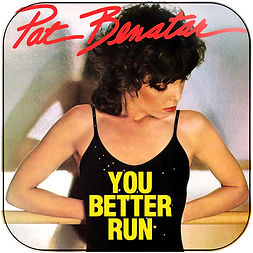
OK, so I’ve scoured the data, listened to the receipts, and come to the only conclusion that makes any sense: Pat Benatar was the best singer in rock music—male or female.
Now, if we’re talking about men, I’d hand that crown to Freddie Mercury, followed verr, verr closely by Chris Cornell, Layne Staley, and Ronnie James Dio. On the women’s side, other elite rock vocalists include Ann Wilson of Heart, Linda Ronstadt, and the incomparable Tina Turner. (And while we’re here—why do white critics insist on ranking Patti Smith’s scraggily, craggly yowling so high? Stop it.)
Benatar may not have always had the best material, but she had that rare combination of smoothness, bite, clarity, and vocal power that could elevate just about anything she touched. (Think of her as the Whitney Houston of rock: someone who never had to shout to prove she could out-sing anyone in the room.) Pat had the kind of voice that could have flexed across genres—and eventually did, as her rock career dried up like a raisin in the sun.
“You Better Run” is my favorite of her early singles because she absolutely dares anyone to match her level of attitude. She spits the verses with venom, growls and roars through the hook, yet her tone always hits you like a bell. Crystal clear, full-bodied, and bursting with intent. She would later add more emotional vulnerability to her toolkit and take a more mainstream route—but in those early days, it was tracks like this that cemented her legacy as the baddest singing bitch rock music ever had the privilege of claiming.
258
Violent Femmes
"Blister in the Sun"
1983

A surprisingly influential band, Violent Femmes dropped a debut album full of soupy, whiny, acoustic punk that struck a deep, hormonal chord with every seventh-grade white kid with a cassette copy in their My Little Pony backpack.
At my Arizona junior high, these very white dudes from Wisconsin were the truth—at least to the frosted-tip masses who thought they were being rebellious belting out lyrics about being “so strung out” and “high as a kite.” (Honestly, most of them were. This is suburbia we’re talkin’ ‘bout.) But lyrical content aside, “Blister in the Sun” was a catchy fuck of a song, built around a plucky, simple guitar riff that was impossible not to hum as you trudged between Home Ec and gym class.
Lead singer Gordon Gano sang with that specific brand of nasal angst that perfectly mirrored what white suburban teens were feeling in the mid-’80s: pissed, confused, and dying to be just like everyone else. I wasn’t white, and the lyrical themes didn’t really speak to me when they first came out—but I was high as a kite through most of high school, so yeah… I hummed this shit right along with the rest of ’em.
257
Eurythmics
"Here Comes the Rain Again"
1983

The orchestral swells that brush up against the electronic percussive ticks in the opening moments of this song are iconic—chilly, clinical, yet somehow deeply intimate. At the time, there was virtually nothing on the radio that sounded quite like this: synths that felt like snowflakes falling on steel, anchored by one of the most dynamic voices the U.K. has ever shipped across the Atlantic—carrot-topped powerhouse Annie Lennox.
Personally, I have a soft spot for songs written in minor chords. They tend to sound moodier, more introspective, often soaked in a kind of stylish melancholy—and for that to really land, you need a vocalist who can swim in those waters without sinking. Lennox does it effortlessly. Her delivery is restrained but emotionally precise, shadowed and breathy in the verses, rising to a soulful simmer as the song lifts in the final stretch with some beautifully timed ad-libs.
This is a fantastic song that, with just the right push on Black radio, might’ve even slipped into the R&B Top Ten. The mood, the groove, and that voice? All the ingredients were there.
“Here Comes the Rain Again” is just another immaculate piece of evidence that proves that the Eurythmics were 80s royalty.
256
Teena Marie
"Square Biz"
1981

What made Teena Marie so unique is that she didn’t try to sing Black—she just was. Everything about her delivery—the slightly unstable vibrato, the unforced melisma, the occasional church-born growl—came from deep within someone who had soul music coursing through her bloodstream, not just her playlists.
“Square Biz” was my personal introduction to Lady T. It was a massive hit even in Cow Patty County, Arizona, which meant you couldn’t go anywhere without hearing that bass line snapping like plastic barrettes at the end of your ponytails. Co-written by bassist Allen McGrier, the track wisely puts his pop-and-thump front and center—but Teena had the vocal chops (and then some) to ride that groove like a pro. She didn’t just survive the funk—she bent it to her will.
A lot of folks point to the rap verse as the song’s biggest flex—and yes, Teena drops some bars with surprising confidence. But Debbie Harry had already gone there earlier that same year on “Rapture.” No, what truly set “Square Biz” (and Teena Marie in general) apart was the fact that she produced her own damn music. That detail often gets lost in the awe of everything else she brought to the table, but it’s a huge part of why her work felt so intentional, so unmistakably hers.
255
Traveling Wilburys
"End of the Line"
1988

Though there are one or two country artists I really dig, country music itself doesn’t exactly give me a boner. (A hot cowboy in tight Wranglers does, though.)
But country-adjacent rock? That’s when my ears perk up like when a dog hears the can opener. Linda Ronstadt serves this kind of rock. So does Stevie Nicks. Bonnie Raitt? Oh, she practically marinates in it. Even Eric Clapton dabbles now and then. I’m not entirely sure what the official term is—Cracker Rock? Rockabilly? Whatever it is, it walks that line between twang and groove, and I’m here for it.
“The End of the Line” by the Traveling Wilburys fits squarely into that delicious in-between. Jeff Lynne (of ELO fame) is a fine producer, and this track is a great example of his light-touch, sun-drenched approach. But what really jumps out—knocks you sideways, even—is when Roy Orbison’s voice enters. It’s angelic. It’s otherworldly. It’s like the other guys (George Harrison, Tom Petty, Jeff Lynne) are singing around a campfire with marshmallows while Orbison is being beamed down from some velvet-curtained cathedral in heaven.
Thank God Jeff Lynne had the good sense to leave Bob Dylan off this one because his frog-throated croak would’ve just fucked it all up.
Back when this came out, I didn’t know much about Roy Orbison, but the contrast was impossible to miss. His voice demanded attention, elevating what could’ve been a laid-back porch jam into something close to celestial. It’s easy to forget the power of a voice until someone like Orbison steps in and reminds you.
Watching the video for this song made me realize (or remember, rather) that Orbison was already dead before this single was released in January of 1989. He’d died of a heart attack in December at the age of 52, right as his career was experiencing a major resurgence.
It almost gives the song’s title an ironic feel…
254
Erasure
"A Little Respect"
1988

1980s electro-pop has Vince Clarke’s name spray-painted all over it. As the founding member of Depeche Mode, Yaz(oo), and Erasure—in that order—Clarke was the sonic architect behind some of the era’s most enduring synth-driven anthems. In the U.K., Erasure were just as big as Depeche Mode, and the pairing of Clarke’s bright, bouncy production with Andy Bell’s flamboyant and soulful vocals gave us more than a few pop masterpieces—chief among them: “A Little Respect.”
Andy Bell is no Aretha, but he sings with a touch of gay soul that feels like your Black Aunt Kay-Kay got herself a drum machine and a glitter mic. His voice, while not as smoky as Yaz’s Alison Moyet, shares a similar emotional pull—tender, urgent, and just the right amount of theatrical. And while “A Little Respect” is built on the electronic bones Clarke is famous for, the acoustic guitar strumming through the track adds a charming, human heartbeat that gives it crossover appeal.
The song is pure pop gold—uplifting, dramatic, and sing-along ready—and it’s just one of many gems in Erasure’s catalog. I don’t own any full albums by them, but "Pop! The First 20 Hits" is a must-have for anyone looking to inject a little 80s-era sparkle into their day.
253
OMD (Orchestral Manœuvres in the Dark)
"If You Leave"
1986

Researching this blog revealed that OMD (Orchestral Manœuvres in the Dark) were actually a pretty influential force in the late-’70s electronic music scene. I may have to take a minute and check out their early catalog. Then again, I probably won’t.
The truth is, I’m perfectly content with “If You Leave” being the one—and possibly only—OMD song I carry with me through life. OK, let me stop lyin’: I also know “Secret” and “(Forever) Live and Die,” and they’re just fine. But “If You Leave” towers over them like when Shaq and Kevin Hart show up for the same event.
If you were in junior high or high school in the 1980s—and this part is crucial—and you grew up in the suburbs and/or surrounded by white people, movies by John Hughes and songs like “If You Leave” helped define your teen years. Full stop. “If You Leave” is from a movie I’ve never even seen ("Pretty in Pink"), but I cannot hear this song without picturing Molly Ringwald’s scraggly little face full of freckles looking both angsty and oddly hopeful.
This song instantly teleports me back to school dances in the gym and marathon weekends watching MTV when it actually played music videos. It’s a gorgeous slice of synth-pop melancholy that would’ve worked just as well coming from ELO, ABC, or the men’s choir at BYU.
I hold “If You Leave” close, not just because of how it sounds, but because of what it evokes: a perfect little time capsule from a weird, wonderful, coming-of-age era that, for many of us, will never quite be topped.
252
Alice in Chains
"Rooster"
1992

My brain is pretty good at producing most emotions on its own—happiness, anger, bitchiness—but I’ve never been able to create sadness or depression, so to keep myself balanced, I have to get those feelings from somewerrr else. That’s where my love of sad songs comes in, and those mournful harmonies that open “Rooster” provide all the gloom I need for the day.
Layne Staley was a magnificent vocalist, and something tells me he didn’t have an easy time producing joy either, which made him the perfect interpreter of the doom-heavy rock Alice in Chains specialized in. “Rooster” tells the story of a Vietnam vet—guitarist Jerry Cantrell’s father—and Staley delivers it like he’s the one stomping through the jungles. His emotion here is raw and gripping, capturing the horror and futility of yet another war that made no damn sense.
(And just in case you were wondering, as I’m sure you were—my favorite rock song about the perils of war is Metallica’s “Disposable Heroes.”)
I also appreciate that the video includes the suffering of soldiers on both sides. You know who else are Vietnam vets? The Vietnamese.
And by the way, even if “Rooster” sucked, it would still be worth it just for the way Layne sings, “The path leads me to nowerrr / The bullets scream to me from somewerrr.” That’s gold.
251
Pet Shop Boys with Dusty Springfield
"What Have I Done to Deserve This?"
1987

From Erasure to Dead or Alive to the Pet Shop Boys, the 1980s did little more than confirm that all the gayness in the world originated in the U.K.
Neil Tennant could sing, but he wasn’t really a singer. He could sort of rap, but he wasn’t a rapper either. What he brought to the mic was a uniquely aloof, swishy charm that worked beautifully for the Pet Shop Boys’ brand of icy, brainy electro-pop—but maybe that’s part of why they never became the massive American pop force they deserved to be.
On paper, adding a blue-eyed soul legend, the legendary and lesbianic Dusty Springfield, to the mix should’ve made things worse for the fortunes of the Pet Shop boys. But it didn’t. In fact, “What Have I Done to Deserve This?” needed a real voice to anchor it, especially during the bridge (“Since you’ve been away…”) where Dusty’s warmth takes the song from clever to classic.
Several big-name singers were considered for the duet, but none of them felt right. Even when Springfield was first approached, she turned it down—she didn’t know who the Pet Shop Boys were. But after learning more about their success (and probably eyeing some bills stacking up on the kitchen counter), she agreed, and two years later finally flew from L.A. to London to record her part. What resulted was a fabulous song that hits on all cylinders: it’s danceable, melodic, and catchy as it wanna be. And it’s the tenderness of Springfields smooth vocals that contrast with Tennant’s even-keeled delivery that gives the song its glow.
The single became Dusty’s first real hit in nearly two decades and gave her a graceful return to the charts as well as some much-needed grocery money. It also handed the Pet Shop Boys their biggest U.S. hit since “West End Girls,” helping make “Actually” their best-selling album.
At her funeral in 1999, Elton John called Springfield “the greatest white singer there ever has been”—making a point to add the “white” part, presumably because he didn’t want the famously testy Aretha Franklin to burn one of his mansions to the ground.
250
Wang Chung
"Dance Hall Days"
1983

Where was the #MeToo movement when we needed it?
Am I the only one getting serious sexual assault vibes from “Dance Hall Days”?
Let’s take a closer look:
“Take your baby by the heel / And do the next thing that you feel.”
Absolutely not. You can’t just grab a person by the heel and follow your instincts. That’s not dancing—that’s a crime scene. Also, who grabs anyone by the heel?
“Take your baby by the hair / Pull her closer, there, there, there.”
He obviously wasn’t dancing with no sistahs in that dance hall. Try grabbing a Black girl by the hair and you might end up with a fist full of weave…and a broken jaw.
“Take your baby by the wrist / And in her mouth, an amethyst.”
Wait, what's an amethyst? Is it some kind of rock? So now she’s got rocks in her mouth? Are we dancing or burying her alive? This went from weird to full-on Dateline NBC.
Why didn’t the authorities release the dogs on these dudes and take them into custody?
Well… probably because whoever writes a song this good deserves his freedom. “Dance Hall Days,” for all its questionable lyrics, rides along on that blissful synth line, percolating bass, and string flourishes that feel like a soft breeze blowing through a pastel-filtered dream sequence. That Roger Federer-looking lead singer came across as both wistful and just a touch unhinged, selling the vibe like he’s recalling a beautifully choreographed felony from long ago.
Creepy or not, "Dance Hall Days" is a bop. A problematic bop. But a bop, nonetheless.
249
Kylie Minogue
"Slow"
2003

“Slow” sounds like the soundcard of the coolest Atari game you’ve never played.
Kylie Minogue might not be the Aretha of dance music, but she knew exactly how to approach this track: breathy, coy, and light enough not to disturb the song’s sleek, interstellar vibe.
Created in collaboration with acclaimed U.K. producer Dan Carey and Iceland’s second-greatest export (after Björk), Emilíana Torrini—yeah, I had to Google her too—“Slow” is a minimalist, synth-drenched slow-burner that somehow sounds both futuristic and sensual. The bass-heavy, jittery beat breakdown? Pure ear candy. Actually, it’s orgasmic.
But let’s talk about what’s really wrong here: U.S. Americans. This song obviously deserved its #1 spot on the U.S. Dance charts. But how, in the name of all that is holy, did it stall out at #91 on the Hot 100? Meanwhile, Minogue's bubblegum abomination “The Loco-Motion” reached #3? Don’t make a lick of sense, Gringos. Were ya'll mad at Kylie's "Slow" video with all those extremely fit, Speedo-clad people at the public pool squirming around in a sensual manner? You knew that with so many people in that good of shape in one place, the video was obviously filmed outside the United States. America first, I guess.
Voting a ridiculous and unhinged reality star into the office of the presidency TWICE actually makes more sense to me now.
248
Don Henley
"The Boys of Summer"
1984

Was there anyone who DIDN'T have a big hit in 1984? At this point, I’m starting to feel like my own platinum album from that year should be arriving in the mail any day now.
You know me—I’ll find a way to bring up Prince no matter what, and there’s actually a legit connection here. The demo for “The Boys of Summer” was written by Heartbreaker Mike Campbell on a LinnDrum machine and an Oberheim OB-X synthesizer—the same tech that Prince used to make magic on "1999". The reason a classic rock band like the Heartbreakers was even dabbling in electronic gear was because Tom Petty had been listening to Prince and realized he’d need to evolve the band’s sound for their upcoming "Southern Accents" album.
But when Campbell presented this demo to Petty, he politely dropped it in the trash chute. Not sure if Don Henley was rummaging through the dumpster behind Heartbreaker Studios or what, but somehow he got his hands on it, added some cryptic, wistful lyrics—and the rest is music video history.
From those artificial cymbals and moody synths to the ghostly guitar licks, “The Boys of Summer” is one of those songs that gives you that glorious, ominous 80s feeling. Like something sad and beautiful is just around the corner. And I live for that feeling.
And I’m glad that Henley dug this track out of the trash and sang on it because his vocals give the song more texture than Petty ever could’ve. And “The Boys of Summer” is yet another reason why 1984 might be the coolest year pop music has ever seen.
All thanks to Prince… of course.
247
Elton John
"Daniel"
1973

Elton John and his big, oversized clown glasses were an unstoppable force in the 1970s, racking up Top 10 hits and albums like nobody’s business. He probably has something like 10 number-one singles in the U.S.—but let’s be honest, nine of those are just reissues of “Candle in the Wind” every time a famous woman kicked the bucket.
Originally a tribute to Marilyn Monroe, Elton would read the obits, rush to the studio, and turn “Goodbye Norma Jean” into something more topical, depending on who’d bit the dust that week:
• “Goodbye England’s Rose” for Princess Di.
• “Goodbye Super Nun” for Mother Teresa.
• “Goodbye Li’bral Judge” for RBG.
• “Goodbye Golden Girl” for Betty White.
If Beyoncé and Angela Merkel croak before he does, expect two more chart-toppers from John. Honestly, Billboard should only count that song once in his total.
Anyway, Elton was always unrepentantly cheesy, and “Daniel” is one of those rare cases where the cheese worked beautifully. Released in 1973—by which point rock had already lost most of its rebellious edge—“Daniel” came through as a soft, syrupy ballad that totally dominated the radio.
The lyrics, penned by longtime writing partner Bernie Taupin, are allegedly about a Vietnam vet returning home—but if you’ve heard this song more than once (or a thousand times), you probably thought the same thing I did: this is about Elton dropping his blind brother off at the airport and watching the plane take off with one solitary tear rolling down his cheek. And frankly? That makes way more sense, Bernie.
Regardless of the backstory, “Daniel” is prime Yacht Rock—mellow, melodic, and tailor-made for breezy drives or soft-rock radio. Sure, music snobs may have hated this sound, but soft rock staples like "Daniel" quietly ruled the charts all the way until disco arrived and washed Yacht Rock out to sea without a sail.
246
Hall & Oates
"Maneater"
1982

So popular were Hall & Oates in the early eighties that even Michael Jackson had to jack a page from their hit-making manual. Jackson openly admitted that he borrowed the bass line of “Billie Jean”—his career-defining smash—from “I Can’t Go for That (No Can Do),” one of the rare tracks by a white artist to reach #1 on the R&B charts. And while MJ never name-checked “Maneater,” its theme of a helpless man being devoured by a femme fatale became a recurring motif in his music for decades.
But MJ wasn’t the only one creeping into folks’ houses and stealing shit. The bass line of “Maneater” is clearly lifted from The Supremes’ “You Can’t Hurry Love,” with Hall himself describing it as a “Motown kind of groove.” Musical larceny or loving homage—whatever it is, “Maneater” works.
As one of the most soulful white dudes to ever slide into an R&B groove, Daryl Hall delivers the vocals with the same breezy authority that made the duo unstoppable for most of the decade. He never lets the monster groove overwhelm him. The rhythm section—anchored by drummer Mickey Curry and the late, great bassist T-Bone Wolk—keeps everything locked and loaded, while saxophonist Charles DeChant delivers a solo that still sounds sexy all these years later.
John Oates and his legendary mustache were there, too.
Everything Hall & Oates had been perfecting since the early ‘70s seemed to snap into place on this track, their biggest hit and one of the most enduring in their catalog. Of course, their success couldn’t last forever—eventually the partnership devolved into legal warfare. All I got to say is if the lawsuits were decided based on musical contributions alone, Oates might not have a leg—or a push broom mustache—to stand on.
245
Radiohead
"Creep"
1992

While “OK Computer” and “Kid A” absolutely defined the sound of moody, experimental rock in the late ’90s and early 2000s, it’s “Creep” that’s come to define Radiohead. Whether they like it or not—and by all accounts, they’re not feelin’ it.
Radiohead have spent much of their career trying to distance themselves from “Creep,” a song they’ve often dismissed as a creative misstep. Most of their post-“OK Computer” work seems specifically engineered to erase it from public memory. But ironically, the more Radiohead grew in stature and acclaim, the more “Creep” refused to go quietly. The song crept (pun fully intended) into movies, commercials, karaoke bars, and cover versions by artists as far-flung as Moby, Kelly Clarkson, and even Prince. When Prince covers your rock song, you know you done done sumthin’ gooder than good.
My own introduction to Radiohead was “OK Computer” in 1997. So when I eventually got around to hearing “Creep,” it didn’t exactly bowl me over. I’ve always been more into gloom than angst, and “Creep” is heavy on the latter. Still, there’s something undeniably magnetic about that blast of distorted guitar that crashes into the chorus, and Thom Yorke’s falsetto near the bridge is one hell of a moment. The song’s soft-loud dynamics work well, too—it’s the kind of structure that would later become a staple in alt-rock.
But here’s the thing: Radiohead is an albums band. “Creep” comes from “Pablo Honey”, a record I only revisit when Saturn does a full circle around the sun, so pulling the best track from an album I care nothing about was easy as pie. With later Radiohead albums, the songs are so intricately woven into the full experience that isolating one track feels unnatural as they don’t stand well on their own. That, to me, is a sign of artistic evolution. It also explains why so few of their singles made this countdown.
Unlike many of their peers, Radiohead became more than just the sum of their hits. But “Creep”? For better or worse, it’s the song that made them matter to the fat asses of the masses.
244
Def Leppard
"Animal"
1987

Liking songs by wet-mop rock band Def Leppard is the very definition of a guilty pleasure. But if you have even a passing interest in ‘80s pop, chances are you’ve got at least one of their tracks tucked away on your iPhone—whether you want to admit it or not. Most of us don’t wanna. And I get it.
It’s easy to see how a sticky-sweet anthem like “Pour Some Sugar on Me” became a monster hit—songs like that are engineered to worm their way into your brain’s pleasure center and set up camp indefinitely. It’s sugar, after all.
But “Animal”? Now that’s a weird one to still be holding on to. It’s not a signature Def Leppard jam. You’re not gonna hear it blasted in bars, covered at karaoke, or listed on those “essential rock classics” playlists. Even diehard Leppard fans—like my old college roommate, Stan—probably forgot “Animal” is on their ga-zillion-selling “Hysteria” album until it comes on.
Still, this song? This is my guiltiest of guilty Leppard pleasures. There’s something vaguely melancholic about the verses, like a heavy-lidded glam rocker trying to process a breakup through a haze of Aqua Net. It’s not flashy. It doesn’t soar. And it sure as hell doesn’t have the cultural staying power of the band’s bigger hits.
I don't know why I like it. I just do. And quite a lot. It’s not rock-pop’s glittering high point—if such a thing even exists—but there’s something quietly compelling here. Just don’t ask me to blast it on the speaker. This one stays in the headphones. I got a reputation to protect, ya’ know.
243
The Cars
"Drive"
1984

I’m not sure how white people and rock critics really see The Cars, but my guess is they were never held in the highest regard. And I kind of get it—Ric Ocasek wasn’t a musical genius in the traditional sense. But what he did know how to do was craft a damn good pop song.
To prep for this write-up, I threw on their 1985 Greatest Hits collection and, no lie, every track on there bangs. I genuinely don’t understand why The Cars aren’t held in the same regard as other white-boy rock staples like The Eagles or Neil Diamond. In fact, I might argue The Cars are better—at least they didn’t insist you take them so seriously.
“Drive” was sung by bassist Benjamin Orr, but it was written by Ocasek (despite what Wikipedia might try to tell you). Released in the holy grail of a year for music (1984), “Drive” is one of those quintessential synth-heavy ‘80s ballads that’s lowkey about mental health—or at least about dealing with a partner’s emotional spiral. The lyrics are full of poignant questions, asking who else is going to stick around once things get messy.
Letting Orr sing this one was the right move. Ocasek’s voice, while iconic in its own way, often came across a little too quirky or detached. Orr, on the other hand, brought a softness and sincerity that matched the mood perfectly.
“Drive” turned out to be the band’s biggest hit, and one of their final Top 10 singles before all four tires of their commercial standing got a flat. Both Orr and Ocasek have since passed on, but the music? Still riding smooth.
242
Joni Mitchell (with Peter Gabriel)
"My Secret Place"
1988

There’s a line in “My Secret Place” where Joni Mitchell sings, “I was born and raised in New York City.” Back in the early 2000s, when I was just starting to explore her music, I got into a spirited debate with a white Canadian coworker who referred to Joni as a national treasure.
I challenged him: How could Joni be a Canadian national treasure when she was clearly born in the United States?
This was Colombia, pre-Google-everything, so there we were—two people arguing about Joni Mitchell’s birthplace with nothing but stubborn conviction and bad information (on my part) to back up our arguments. It was basically the equivalent of him trying to tell me that Fred Sanford’s junkyard was in Quebec. I still cringe when I think about how stupid I must have looked arguing about Joni Mitchell with a Canadian.
Of course, Joni is Canadian, and when she mentioned NYC in this song—not once but twice—she wasn’t misrepresenting her biography. She was writing in character, telling the story from someone else’s perspective: a New Yorker swept away by the rugged beauty of Colorado. This haunting song, with its hollow, echoey atmosphere, was my first real introduction to Joni’s music, and it beautifully captures the wild stillness of the Rockies. Peter Gabriel adds shadowy, atmospheric harmonies, and though Joni’s voice had deepened significantly by 1988 (thanks to inhaling about twelve zillion Virginia Slims over the years), her smoky vocal tone suits the mood perfectly.
I would later dive deeper into her catalog, especially the mid-70s, widely misunderstood, jazz-leaning era. But “My Secret Place” remains one of my favorites from this native New Yorker.
I mean, Canadian.
241
Gary Numan
"Cars"
1979

“Cars” is ominous, apocalyptic, and spooky as hell—easily one of the best things to come out at the turn of the decade, when post-punk New Wave was the dernier cri of pop music, taking over Europe before finally storming the U.S. You can hear traces of this track in almost everything that came out of Europe afterward. Gringo groups like Devo, Missing Persons, and The System eventually caught on, but Gary Numan was already miles ahead.
Hard to believe, but “Cars” is technically a ’70s jam, released in late 1979 and becoming a U.S. hit in early 1980, a success bolstered and sustained by the inclusion of its accompanying video on a fledgling cable channel called MTV in 1981. It helped usher in the second British Invasion—a much more exciting one than the first, if you ask me—bringing with it synth-pop candy canes from the Human League, Eurythmics, Yaz, Depeche Mode, and others. People often credit “Don’t You Want Me” as the kickoff point of that movement, but “Cars” cracked the U.S. Top 10 two full years before that track hit #1.
The real magic of this paranoid banger lies in its interplay between electronic and conventional instruments—something Prince would perfect a few years later. On “Cars,” the drums and shaking tambourines are real, but those keyboard stabs and percussive crashes? All powered by London’s version of Con Edison. No electricity, no song. Numan’s "The Pleasure Principle" (the 1979 album, not Janet Jackson’s dancefloor ditty) is often cited as one of Prince’s biggest influences—just listen to “Automatic” on "1999" and tell me that connection isn’t crystal clear.
“Cars” is iconic, and its parent album is absolutely worth a listen—especially if you’re in the mood to spook yourself out on a lonely night.
240
Simply Red
"If You Don't Know Me By Now"
1989

Why do people in the U.K. hate Simply Red so much? Is it really about the music—or is it because gingers freak people out a little?
Let’s talk about it. The blotchy skin that goes from cotton candy pink to boiled lobster red at the mere suggestion of sunlight. That frizzy, copper-toned hair with the same wiry texture as those troll dolls we used to stick on the ends of our pencils. The freckles, the weird glow under fluorescent lighting—it’s a lot to process. And for some folks, the processing never quite happens.
Mick Hucknall is the poster child for this phenomenon. Tell me—besides him, which other redhead has left a major stamp on pop music? Nelson Eddy? Yeah, I didn’t think so. We can handle gingers when they’re kids—Little Orphan Annie, Dennis the Menace—but once puberty hits, the cuteness gets repossessed like a Hyundai with missed payments. The creators of the Chucky doll didn’t just happen to make him a redhead. They were tapping into something primal.
But Hucknall? He wasn’t scary like Carrot Top. He was just… there. Bright orange and unbothered, crooning blue-eyed soul like Teddy Pendergrass’s slightly damp cousin. And say what you will—he kicked down the door for Ed Sheeran, another wildly successful artist I will politely decline to explore due to a mild allergy to ginger-folk. (If ya’ll say his music’s good, I’ll go ahead and take your word for it.)
Simply Red caught some flack for their cover of “If You Don’t Know Me by Now”—and here’s where things get interesting. Nobody batted an eye when they remade “Money’s Too Tight to Mention” because it was a remake of a song no one remembered. But “If You Don’t Know Me” is sacred ground. Teddy Pendergrass breathed on it. And Hucknall, for all his vocal ability, wasn’t seen as fit to Windex the frame around Teddy’s gold record.
But here’s the twist: I like Simply Red’s version better. I’ve never cared for the Harold Melvin & the Blue Notes’ original. The remake’s stripped-down production lets the melody breathe, and that harmony from the unnamed Black dude (can we please find out who that was?) gives the whole thing a smoothness that just works. The song doesn’t really build, but maybe that’s the point. It just sits there and stares at you, like Hucknall’s ghostly pale chest under a silk shirt.
And yes, I’ve read Red Mick, the Mick Hucknall biography. Another thing I don’t fully understand about myself. I didn’t read it to scare myself, though. I’m not afraid of gingers.
…I don’t think.
239
20 Fingers feat. Gillette
"Short Dick Man"
1994

Only a woman with a Bronx or New Jersey accent could’ve pulled this off. It’d be damn near impossible to find someone this unabashedly ruthless in most other parts of the country. If you’re a music producer in the Bronx and need rude, audacious woman who simply doesn’t give a fuck to step up to the mic and spit lyrics like these, you probably don’t even need to leave your building.
As far as one-hit wonders go, “Short Dick Man” has to be in the top 15. It hasn’t left a huge footprint in the annals of dance music, but it’s still irresistibly catchy—especially with that robotic “don’t-don’t-don’t.” The song was originally conceived as a clapback to the rampant misogyny in male-dominated rap, but of course no one saw it that way. What people did see—immediately—was how bold, comical, and flat-out fun it was.
It instantly became a catchphrase and a call to arms for women to loudly and publicly reject the tiny, fragile egos of boys pretending to be men. (Honestly, the Democrats missed a golden opportunity by not sneaking this track into Trump rallies in place of “YMCA.”)
Put into perspective, “Short Dick Man” was the “Respect” of the mid-’90s. The only real difference is that Rolling Stone named Aretha’s anthem the greatest song of all time, while this one was mysteriously left off the list altogether. Odd.
(Just Wiki-ed Gillette. She’s from Jersey. Of course she is.)
238
Pablo Cruise
"Love Will Find a Way"
1978

I'm all about the revving bass line that opens “Love Will Find a Way.”
Alongside artists like Ambrosia, Boz Scaggs, and the Michael McDonald-led Doobie Brothers, Pablo Cruise helped inject a little smidge of soul into the late-’70s Yacht Rock movement. They did it here by pushing the bass to the front over a buoyant bed of keyboards, laying the foundation for a semi-call-and-response chorus that had more than a few Black folks vibing with this song on the downlow.
Now, Pablo Cruise were no Hall & Oates, so this jam never touched the R&B charts—but that doesn’t mean it lacks soul. When Pablo (or whatever the lead singer’s name is) exclaims, “Well, it’s alright!” you can hear him channeling Ray Charles or Curtis Mayfield. And as the track cruises along, he even raises his voice and tosses in a surprisingly solid ad-lib—something your average straight-up rock singer wouldn’t even attempt.
“Love Will Find a Way” is yet another reminder of a core truth running through this countdown and this blog:
Yacht Rock rocks.
237
Richard Marx
"Should've Known Better"
1987

Back when he dominated pop radio, Richard Marx’s music felt like an abomination sent straight from Beelzebub himself. I couldn’t stand his pasty face or that severe mullet. I despised the fake rasp in his whiny-ass voice. Those junior high slow dance ballads—“Right Here Waiting,” “Hold On to the Nights”—were festering, pus-filled boils on the ass of late-‘80s pop. And I just checked his discography again: turns out I hated every single he cursed this Earth with during his heyday.
Now that I got that out of the way: “Should’ve Known Better” is my jam!
His debut single “Don’t Mean Nothin’” was appropriately titled because that’s exactly what it meant to me. To be honest, I figured Marx was going to be just another flash in the pan and would fade away soon enough, leaving us all in peace. But then I heard that ominous intro to “Should’ve Known Better,” with those sharp, cutting guitars, and I damn near popped out of my chair doing my White Boy dance. For a minute there, I thought—maybe I had misjudged Richard Marx?
But then, of course, the letdown came. After “Should’ve” slid off the charts, we got “Endless Summer Nights,” which was easy enough to ignore. Then came “Hold On to the Nights” and a string of other turrbull ballads Satan must’ve personally co-produced. Marx had fooled me into thinking he had more “Should’ve Known Better”-level tracks in his arsenal. He didn’t.
I know he later co-wrote “Dance With My Father,” which gave Luther Vandross the mainstream flowers he always deserved—but I don’t like that song either.
Still, we’ll always have “Should’ve Known Better” (which really should’ve been titled “Shoulda”). And for that brief moment, Richard Marx—mullet and all—gave us something damn near great.
236
The Jets
"Cross My Broken Heart"
1987

Producer Stephen Bray was at the helm for “Cross My Broken Heart”—the same guy behind some of Madonna’s biggest early hits. And you can hear the similarities between this track and the glossy production style of her “True Blue” era. That said, whichever one of the 85 Togolese kids from Minnesota sang lead here could out-sing Madonna with one lung tied behind their back. Still, with a monster hook like this, the song could’ve been a hit for just about anyone from Togo or otherwise.
Released as the first single from The Jets’ second album “Magic”, “Cross My Broken Heart” also found its way onto the "Beverly Hills Cop II" soundtrack. And as I’ve said before: any song accepted to be included on either one of the first two soundtracks of "Beverly Hills Cop" movies is a hit in my book.
By the time this jam dropped, The Jets already had a solid run of hits. I’ve never heard the full “Magic” album—and don’t need to. The tracklist reads like a greatest hits compilation, spinning off six singles in total. “Cross My Broken Heart” was the final track on the album, which was a smart move—leave the listener dancing as the credits roll.
Chart-wise, it was a pop success (#7 on the Hot 100) and did respectably on the R&B charts (#11). Still, it was a little overshadowed by their other high-quality singles like “Rocket 2 U” (originally intended for Earth, Wind & Fire, believe it or not) and the sentimental slow jam “Make It Real.” For a hot minute, this musical army from Minnesota was on an undeniable roll—then poof! they were gone.
By 1989, the only Jets anyone talked about were the sorry ones from New York. But these Jets did not suck, and their “Greatest Hits” should live on every phone belonging to anyone who enjoys doing the Snake around the house to some good, downhome R&B.
235
Gino Soccio
"Dancer"
1979

I love disco music—but I’m talking about the real stuff. The kind that was birthed in Black and Latino discos in Philly, Chi-Town, and New York. Not the disposable junk that non-U.S. acts like Silver Convention were squeezing out of their rhinestone-studded butt cheeks. That was disco-adjacent at best, and Eurotrash in platform heels at worst.
Now, that last statement was a sweeping generalization, and like most generalizations, there are exceptions. High-quality disco from across the pond did exist. Giorgio Moroder, for one—an Italian synth god who basically invented the future. And then there’s Cerrone, France’s answer to Studio 54. But for the purposes of this rant, let’s talk about Gino Soccio. Despite having the most Italian name imaginable, Soccio wasn’t from Rome or Naples—he was from Canada. Which explains a lot, honestly. Canadians are always about one step behind, but sometimes that’s just the right distance to swerve around the mess and sneak in a classic.
Even after disco was snatched off the airwaves and exiled to gay clubs and roller rinks, Soccio kept the groove alive into the early ’80s with jams like “It’s Alright” and “Try It Out.” But his finest work came from his 1979 debut album “Outline”. Clearly influenced by Kraftwerk, Soccio avoided the dookie-stained, dinner-theater disco of acts like Alec R. Costandinos and Voyage. Instead, he leaned into a more electronic, aggressive style that still hit all the right notes for the Black and Latino disco faithful.
“Dancer” was the standout. A bass-popping, piano-splashed, four-on-the-floor killer that could make a cement block strut. The vocals were anonymous enough to keep the song accessible to moms in Des Moines who were taking disco dance lessons at the local YMCA, but the groove was pure underground fire. “Dancer” was—and remains—a highwater mark in a criminally invisible recording career that fizzled out by the late ’80s.
What happened to Gino Soccio thereafter? I have no clue, and honestly, it don’t matter much. He gave us “Dancer”—one of the few reasons to keep Canada on the roster. Hell, I’d even support making Canada the 51st state with jams like that!
234
Lily Allen
"Fuck You"
2009

Not to be confused with the equally playful ditty of the same name by CeeLo Green that came out a year later, Lily Allen’s “Fuck You” was aimed not at a jilted lover, but squarely at right-leaning politicians—mainly George W. Bush. Where CeeLo’s version is a giddy whine-fest dripping in falsetto heartbreak, Allen’s is a sugary poison dart dipped in sarcasm at politicians who delve in fuckery.
It opens with a clinky-dink, Fisher-Price piano riff that instantly evokes The Monkees or The Partridge Family. If you weren’t paying attention to the lyrics and just judged the track by the chummy tone of Allen’s voice, you’d think she was singing about her favorite ice cream flavor or the ride she loved most at Knott’s Berry Farm. But she’s not. And that dissonance—the contrast between the cutesy, toe-tapping sound and the sharp, acidic lyrics—is only a few steps shy of brilliant.
Allen has never been a major commercial force in the U.S., so “Fuck You” was teed up to be a one-hit wonder moment. But even that didn’t materialize. Maybe it was just too quirky for the American palate—this is, after all, a country that only embraces political protest when it’s wrapped in red, white, and blue bunting. Allen’s label probably learned the hard lessons served to Crowded House, whose “Chocolate Cake” roasted American gluttony and effectively tanked their U.S. career, and to the Dixie Chicks, whose anti-Bush comments got their careers stomped out like a discarded cigarette butt.
Instead of pushing for U.S. domination, Allen’s team contented themselves with letting “Fuck You” become a sizeable hit across Europe—ironically, not including her native U.K., where it didn’t even get an official single release for reasons only the label gods know.
We need Lily to write a nice ditty aimed at Trump! That would be really fun, innit?
233
Steve Miller Band
"The Joker"
1973

Even though Steve Miller grew up surrounded and mentored by legit blues legends like T-Bone Walker, he still gives off the aura of that nerdy kid in school who ate his boogers and got his lunch tray slapped out of his hands while he wandered the cafeteria looking for a seat. In the rock world, Miller ranks at Zuckerberg-levels of uncool—but “The Joker” is cool incarnate. So cool that even Homer Simpson flexed his smoothness by crooning it in an episode. You can really feel Miller’s blues roots here, something that wasn’t always obvious in his other big hits.
You already know I went to a white college in the late ’80s, early ’90s, and this was the era I got introduced to the Holy Trinity of white-boy dorm room Greatest Hits collections: The Eagles, Bob Marley & The Wailers, and Jimmy Buffett. The Steve Miller Band was right there in the mix. And I’ll go on record and admit—I ended up liking a lot of their stuff. (My casual appreciation for Marley in college turned into a full-on obsession.) This was the soundtrack for the guys I went to school with. We didn’t have any of that in my house growing up. But somehow—I remember hearing “The Joker” as a kid.
Did they possibly play "The Joker" on the Black station in Alabama?
I doubt it. But it does have a laid-back, bluesy pocket and that deep, deliberate bass line that a Black artist easily could’ve flipped into something of their own. And then there’s that chorus. That unforgettable, slightly ridiculous, wildly infectious chorus that demands you sing along—even if you have no idea what a “pompatus of love” is.
Rock critics rarely take Miller seriously, but the receipts don’t lie—“The Joker” helped move more than 15 million copies of the Steve Miller Band Greatest Hits collection. And that ain’t no joke.
232
General Public
"Tenderness"
1984

General Public was a British supergroup with members culled from some of the most beloved U.K. bands of the post-punk era: The Specials, The Clash, The Beat, Dexy’s Midnight Runners, and a few others. But front and center in the lineup were two guys—Dave Wakeling, a white dude with a mop-top and a big voice, and Ranking Roger, a Black dude rocking a hairdo that looked like when they put peanut butter and jelly in the same jar.
The group scored their biggest hit with 1984’s “Tenderness,” a shiny, buoyant jam that seemed heaven-sent to teach us all how to do that White Guy dance. (It’s impossible to do any other kind of dance to this song.) Wakeling’s husky, tuneful baritone floats perfectly over the track’s chiming keys and ska-flecked bounce, and the massive bridge hook sends it all the way to teen-movie nirvana.
That’s probably why it landed so perfectly at the end of one of the best teen flicks of the ‘80s, “Weird Science”. “Tenderness” cracked the U.S. Top 30 and became the kind of cult classic that lived on long after its chart run ended.
After that brief run, General Public broke up, and Wakeling shifted focus to The English Beat (essentially a U.S.-focused reincarnation of The Beat, the ska band he and Roger were originally part of). General Public didn’t do much else in the States for a while, but nearly a decade later they resurfaced with a cover of the Staple Singers’ “I’ll Take You There,” featured in the forgettable 1994 movie “Threesome”—a film I’m pretty sure I actually paid money to see in the theater. Yikes.
Wakeling continues to tour with The English Beat. Ranking Roger, who brought a wild charisma to every song he touched, sadly passed away in 2019 from cancer complications. He was only 56.
231
Van Halen
"Finish What Ya Started"
1988

Stop debating which Van Halen era was better—the one helmed by David Lee Roth, or the more commercially successful second act with Sammy Hagar. Hagar is, without a doubt, the better singer. He wipes the floor with Roth vocally. No contest there.
But early Van Halen wasn’t about pristine vocals—it was about two things:
1. The freakish, planet-realigning musicianship of Eddie Van Halen, and
2. The swaggering, unfiltered attitude of David Lee Roth.
When Hagar came on board, the band had just passed through puberty and had started growing hair on their balls. They left behind the horny frat-boy anthems that had once made them the biggest rock band in the world. Enter Sammy, a seasoned vocalist who could bring actual nuance and melody to the party. Case in point: “Finish What Ya Started.” There’s no way Roth could’ve pulled off that song. It’s too subtle, too laid-back. That twangy, chicken-fried groove plays like a whiskey-fueled campfire jam session, and Hagar sells it with smooth confidence.
I already have a sweet spot for non-country artists dabbling in honey-glazed rock, and I have to say—Van Halen knocked this one out of the park. And they couldn’t have done it without Hagar’s voice anchoring the vibe.
But…
At the end of the day, Roth’s era wins. Why? Because what Roth brought to Van Halen—unbridled, manic energy and fun—was lightning in a bottle. The world didn’t just hear those early records; it felt them. Roth was chaos. Roth was fire. Roth was ridiculous, sexy, dumb, and brilliant, sometimes all in the same line. You can’t replicate that.
So stop the debate.
230
Depeche Mode
"Policy of Truth"
1990

This song is a banger, so I’m not sure why lead singer Dave Gahan approaches it with vocal indifference, like he’s at Jiffy Lube getting the oil changed on his Mini Cooper. Hey, Dave—there’s nothing wrong with lifting your voice and pumping some energy into a track with this much potential to blow the roof off a high school prom.
Then again, when you’ve got hooks this good and the high-gloss production of the iconic Flood, you don’t have to work too hard to bring it all home. It seems like Mode are fed up with being betrayed—again—by a lover who keeps swearing they won’t do that thing anymore…only to go and do it again. You’d think they’d be piping mad, but you’d never know it from Gahan’s detached delivery.
Of course, we now know he was deep in a heroin addiction at the time, so maybe he just wasn’t physically capable of sounding anything but borderline suicidal. Still, on “Policy of Truth,” that subdued approach works beautifully. It might just be the strongest track on their blockbuster "Violator", which is saying a lot.
229
Joni Mitchell
"In France They Kiss on Main Street"
1976

People love Canada—and I get it. It seems like nothing bad ever happens there. The worst thing that could befall you might be getting trampled by a herd of angry meese. (Is that the plural of moose?)
Canada doesn’t surprise, startle, or bother anybody. It’s just there, polite and scenic. And the same could be said of its music.
So I know white folks were maaaaad when this breezy and ridiculously catchy single hit the airwaves in 1976, and they rushed out to buy “The Hissing of Summer Lawns”—only to be ambushed by a very different Joni Mitchell. Gone was the acoustic folk goddess baring her soul in open tunings. In her place: a confessional jazz-fusion auteur crafting knotty, challenging soundscapes full of muted horns and elliptical storytelling. U.S. record buyers, let along Canadians, weren't gonna stand for this!
But for a brief moment on that album, Mitchell gave the people a hit. “In France They Kiss on Main Street” is about as hooky and infectious as she was ever going to get. There’s a glittery sheen to the production that gives off major Mamas & Papas-meets-soft-rock vibes, especially on that delicious chorus. You can hear Joni smiling as she sings in her still glorious voice, and when she hits the “rollin’, rollin’, rock and rollin’” refrain, the whole track lifts like sunlight off chrome.
It’s joyful, it’s jangly, and it’s incredibly accessible. But not for long.
“In France…” barely cracked the Top 20, peaking at #19 in the U.S. And that would be the last time she ever charted that high. From this point forward, Joni Mitchell would be hailed more as a pioneer than a pop star—a deeply respected, widely revered artist whose work became more about creative freedom than commercial success. The stadiums got smaller. The numbers shrank. But the legend grew.
I don’t know Joni, but I get the feeling she was completely fine with that. She was making music on her own terms. And that is what makes her a true icon.
228
Coldplay
"God Put a Smile Upon Your Face"
2003

I don’t understand wipepo. They love Nickelback. They love Foo Fighters. They worship Oasis. But then they turn around and hate on Coldplay? What criteria are they even using? How are they able to tell any of these bands apart?
I mean, I’ll admit that Coldplay can be a cold plate of porridge—but if I spent my days hating on them, I’d have to extend that same hateful energy to just about every other rock group that came out in the 2000s. Keane? Travis? Maroon 5 before they went full Vegas? Sorry, but I’ve got bigger and better things to do with my hate.
If I bag on modern-day Coldplay, it’s only because I loved their 2000 debut “Parachutes” so much that nothing they’ve done since has come close. That album was moody, sparse, and sincere in a way that felt genuinely fresh at the time. Their 2003 follow-up, “A Rush of Blood to the Head”, doesn’t rock the bells—but it doesn’t exactly suck either. It’s just kind of… there.
Honestly, post-2000 Coldplay is like the Chinese food of rock music: I can listen to “A Rush” from start to finish and an hour later, mess around and cue it up again, having forgotten that I just rocked it sixty minutes prior.
Still, even within that bland buffet, one dish stands out: “God Put a Smile Upon Your Face.” While the rest of the album may go down like a pint of warm, flat beer, “Got Put a Smile” is the funky cold medina of the set. It’s minor-key, paranoid, and slightly menacing, with a sweeping, dramatic bridge that somehow pulls me in every time. It might not be “funky” in the James Brown sense, but for Coldplay, this is as gritty as it gets.
They’ve dropped what—ten albums by now? And I’ve heard more than a few people say the newer stuff is fine, even great. But you know what? I’m perfectly happy with just “God Put a Smile Upon Your Face” on my post-“Parachutes” playlist. Let Coldplay experiment with lasers and neon stage suits. I got what I needed from them more than twenty years ago.
227
Wham!
"Everything She Wants"
1984

George Michael’s attempts to sound like Stevie Wonder are exponentially more enjoyable than his actual Stevie Wonder covers, which often come off about as flavorless as fried chicken made by your white school buddy’s mom.
“Everything She Wants” clearly takes cues from Stevie’s “All I Do,” with its Roland Juno-60 synthesizer magic, that signature ‘70s-style sliding cymbal, and some of those funky keyboard flourishes. (Honestly, those drums even give “Stranger on the Shore” a little nod.) But “Everything She Wants” isn’t either one of those songs. It sits more in line with Stevie’s post-Golden Era output—high-quality pop that good enough to bop to, but nobody’s calling home about it, either.
Still, Black audiences co-signed it, pushing the track to #13 on the R&B charts. “Careless Whisper,” with its saxophone made for sippin' wine coolers and unsnappin' bras all late at night, had already broken the top 10 on the Hot Black Singles chart, so George was racking up stamps on his Ghetto Pass early on.
Even back then, Michael sounded a little too convincing in his complaints about dating that woman—any woman. His voice isn’t robust, but it’s limber, capable of stretching into those high, dramatic notes that give the song much of its emotional weight. His vocal approach pairs nicely with that thick, funky bassline that managed to bridge the racial gap and bring both Black and white audiences into his groove.
George Michael earned his place here and we might see him again. The other guy in Wham!? Can’t say the same.
226
New Order
"Temptation"
1982

This is one of my favorite groups to come out of the early 1980s British Invasion, and their “Substance” compilation is an absolute must-have for anyone who loves to sink their teeth into some well-crafted dance pop.
When Ian Curtis took his own life just as Joy Division were on the verge of a major breakthrough with the stunning “Love Will Tear Us Apart,” the remaining members were left at a crossroads: pack it in, or push forward? If they did continue, in what direction should they go? Their initial singles kept to the same gloomy, post-punk terrain, but without Ian’s haunted presence, the formula didn’t quite land.
So, they pivoted—hard. Shedding the darkness, New Order dove headfirst into a luminous blend of electronic dance music, laced with sharp guitars and unexpected melodies. The results were revelatory.
Instead of focusing on albums, they released a string of standalone singles, and “Temptation” was their fourth. The version of "Temptation" on “Substance”—a re-recording of the original—is the definitive take for most fans. With its jumpy, hard-hitting drum programming, jittery guitar work, and Bernard Sumner delivering the lyrics with a perfect cocktail of giddiness and disinterest, “Temptation” didn’t make much noise in the U.S. at the time. But it was a sign of massive things to come for New Order in less than a year.
New Order will be back here, I promise ya’.
225
Spiller featuring Sophie Ellis-Bextor
"Groovejet (If This Ain't Love)"
2000

Spiller is an Italian DJ and by the looks of him in the video, he might also double as a center on the New York Knicks. Dude is tall! Sophie Ellis-Bextor is a doe-faced British singer of considerable acclaim in the dance-pop world. Put them together on “Groovejet (If This Ain’t Love)”—a track that cleverly samples Carol Williams and the Salsoul Orchestra’s disco classic “Love Is You”—and the result is a bouncy, shimmering club banger that helped soothe whatever Y2K anxieties we had with pure groove-a-licious energy.
The Brits, as usual, proved they have better taste, sending the track straight to #1. Meanwhile, the U.S. barely noticed, though it did scrape to #3 on the Dance charts. Sure, the song can feel a bit repetitive, but Prince already told us: there is joy in repetition.
Bextor would go on to rack up more global hits—including a couple in the States—but none of them sparkle quite like “Groovejet.” Her 2001 single “Murder on the Dancefloor” may have gone gold in the U.S., but whenever it comes on, I cringe. I'm not sure what Spiller has been doing since 2000, but it sure hasn't been helping the Knicks win that elusive NBA title.
224
The Police
"Message in a Bottle"
1979

As a kid who grew up in The Sticks watching MTV, it would’ve been impossible not to have the Police--the white Brits, not the po-po--all up in my life. Their videos were so omnipresent on the channel that I was practically co-parented by Sting. I liked most everything I heard from them, but unlike white kids, I didn’t lose my mind over them. I mean, I didn't join any protests to defund the Police, but they weren't one of my go-to artists, either. Also, I wasn’t familiar with reggae or ska back then—especially not the New Wave-infused kind these guys were pushing—so the fast-slow bounce of their music always felt a little…quirky.
“Message in a Bottle” was the first time I really felt like I could like this band. Sting’s singing had always struck me as kind of whiny, but there’s less squeak here. The whole track has an urgency to it, especially when that cymbal crash kicks off the transition from verse to chorus—one of the catchiest in their catalog. The lyrics, always Sting’s strong suit, are clever without being cloying. And when the song closes out on that hypnotic repetition of “sending out an S.O.S.,” it fully earns its place as one of the band’s most memorable moments.
Was Sting a genius? If you ask his conceited ass, then yes, absolutely. But whether you think he stomps or stinks, you can’t deny that Sting—both with the Police and as a solo artist—has had one of the most impressive and enduring careers in pop music.
223
Linda Ronstadt
"Just One Look"
1979

Even though Linda Ronstadt had the pixie cut and innocent eyes of a kindergarten teacher, she was a straight up thief. Throughout her career, Ronstadt made a habit of sneaking up behind you, fishing a song out of your purse, and then singing the living fucc out of it. With interpretive skills that bordered on the supernatural, she couldn’t be bothered with the formalities of picking up a pen—she didn’t need to. “Just One Look,” originally released in 1963 by Atlantic recording artist Doris Troy, is yet another entry in Ronstadt’s long list of Black excellence she borrowed from and turned into radio gold. And to great effect.
Ronstadt’s version doesn’t stray far from Troy’s—both women approach the song with power and confidence. But while Troy wasn’t able to spin her self-penned gem into sustained chart success, Ronstadt was the biggest and best-paid female singer of the ’70s. She was a certified vocal dynamo, and when she landed on a top-shelf song like “Just One Look,” she made it count.
Every. Damn. Time.
222
K.C. and the Sunshine Band
"I'm Your Boogie Man"
1976

K.C. was never going to win the Longfellow Award for his lyrics—they were always the least important component of his songs. His real job was to find an irresistible groove, slap a hook on it, and ride that thing into the ground. His biggest hits—“That’s the Way (I Like It),” “Shake, Shake, Shake,” and “Get Down Tonight”—sound like they were written using nothing more than refrigerator magnets. “I’m Your Boogie Man” isn’t much different. Sure, it technically has more lyrics, but most of them could’ve been written by his seven-year-old niece.
“Boogie Man” (not to be confused with his other “boogie” classic, “Boogie Shoes”) opens with some plucky guitar, light piano taps, and a whole lot of tambourine shimmer. Then—bam!—someone yells “1-2-3-4!” and we’re thrown head-first into disco paradise. The highlight? The breakdown. Even in the video, K.C. can’t stay behind his keyboard—when the break comes in, he emerges from behind the keyboard and commences to shake, shake, shake his own groove thing like the rest of us.
My only complaint is that the breakdown ends too soon. I’ve always believed there’s a 7-minute version of this track floating around somewhere—complete with a long, filthy break this song deserves—but I’ve yet to find it. And yes, that’s my disco white whale.
221
Yaz(oo)
"Don't Go"
1982

Some synth-pop out of Britain was more soulful than anything those artists had attempted up to that point. Alison Moyet, Annie Lennox, and Human League borrowed generously from Black dance music when crafting their electro-European gems of the early ’80s. This was nothing new, of course—Tom Jones, Dusty Springfield, Eric Burdon, Led Zeppelin, Mick Jagger, and all of them had been cashing fat checks after stealing from somebody Black.
Moyet managed to embody the soulful approach of Big Mama Thornton, singing with unbridled howls that combined feminine flair and masculine aggressiveness. For a while, I didn’t know the race or gender of Yaz’s dynamic singer. And Vince Clarke’s futuristic production meshed beautifully with Moyet’s soulful, throwback vocals. “Don’t Go” was a song that could easily play at the high school dance at White Bread High, but it’s not hard to imagine it blasting from a boom box at a basketball court on Delancey Street either.
Internal tensions put Yaz asunder after two albums and a very short time together; Clarke went on to bigger success with Erasure while Moyet had a solid solo career—everywhere except the U.S. We’ll be seeing both Clarke and Moyet again in this countdown, as part of Yaz and in other incarnations.
220
Nine Inch Nails
"Closer"
1994

For the longest time, Nine Inch Nails was just one guy: Trent Reznor—the poster boy of industrial, doomsday electronic music that dragged eardrum-ripping distortion and blood-curdling screams into the U.S. Top 50. He became a hero to that crowd of folks who sometimes cut themselves with shards of glass just to watch the bloodletting.
I first remember NIN from college, when young white people went absolutely feral over their 1989 debut “Pretty Hate Machine”. I remember it as steely but strangely melodic in places—dance music you could hum along to while slam dancing under strobe lights.
Their next studio album, “The Downward Spiral”, came five years later and gave us the incredibly good—and deeply disturbing—single “Closer.” The only thing creepier than the song was its video: a perfect marriage of “Nightmare on Elm Street” and the director’s cut of “The Exorcist”, set to one of the most jarring songs ever played on the radio. The production, the whisper-to-a-scream vocals, the blasphemous imagery, and the full-on fuck-you attitude came together in a way that was terrifying and mesmerizing. It was a beautiful act of rebellion against the safe-bet chart hogs of 1994 like Ace of Base, Mariah Carey, and—God help us—All-4-One. (YUCK.)
To be honest, I could never fully get into NIN’s catalog. A lot of it feels really noisy with too much mood and effect and not enough actual song. All that distortion and screaming blew the batteries out of my hearing aid, and the bottomless pit of anger and angst demanded more emotional labor than I was willing to invest. But “Closer”? That shit slaps. It’s all I need from NIN to crown Trent Reznor the coolest white boy New Castle, Pennsylvania has ever produced.
219
Billy Idol
"White Wedding"
1982

Blond Brit Billy Idol snarled his way out of the punk scene and into the pop-rock stratosphere. He knew punk was already dead and if he wanted the attention he felt was rightfully his, he’d need to trade in rage for radio hooks without grinding away too much of his edge. His pretty face alone could’ve made him a star in the age of MTV, but you can’t see cheekbones through a radio speaker.
So Idol teamed up with Keith Forsey, a disco-scene veteran turned hitmaker, and together they crafted a brand of bratty, electric pop perfectly suited to Idol’s emerging persona: the strung-out sex god every teenage girl wanted to screw, and every teenage boy wanted to be. (I was a member of the first group.)
“White Wedding” was the ideal showcase for Idol’s moody, crotch-grabbing vocals. It had just enough guitar snarl and breakneck energy to nod toward his punk roots, but the real magic was in the candy: that “Hey, little sister” hook, the pulsing bass, and those synth stabs—pure pop brilliance. Idol wasn’t a powerhouse vocalist, but with a track this tight, that didn’t matter.
And then came the video: a crash course in sexual rebellion. The camera lingered on Idol’s brooding scowls, exaggerated lip pouts, and icy blue eyes like it had a crush of its own. No shirts were harmed in the making of this video—just plenty of teenage libidos. Sure, “White Wedding” would’ve been a hit no matter who sang it, but let’s not kid ourselves: Billy Idol’s sex appeal pushed it over the top.
And listen—when the time came to quietly choose between the smooth path of straightness or the tangled, technicolor journey of being a fag, it was Idol’s videos that helped me tick the box marked Poof for Life. God bless eyeliner, leather pants, and whatever casting director told Idol to look directly into the camera and pout those lips just a bit harder for the girls...
...and the guys.
218
Gloria Estefan and the Miami Sound Machine
"1, 2, 3"
1987

Man, what a hackneyed song—but a good hook is a good hook, for Christ's sake. And “1, 2, 3” has hooks coming out of its booty hole. That spooky little ascending piano line that creeps in during the chorus? Easily my favorite touch. Like most of Gloria Estefan’s catalog, I’ve never once been tempted to buy the cassette single, pull it up on YouTube, or request it from a radio DJ. But when “1, 2, 3” comes on, I don’t reach for the dial, either. In fact, if I’m not paying attention, there’s a decent chance I’ll start toe-tapping right along with it.
Estefan and the boys specialized in this kind of non-invasive, risk-free pop—music so safe it would sooner slit its own wrists than offend anyone. And that formula worked wonders. Throughout the late ’80s, it helped turn Gloria Estefan into a pioneer of the Latin pop crossover wave that would later take over pop markets worldwide. Before Bad Bunny, Ricky Martin, Karol G, or those dudes who sang “Despacito,” there was Gloria and the Miami Sound Machine, doing the heavy lifting—using their maracas not to shake the system, but to gently knock on the doors that future Latin artists would salsa right through without being stopped by security.
Correction: Gloria Estefan and the Miami Sound Machine weren’t a decades-long duo on the pop charts. In fact, “Let It Loose”—the album that gave us “1, 2, 3”—was the last time the band was billed alongside her. I imagine Gloria and husband/manager/Svengali Emilio eventually got tired of splitting the paycheck 19 ways when it was crystal clear who the real draw was. Spoiler: It wasn’t the trombone section.
217
Björk
"Big Time Sensuality"
1993

Nellee Hooper is one of those bomb-ass producers with the Midas touch whose name somehow always gets left off the list when people talk about iconic music producers. To be honest, I knew almost nothing about him until recently—and only just found out he’s white. But I ain’t even gonna hold that against him, because this man was behind landmark recordings by Soul II Soul, Massive Attack, Madonna, and Sinéad O’Connor. And let’s not forget: he played a major role in shaping the early solo career of far-out Icelander Björk (don’t ask me to type her last name—my keyboard can’t produce those characters).
Even back when she was with the Sugarcubes—an alternative group that was Iceland’s answer to, well, everything. That country hasn’t really given us much else that isn’t Björk-related, has it? I vaguely remember the Sugarcubes in college, but they made zero impression on me. It wasn’t until “Human Behaviour” from Björk’s solo debut—cleverly titled “Debut”—that I got intrigued.
The fourth single from that record, “Big Time Sensuality,” is the one that stuck with me. That signature Nellee Hooper sound was everywhere in the downtown NYC lounges and clubs back then. Unlike most of Björk’s catalog, “Big Time Sensuality” didn’t need Junior Vasquez to come remix it into something playable—it was already club-ready straight out the box. Sure, the Sugarcubes were critical darlings, but they came and went largely unnoticed by the mainstream. So when Björk went solo, she clearly wanted to keep her edge, but also knew she needed a more palatable sound to get on the radio. Because—even in Iceland—folks got bills to pay.
“Big Time Sensuality” paid the bills. It became one of Björk’s most recognizable hits because, let’s be honest, there aren’t many Björk songs you’ll catch yourself humming while making photocopies at work. But with that sharp, ascending hook, the electro-bass groove, and a melodic bridge, this one you could absolutely cut a rug to at Happy Hour in your local gay bar. And really, isn’t that what all music artists strive for?
“Debut” remains Björk’s most successful and accessible album, but she’s released several records that are engaging, strange, and yes, way out there. If you’re not open-minded or your tolerance for unconventional sound is low, you may want to call it a day after her sophomore album "Post"—which, yes, was also produced by Hooper.
I like Björk. I helped make her a star by buying at least three of her albums. And according to Wikipedia: “Björk would later become an internationally successful solo musician and the best-selling Icelandic musician of all time.”
That’s nice and all.
But seriously… who’s number two?
216
No Doubt
"Hella Good"
2001

What lies beyond the edge of the universe? How did they carve and move those big heads on Easter Island? Why were No Doubt so fuckin’ popular?
These are mysteries we may never fully comprehend. But one thing that’s crystal clear is this: when you bring together producer Nellee Hooper and the mighty Neptunes duo—Chad Hugo and Pharrell Williams—somethin' good finna happen. (Side note: I only just now found out Nellee produced this track.)
“Hella Good” is a sweaty, swaggering treasure trove of power chords and a drum beat that blatantly nods to the “Billie Jean” intro. It’s immediately recognizable and does little to hide the fact that its aim is to bring out the California cool in all of us and nothing more; this is music meant to amp up the party, not save the panda from extinction. Mission accomplished.
I’ve always thought of Gwen Stefani as a squeaky, bargain-bin version of Dale Bozzio (from Missing Persons)—someone who desperately needed the right song to hold my attention. Well, “Hella Good” is that song. And honestly? I don’t care that the production—a heady collision of clanking metal, synth zaps, and guitar sparks—swallows her whole.
In fact, the only thing about the song that doesn’t come across as all amped up is Stefani. And yet, there she is, breathlessly ordering us to “keep on dancin'” with all the enthusiasm of an Oh Henry! bar that’s been left to melt on the sidewalk. No matter. The song does its part in keeping us dancin'. “Hella Good” is that rare track so structurally tight and hook-packed, it could’ve been fronted by Stefani or Flo from Progressive, and you still would’ve rocked. Songs this infectious require neither presence nor charisma from the singer—and lucky for us, Gwen brought neither.
On the strength of this single, I went ahead and downloaded the parent album, “Rock Steady”, and to my surprise… I didn't hate on it like I thought I would. I’m a sucker for mindless fun, and that’s exactly what this record delivers. By this point, No Doubt had banked enough goodwill to call in the big names to lend a hand: Nellee Hooper, Ric Ocasek, Sly & Robbie, even Prince. But “Hella Good” is the undeniable standout.
The rest? Harmless. Breezy. Fun. But “Hella Good” is the one that earns its spot on the playlist. Even if Gwen’s just along for the ride.
215
Laid Back
"White Horse"
1983

Back then, little did we know that the most scandalous thing about “White Horse” wasn’t the part where the voice snarled, “You got to be a bitch!” I mean, yeah, that raised a few eyebrows—but what my 12-year-old brain couldn’t possibly have grasped was that this Danish duo was offering a full-blown PSA on drug hierarchy. Turns out “riding the white horse” was slang for heroin—something we were being warned against. Nancy Reagan would approve. But instead of riding the white horse, Laid Back suggests we ride the white pony, which I would later learn meant cocaine. Great! A message the whole family can get behind.
Meanwhile, in that same year, Melle Mel was over on the radio shouting about not doing “White Lines”. Again, I had no idea what he was talking about. Laundry detergent? Johnson & Johnson’s baby powder? All I knew is that when “White Horse” hit the breakdown, we pulled our dance partner close and Freaked. Her. Down. As low as human joints would allow. We weren’t thinking about addiction—we were just trying not to pull a muscle in our backs.
Nobody in the U.S. had heard of Laid Back’s European hit “Sunshine Reggae” (thankfully), and not enough Black folks had seen the unhinged video for “White Horse”, so no one realized the band looked like a pair of Nazi pharmacists stomping through Poland in 1941. And the record company refused to put the faces on the record sleeve. That anonymity worked in their favor. “White Horse” managed to top the U.S. Dance Charts and even top out at No. 6 on the R&B charts—yes, R&B.
Meanwhile, “Sunshine Reggae”—which had been the original A-side—became a #1 hit all over Europe, Africa, and South America, thanks in part to the accompanying video featuring said pharmacists frolicking on the beach like they’d just escaped the Nuremberg trials and defected to Argentina. But in the States, it was the B-side that made waves. “White Horse” was re-released as a lead single and quickly earned a spot on sweaty dance clubs playlist and teenage headphones everywhere.
Years later, the song would be sampled by R&B semi-star Monifah, whose slut-bucket anthem “Touch It” became her biggest hit and solidified “White Horse” as a song that had some serious staying power.
People my age remember when “White Horse” came on the radio, they had to bleep out “bitch”. If you wanted the uncensored version—and trust me, we did—you had to listen to it privately on your Walkman, lest you get grounded for the weekend. That feels almost quaint now, considering a song like “WAP” can debut at #1 and become a TikTok anthem for teens and grandmas alike.
Is that progress or what…?
214
Taylor Dayne
"I'll Always Love You"
1987

Only big noises could come out of a mouth that huge. Luckily, Taylor Dayne figured out how to turn all that noise pollution into a joyful noise—because if you’ve ever been to Long Island, you already know they believe “the louder, the better.”
When the ’80s rolled in with their Uber-hairsprayed, bedazzled, neon-colored madness, Long Islanders parked their IROC-Zs right in the middle of it all and have refused to move them ever since. For the uninitiated, picture unfunny versions of the mom and grandma from "The Nanny"… now multiply the tackiness by ten. Twisted Sister didn’t have to search far for makeup inspiration, and Mariah Carey’s decades-long allergy to fashion restraint? Straight out of the Long Island DNA.
Still, the place has given us some cool exports—Pat Benatar, Eddie Murphy, Rakim, Method Man, and my first love, the incomparable Tony Danza. (Though let’s be honest: Long Island also seems more prone to produce pustules like Tucker Carlson than trailblazers like Harvey Milk.)
Taylor Dayne? She’s from that first group—the “good” side of the island—and she took her natural-born loudness and put it to work. “I’ll Always Love You” is a decent song on paper, but without Taylor’s full-throated, sassy, mic-eating delivery, it wouldn’t be worth a spit. The track calls for tenderness, and there are milliseconds of it here, but mostly it’s an excuse for her to sing like she’s trying to reach New Jersey without a PA system. Honestly, she almost sounds angry about always loving this guy. But that’s just the Long Island in her: every emotional expression, no matter how intimate, delivered at full stadium volume.
And lucky for us, the loudness that came out of Dayne’s big mouth was worth celebrating. We'll see more of Taylor and that glorious, hippopotamus-sized mouth on this countdown.
213
Gorillaz
"Clint Eastwood"
2001
This song probably deserves a spot on the Black Singles chart, seeing as it’s basically a Del tha Funky Homosapien solo track with a slacker dude singing the hook. That slacker is Blur’s Damon Albarn, the co-creator of the animated band Gorillaz. His mopey, detached vocals contrast perfectly with Del’s spry, caffeinated delivery—as Del steps into character as Del Tha Ghost Rapper, a spirit possessing the band’s drummer Russel, or… something like that. (No, I don’t really get it either.)
What I do get is Gorillaz’s appeal: the genre-smashing audacity, the collage-like production, the refusal to be pinned down. “Clint Eastwood” hits that sweet spot between optimism and existential dread, cruising along at an unbothered tempo with a childlike little piano loop that makes the whole thing feel both simple and strange. Somehow, all the clashing ingredients fuse into something that feels right. In an era when the charts were suffocating under the weight of Britney clones and boy bands, “Clint Eastwood” sounded like it arrived from a much more interesting place. Alongside Radiohead and early Coldplay, Gorillaz were one of the few contemporary acts I actively listened to at the turn of the century.
The song never name-drops Clint Eastwood, but I’m guessing that “sunshine in a bag” is a nod to "The Good, the Bad and the Ugly", where Eastwood’s character stashes gold in—you guessed it—a bag. I always assumed the “sunshine” in this case was some particularly sticky ganja, but I can't be right all the time.
Now, props to Gorillaz for creating a multi-ethnic virtual band. That said… did the Asian member really have to be a martial arts expert AND be named Noodle? Stereotype much? Why stop there? Call the Black member Chicken Wing and the white dude Cracker while you’re at it. The racial optics were more than a little wonky, but OK.
Still, problematic caricatures aside, Gorillaz were onto something. They predicted that “the future is coming on,” and damn if they weren’t right. The future did come on. Just like 2-D said it would.
212
Steve Winwood
"Higher Love"
1986

Unlike Robert Palmer, Steve Winwood did the smart thing: he left Chaka Khan’s powerhouse vocals in the final mix of his mega-hit “Higher Love.” That decision paid off. The track went on to win two Grammy Awards, featured the guitar wizardry of Nile Rodgers, and opened with a burst of Brazilian-inspired percussion that blessed the rhythm from start to finish.
“Higher Love” is one of those quintessential ’80s anthems that explodes out of the speakers and instantly electrifies the air. It marked a sharp turn from Winwood’s earlier solo fare like “Valerie,” a soft synth ditty that your dad probably snapped his fingers to while driving around in his station wagon—if your dear ol' dad’s white, that is. And though many might not have realized it, Winwood was once the lead singer of the Spencer Davis Group (of “Gimme Some Lovin’” fame)—a fact often lost on listeners who assumed the lead singer of the Spencer Davis Group was Spencer Davis.
By the time “Higher Love” dropped in 1986, it had been 20 years since Winwood had fronted a song that topped the Billboard Hot 100. But with this dazzling, intricate, high-energy jam, his comeback was sealed—and it was only the beginning. The "Back in the High Life" album would catapult him to full-fledged MTV-era stardom, making his one of the most impressive and unexpected comeback stories of the decade.
Around that time, a very tired Whitney Houston casually told producer Narada Michael Walden that “Higher Love” was one of her favorite songs. Inspired, he flew to L.A. and secretly cooked up a backing track and got her in the booth to record her own version. But in one of those truly baffling music industry decisions, the song wasn’t included on her next album and instead wound up as a Japan-only B-side.
Fast-forward to 2019, when Norwegian DJ and twink-on-a-stick Kygo got his hands on the unreleased Houston track. He remixed it into a sleek tropical house version that became a posthumous global hit—bringing the song full circle and giving Whitney her due on a track she never got to showcase in her lifetime.
Circling back to Robert Palmer...well, the story gets murkier. “Addicted to Love” was originally recorded as a duet with Chaka Khan, but when the final version was released, her vocals had mysteriously vanished. No one gave me a straight answer as to why when I demanded one. Khan herself has speculated that it was likely due to record label politics, specifically the kind that tend to surface when race and radio formats collide.
Let’s just say some folks at the top really could’ve looked to Winwood for a lesson in higher love.
211
Billy Squier
"The Stroke"
1981

(Has anyone else noticed how Billy misspelled his own last name? Is he dyslexic?)
Anway, I’m not a fan of hard rock music, but when a song comes along that’s this anthemic and ass-kicking from start to finish, you gotta add it to your playlist. Man, what a killer riff—accentuated by crashing, echo-y drums that sound like a filing cabinet full of loose papers being dumped on your head. Or something.
The track’s sparse, pulsating beat and sudden guitar blasts move at the pace of a very nice sexual experience. It practically begs you to do that dance where you gyrate your hips forward and backward in a slow, suggestive rhythm like the slut you are. And in the video, Billy’s jeans are so tight and jacked up so high you can clearly make out the outline of his pee-pee and ball sac. Meanwhile, the background singers are chanting “stroke me, stroke me”—so why exactly wouldn’t we think this song is about getting a hand job?
Well, Billy Squier insists that’s not what he meant. He got all huffy in interviews, claiming the “smut” in question wasn’t about getting off—it was about the music industry screwing over artists. Really, Billy? So you went and put your dick on full display to make that point?!
All those teenage boys who ran around singing that chorus felt deeply betrayed by this revelation. “The Stroke” had become the I-want-you-to-slob-my-knob anthem of the playground, and now you’re telling us it’s about… corporate exploitation? Da fuq.
But poetic justice came for Squier not long after, when he became the only major artist in history whose MTV video actually destroyed his career. In 1984, he released “Rock Me Tonite”, and its accompanying video—directed by none other than Kenny Ortega of “High School Musical” fame—featured Billy prancing around in a pink tank top, flailing his arms like a coked-out chicken trying to take flight unsuccessfully. Squier’s moves were so ridiculously hilarious and cringeworthy that the arenas he once filled instantly went empty. And worse, he became the target of speculation about his sexuality and was also gay-bashed. (I'm sure the LGBTQ community must've issued an official statement clarifying that, with those dance moves, Billy was clearly not one of us.)
Maybe this was his record label’s revenge for the mixed messages he sent with “The Stroke”. After all, one of the reasons that song became so massive was because we all thought it was about getting jacked off in the backseat of a car, not a critique of the very industry that made him a star in the first place.
How dare Squier mislead us that way.
(By the way, did you know that Squire, I mean Squier, provided us with that famous, bombastic beat that U.T.F.O’s Educated Rapper rapped over on “Roxanne, Roxanne”? Finally, he did SOMETHING right.)
210
Peter Gabriel
"Shock the Monkey"
1982
Is bullying a normal part of humanity? Is everyone, at some point, either a bully or a bull-ee?
I had a Blasian friend growing up named Eric Errol, a sweet kid unfortunately saddled with the nickname E.E. And while the name alone might not seem cruel, it took a dark turn thanks to a perfect storm of adolescent cruelty and pop culture timing. E.E. had physical features—an oversized, flat face and a wide nose—that gave him a resemblance to a baby gorilla. And because “E.E.” sounded like “eee-eee,” the sound humans think monkeys make, it didn’t take long before his life turned into an ongoing punchline.
Enter Peter Gabriel’s 1982 track “Shock the Monkey.”
As soon as that song hit the airwaves, it became E.E.’s unwanted theme song. Every time he walked by the bullies wouldn't sing the song to him, but AT him, incessantly and cruelly. And yet, if you’re going to be taunted with a pop song, “Shock the Monkey” is as good a bully song you're gonna find on the charts. Strange and synth-heavy, it had a vibe none of us could quite explain—but we couldn’t ignore it either.
Truth is, none of us Black kids had ever heard of Peter Gabriel, but we liked what we were hurrin’. “Shock the Monkey” came from Gabriel’s fourth self-titled album—often referred to as “Peter Gabriel 4: Security”—and it marked his first real commercial breakthrough in the U.S., setting him on the road to global stardom.
You might wonder: Why were Black kids listening to “Shock the Monkey” in the first place? We didn’t understand the video at all—Peter, sitting in the Temple of Doom with his face painted in white with tribal designs, thrashing around in the rain while three little people (back then, we rudely called them midgets) climbed on his back and tugged at his body from all directions. It was bizarre, cryptic, and vaguely disturbing.
But the beat? That synth-heavy, pulsating electro-groove hit us somewhere deep. Funky and primal, it moved like something kinda cool, even if I couldn’t make heads or tails of what Gabriel was talking about. MTV was still relatively new, and “Shock the Monkey” stood out in the video rotation with an earthy, urban energy, even if the visuals gave me a nightmare or two.
And I wasn’t alone. The song may have been classified as “art rock,” but it found traction in Black spaces: peaking at #64 on the Hot Black Singles chart and #26 on the Dance/Disco chart. “Shock the Monkey” wasn’t just a weird rock song—it was a vibe. And for a minute, it made its way onto Black radio.
Good news for Peter Gabriel.
Bad news for E.E.
209
Sonic Youth
"Superstar"
1994
The Carpenters did it first—and did a fine job. Luther made it longer, better, and a whole lot more melodramatic. But Sonic Youth? They did it best.
Any song that has me dialing the Suicide Hotline once it’s over can’t be all bad—and Sonic Youth’s disturbing take on this Carpenters classic has that effect over me.
I didn’t know much about Sonic Youth going in, so I decided to dive into their top five tracks on Spotify to get a sense of what they do—or did. First up was “Kool Thing,” which struck me as a fairly standard grunge-era number. Honestly, if you told me it was a Hole track, I’d believe you. At #2 was the seven-minute sprawl that is “Teen Age Riot (Album Version),” which opens with a dreamy intro that gave me early-’80s Echo & the Bunnymen vibes before kicking into a groove soaked in post-punk energy. I was getting heavy retro feels… until I learned via Wikipedia that Sonic Youth was, in fact, an ’80s band. Go figure. Then came “Incinerate,” with a churning, Joy Division-esque guitar riff that I found oddly hypnotic.
But it was the fourth most-streamed track—“Superstar,” from the “If I Were a Carpenter” tribute album—that completely knocks the wind out of me.
This song doesn’t sound remotely like the others on the list. Whoever is singing lead (Thurston Moore?) sounds less like he’s performing and more like he’s delivering a message from beyond the grave. And no, it’s not just some studio filter slathering on eerie effects. When he croaks out “it sounds so sweet and clear / but you’re not really there,” it genuinely feels like its an apparition of him singing the lyrics from the end of a dark corridor in the most haunted house in town. The subtle distortion and the low, funereal keyboard hum only heighten the sense of doom and death. And I can’t get enough of it.
Apparently, Richard Carpenter—ever the grump—has publicly said he neither understands nor cares for what Sonic Youth did with the song. Fair enough. But you have to hand it to them: they took a slick, soft-focus ’70s ballad and dragged it into a whole new, shadowy dimension.
And if you ask me, that’s a Kool Thing.
208
Berlin
"The Metro"
1981

“The Metro” is one of those songs that makes you feel like you’re being chased through a maze by an FBI agent who just wants to ask you a few questions—or a renegade robot whose algorithms were reprogrammed to “kill, kill, kill!” by a mad genius. Either way, it's all good. Just as long as the persecution is being soundtracked by this New Wave jam.
It’s those propulsive synthesizers that keep the momentum racing forward, and Terri Nunn delivers the vocals with a cool, calculated edge, weaving steely detachment with flickers of angst. “The Metro” is pure New Wave gold, perfectly fusing the icy sheen of German electronic music with irresistible pop hooks.
And speaking of Germany—Berlin were not from Berlin, but rather Los Angeles. They took the name as a nod to the popularity of electronic music in Europe in the ’70s and ’80s, a genre that had a huge influence on the group until they went completely pop with “Take My Breath Away,” the band’s sole number one hit and a headache that created a rift between Nunn and the other members. She wanted to take the band in a pop direction, while they mostly disagreed. So they got on the metro and rode in opposite directions—and out of each other’s lives—not long after “Take My Breath Away” topped the charts.
That crappy, overproduced ballad will not come near this countdown, but another Berlin song that could have been included here was 1982’s “Sex (I’m A…)”, which was quite controversial back in the day with its “I Feel Love”-inspired synthesizers and its ample use of misogynist pseudonyms for women, including “whore,” “bitch,” and “slut,” which had DJs tossing the record out the window lest they lose their jobs. MTV barely touched it, though it ironically became a #4 hit in Canada—a country most of us believe sex never even takes place in. (“No More Words” was a pretty good song too.)
I know that Nunn continued making music under the Berlin name, and the original members have reunited in the past—and good for them. I’m sure they still sell out arenas in Canada.
207
Shania Twain
"Man! I Feel Like a Woman"
1997

I shade Canada a lot on this site, don’t I? I don’t know what my deal is with Mooseland. I’ve only been there once in my life and I found it quite agreeable. And when it comes to music, very few Canadians have made music that truly merits their inclusion here, but that's not a good reason to poo-poo the whole country. Stand-up comedians and sitcoms have long used Canada as a punchline or a punching bag, and maybe I’m guilty of piling on.
Truth be told, Canada hasn’t really done anything to anyone.
But still, I’ve always felt a strange kind of resentment toward Canada for ringing the doorbell, leaving a box with Anne Murray, Celine Dion, Justin Bieber, Avril Lavigne, Tamia, and Nelly Furtado on our doorstep… and running away. Still, credit where it’s due—they also gave us Feist (so good I thought she was British), Rush, Joni Mitchell (a goddess), Corey Hart (only three good songs, but he gave me plenty of boners back in my White Boy Daze), Bryan Adams (who’s better than you think), and Kaytranada. And while I remain perplexed by the massive popularity of Canadian muktuk Drake, I completely understand the appeal of country-pop juggernaut Shania Twain, whose success stands as one of the most calculated careers in modern recording history.
Calculated not in the sense of fabricated, but in the sense that the songs weren’t traditionally country—they were pop, dressed up in cowboy boots and rhinestones. Nearly every one of Twain's singles feels like it was designed to have a line dance choreographed around it. When she teamed up with super-producer (and future ex-husband) Robert John “Mutt” Lange, he knew exactly what he had on his hands: a gorgeous, charismatic singer-songwriter with commercial potential oozing out of every pore. The calculations started turning in his head and he liked those numbers. Cha-ching!
Yes, calculated. But not fake. Shania got her start singing Top 40 covers so pop is in her DNA. She also writes her own songs, and when she paired with Lange—who had already taken acts like Def Leppard and Billy Ocean deep into the pop charts—the magic was inevitable. “Man! I Feel Like a Woman!” was never meant to be put on the same pedestal as Patsy Cline’s “Crazy” or Dolly Parton’s “Jolene.” It was built to live comfortably next to Britney Spears and Janet Jackson—producer-driven, good-time music for the masses.
“Man!” is almost too catchy, if that’s even possible. From the campy opening horn toots (which sound like they came from a gay choo-choo train) to the punchy verses and that chorus—complete with “oh-uh-ohs” that are stickier than Gorilla Glue—the song practically dares you not to sing along. It’s liquid gold, expertly straddling the line between country and camp with almost no effort at all.
I get why it annoyed the country music purists. Just like “U Can’t Touch This” gave real hip-hop heads indigestion, “Man! I Feel Like a Woman!” was made for people like me: extremely casual country fans who won't go near Waylon Jennings or Travis Tritt. To be honest, Shania is one of only three country artists I listen to with anything approaching regularity. If she’d wanted to be a down-home, backwoods, traditional country artist, she would’ve said no to “Mutt” Lange’s proposal to produce her. But she didn’t—and thank God for that.
Like many other artists of the late ’90s and early 2000s, I didn’t get on the Twain Train during her initial rise. It wasn’t until her 15-year hiatus between albums that I downloaded her “Greatest Hits”… and despite the fact that CD has what feels like 89 tracks on it, I’ll be damned if I didn’t like almost all of them.
Meanwhile, in classic country soap-opera fashion, her marriage to Lange fell apart when he got caught cheating—with her best friend, no less. A woman named Marie-Anne. (His nickname is “Mutt” fuhcryinoutloud, so no one should’ve been too surprised when he dogged her out.). Shania got her revenge in the most poetic way possible when she hauled off and married Marie-Anne’s ex-husband in 2011. Man!
And every time I think about all that drama—all the heartbreak, the betrayal, and the arena-ready choruses—I just shake my head and murmur:
“Oh, Canada.”
206
Samantha Fox
"Naughty Girls (Need Love Too)"
1987

Everyone knows I love a good hoe, even the female ones. I admire women who know how to leverage what they’ve got to get what they want—whether that’s convincing some sugar daddy to cover the rent on a Santa Monica studio or chasing after some low-hanging fruit just to fill a void. Vixens like Marilyn Monroe, Monica Lewinsky, and “Becky with the Good Hair” flipped the world on its axis using nothing more than their good poonanny, and, in Lewinsky’s case, her mouth. It’s proof that more than fame or fortune, pussy remains one of the most potent forces on Earth.
As messy as it can be, I’ve got a soft spot for women like Samantha Fox who put their power on the table, especially when the table is already stacked against them. My friend Lena actually went to school with Fox and confirmed that she had quite a reputation even back then. (I think "skank" was the descriptor she used.). Before she was of legal age, she’d already posed nude for some sleazy rag and was rumored to have cozied up to older men to break into the industry. Shameless? Yes. But effective? Also yes. Her topless fame eventually landed her a deal with Jive Records. Her debut album made a splash overseas and went gold in the U.S., thanks in large part to the slut-bucket hit “Touch Me (I Wanna Feel Your Body).”
For her second album, Fox called in the production powerhouse Full Force, who delivered the excellent dance-pop banger “Naughty Girls (Need Love Too).” The track climbed into the Top 5 on the Hot 100 but was noticeably absent from the R&B charts—despite having a funky beat. Was it reverse racism? Is reverse racism even a thing?
Anyway, the track was undeniably urban for 1987 and catchy enough to distract from the fact that Samantha Fox couldn’t really sing. And Full Force took advantage of the potential pop success of “Naughty Girls” to make direct references to their own titles (e.g., “temporary love’s so bad”, “Let’s get busy my way”). But none of those things mattered. Faux Cockney accents were all the rage back then, and at least hers was authentic. She stuck with the overt lyrics (“Used to be so good, so bad / Sex was something I just had”), but smartly ceded the heavy vocal lifting to Full Force. I remember this song being in heavy rotation at the Black teen club back in the day, so its absence from the R&B chart remains a mystery. Oh right, I said reverse racism already.
Interestingly, the sex Fox spent so much time singing about turned out to be more theoretical than autobiographical. She later came out as a lesbian, saying she’d known since her twenties but didn’t feel safe enough to live openly. I’m glad she’s able to be herself now and wish her well in whatever flirtatious, fabulous adventures await.
And now that I watch the video again, the boys of Full Force looked much more interested in grinding on the crop of cute, tits-out male dancers than on Fox herself. Was her sexual orientation the reason for that? Or did Full Force also believe that Naughty Boys (Needed Love Too)?
205
When in Rome
"The Promise"
1987
Partially cloaked in the darkness of early New Order, When in Rome tapped into the synth-drenched dance roots that the U.K. had mastered, but added a heavy dose of melody and harmonized vocals that gave the song its heart. There’s a real sense of yearning in the lead singer’s voice on the chorus—a feeling reportedly sparked by a recent breakup. But to be fair, Brits rarely need an external reason to sound gloomy and melancholy. It runs through their veins.
The song opens with a lovely piano line before the lead vocalist comes in with a faux baritone—almost Ian Curtis-inspired, especially on the earlier versions of the track. The harmonies are hollow and echoey, as if sung in a cavernous Catholic church after the worshippers have all gone home for the day. The lead singer sounds especially desperate when he tosses his 5 pounds of hair back and croons that “I gotta tell ya, I need to tell ya, I gotta tell yaaaaah!” line during the breakdown. Once the final chorus fades, that similar piano line returns to close the song on a melodic note. When it comes to 80s one-hit wonders, “The Promise” is right up there among the best.
When in Rome had a second single called “Heaven Knows,” where they leaned into their best Everly Brothers imitation with harmonies throughout. But at the end of the day, it’s just a far less compelling facsimile of “The Promise.” Listening to it will neither enhance nor diminish your quality of life. I promise you.
204
The Fixx
"One Thing Leads to Another"
1982
“One Thing Leads to Another” was produced by the late Rupert Hine, who also delivered hits for Tina Turner, Howard Jones, and the Thompson Twins during the 1980s. He produced the biggest albums by The Fixx, a group that had no trouble mixing rock with danceable New Wave beats—sounds that were a mainstay on MTV and radio for a minute there. Though based in London, and often carrying that signature British melancholy, The Fixx broke from the gloom with this bold, aggressive stomper, which climbed all the way to #4 on the U.S. Hot 100.
The song kicks off with what sounds like someone blowing through a metal pipe, then jumps right into a Nile Rodgers-inspired guitar stroke that gives the track its irresistible dance feel. Wimbledon’s own Cy Curnin—who interestingly cites Grover Washington, Jr. as an influence—delivers the vocals with swagger and just the right amount of bite, befitting a song that takes a sharp jab at political corruption. (I'm not sure why musical artists insist on singing about the evils of politicians knowing that the ice caps will grow back on their own before a politician walks away from his corrupt ways.)
Although “One Thing Leads to Another” was The Fixx’s only Top 10 hit in the U.S., it should’ve been the beginning of a household-name career here. (You might remember Cy running barefoot in Tina Turner’s “You Better Be Good to Me” video.) But once this track slipped off the charts, we didn’t hear much from Cy and the boys.
I’m not sure if this song hit the Black charts (it did reach #14 on the Club Dance chart), but I distinctly remember my older brother loving it. Unlike me, his interest in the white artists on MTV was usually surface-level, so only a track as groove-heavy and funk-based as “One Thing Leads to Another” could catch his ear.
As for me, this was just one of several Fixx songs I liked—so yes, we’ll be seeing them again in this countdown.
203
Tim Deluxe
"It Just Won't Do"
2002

Songs this catchy tend to shoot up the mainstream charts in countries that aren’t the United States of America. That perky, Brazilian Day Parade–feeling trumpet riff (or whatever instrument that is), the Afro-Latin drums right under the surface, the nasally crooning of Sam Obernik, and those jolly little “la-la-las” are pure pop legal tender. But the U.S. is so obsessed with keeping everything in its lane—segregated by genre, race, and vibe—that a song like this had very little chance of crossing over and getting wider exposure. Maybe it just sounds too gay. But don’t people who aren’t gay also like to jump around to music that sounds really cool? Music programmers would have you believe otherwise.
I was already living in Colombia when “It Just Won’t Do” came out, and the song was everywhere—clubs, radio, car stereos. South Americans don’t get nearly as anxious about “seeming gay”—probably because most of them are, thank God—and they don’t mind mixing salsa, house, vallenato, reggaetón, and pop all in the same playlist. They call this freewheeling blend of genres crossover, which is exactly the kind of thing a track like “It Just Won’t Do” can’t seem to pull off in the U.S. Too bad, because the straight folks up there—who could definitely use more upbeat and sunny music in their lives—really missed out on a good thang.
202
Madonna
"Holiday"
1983

Is Madonna wrongly accused of being a total bitch? Probably not. Based on the interviews I’ve been watching with people who came up around her, she seems like a completely unpleasant sommamabitch. Even back when she was living in squalor on the Lower East Side, she came off as self-important before she was important. She bet everything on her dogged determination, her charisma—and possibly her pussy power—absolutely convinced that she could turn the $37 in her pocket into world domination.
To make that happen, she was going to have to stand out from every other Midwestern runaway who landed on New York's doorstep looking for fame. With songs like “Everybody” and “Burnin’ Up,” she and her two gay dancers (including her late brother Christopher) hit the clubs, where she was loved by some (the gays) and hated by others (Long Islanders). When “Holiday” came along, Madonna was still piecing together her debut album. The song had been rejected by several artists before renowned DJ Jellybean Benitez—one of the many men pulled into Madonna’s sexual orbit—brought it to her. It was recorded quickly and originally intended as a B-side to “Lucky Star,” until it started blowing up in the clubs.
This might seem insane in today’s world of constant media exposure, but back then, “Holiday” had us thinking Madonna was Black, folks. We had heard “Everybody” and then “Holiday” on Black radio stations, and with no music video for either song, we had no reason to believe she wasn’t a sistah. Teena Marie had just finished fooling us—no way it could happen twice in a row, right? But then Madonna performed “Holiday” on American Bandstand, and there she was in all her white glory. These Rachel Dolezal moments had some of us giving folks like Lena Horne and Stacy Lattisaw another, more scrutinizing look.
But unlike Teena, Lena or Stacy, Madonna wasn’t a vocalist with any discernible vocal skills. But she had magnetism up the wazoo and the camera loved her almost as much as she loved herself. So the second her first video was finished, it got rushed straight to MTV. Compare that to Teena Marie, who had to wait a whole year before her “Lovergirl” smash finally got picked up by the channel. (Lattisaw never stepped foot on the grounds of MTV Studios.). Even if Sire Records had wanted to keep Black audiences fooled, there was no way to keep a song as infectious as “Holiday” from crossing over. That deliberate bass line, the catchy “It would be so nice” hook, and Madonna’s peppy vocals made sure of it. She has about a ka-jillion excellent songs in her catalog, but none match the pure joy and sunshine of “Holiday,” which still ranks as one of her all-time best singles.
And no, we’re not going to hold it against her that she’s not Black—no matter how badly she wanted us to believe she was. (Not only did she date Jean-Michel Basquiat, but she even had her hair done partially in Jamaican braids for her Solid Gold performance of "Holiday". You go, girl!). At the end of the day, what Madonna did was show us that being a total bitch--Black, white or otherwise--can really pay off… if you do it right.
201
The Human League
"Human"
1986

Rumor has it that British R&B outfit Loose Ends were dying to work with Jimmy Jam and Terry Lewis. There were even some preliminary talks in the works—but the group got on Jam & Lewis’ bad side when they went ahead and lifted the duo’s signature sound for their 1985 hit “Hangin’ on a String (Contemplating).” That probably killed any collaboration prospects. Jam & Lewis, who had been looking to work with a British act, curiously turned their attention instead to The Human League, producing three tracks for them—including the #1 pop/#3 R&B smash “Human.” Loose Ends couldn’t have been feeling jolly about that.
There’s a lot happening in that song: things banging together, snapping in two, crashing to the floor, all tied together with shimmering background vocals and some unexpectedly emotional singing from Philip Oakey. His deep voice always stood in delicious contrast to the group’s glammy, androgynous image—three members who, on the right day, looked more like Bananarama than a synth-pop trio. “Human” is a gorgeous, glossy ballad, so immaculate that it marked the first time I ever spent my own money on music by a white artist. (I bought the 45. A well-spent $1.97.)
I never copped the full album “Crash”—the one that housed “Human”—because it didn’t have enough Jam & Lewis content to justify the purchase. But when you actually listen to the record, you can tell they helped with synthesizer programming on tracks like “Swang” and “Jam,” which they later confirmed in interviews. Still, the other two Jam & Lewis productions aren’t much to write home about—especially “I Need Your Loving,” which sounds like it was meant for Cherrelle but was accidentally recorded by The Human League. (Do I actually hear Cherrelle singing in the background?) A tragically ill-fitting song, it got dragged by critics and easily ranks among Jam & Lewis’ weakest efforts. Even if “I Need Your Loving” had been offered to the thirsty Loose Ends crew, they would’ve looked at each other and gone, “That’s bleedin’ ’orrible, innit?” before passing on the song.
But “Human”? Not bleedin’ ’orrible at all, fam. It’s still a beauty. It also, sadly, marked the end of The Human League’s hitmaking days—one more thing that probably brought a smug little smile to Loose Ends’ collective face.
200
Red Hot Chili Peppers
"Give It Away"
1991

The very heart and soul of “Give It Away” lies in its bass line—simple, unpretentious, and pushed front and center in the mix. Maybe that’s reggae’s influence at work—or more precisely, Bob Marley’s, who gets name-dropped in the song. When whiny rock group No Doubt dabbled in ska and reggae on their “Rock Steady” album, their bass player actually complained about the simplistic and unchallenging nature of the bass parts. He clearly missed the point: in Black music, the bass isn’t there to impress with metal-style loop-de-loops—it’s there to anchor the song, to create a groove on which to lay everything else.
And it’s that groove—deep, heavy, undeniable—that makes “Give It Away” hit so hard for funk and reggae lovers like me. Flea gets it. A jazz head and a disciple of George Clinton (who produced RHCP’s “Freaky Styley” back in ’85), Flea brought the funk not just to the Peppers, but to other joints like Young MC’s “Bust A Move,” where he laid down that iconic bassline. He’s the motor that makes “Give It Away” go, and that song remains one of my all-time favorites in the Chili Peppers’ catalog.
As for Anthony Kiedis—he’s neither a rapper nor a singer, and that’s exactly why it works. His spitfire, staccato delivery is tailor-made for the Red Hot Chili Peppers’ fusion of punk, funk, rock, and pop. I wore “Mother’s Milk” out back in the day, and somewhere in my music collection, I still have “Blood Sugar Sex Magik”, “Californication”, “By the Way”, and “Stadium Arcadium”—all touched by Rick Rubin’s magic hand. Rubin, early on, had a gift for stripping a song down to its bones and then cranking the remaining elements up to ten, as he did on LL Cool J’s “Radio” and The Cult’s “Electric”.
That said, I can only take the Peppers in doses. Kiedis’ ADHD performance style, while thrilling in bursts, gets exhausting if you don't manage your intake carefully. Too many RHCP tracks back-to-back and I need to throw back a Ritalin and sit in a dark room for the rest of the afternoon.
Still, I love these dudes. I respect their journey—from drugged-out misfits performing naked onstage—great ass on that 1980s-era Kiedis, by the way—to the godfathers of White PunkFunkRockRap. And “Give It Away” is proof that, when they lock in, there’s nobody quite like them.
199
King
"Love and Pride"
1984
“Love and Pride” moves with urgency and lands on a genuinely great hook. Ireland’s own Paul King sings like he’s sprinting alongside the arrangement, all energy and conviction, perfectly matched to the song’s get-up-and-go momentum. Sure, the keyboards sound a little chintzy now, missing some of the cathedral-sized reverb that made the ’80s feel so towering and overblown. But King more than compensated for the lack of sonic drama with a terrifyingly expressive mullet, and in the grand tradition of the era, it all balanced out.
After a couple of successful albums in the U.K., King went solo and promptly went nowhere. He eventually did the sensible thing—mosied down to the hair saloon, got a respectable cut, and reinvented himself as an MTV VJ in the early ’90s. I vaguely remember those days, though I’m not sure I ever connected the clean-cut host with the guy who once sang “Love and Pride”.
Remember when we had the entire royal family on the charts? King with “Love and Pride,” Queen and Prince doing their thing and Princess scoring with “Say I’m Your #1”? Two of those outfits ascended to near–Princess Di levels of fame, while the popularity of the other two faded quick, fast, and in a hurry, Harry-and-Meghan style.
198
Nirvana
"Smells Like Teen Spirit"
1991
I was 20 in 1991, and for reasons I still can’t fully explain, my soul was already too old for grunge. So when Nirvana happened, the whole phenomenon more or less passed me by without much fanfare. One of my roommates was deep into Pearl Jam and Jane’s Addiction, and I’m pretty sure he also harbored a personal grudge against Kurt Cobain for marrying Congeniality College dropout Courtney Love.
People have since made sure I understand the monumental impact of “Smells Like Teen Spirit”—how it cracked pop radio open and offered an alternative to the syrupy onslaught of Mariah Carey and the boy-band industrial complex that would soon follow. Fair enough.
I still have no idea what Cobain is garbling on about in the song, but that stop-and-start, loud-quiet dynamic was undeniably exciting. It felt new. Those distorted guitar licks are now as American as “The Star-Spangled Banner” or an industrial-sized bag of Sour Patch Kids. Intentional or not, “Teen Spirit” became a call to arms for young and disgruntled white suburban kids everywhere—despite the fact that the original meaning was far less revolutionary. Kurt didn’t smell like Teen Spirit the rebellion; he smelled like Teen Spirit the deodorant, according to his then-girlfriend, who coined the phrase.
In any case, all that confusion gave us a genuinely great song and kicked off the commercial phase of grunge, a subgenre I’d eventually grow to like quite a bit. I remain fairly cool on Nirvana as a whole, though. And unlike my old roommate, I’ve never had much of an opinion—positive or negative—about the widow and former waste-oid, Courtney Love.
History has plenty to say. I’ll just take the song.
197
Led Zeppelin
"D'yer Mak'er"
1973

White people steal from Black people.
There. I said it.
I have no idea how the members of Led Zeppelin actually felt about Black people, but they could not keep their hands out of a nigga’s cookie jar. This time, the looting ran through Jamaica, which—unsurprisingly—turns out to be exactly what “D’yer Mak’er” means when spoken in their accent. The title itself is built on a groan-worthy pub joke:
“My wife’s gone to the West Indies.”
“Jamaica?” (which, in many English accents, sounds like "Did you make her?")
“No, she wanted to go.”
Cue laugh track.
Since this band won’t be appearing again on this list, let me go ahead and say it plainly: I’m not a Led Zeppelin fan. When I listen to their music, I mostly dismantle it—zeroing in on the fascinating relationship between John Bonham and Jimmy Page. Bonham’s drumming didn’t so much lock in with the bass as it did chase the guitar, which is strange considering we’re taught that the rhythm section is supposed to be a drummer–bassist marriage. John Paul Jones, a monster musician in his own right, often feels sidelined, while Bonham’s cymbals and kick mirror Page’s riffs instead.
And then there’s Robert Plant, caterwauling away, giving his most earnest Janis Joplin impression about things I’ve never cared much about. What I did care about was Bonham—his power, his feel, and the way Zeppelin used studio trickery to make his drums sound as big as brontosaurus burgers.
You can’t stop white people from looting our shit. History has made that abundantly clear. The least they can do is make it sound as good as “D’yer Mak’er” so the damage doesn’t feel like a total loss.
196
The Cure
"The Lovecats"
1983

I grew up in a strange time musically.
Somewhere in high school, I became a huge fan of The Cure. That alone felt like a minor act of rebellion. Even if I had wanted to walk into Tower Records and buy one of their albums myself, I would’ve been too embarrassed to ask the clerk where the alternative section was. Record stores back then were rigidly segregated, and everybody knew it.
Pop and country sat upfront in the bright, welcoming part of the store. Everything else lived somewhere over there. The lighting got dimmer, the aisles narrower. And the few Black folks in the place—including me—were expected to congregate politely around Ready for the World and Fat Boys records. Getting caught flipping through New Order 12-inches or Billy Idol singles could earn you side-eyes from other Black shoppers, the kind that said, "What the hell are you doing over there, brah-man?"
I was lucky. I had a friend who quietly lent me her Cure tapes so I could dub them at home, no witnesses. Later, when I got a seasonal job at K-Mart, I took matters into my own hands—stuffing about half a million tapes and CDs down my pants before clocking out at night. Desperate times call for desperate measures.
One of my most prized scores was "Standing on the Beach", The Cure’s greatest hits compilation. That cassette introduced me to “The Lovecats,” a song that leaned into pop hooks and jazz flourishes while completely ditching the creepy goth atmosphere that had made the band catnip for awkward kids who never got invited to parties. “The Lovecats” is sunny, playful, and borderline goofy—a romp that gave The Cure their first UK Top Ten hit and officially kicked off their pop era.
From there, the band made a hard left turn into accessibility, eventually becoming international superstars four years later with "Disintegration"—the album where they dropped the happy act, embraced the gloom again, and reclaimed their rightful place as the undisputed Lords of Chemical Imbalance.
Funny how a song about cats in love became the gateway drug.
195
The Judds
"Cry Myself to Sleep"
1983

You know how much it must have sucked to be Wynonna Judd sometimes.
Blessed with one of the most outstanding voices in country music history, it was never really in doubt where the actual talent lay in that duo. And yet, standing right next to her was her mother—stunning, camera-ready, swathed in frilly dresses and skin-tight britches, batting her eyelashes and "innocently" flirting with the front row like Ms. O. Golly, Pardon. Optics matter, and Naomi had them on lock.
To make matters worse, whenever Naomi opened her mouth, three-part harmonies seemed to magically pour out. Now unless Naomi Judd was secretly Regan MacNeil from "The Exorcist"—with two musical spirits living inside her—those extra voices had to be coming from somewhere else. And sure enough, after spending a good half hour watching Judds live performances, the truth reveals itself: sometimes it really was just the two of them, practically a cappella, blood harmony doing what blood harmony does. But other times? Band members quietly joined in. Occasionally there were background singers tucked safely in the shadows, doing the Lord’s work and staying out of the camera’s way.
Maybe this led Wynonna to wonder, "How much do I really need my spotlight-hoggin' mama here?"
Naomi sang, no doubt about it. But Wynonna—the blazingly gifted one—was chubby, shy, and more than a little butch, standing beside a mother who seemed engineered for the male gaze. You can’t tell me that didn’t sting. The optics might’ve improved if Naomi had at least plucked a banjo, shook a tambourine or tapped on a cowbell. She could have pretended she was there for rhythmic support rather than stealing the spotlight while her daughter did the heavy lifting.
Anyone who’s watched the Lifetime miniseries or read even a surface-level account of The Judds knows the tension between mother and daughter was real and constant. And honestly? That friction may be exactly what pushed Wynonna into becoming one of the premiere vocalists in country music.
Take “Cry Myself to Sleep”, the eighth of an astonishing fourteen #1 country hits. Wynonna sounds bruised, worn down by lies and side pieces, growling through “the lies you told” before settling into a weary resignation that feels painfully adult. Naomi floats in with her shimmering, right-in-the-pocket harmonies, and suddenly the song deepens—less accusation, more aftermath. It’s one of my favorite singles they ever released.
I spent part of this morning fighting with ChatGPT about whether those background singers existed in live performances, and that’s fine—we don’t have to agree. Back when The Judds were at their peak, I was never going to see them live anyway. I wasn’t particularly interested in getting lassoed and branded by 80s-era, racist Arizona cowboys just to hear “Why Not Me” while hiding under my seat.
Keeping it real, The Judds’ greatest hits package—with all those juicy, overdubbed harmonies—is all I’ve ever needed from this legendary duo. Perfected. Polished. No distractions. Just the music.
Rest in peace, Naomi.
We’ll see you again on this countdown.
194
Madonna
"Music"
2000

Let me tell you something right now: you’re going to get sick of hearing Madonna’s name. But for people of my generation—especially the fags—Madonna is as fundamental to our lives as the rudimentary glory holes drilled between university restroom stalls. And almost as important.
Her albums? Hit or miss. Always have been. But her singles tower over most of the ’80s, ’90s, and early ’00s like architectural marvels. Few artists have ever been as consistently lethal in three-to-five-minute doses.
We gave Madge such a wide berth culturally that we even let her pass through her little cowpatty phase without so much as a raised eyebrow. Instead of going full Shania, she merely flirted with country—adding twangy inflections to songs like “Don’t Tell Me.” (OK, it was really just that one song.). But we also tolerated her stomping around in cowboy hats and boots like she had a rodeo to hit that afternoon.
Don’t get it twisted, though. Despite the Madonna-Lou-hittin’-the-hay album artwork, the title track of her 2000 album "Music" is about as far from country as humanly possible. “Music” is a fantastically jittery space jam, where both the beat and Madonna’s vocals are subjected to repeated electroshock treatments. The result? One of the best late-career singles of her entire run.
It also added to the warm feeling she'd finally garnered from music critics for her late 90s work. Unfortunately, that goodwill arrived the same year as "The Next Best Thing", a movie so catastrophically bad it managed to vaporize whatever prestige residue she still had lingering from "Evita" four years earlier.
Still, "Music" represents the last moment when a then 42-year-old Madonna could run alongside the Britneys and Xtinas of the world without looking like a ridiculoid. More than that, the album itself is a dramatic improvement over 1998’s "Ray of Light"—an EDM-slash-Adult Contemporary record seemingly engineered for acid-dropping octogenarians, and one I still contend contains exactly zero fun moments.
But "Music" was as fun and jumpy as a virgin at a prison rodeo, and it was a worldwide smash, whose parent album sold nearly as briskly as "Ray of Light"—the damned album that aroused critics and finally gave them long-lasting boners for Madonna’s “serious artistry.” Those hard-ons continued for "Music" too. And rightly so.
"Music" is arguably one of Madonna’s top ten singles, which is no small claim when you’re talking about one of the most iconic pop careers in the galaxy.
193
Joe Jackson
"Steppin' Out"
1982
None of us knew that Joe Jackson had once been one of those whiny post-punk Brits before the absolutely gorgeous “Steppin’ Out” floated onto the airwaves and got fingers a-snappin'.
White people age badly. Already balding and looking damn near twice his age in the video, Jackson was only 28 when “Steppin’ Out” was released—pulled from his fifth album in just over three years, which is an insane creative pace no matter how you slice it. The song felt like it was made for grown folks, and as such, it looked slightly out of place on MTV. But that was precisely the point.
“Steppin’ Out” is an R&B song at heart, lightly dusted with jazz flourishes—most notably that delectable piano hook that makes the chorus shimmer instead of explode. Jackson’s voice has a nervous, almost fragile vibrato that lends the song a sense of intimacy and vulnerability. And for a kid who had only heard about New York City and mostly experienced it through television, “Steppin’ Out” offered a convincing preview of its magic. Even without the video, it was obvious he wasn’t singing about Des Moines. The melody and that chugging synth bass conjured a vivid image of the Capital of the World, all nighttime motion and possibility.
And Jackson—who has at various points identified as bisexual—is, for all practical purposes, gay. How do I know this? Simple. He moved to New York in the 1980s, where older gay men go to live. And now he resides in Berlin, where even older gay men go to die.
Case closed.
192
Tears for Fears
"Change"
1983

I just finished talking about whiny Brits, and when it comes to being touchy, complain-y, and emotionally aggrieved, no one did it better than Tears for Fears. Their entire M.O. was baked right into the name, lifted from that deeply earnest and slightly ridiculous Primal Scream therapy movement. You already knew what you were in for before the needle even dropped.
After their first band went kaput, Curt Smith and Roland Orzabal regrouped, bonding over their shared histories of childhood abuse and mistreatment—always a solid foundation for a pop partnership. The result was "The Hurting", a full-on concept album that extended a giant middle finger to adults who fuck up their kids’ lives. “Change” was the fourth single from that record.
Orzabal has claimed the song has no deep meaning, which I don’t buy for a second. "The Hurting" does exactly two things, relentlessly and unapologetically:
1. Bitch
2. Moan
There’s no reason “Change” would suddenly opt out of the program.
For me, “Change” is the strongest track on an album full of very solid cuts, largely thanks to the pre-chorus—“when it’s all too late, it’s all too late.” Smith absolutely floors the Whine-mobile when he stretches out the word “all,” but instead of collapsing under its own melodrama, it works beautifully. It’s theatrical, yes, but also devastating in exactly the way the band intended.
The album was a massive hit in the U.K., but Tears for Fears wouldn’t truly break through until two years later with "Songs from the Big Chair." The whining was still there—it was a brand by then—but the sound got bigger, slicker, and hookier, especially on “Shout,” a song so heavily indebted to synth-R&B that it actually cracked the Hot Black Singles chart, peaking at #56.
With success like that, the boys in Tears for Fears had absolutely nothing left to bitch and moan about.
But of course, you know they did anyway.
191
Soundgarden
"Outshined"
1991
Unless you’re super flexible and can open your legs wiiiiiiide like David Lee Roth—I’m referring to his stage kicks, you Dirty Birds!—you’d better know how to scream your fuckin’ lungs out if you’re going to sing in any of the more demanding subgenres of rock. Folks like Ronnie James Dio and Axl Rose understood that, both great rock vocalists for very different reasons. But when it comes to the absolute best singer in those genres—one of the most powerful voices in all of contemporary music—look no further than Chris Cornell. For me, it all started right here with “Outshined.”
As I mentioned earlier, I wasn’t riding grunge’s dick when it hit in the early ’90s. If my memory serves me right, “Hunger Strike,” the single from supergroup Temple of the Dog, was the first time I liked a grunge song in real time. I knew who Eddie Vedder was in 1991—you couldn’t escape Pearl Jam if you tried—but I had no idea who the other guy was, the one screaming his ass off.
Maturity made me more open-minded, and advances in technology made it easy-peasy to explore different corners of music with little or no investment. So I went back in time and discovered “Outshined,” thanks in part to my Colombian ex’s love for Cornell.
The song is the bomb, but let me tell you something: Chris Cornell was a soul singer. Here’s my proof. I once shared a rock playlist with a Black friend who never, ever listens to that kind of music. A few weeks later, he wrote to me, making special mention of the singer from Soundgarden. A few days after that, he asked, “And who’s that singer from Audioslave? Is he Black?” Without any previous exposure to Cornell—and without knowing he sang in both bands—he zeroed in immediately on the soulfulness in his voice.
The Black Bitch living inside Chris Cornell did her thing on “Outshined,” where Cornell basically screams the living daylights out of the song. Just like Aretha or Patti would have.
RIP, Chris—a man who was never outshined vocally.
190
Van Halen
"Hot for Teacher"
1984

White dudes don’t have too many worries on their plates, so they often come to blows arguing about dumb shit—like which era of Van Halen was the best. (No one’s eyes ever got scratched out over the Gary Cherone era.) No one has ever asked for my opinion on the matter, but if they did, I’d point straight to this song and video as proof positive that the David Lee Roth era reigns supreme. It all comes down to three words: fun, fun, and fun.
Those drums, that intro, and Eddie Van Halen’s guitar noodling are the perfect setup for Roth. The beauty of the Roth era is that no one ever demanded too much from him. He was brilliant not because of vocal precision, but because he brought enough charisma and stage presence to distract from his limitations. “Hot for Teacher,” with its aggressively juvenile subject matter, didn’t require Pavarotti. A better technical but less magnetic singer would’ve just fucked the whole thing up.
David Lee Roth was perfect for the kind of locker-room rock Van Halen was making at the time.
And to be fair, Sammy Hagar was perfect for the more mature chapter the band moved into later. He represented growth and expansion—territory Roth was never going to lead them into. But at the end of the day, I’m more of a mindless fun kind of guy, and you’re not going to get much more mindless or fun than early ’80s Van Halen.
So yeah.
Roth wins.
189
Simply Red
"Stars"
1991
You know… Simply Red were good, but not nearly as good as Simply Red thought they were. For reasons I can’t fully explain, I once read a Mick Hucknall biography and—like so many British male artists—he came off as an egotistical sommamabitch who was widely disliked in his own homeland.
In 1989, lead singer Mick took a massive gamble by remaking “If You Don’t Know Me by Now.” Somehow, miraculously, it paid off when the song inexplicably went all the way to #1 on the U.S. Hot 100. That success clearly gave Mick balls of steel. While that level of U.S. chart dominance was never repeated, Simply Red became absolutely mammoth worldwide in 1991 with the release of "Stars", one of the best-selling albums in U.K. history. (It went 12× platinum over there, which I assume means it sold roughly 507 copies.)
A big part of that success was the gorgeous title track, written by Hucknall and produced by Stewart Levine—a man with a résumé that includes Minnie Riperton, Lionel Richie, and Patti LaBelle. Levine had worked with the band since their debut, nudging Hucknall away from stiff, old-timey soul cosplay and toward a more contemporary R&B sound. You can really hear that evolution on “Stars.”
The song is drenched in Philly soul, filtered through early-’90s R&B sensibilities, anchored by a monster hook and sung immaculately by Hucknall. It’s lush, classy, and undeniable. Of course, U.S. music buyers—an enigmatic and deeply fickle species—who eagerly devoured “If You Don’t Know Me by Now” two years earlier, mostly shrugged at “Stars.”
The single peaked at #8 in the U.K. and a modest #44 in the U.S., making it the last time Simply Red placed a song on a major American chart. If you’re curious about the band, I’d skip most of the albums (though "Stars" itself is pretty solid) and go straight for their excellent 1996 "Greatest Hits" compilation. Its lone misstep is the hip-hop-flavored remake of Aretha Franklin’s “Angel,” featuring production and vocals by the Fugees. Truth be told, the song is just fine—as long as you’ve never heard Aretha’s sublime original.
188
Hooverphonic
"2 Wicky"
1996

These folks are from Belgium, and “2 Wicky” was their first single—and the last one I’ve ever had any interest in hearing. I first encountered the song at what’s known as an “un club video,” where gay men in Medellín gather to watch gay porn and then dry-hump each other in cramped little private cabins. When I heard the song pumping through the speakers, I asked the DJ to pass along the artist’s name, wrote it down, felt on some firm, 20-year-old booty, and bounced. When I got home that night, I downloaded the song onto my laptop.
Yes, Hooverphonic came off like a bargain-basement Portishead, and every other track on the album—besides “2 Wicky”—was promptly dragged to the wastebasket.
I don’t remember the other songs having the same spooky atmosphere as “2 Wicky,” which gets its deep, slinky groove from a very generous helping of Isaac Hayes. Vocals were handled by hired hand Liesje Sadonius, and the song got an extra push after turning up on a few movie soundtracks, including "I Know What You Did Last Summer". Judging from the video—The Jetsons filtered through an Art Deco future, complete with Elvis impersonators and a Black man wearing a bob wig—Hooverphonic seemed to misunderstand the assignment. The goal of “2 Wicky” is to take you somewhere spooky, not spacey. Maybe that disconnect explains why Sadonius exited the group not long after the single dropped.
Honestly, Belgium gave us waffles and “2 Wicky,” and I think that’s enough for now. I’ll admit I’ve been to Brussels, and yes, it’s quite beautiful and all that. But if you ask me to recall anything else about that country beyond those two items—and Jean-Claude Van Damme’s firm, 20-year-old booty—you’re not getting anything more than me shaking my own bob wig no.
187
Soft Cell
"Tainted Love"
1981

Is this song really that great? No. But it was largely inescapable during my junior-high years, and it became part of my formative experience by sheer force of repetition. It's also one of those songs that helped me hone my skills doing that Carlton Banks / White Boy dance. At the time, we were unaware that it was a remake—Gloria Jones was not exactly touring Hick-a-Doodle, Arizona—and I am comfortable stating that Soft Cell’s version is the definitive interpretation of the song. Satan’s on-again, off-again girlfriend Marilyn Manson also recorded a version, but..nah.
What makes the 1981 version so memorable is Soft Cell vocalist Marc Almond and his sharply etched expressions of gay bitterness in the song’s delivery. He underscores that bitterness most effectively on the line “I’m sorry, I don’t puh-ray that way!” Almond’s angry-bitch delivery is offset by the musical arrangement. Soft Cell did not appear to have access to top-tier synthesizers at the time, but the distinctly Casio-like backing track proves to be an advantage, creating a sparse sonic environment that allows Almond’s vocals to dominate.
One can easily imagine him standing in a doorway, one hand on his hip, the other wagging a crooked finger at a ne’er-do-well boyfriend who has likely been caught with his pants down fucking some tainted butt. (Oh-oh-oh-oh!)
I have no idea whether Soft Cell had other significant hits in the United States—Wikipedia suggests they did not. Elsewhere, however, the group enjoyed additional chart success and continued releasing music through 2024. Wikipedia also notes that the group’s other half, David Ball, died in October 2025 at the age of 66 after a prolonged period of illness.
186
Exposé
"Point of No Return"
1987
Back in the ’80s, I hadn’t yet been to Miami, but if the so-called Miami sound was any indication of what was happening there, then Miami was clearly where I needed to take my ass.
I absolutely loved the Miami sound, though I was never much of a fan of the Miami Sound Machine, ironically.
Exposé, on the other hand, made some of the catchiest dance music of the era. I downloaded their 1995 Greatest Hits compilation and immediately edited out all the slow jams. (“Seasons Change” is keepable.) Only later did I realize that many of those ballads were written by the diabolical pen of Diane Warren—something that, in hindsight, should not have surprised me.
“Point of No Return” opens with those unmistakable synth horns, signaling that Puerto Rico is in the house, even though lead singer Jeanette Jurado is of Mexican descent. Her voice is light and peppy, engineered not to interfere with the music—and it doesn’t. There was something distinctly Supremes-ish about Exposé, including their run of hits (seven Top 10 singles in a row, second only to the Supremes’ nine). They were very much a producer’s vision: all four original members were replaced, and the new trio understood the assignment well enough not to rock the boat. They didn’t need to. With songs this strong—fake horns, a hard-driving beat, and hooks up the wazoo—Exposé were clearly going places, taking the baton from Shannon and running with it. No other group represented that exhilarating Miami sound—also known as (Latin) freestyle—better than these three women and I Reebok-ed the hell out of this jam.
I would eventually visit Miami several times over the years, and aside from the more decadent days of Twist nightclub and the fabulous Haulover Beach, I can say that around 2008 marked my own point of no return when it came to that wack-ass city teeming with Trump-loving Latinos.
Case in point: Lewis A. Martineé was the creative force behind Exposé, but his real name is Luis Antonio Martínez. Luis Martínez is not a difficult name for gringos to pronounce, so why de-Latinize it unless you’re trying to be something you’re not? This is why I don’t fucc with fake-ass Miami Latinos.
185
Dead or Alive
"Something in My House"
1987

“Ay-Ay-IIII-Ay! Ay-Ay-IIII-Ay! I am being haunted!”
Speaking of being haunted, I owned the 12-inch single, and I was absolutely terrified of the sleeve—Pete Burns standing beside a giant inverted cross. I literally hid the record under my bed so I wouldn’t have to come into contact with it, only pulling it out when I wanted to do my White Boy dance.
The fact that a label would even press something that provocative only reinforces what I’ve long believed: White British pop artists were consistently more daring, more creative, more transgressive—and, ultimately, better—than their North American counterparts. Dead or Alive may not have had the cultural impact of Culture Club, but Pete Burns was like Boy George’s cousin who was mad, bad, and dangerous to know. George, for all the makeup and hair braided by Jamaican women, sang from a place of innuendo and romance. Burns, by contrast, made videos set in male saunas under signs reading “No Women Allowed,” sang about a lover’s sweetness being “too hard to swallow,” and wielded a banana with absolutely no interest in subtlety.
As the second single from the group’s third album, “Something in My House” picks up where “You Spin Me Round” left off, but with a more deliberate, club-oriented beat and slightly less aggressive vocals. Musically though, the song is essentially “You Spin Me” on steroids. It struck a chord with me and my football-team buddies, who used to run around yelling “Ay-Ay-IIII-Ay!” between snaps. While I was fully aware that Pete Burns was trans, I’m not convinced my hick teammates quite grasped that detail. They just knew a great hook when they heard one.
The comparatively low-key “Brand New Lover” was the first single from "Mad, Bad and Dangerous to Know" album, and it performed better on the U.S. pop charts than in the U.K. (#15 versus #31). The opposite was true for “Something in My House,” which reached #12 in the U.K. while barely cracking the U.S. Top 20 (#19). Dead or Alive were among the earliest beneficiaries of the Stock Aitken Waterman production team, who would go on to dominate the U.K. charts throughout the ’80s and early ’90s—much as the S.O.S. Band functioned as an early proving ground for Jimmy Jam and Terry Lewis.
In later years, Pete Burns became a staple of the British tabloids and ultimately suffered severe health complications from extensive plastic surgery, leading to his sudden death in 2016 at the age of 57. It goes without saying that I am still being haunted by Burns' music--but in a heavenly way, thankfully.
184
Culture Club
"Time (Clock of the Heart)"
1982

He had a nice singing voice, but boy! George was not that cute. And he made some… questionable choices. Chief among them: pouring all those lovelorn, heart-wrenching songs into his doomed, DL romance with Culture Club drummer Jon Moss, when he really should have been directing his attention toward the toasty brown Mikey Craig, by far the least ugly member of the group. No, Craig wasn’t gay—but then again, according to Moss, neither was he. He eventually married a full-on woman and had three rugrats to prove it.
Still, thank God for Moss and his thoroughly fucked-up identity crisis, because it functioned as the emotional axis around which some of the best British pop of the era revolved. Culture Club could have easily been dismissed as a novelty act by puritanical Americans, but the quality—and authenticity—of their music made that impossible. Beginning in 1982, they released a run of genuinely enjoyable blue-eyed soul singles, steeped in classic R&B and Caribbean influences. This wasn’t just cosmetic reggae seasoning or post-disco cosplay; the grooves were solid, the basslines authoritative, and the phrasing informed by Black vocal traditions.
As a result, Culture Club didn’t merely cross over to Black audiences—they were actively embraced. Their records received consistent airplay on Black radio at a time when British pop acts rarely did, and several singles charted respectably on Billboard’s Hot Black Singles (later Hot R&B/Hip-Hop Songs) chart. That kind of acceptance wasn’t automatic or charitable; Black radio was discerning, and it responded to feel, not image. Culture Club passed the test.
“Time (Clock of the Heart)” is a soulful mid-tempo gem, anchored by a prominent bass line and shaded with melancholy. It’s the kind of song that could just as easily have been sung by Dusty Springfield or Jean Carn in another era. Boy George possessed a honey-coated voice capable of conveying real, palpable sadness with disarming ease, and with songs this strong there was never any danger of Culture Club ending up in pop music’s bargain bin. “Time” was a superb follow-up to their breakthrough hit “Do You Really Want to Hurt Me” and further proof that Culture Club was the real deal.
The only thing fake or flimsy about the group, really, was Jon Moss’s heterosexuality.
183
Whitesnake
"Is This Love"
1987

I’m not gonna lie: I still own this Whitesnake album on cassette, and I play it from time to time. Rock purists never took Whitesnake’s glam-metal leanings particularly seriously, but it’s hard to scoff at the band’s 1987 self-titled album, which sold with the reckless efficiency of fentanyl pills in an Indiana trailer park.
“Is This Love” was the third single from that album. It peaked at #2 on the charts after “Here I Go Again” went all the way to #1, helping to cement Whitesnake as one of the biggest hair bands of the ’80s. When lead singer David Coverdale wrote the plaintive opening line—“Shoulda known bettah than to let chu go alone”—he reportedly had Tina Turner in mind, for whom he'd written the song. But once music mogul and gay divorcée David Geffen heard the demo, he persuaded Coverdale to keep the song for Whitesnake. A smoove move, as the ballad became yet another massive hit. (I say “band,” but Whitesnake was essentially Coverdale alone by this point; he had fired, rehired, and re-fired so many musicians and producers that he was effectively the sole remaining member when the 1987 album was released.)
The video for “Is This Love” features little more than Coverdale and his then fire-haired girlfriend. My white friends got instant boners watching video vixen Tawny Kitaen—I seriously thought her name was Titty Kitawn—gyrate for the camera. She rubbed me the wrong way even back then, long before I learned she’d fucked O.J. Simpson behind Nicole Brown Simpson’s back and later assaulted her MLB husband, future non–Hall of Famer Chuck Finley, with a high-heeled shoe. (When Finley became Hall-eligible, he received exactly one vote—frankly, I could manage that without ever touching a bat, or any balls besides my own.)
Despite the constant personnel upheaval, both the song and the album worked. The relationship with Kitaen, however, did not. She and Coverdale married in 1989 and divorced in 1991. She later married Finley in 1997; that union lasted five years before her substance abuse issues and violent behavior led him to file for divorce while she was in rehab.
At various points, both Coverdale and Finley presumably had to look themselves in the mirror and ask: “Is this love that I’m feelin’? Is this the love that I’ve been searchin’ for?”
I’d say no. In both cases, their romantic decisions were guided less by their brains than by their white snakes.
182
The Chemical Brothers
"Do It Again"
2007

“Do It Again” has a genuinely cool video filmed in Morocco that never fails to put me in a good mood. A cassette tape of Chemical Brothers music falls from the sky, triggering uncontrollable dancing wherever it lands. Two brothers quickly realize they can manipulate the people around them—including bank employees—by playing the tape. They force the tellers to stuff their knapsacks with cash, then use the loot to pay for a gold tooth to replace the younger brother’s rotting one. It’s a playful, absurd premise, and I especially love the herky-jerky dance movements of the Moroccans who hear the music, largely because they resemble the moves I make when this song comes on.
The Chemical Brothers are Manchester natives Ed Simons and Tom Rowlands, who initially called themselves the Dust Brothers—a borrowed name from the Beastie Boys and Beck producers—reflecting both tribute and the British adoption of similar sampling-heavy techniques. The Chemical Brothers achieved near-immediate success with their first releases in 1995. “Do It Again” arrived twelve years later and proved they still had plenty left in the tank, becoming a hit in the U.K. and elsewhere and earning one of the duo’s many Grammy nominations.
That nomination, however, produced one of those Grammy moments that makes you say, hmmm. “Do It Again” was nominated for Best Dance Recording at the 50th Grammy Awards but lost to Justin Timberlake’s “LoveStoned / I Think That She Knows.” Which raises the obvious question: what were the Chemical Brothers and Justin Timberlake doing in the same category in the first place? Timberlake may flirt with EDM textures, but he is fundamentally an R&B artist. “LoveStoned” is arguably the best—and most danceable—track on the otherwise monochromatic and snoozy FutureSex/LoveSounds. Still, the Chemical Brothers’ entire artistic identity is rooted in electronic dance music, and “Do It Again” is simply the more dynamic, inventive record.
Which just goes to show that, once again, the Brothers weren’t the only ones on chemicals.
181
INXS
"Original Sin"
1983

Not enough white people sing out loud about the evils of racial discrimination. INXS at least tried. Not only did they write a song imagining a racial utopia where a Black boy and a white girl could wake up to a brand-new day and hump without getting the stink eye—or attacked by a white mob—but they also brought in Nile Rodgers to produce it. And just in case anyone doubted their aspirations toward blue-eyed soul-funk legitimacy, they even enlisted Daryl Hall for guest vocals on "Original Sin".
You don’t even need to parse the lyrics to grasp the intent. Just listen to those James Brown–inspired guitar licks and that funky sax line mimicking the guitar hook. (I’ve long suspected Tony Thompson has an uncredited drumming appearance, but that’s neither here nor there.) Michael Hutchence delivers the song with his customary macho cool—a sensual balance of vocal power and restraint that helped him stand out during MTV’s early years. The track became INXS’s first #1 in their native Australia, but their massive U.S. breakthrough with their catchy Aussie soul was still a few years away.
Then comes the white duplicity—or cowardice. The video is completely divorced from the song’s lyrical content. The band members are the only “white boys” in town, and there isn’t a “Black girl” anywhere in sight. In fact, the clip was filmed in early-’80s Japan, probably the last place you’d expect to see a Negro of any kind. My guess is that MTV—still in its infancy but already wielding enormous influence—would not have welcomed such an overtly political video from an up-and-coming band. And sure enough, the song barely registered in puritanical America, stalling out at #58 on the pop charts. In 1983, INXS weren’t Duran Duran-level huge, and foregrounding interracial intimacy would likely have complicated their climb to stardom.
Dream on, indeed.
Duran Duran, meanwhile, had already managed to sneak their version of original sin into the mainstream with the 1982 video for “Hungry Like a Wolf,” where the object of desire—equal parts elegant seductress and wild “savage”—is a woman of color, Sheila-Ming Burgess. You may also recognize Duran Duran’s tiger woman as Whitney Houston’s rival in the “Saving All My Love for You” video.
INXS gave civil rights the ol’ college try, and I’ll give them credit for taking those baby steps. That same year, Nile Rodgers teamed up with David Bowie for "Let’s Dance". Bowie’s first two videos from the album—the title track and “China Girl”—also tackled racism, though in more direct and arguably clumsier ways. But Bowie went further: he was the only white artist to publicly call MTV out, to their faces, for their racist policy of not playing Black artists. No baby steps with David, y’all. He also married Black supermodel Iman.
None of the INXS or Duran Duran members married Black women—though rumor has it Duran Duran’s resident twink John Taylor got busy with both Jody Watley and Diana Ross.
Top that, INXS.
180
John Lennon
"Imagine"
1971

Not sure why everybody was always furious at Yoko Ono for breaking up The Beatles. Folks need to be mad at her taking a line from a Zora Neale Hurston novel ("De nigger woman is de mule uh de world so fur as Ah can see"), switching it up to make the song title "Woman is the Nigger of the World" and then making John sing that shit! Look, Yoko. The world done already got niggers. Niggas are the niggers of the world. That role has already been taken, whether we wanted it or not. It's like saying "The Chinese are the Japanese of the world." Wouldn't be so nice, now would it? This is exactly why the Nigs and the Japs can't get along to this very day.
Before the whole "Woman is the Nigger" dust-up, Yoko was on a roll, having gotten John to finally quit his day job with The Beatles and agreeing to take her absolutely everywhere, making Ono kinda like the annoying, emotional support chihuahua of show business. But she did some good things, too, like shining a light on human rights and basically writing "Imagine", one of the most transcendental and important songs in pop music history. We know Ono wrote the song because the song is a simple as a nursery rhyme and grammar isn't airtight (e.g., "Nothing to kill or die for / And no religion too"). The song is gorgeous and completely accessible, becoming a worldwide anthem for illusions (or delusions) of peace--the way Lennon sings "You may say I'm a dreamer, but I'm not the only one" is a particularly powerful. "Imagine" helped solidified Lennon's image as a symbol of pacifism and fellowship, right up there with Gandhi, Dr. Martin Luther King, Jr. and Bob Marley. None of this might have happened without the uncomplicated beauty of "Imagine", a song Yoko Ono wrote but thankfully did not sing.
And back to more important topics, how the hell did Lennon even defend his decision to sing Yoko's "Woman is the Nigger" song before the press? I mean, Ono took words written by a Black woman and twisted them to try to equalize the mistreatment of all women. Latin woman and Black woman and white woman and Asian women and Arab women ARE NOT MISTREATED THE SAME and trying to say that the difference in their plight is not race-based, and using the word "nigger" as if it had no racial connotations, is misguided.
Since we're throwing around ethnicities and epithets all haphazardly without any concern for who it might offend, how horrifying would it had been if John had just laughed the whole thing off responding, "Oh, don't take Yoko seriously. She Chinese, she play joke."
You may say I'm a dreamer, but I will continue imagining a world where Blacks and Asian actually get along.
179
Amy Winehouse
"Back to Black"
2006

I wasn’t born in the sixties, but I can assure you the music from that era wasn’t that great—because if it were, I’d still be rocking it on the regular. But it wasn't, so I don’t.
That said, some of the best ideas absolutely came out of the sixties. Just as cool-ass Amy Winehouse owed her vocal sensibility to the forties and fifties, the production aesthetic of her breakthrough album drew heavily from sixties pop and soul. What that era lacked was an interpreter like Winehouse—someone capable of making those ideas fully cohere, fully sting, fully matter.
On “Back to Black,” you hear stark minor-key chord progressions moving at a deliberately reduced tempo, giving the matte, reverb-soaked drums—more reminiscent of a 1960s pop session—the kind of gravity the Ronettes or early Motown girl groups once crooned over. The contrast comes from Winehouse’s jazz-inflected vocals, steeped in Dinah Washington and Billie Holiday. That collision—girl-group melodrama filtered through jazz phrasing—was so distinctive it knocked early-2000s radio completely off balance. Nothing here is rushed, Auto-Tuned, or dipped in overt commercial gloss. This is a voice born of sadness.
Where her debut album sometimes seemed unsure of how best to channel her stinging humor and melancholy, producers Mark Ronson and Salaam Remi—along with seasoned musicians like the Dap-Kings—knew exactly what to do with all that emotional weight. They gave it structure. They gave it space. Most importantly, they trusted it.
The lyrics of “Back to Black” mirror the despair Winehouse was experiencing in the midst of a volatile relationship—one that exacerbated her substance abuse, erratic behavior, and alcoholism, the last of which would eventually claim her life at just 27. Though her death was officially an accident, it often feels tragically inevitable. The sudden, overwhelming success of the album, coupled with the suffocating glare of the media, seemed to drain what little joy remained in her already-fractured life.
Amy is in a better place now. And the world she left behind is better for having had her in it—even briefly.
Sleep in peace, Amy.
178
Dirty Vegas
"Days Go By"
2001

“Days Go By” isn’t a by-the-books club banger that kicks in the door and immediately starts stomping all over the place. It has patience. The track allows mellow passages where tension and anticipation build before the beat crashes back in. Dirty Vegas were the British duo Ben Harris and Paul Harris—and since they’re British, you can safely assume they were depressed about something or the other. That mood seeps into the somber lyrics that surface during the breakdowns. But when that gargantuan bass line and hard-driving beat finally re-enter, they’re clearly designed to help you white-boy dance those blues away. It’s that unlikely fusion of melancholy and movement that makes the song such a keeper.
Against all expectations, the track climbed to #14 on the U.S. pop charts, propelled largely by its prominent placement in a Mitsubishi commercial. It even walked away with a Grammy in a dance category, further proof that subtlety can still hit hard when it’s done right.
I also love the video, which features a sexy, middle-aged Black man who shows up outside an L.A. eatery with a boombox, rolls out some cardboard, and starts breaking and locking—apparently as a ritual to summon back a long-lost girlfriend from his youth, according to bystanders. Her loss, because homeboy is fine as he wanna be. Interestingly, this basic idea was later echoed—loosely—in the 2010 Fatboy Slim video for “Weapon of Choice,” featuring Bootsy Collins. In that case, the dancer is legendary actor Christopher Walken. “Weapon of Choice” isn’t as groovy as “Days Go By,” and Fatboy Slim never explains why Walken is dancing in the first place, but it’s undeniably cool all the same.
177
Gino Vannelli
"Wild Horses"
1987

I don’t know much about Adult Contemporary as a formal musical category, but my working theory is that it really dug in during the mid-’70s with sensitive, somnambulant singers like Leo Sayer and Carly Simon. By the ’80s and ’90s, it had become a full-on cash cow, powered by industrial-strength superstars like Céline, Whitney, and Bolton (Michael—not former National Security Advisor John). Canadian corn dog Gino Vannelli was part of this ecosystem, scoring lite-rock hits like “I Just Wanna Stop” and “Living Inside Myself.” Those songs mostly suck, which is why I was genuinely surprised when “Wild Horses” (1987) became one of my go-to decompression jams after long afternoons of smoking cheebah in the parking lot and playing Ms. Pac-Man at the mall arcade. For years, I was convinced the song was by Glenn Medeiros—mostly because I was too high to make any serious effort to tell the two apart.
Glenn Medeiros is probably a perfectly respectable artist, but I know he doesn’t have a “Wild Horses”-level record in his catalog. This song is pure Adult Contemporary heaven: glistening keyboards, an echo-drenched Southwestern vibe, and just enough atmosphere to suggest emotional depth without demanding too much from the listener. Inspired by a trip to Santa Fe, Vannelli creates a wide-open sonic landscape and approaches the vocal as if he’s gently swinging in a hammock outside his indigenous-styled adobe home. The lyric phrasing occasionally requires him to speed up the cadence a little, but he navigates it with a breathy ease that complements the song’s cool, sunbaked arrangements. This jam feels so Southwestern that I always have to check my shoes for scorpions whenever it comes on.
Oddly, “Wild Horses” didn’t exactly gallop up the charts, peaking at a modest #33 on the Adult Contemporary chart. It did, however, hit #1 in South Africa. One hopes Vannelli didn’t perform it in that apartheid state, but even if he did, it’s unlikely his standing within the lite-rock community suffered much.
There are very few songs that genuinely make you feel like you’re inhabiting the place they describe, but “Wild Horses” pulls it off. So convincingly, in fact, that it should have been included in "Thelma & Louise" (1991), the road movie where two runaway women ultimately drive their convertible into a giant ditch in Arizona. Spoiler alert. (I guess I should have mentioned that at the beginning of this paragraph. My bad.)`
176
Herb Alpert
"Making Love in the Rain"
1987

This Quiet Storm gem pulls a clever switch-a-roo: the marquee name, Janet Jackson, steps back and lets longtime background assassin Lisa Keith take the lead. Jam and Lewis orchestrated this move with surgical precision. They understood that the verses required a level of vocal heat and emotional saturation that Janet’s relatively modest pipes simply couldn’t deliver, so Keith got the assignment—and nailed it. By 1987, Jam & Lewis were fully in their imperial phase, hot enough that Herb Alpert (the A in A&M Records) recruited them to reboot his long-dormant recording career, which had stalled after the 1979 smash “Rise.” Alpert, a trumpeter with excellent industry instincts, knew he needed contemporary star wattage to reenter pop radio. Janet, still very much an A&M beneficiary, returned the favor by appearing on the album’s two biggest singles: “Diamonds” and “Making Love in the Rain.”
“Making Love in the Rain” is built around a simple but ambitious premise—namely, seeing how many women could end up pregnant by the end of its six-minute runtime. Lisa Keith sings it with the level of sensual authority the concept demands, especially on the bridge where she trades lines with Janet. Janet offers the soft-focus sentiment (“Every raindrop makes me think of you”), while Keith answers with yearning (“Wishin’ you were close to me”), before Janet trails off into breathy implication (“There is nothing that I’d rather do than…”). Keith then seals the deal with some exquisite ad-libs, including repeated invocations of “My love, here comes the rain,” which all but signals the moment of conception.
This should have been the launchpad for a major solo career, but for reasons known only to Keith (and possibly Jesus), she didn’t strike while the iron was hot. She waited six years to release her debut album on Jam and Lewis’s fledgling Perspective Records, at which point it sank without a trace. A friend who owned the album described it as having a distinctly Jesus-y vibe—not exactly what the Quiet Storm constituency was clamoring for. Still, Keith’s legacy is secure in the countless ways she added color, warmth, and dimension to records by Alexander O’Neal, the S.O.S. Band, Janet, and others—and, most importantly, in leaving us with this late night classic, best enjoyed between some silk sheets after a glass or two of Chablis.
And one last thing: when Lisa sings, “It’s just a little thing, but it means so much to me,” is she shading the dimensions of her lover’s junk? Just askin'...
175
Sheena Easton
"Sugar Walls"
1984
Insipid Scot Sheena Easton snatched the Grammy for Best New Artist in 1982 away from The Go-Go’s and Luther Vandross. As if that weren’t embarrassing enough, the Grammys later doubled down on nonsense by awarding her Best Mexican-American Performance—fully aware that she was neither Mexican nor American. (At least her duet partner and future Mariah Carey fuckboy Luis Miguel qualified on one half of that hyphen.)
There’s no denying Easton started out as a full-on snooze. Still, credit where it’s due: she didn’t stay boring forever. I genuinely enjoyed the New Wave-adjacent—and orthographically challenged—“Telefone (Long Distance Love Affair)” in 1983, and 1984’s “Strut” sucked far less than expected. But even that mild sex appeal didn’t prepare anyone for Easton agreeing to record Prince’s “Sugar Walls,” a truly nasty, pussy-centric slow burner that feels like it was originally meant for Vanity 6 (or Vanessa del Rio).
Musically, “Sugar Walls” is a rock-solid dance jam and peak Prince production—funky, sleek, and minimal in all the right ways. (And yes, the extended seven-minute version is the only one that matters.) The beat glides, but the lyrics are where the clutching of pearls began. Easton spends the entire song extolling the heavenly pleasures of her W.A.P., daring some likely stunned dude to dive headfirst into her coochie. She clocks his erection with clinical calm—“blood races to your private spots / it lets me know there’s a fire” (replace fire with boner)—and just in case there’s any confusion, she spells it out in the spoken passage: “Your body’s on fire, admit it. Come inside (my sugar walls).”
Even Vanity—whose own Prince-penned pussy anthem “Nasty Girl” had hit #7 on the R&B charts the year before—must’ve heard “Sugar Walls” and muttered, "damn, Sheena NASTY!" And yet, despite being the stronger record, “Nasty Girl” was barred from the U.S. pop charts altogether. The difference? The full weight of Prince, the Minneapolis Sound, and—let’s be honest—Sheena’s white skin and less confrontational delivery. America's duplicitous middle class could clutch its pearls and buy the single at the same time, allowing “Sugar Walls” to slide its way into the U.S. Top 10.
Easton didn’t stop there. She continued working with Prince and later with Black hitmakers like L.A. Reid and Babyface, successfully transforming herself into a convincing R&B diva. So convincing, in fact, that we almost forgot she’d once won a Grammy singing about waiting at home while her baby caught the morning train. By 1984, Sheena had fully reinvented herself as a liberated slut-sicle—less likely to pine by the window and more likely to let a couple of her baby's friends run a morning train on her sugar walls.
That’s the Sheena I prefer.
174
Héctor Lavoe
"Hacha y Machete"
1976
Héctor is on this list because, like Amy Winehouse, he performed Black music without ever being categorized as such. Like all other rhythmic genres, salsa is the product of African beats, Caribbean flavors, and New York attitude—a shifting, kinetic dance music whose lyrics often tell stories of urban migrant life, social and political struggle, cultural identity, and the full spectrum of human emotion. But mostly love and heartbreak, because people of color seem to respond most deeply to those two.
Héctor may not have been the purest or cleanest vocalist in salsa—for me, that title belongs to Rubén Blades—but with his soneos (ad-libs) and his singular approach to singing—especially the gleeful way he punctuated and ended stanzas—he was unquestionably the most exciting singer of his era. He has roughly a million hit songs that still get regular radio play, but “Hacha y Machete,” a song about strength, power, and solidarity through music, is one of my personal favorites in the entire genre. Structurally, the song is one-third verse and two-thirds chorus, carried almost entirely by Lavoe’s impeccable improvisations. In my view, it takes an extraordinary level of talent to do so many things at once: stay locked into the beat, ad-lib without stepping on the background singers, remain in tune, stay compelling, and invent lyrics on the spot.
The drugs certainly fueled his creativity—until they didn’t—but even without them, Lavoe was a monster talent in the world of salsa, standing alongside Celia Cruz, Tito Puente, Johnny Pacheco, and Willie Colón. All were generational figures, but with the exception of Celia, none possessed Lavoe’s sheer vocal chops, which are on dazzling display in “Hacha y Machete.”
173
U2
"Pride (In the Name of Love)
1984

Their first two albums were caffeinated bursts of "sprite rock" with a jagged, post-punk edge—but I wasn’t tryna hear all that. It wasn't until 1983’s "War" that U2 became truly accessible, anchoring the record with the massive, hook-driven anthems "Sunday Bloody Sunday" and "New Year's Day." At the time, I was too young to parse the complexities of global politics, but I understood the energy; I could grasp that whatever they were shouting about was the catalyst for people marching down streets and hurling Molotov cocktails through bar windows. Even so, "War" didn’t quite make me a convert into a full-on U2 fan.
Then came 1984—a breakout year for just about everyone and their mama—and U2 caught the wave. With "The Unforgettable Fire", they began their career-defining partnership with producers Brian Eno and Daniel Lanois. This duo was instrumental in stretching the band’s horizon, pushing them toward a sound that was simultaneously more pop-conscious and more abstract. The crown jewel of this evolution was "Pride (In the Name of Love)," a magnificent single that showcased The Edge’s new penchant for sharp, atmospheric guitar textures and a vocal performance from Bono that sounded more confident and commanding than ever. It would have been a rousing tribute to Dr. Martin Luther King Jr.—if only U2 had let us in on the secret.
I mentioned earlier how INXS sang about a racial utopia without actually casting any Black people in their video. "Pride" suffers from a similar disconnect. It is a tribute to MLK, but you wouldn’t know it unless you remembered from history class that he was assassinated in Memphis on April 4th—and in the afternoon, not the morning, as Bono’s lyrics incorrectly testify. Since I attended white schools in a white state that stubbornly refused to ratify the King holiday, I spent years having no idea who Bono was actually singing about.
In reality, "The Unforgettable Fire" features two tributes to King: the hit single and the ambient, interlude-like title track "MLK." Yet, in "Pride," King’s name is never once mentioned. Furthermore, of the three different music videos filmed for the song, not one contains a single frame of Dr. King’s likeness. It was a bizarre omission for a band so defined by their political convictions. My guess? A video featuring MLK in 1984 would have been relegated to the late-night hours on MTV—only aired after the moms in Des Moines had gone to bed—or simply blacklisted altogether. (No pun intended.)
172
The Clash
"(This is) Radio Clash"
1981

In the 1970s and early ’80s, punk, rap, and reggae formed an unlikely, inextricable trinity. Since reggae occupied the earliest slot on the timeline, it served as the foundation for both successors. Many overlook the fact that reggae was, at its core, raw protest music, or that rap evolved directly from "toasting"—the rhythmic chanting performed over instrumental breaks at Jamaican Sound System parties in the Bronx. As the initial punk explosion began to cool around 1979, pioneers like The Clash began pivoting, experimenting with ska, funk, and even the emerging sounds of rap-rock. "This Is Radio Clash" stands as a definitive moment where the iconic band traded the genre they helped popularize for something more global.
Their anti-establishment bite remained intact, but rather than leaning on the distorted chaos of traditional punk that did little more than mess up my eardrums, "Radio Clash" drew its energy from the urban pavement of London and New York. The result was a—dare I say—bombastic dance record, a sharp left turn from the sprawling experimentation of their divisive triple album, "Sandinista!"
Released as a standalone single, "Radio Clash" wasn't exactly a chart-topper, though it did find its footing in the Top 20 of the U.S. Club Play Singles chart, whatever that is. More importantly, the track served as a bridge to 1982’s "Combat Rock", their most commercially accessible and pop-leaning effort, which housed the two singles that turned them into global superstars. While "Radio Clash" is often relegated to a footnote by music critics, it’s the jam that first put the band on my radar—and it remains my favorite track by the "Only Band That Matters."
171
Groove Armada
"Superstylin'"
2001
Groove Armada is a legendary electronic duo—the white boys out of London who produced a string of sizzling tracks that ignited dance floors back when people still ventured out to sweat. On "Superstylin’," MC M.A.D. (Mike Daniels) handles the toasting and even though he's light as he wanna be, bruhman and his style are black t'rough and t'rough. He absolutely lights it up over that aggressive, high-voltage dance beat. I haven't hit a club since before MC M.A.D. was born, but I still blast this jam at the gym while power-walking on the treadmill, joined by a fleet of aging Muscle Marys desperately trying to keep that middle-age beer belly in check. For most of us, shedding those extra pounds feels like an exercise in futility, but hearing "Superstylin’" pump through the earbuds almost makes the whole useless endeavor worthwhile.
Regarding the Groove Armada albums, "Vertigo" and "Goodbye Country (Hello Nightclub)" are considered by some to be standout releases in their catalog and I have them both on my phone. "Vertigo" notably features the track "I See You Baby," which includes vocals from Gram’ma Funk and incorporates a sample from Earth, Wind & Fire’s "Happy Feelin’". If every gram'ma was this funky, they wouldn't have to spend their golden years in a drab and depressing old folks' home.
170
Simple Minds
"Don't You (Forget about Me)"
1985
If you grew up in the neon-soaked suburbs of the eighties, the late John Hughes basically helped raise you—pro bono. All he asked in return was a total, lifelong obsession with his films and the soundtracks that defined them. Hughes didn't just make movies; he curated high-gloss anthems, perfectly tailoring his scenes for catchy New Wave gems and ensuring there were always plenty of stylish Brits on hand to set the mood.
Tapping into the MTV generation—an era where the visual was just as vital as the beat—pairing the right track with heartthrobs like Judd Nelson and Emilio Estevez (if that particular "twink" aesthetic was yo' thang) was a stroke of genius. The two became inseparable in the cultural psyche.
The anthem of the era, "Don't You (Forget About Me)," arrived via Simple Minds, a Scottish band I’d never even heard of at the time. Despite a few minor hits in Europe, they hadn't cracked mainstream American radio yet. This song blew the doors off for them. It is the quintessential '80s sound: gleaming synths, drums soaked in reverb, echo-heavy vocals, and a massive, soaring chorus that took zero effort to memorize.
In "The Breakfast Club", the track crashes in just as Judd Nelson thrusts his fist toward the heavens in a defiant walk-away. It’s high drama meeting high drama—a perfect cinematic collision that cemented both the song and the film as the definitive cultural touchstones of the mid-eighties.
(Side note: On their follow-up smash "Alive and Kicking," that incredible voice you hear wailing from the mountaintop belongs to Robin Clark—a powerhouse singer closely tied to Luther Vandross’ legendary circle of background vocalists.)
169
Scritti Politti
"The Perfect Way"
1985

Scritti Politti's name inspired the creation of Milli Vanilli—an "accomplishment" one might assume Scritti frontman Green Gartside probably keeps off his CV.
Regardless, Gartside, the group's founding member, initially led a raw, leftist punk outfit before engineering one of music's great transformations. With production maestros Arif Mardin and David Gamson, the band morphed into a slick, blue-eyed soul machine. Tracks like "The Perfect Way" had the sheen of a fastidiously polished chrome bumper on a spaceship, their sound sculpted by the high-class disco of Chic and the electro-funk precision of The System.
While Gartside name-checked the Queen of Soul in "Wood Beez (Pray Like Aretha Franklin)", he never tried to emulate her power; his vocals remained as light and lilting as an eyelash detached from a pixie. Yet, that deep funk sensibility absolutely shimmered on "The Perfect Way," earning it a rare spot on the Black charts, where it peaked at #85. This was a peak achievement that fellow white soul faithfuls like Talking Heads, Roxy Music, and ABC only dreamed of—none of them had that perfect track in their repertoire.
Producer David Gamson stayed with Scritti Politti for a few influential years before branching out to focus on his own production career, collaborating with a staggering range of icons from Chaka Khan and George Benson to Kelly Clarkson and Charli XCX. I especially enjoy the early albums he produced on Meshell Ndegeocello.
(One can only assume Gamsom never got the chance to work with Aretha herself, though. A hit produced on the Queen would have been the perfect way to show his R-E-S-P-E-C-T.)
168
Sting
"Fortress Around Your Heart"
1985
Nobody loves Sting more than Sting, but credit where it's due: the man consistently delivered the goods. His tenure with The Police merely offered a glimpse into the tremendous musical talent that made both the band's work and his subsequent solo output extraordinary for a significant stretch.
For his debut studio album, Gordon Matthew Thomas Sumner didn't mess around; he held auditions for top-tier New York City jazz musicians. He emerged from that process with an ensemble of luminaries: Darryl Jones on bass, Kenny Kirkland on keyboards, Branford Marsalis on horns, and Omar Hakim on drums. Together, they elevated Sting's compositions from the mosh pit straight to the cocktail lounge—a voyage that punk Brits like Joe Jackson and Elvis Costello had briefly charted years prior. But where their forays into jazz were temporary career pit stops, the songs on Sting's debut signaled a seismic, and mostly permanent, shift in his musical direction.
The seriousness with which Sting approached his solo career is perfectly encapsulated in "Fortress Around Your Heart," a sweeping ballad with an ancient, European feel sung with a tinge of sadness. Sting talks-sings a good portion of the track with patience and care, only allowing his voice to soar on the pre-chorus ("...of walking on the mines I'd laid and...")—and it is a beautiful thing. The song became Sting's second US Top 10 hit and helped propel the album "The Dream of the Blue Turtles" past triple platinum.
Ex-Police drummer Stewart Copeland once famously described the man as an "egotist, narcissist, and misanthrope" whose "ego so large it is visible from the moon." Yet, with jams like "Fortress Around Your Heart" in your repertoire, who can blame his head for getting a little "swole"?
167
Journey
"Lovin', Touchin', Squeezin'"
1979

Mix a little blues into some rock-a-billy and throw in one of the most gifted vocalists in rock, and you’ve got the makings of some serious country-fried listenin’. Sure, “Lovin’, Touchin’, Squeezin’” ain’t a country tune, but it’s got enough molasses running through it to justify two buttermilk biscuits just to sop it up.
The track appears on Journey’s fifth album, "Evolution"—their second with Steve Perry as lead singer and chief melodic architect. With Perry’s arrival, the band finally started tasting mainstream success: the preceding album Infinity went triple-platinum, and "Evolution" kept the hot streak alive. “Lovin’, Touchin’, Squeezin’” became the band’s first single to crack the Top 20, peaking at #16.
Musically, it’s a slow burn—a hickory-smoked groove with a few splashes of moonshine for good measure. The piano and those yearning guitar licks conjure a sticky Southern summer below the Mason-Dixon line, all humidity and mo-skeetahs. But Perry’s voice provides the real heat: sultry yet sturdy, delicate yet muscular, starting coy and low before soaring to the rafters by the coda. Journey has a ton of hits, but this is the jam I snap my fingers to whenever someone puts on their greatest hits collection.
Journey often gets shortchanged when discussions turn to the “serious” contenders in rock, but songs like “Lovin’, Touchin’, Squeezin’” make the case loudly. Clearly, it resonated—millions of music fans from Dixie to Detroit can testify.
166
Cerrone
"Supernature"
1977

French-fry Marc Cerrone was a monster truck of disco—outselling just about everyone in the genre save the Bee Gees and Donna Summer. Supernature sprung from his third album, and it’s the record that truly put him on the map in the New York club underground.
Riding the wave of extraterrestrial chic sweeping late-70s pop culture, “Supernature” follows a familiar European disco formula: lay down a syncopated beat and draft a small squadron of female studio vocalists to chant something vaguely thematic over the top. But Cerrone broke from the overly orchestrated, ballroom-adjacent disco favored by many of his continental peers. Instead, he went leaner, harder, and funkier. On “Supernature,” the bass and drums are pushed way forward for maximum impact, while the faceless vocalists drone about being abducted and whisked away—by a UFO or a bus. Hard to tell, but the groove doesn’t care which.
As a drummer, Cerrone naturally favored a more percussive attack. On the album, “Supernature” dissolves directly into “Sweet Drums,” and truth be told, those drums are too sweet to be sour. The entire LP holds up, anchored by the more mainstream club hit “Give Me Love.” Cerrone went on to enjoy even greater success in Europe; his tracks still get remixed, sampled, and hammered at clubs, and Cerrone himself remains a celebrity everywhere except the Western Hemisphere.
C’est la vie, Cerrone.
165
Jamiroquai
"You Give Me Something"
2001
I know y’all might make me out to be a turncoat for bigging up so many Brits, like I’m out here trying to secure U.K. residency or something. (Not anymore—Charles and Camilla rejected my application multiple times.) I love my country, but I’m just speaking facts when I say white Brits have their genres on lock.
Take Jamiroquai: the third best-selling U.K. act of the 1990s, after the Spice Girls and Oasis. A bleak state of affairs for ’90s music if you ask me, though when Adele later arrived and detonated the planet with an atomic bomb made of perfumed feathers, I’m not sure that was an upgrade. Personally, I’ll take the acid jazz and plastic funk of Jamiroquai—essentially Jay Kay plus whoever’s working with him that year.
Tracks like “You Give Me Something” show how the group evolved from their early acid jazz formula into a sleeker, dance-oriented machine powered by chewy bass lines and thumping synthetic drums. Kay was never a powerhouse vocalist, and that was fine: the strength was always in the arrangements, the pocket, and the production that lit up dance floors from London to Tokyo. Still, outside of “Virtual Insanity” (and its surreal, furniture-on-wheels video), I’m not convinced many Americans ever bothered with Jamiroquai. And that’s a shame, because Americans could use exactly that kind of buoyant, serotonin-rich funk.
As for Jay Kay himself, he remains an enigmatic figure—looking like a harmless woodland munchkin while simultaneously brawling with paparazzi and tearing around in exotic supercars. Other than that, you almost never hear about him. The band toured as recently as 2025, but the studio has been quiet for years now.
Come back, Jamiroquai. We still love you. (With a little “L.”)
164
James Blake
"Overgrown"
2013
There’s an episode of The Simpsons in which Lisa’s cats (all named Snowball) keep dying. My guess is James Blake must have experienced something similar, because what else could explain the chest-high quagmire of depression his music seems determined to drown in? Nothing magnifies existential despair like a chronic lack of Vitamin D, and since the sun never shines in the U.K., Englishmen are absolute overlords of the melancholic slump.
I can’t even remember how I first discovered James Blake; all I know is that one listen to his music had me the phone with the good folks at the Suicide Hotline. The song in question opens with dungeon-grade piano plinks and Blake moaning like he’s mid-séance, trying to summon something from the other side. His falsetto is weepy and affected, dripping with sadness in the most artisanal way. The programming is sparse—exactly the right production choice, because it pins our attention to that echo-soaked voice ricocheting off stone walls. Then the orchestral wash comes in like a black tide, dragging his voice under where it sinks, sinks, sinks to the bottom of a black ocean.
It’s a fabulous piece—if you can survive it. Plush yet skeletal, simple yet devastating, it’s the perfect soundtrack for sliding deeper into the abyss with nothing but Blake’s voice for company. Something tells me he’s not going to extend a hand to save you either. Misery this luxurious loves company.
See you, Blake and all the Snowballs at the bottom.
163
Crowded House
"Don't Dream It's Over"
1986

A young Neil Finn — the Crowded House leader with the spiky nerd hairdo and squared-off head — reminds me of Phoenix Suns guard and former Duke basketball star Grayson Allen. Grayson made a name for himself in college by throwing errant elbows and sticking his leg out to trip players when they out-juked him. Once drafted into the NBA, he promptly retired those antics, because if he tried that shit in the pros somebody would beat the Dukey out of him.
His doppelgänger Neil Finn became famous for very different and significantly less douchebag-y reasons. The 1980s were absurdly good to Australians. Somebody must have gone into the Outback, overturned a large rock, and watched as a swarm of Aussie hitmakers scurried out like huntsman spiders — INXS, Kylie Minogue, Midnight Oil, and Crowded House among them. And though American audiences tend to treat Crowded House as one-hit wonders, that label is wildly unfair. Yes, they are best known stateside for the gorgeous mid-tempo “Don’t Dream It’s Over,” but they also sent “Something So Strong” up the charts before Uncle Sam inexplicably made their stateside popularity go splat! under the heel of his giant boot.
Before the fall, of course, came “Don’t Dream It’s Over,” a song that wears its Abbey Road button proudly on its lapel and shimmers with Squeeze-like simplicity. Main songwriter Neil Finn banged it out quickly — one of those moments where talent and timing line up perfectly. The result is a masterclass in melody and pop architecture, with a monster chorus hook so undeniable it practically telegraphs itself onto the Hot 100. The song went to #2 in the U.S. and hit #1 in Australia and Canada — and it fit so seamlessly into the late-’80s emotional landscape one wonders why teen-angst movie director John Hughes didn’t immediately build a movie around it.
Crowded House remains one of my favorite groups, with a deep bench of brilliant singles scattered across their first four albums. And as good as “Don’t Dream It’s Over” is, it only scratches the surface of Neil Finn’s gifts as a songwriter. We'll see them here again.
162
Stacy Q
"Two of Hearts"
1986

Before “Because I Got High” and “La Macarena,” there was “Two of Hearts,” a song equivalent to eating half a dozen Krispy Kreme donuts or taking a ceremonial puff from your favorite crack pipe. It’s oodles upon oodles of mindless fun engineered to mercilessly tickle the ribcage of your pleasure center. One-and-done artists are thick on this list, but if you had to rank them by how impossibly flash-in-the-pan their careers were, Stacey Q would place comfortably near the top. That doesn’t mean her 1.50 hits weren’t good. (Yes, Q had 1.5 hits: “Two of Hearts” earns her a full point, “We Connect” gets a generous .25 for being a Xerox copy, and “Don’t Make a Fool of Yourself” nets another .25 because I secretly liked it on the low.)
I never pretended not to like “Two of Hearts,” because that would mean depriving myself of a delectable guilty pleasure that every sexless, gay teenage boy deserves. The bouncy bassline and that “I-I-I-I-I need you” hook were the musical equivalent of snorting assorted pixie sticks. It was an absolutely perfect vehicle for getting your White Man Dance on, and lord knows I wore out two or three pairs of Keds to it. Stacey Q was a living Barbie Doll — all blonde and borderline anorexic without a stitch of self-importance — and it was irresistible. The song went Top 5 in several countries and even notched a very respectable #56 on Billboard’s Hot Black Singles chart. So “Two of Hearts” was for everyone to enjoy, not just the white girls and Black sissies like me.
Stacey Q is, of course, the quintessential one-hit wonder. Remember the failed cross-promotional gambit where she appeared as Cinnamon on two episodes of The Facts of Life? One of the secondary cast members was literally written off the show so he could join Cinnamon on tour as a roadie. That cast member was George Clooney, whose career took a very different path once “Two of Hearts” shuffled off the charts.
Clooney’s a legend and all that, sure. But I bet he never got a single on the R&B charts. So there.
161
Siouxsie & the Banshees
"Peek A Boo"
1988

Along with Kraftwerk, Siouxsie and the Banshees are one of those massively influential outfits who quietly gave birth to just about every notable European group of the ’80s. It was only a matter of time before they finally reaped a little of the fruit from the orchard they planted. They never hit true mainstream status in the U.S., but “Peek-A-Boo” represented their first real presence on the Hot 100 — a full decade after their debut LP hit the streets of London. I’d always known of Siouxsie and the Banshees, mostly through the alt kids who studied her mascara-heavy makeup and skyscraper hair like scripture, but I was completely unfamiliar with the actual music. That all changed in 1988 with “Peek-A-Boo.”
I say this a lot, but this time I really mean it: “Peek-A-Boo” sounded like nothing else on the radio. Through a Frankenstein’s lab of sampling techniques, studio trickery, and conventional instrumentation, the song comes across as gloriously organized noise. There’s a whole circus going on back there: horns played backward, a drunken organ grinder wheezing away, and an even drunker man tapping cowbell for dear life. Meanwhile, Siouxsie’s vocals are split, processed through two different filters, and stitched together so it sounds like she’s singing to — or having a conversation with — herself. It’s disorienting. And it’s fantastic.
Like many Brits, Siouxsie drew her own inspiration from Black American music. The “golly jeepers” line in “Peek-A-Boo” comes straight from Louis Armstrong’s “Jeepers Creepers.” The band also covered Ben E. King’s 1972 silky “Supernatural.” And their lone U.S. Top 40 hit, “Kiss Them for Me,” rides the exact same canned drum break Schoolly D used on his canon-making “P.S.K. (What’s That Mean).”
The group released their final album in 1995 and called it quits, but not before giving drunk organ grinders and reverse horn players the platform they always deserved.
160
Echo & the Bunnymen
"Lips Like Sugar"
1987
A good hook is undefeated, and “Lips Like Sugar” proves it with that guitar riff quietly stealing the show like a kid sneaking extra hush puppies at the buffet. It’s the sprinkles on an otherwise more restrained single—especially compared to the dramatic thunderclouds of their previous album "Ocean Rain". Gone were the swooning vocals and haunted-castle orchestral flourishes that made "Ocean Rain" feel like it came with its own fog machine and a complimentary set of Dracula fangs. For a brief moment, The Bunnymen were the darlings of Liverpool, gliding atop a wave of gothic majesty and sea-salt mystique.
And even though it should have, "Ocean Rain" didn’t exactly break big in the U.S., and while other British alternative acts like Yazoo and Depeche Mode were sneaking onto U.S. playlists, Echo & The Bunnymen records could only be heard every once in a killing moon (Bunnymen fans: you know).
Enter producers Laurie Latham (Paul Young, Squeeze) and Bob Sargeant (The Peel Sessions, Breathe), who helped give the band a smoother, almost R&B-ish finish on several tracks, including “Lips Like Sugar.” Ian McCulloch usually sang like someone just unplugged his amplifiers mid-sentence, but here he pulled way back into something unusually chill. Rumor has it that Ian was in a bit of a wine-forward era during recording, which might explain the relaxed vocals and the decision to lean into his inner Lizard King, even inviting Doors keyboardist Ray Manzarek to cameo on one of the album’s riffs.
Through it all, that guitar hook is the hero—catchy enough to keep the song from floating off like a lost helium balloon and drifting over an actual ocean.
This was the last time I gave my undivided attention to the Bunnymen as I didn’t follow them into the ’90s—1987 was my personal exit ramp—but at least they left me singing that massive chorus and humming that guitar riff every now and again.