.png)


GADDY'S STATISTICS

Stats Are Boring as Phuck… Until They Aren’t
Let’s be real: statistics are boring as phuck. Everybody knows that. But if you can get past your fear of numbers—or at least your math-class trauma from high school—you’ll find that stats can tell a damn compelling story.
Me? I’m obsessed with music, and I get my kicks analyzing it from every angle imaginable. As long as it’s worth my time. (I’m not spending a second analyzing nobody’s Justin Timberlake.)
Growing up, I lived for countdowns: Casey Kasem’s American Top 40, the Top 10 segment on Solid Gold, Soul Train. I was all in. Even then, I could tell it wasn’t just raw talent—singing or songwriting—that made a song or album a bestseller. There was always more to the story.


Buying music, especially in the U.S., has always been about more than pulling cash from your purse and walking out of the wrecka stow with a cassette. There’s a psychology to it. Something has to move us: a feeling, a vibe, an image, the reaction of the people around us, maybe even a little FOMO. When those elements align, boom—we hand over our money.
But for Black artists and Black music buyers, especially before downloads and streaming made everything accessible, buying music could be much more complicated. If you didn’t live in a major market like New York, Chicago, or L.A., you might not have had access to the full range of Black music being made. If local radio, TV, or cable networks didn’t promote Black sounds, Tower Records often wouldn’t order or stock them. You were cut out of the loop.

Add in the economic disparities—and the old assumptions that Black folks didn’t buy music, only taped it off the radio or passed one copy around the entire neighborhood—and the situation got even more fraught.
Those perceptions shaped how record labels treated Black artists. Why pour A&R money into a Phil Perry album if the audience supposedly wasn’t going to buy it? Why send Midnight Star on tour if ticket sales wouldn’t cover the investment it took to make the album they’re promoting? That’s why, until the mid-1980s, very few Black artists went platinum (1 million units in U.S. sales). Meanwhile, going multi-platinum was routine for rock acts like Fleetwood Mac, the Eagles, Led Zeppelin, and Elton John. Even long-dead Elvis and long-defunct Beatles were outselling most living, breathing Black artists in real time.
Then along came Michael Jackson.
"Off the Wall" hit in 1979 and shattered the ceiling. It became the biggest-selling album by a Black artist to date. Earth, Wind & Fire, the Commodores, the O’Jays, Donna Summer, and Teddy Pendergrass had all gone platinum before, but "Off the Wall" was different. During its initial run, it reportedly sold between 5 and 8 million copies in the U.S. alone before reaching 20 million worldwide—unheard-of numbers for a Black artist at that time.
And yet, even that level of success didn’t spark immediate change in music industry boardrooms. The industry was still dragging its feet on fully promoting Black acts. Many artists didn’t get to benefit from "Off the Wall’s" breakthrough, partly because it arrived just as the industry began sounding disco’s death knell—the most popular Black music on the market. It was still almost impossible for Blacks artist to get their records spun on mainstream radio stations.
So yeah, stats may be dry. But when it comes to music—especially Black music—they’re often soaked in truth, struggle, and harsh realities no one else wants to tell, but need to be told.
From 14 Million to 90 Million Albums Sold: The Industry Wakes the Hell Up to Black Music
Things didn’t stay stagnant forever. By the mid-’80s, the tide had started to turn—and it happened for four major reasons.
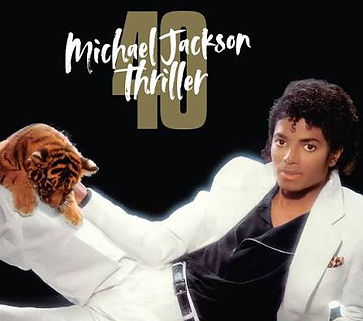
First and foremost: "Thriller."
Michael Jackson didn’t just prove that a Black artist could move units—he obliterated every doubt. Thriller wasn’t just a record; it was a cultural phenomenon. It showed the industry exactly how much money was on the table when you stopped treating Black artists as niche acts. Suddenly, the same people who believed soul and R&B belonged only on “urban” stations had to acknowledge that a Black man zoomed right past Billy Joel and Hall & Oates and became the biggest pop star in the world. By a longshot.


Second, 1984 marked the rise of a new kind of consumerism. People weren’t just buying stuff; they were buying to flex. Reagan-era capitalism had taken hold, and music became more than entertainment. It became a status symbol and a lifestyle accessory. Whether it was vinyl, tapes, or soon CDs, everybody wanted their own copy of the biggest records, hottest singles, and dopest soundtracks. Black audiences were part of that marketplace as our buying power began to climb.


Third: technology. Japan messed around and created a consumer tsunami when Sony dropped the Walkman on us, and suddenly music was mobile. It could go wherever you went. No more being tethered to the family stereo or fighting for radio control in the station wagon.
Then came the CD and the portable Discman: cleaner sound, slicker design, no rewinding, and more durability than a cassette. These innovations changed the game, making it easier for people to buy and consume more music—including Black music.
Finally, and maybe most critically, MCA Records created a real Black Music Division, headed up by Jheryl Busby and later Ernie Singleton. That sounds like a no-brainer nowadays, but at the time, the idea was groundbreaking. For once, a major label put serious marketing dollars behind Black acts: real budgets, real promotion, real resources. The results were immediate and staggering.
Need proof? In 1977, the ten best-selling Black acts in the U.S. moved a combined 14.2 million albums. That sounds respectable—until you realize Meat Loaf’s "Bat Out of Hell" came out that same year and sold 14 million copies in the U.S. all by its damn self.
Fast-forward one decade: the ten best-selling Black artists of 1987 moved 90 million albums. That’s a 534% increase.
Let that sink in.
What changed? Simple: the industry finally figured out there was serious money to be made from Black music—and Black people. Once that realization hit, there was no turning back.

.jpg)


Black Gold: The Top-Selling Black Artists, 1976–2006
This next section focuses on the ten best-selling Black artists for each year from 1976 to 2006—what I consider the juiciest, most creatively fertile, and most culturally resonant era in Black music. This was before the full corporate mainstreaming of the Black sound, before streaming flipped the economics, and definitely before music executives could hide behind algorithms to justify their safe-ass playlists.
This was a time when it was still possible—though never easy—for a Black artist to break big without being diluted.
Did the burst in sales lead to fair contracts, equitable promotion, or lasting infrastructure for Black creatives? Nope. But for a moment, Black artists began getting a piece of a pie that had long been out of reach—a pie created by Black icons like Little Richard and Big Mama Thornton, who were never allowed a proper slice.
And for those of us who lived through that era, we got to witness a remarkable turnaround for Black singers, musicians, producers, and executives in real time.
Of course, equity and fairness didn’t suddenly stroll into the room. But in terms of visibility and market power, the mid-’80s marked a real shift. That’s why those years—when so many of us were falling in love with music—felt like a moment.
Because they were.




Contact info
E-mail -
Youtube-
Home site-
Medellin, COLOMBIA
.png)